


IFLScience
Can a transplanted organ bring with it a memory from a donor?
The question of whether transplanted organs can transfer memory has cropped up for many ... organs, but according to a ...
Did the human brain evolve in sudden leaps as current theories suggest?
A detailed investigation of the expansion in human brains over 7 million years finds faster growth in modern humans and ...
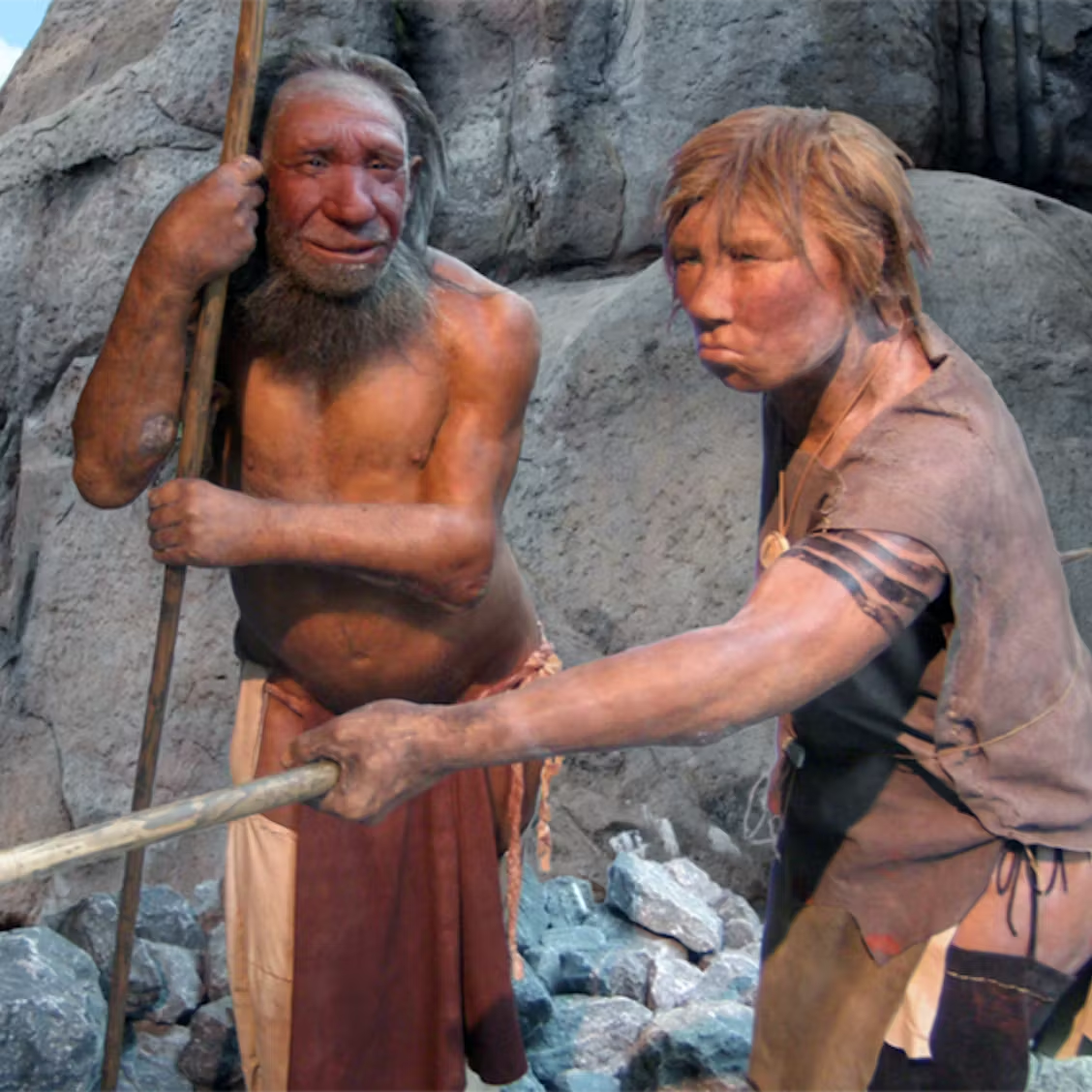
We all bear the consequences of Neanderthal and Denisovan promiscuity
For much of our history, we coexisted with other members of our genus, and our prehistoric ancestors didn’t waste the ...
Were Neanderthals violent and territorial? That’s the stereotype but that better describes Homo sapiens
Throughout the 19th century, when the theory of evolution was struggling to land in the public imagination, discussions about Neanderthals were ...
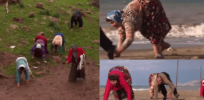
Backward evolution? Brain impairment? Scientists probe guesses on why the Türkish family Ulas walks on all fours
The Ulas family, in southern Türkiye, is like no other. For the last two decades, some of its members have ...
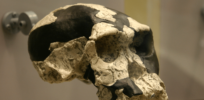
Anatomically modern humans may not have originated in Africa’s Rift Valley
The story of our species begins in Africa, although our ability to tell that story is based on patchy evidence ...
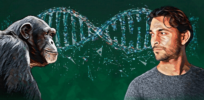
Chimpanzees and humans share 98.8% of their DNA — and just like people, ‘chimps are both bloodthirsty warmongers and thoughtful beings’
Although chimpanzees and humans share a surprising 98.8 percent of their DNA, our differences are vast – or at least we ...

Italian risotto rice is vulnerable to a deadly fungus that destroys enough food to feed 60 million people. Vandals just ruined the country’s first gene-edited rice tests
If you have ever had a good risotto, you most likely had it with arborio rice. This variety is ideal ...
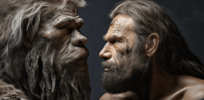
Close cousins: Just 400,000 years ago, modern humans and Neanderthal lineages split, 100,000 years more recently than previous estimates
More evidence suggests that our species may have diverged from Neanderthals just 408,000 years ago, which is later than previous ...

Could another species of humans evolve? Yes, if we begin populating other planets
Along with Homo sapiens, at least eight other species of human have existed. Ultimately, just one species prevailed: Homo sapiens ...
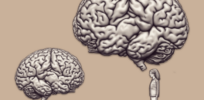
Why do humans have large brains? It may be because humans begin having sex later in life than other mammals
A very brainy biologist has devised a computer model that recreates the development of our cognitive contraption ...
What kick-started the evolution of our complex human brains?
A chance rearrangement of the human genome over a million years ago probably kick-started the evolution of modern humans from ...
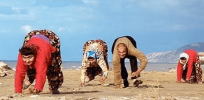
Video: Is there such a thing as ‘backward evolution’? Turkish family that walks on all fours under study by scientists
The Ulas family live in rural southern Turkey. In total, 19 children live with their parents, seven of whom are ...

How gene editing crops can help address world hunger
One-tenth of the world’s population – 811 million people – were undernourished in 2020. That’s an increase of 161 million in just ...

Seafood of the future: Could lab-grown fish replace its wild and farmed relatives?
Do we need animals to make meat? What if we could grow cells outside the body of an animal to ...

Food crops could be engineered to summon wasps that kill deadly plant pests
Plagued by stemborers, a type of crop parasitism, maize can launch a chemical defense that essentially calls in the cavalry ...
Horrific genetic mutation starts as insomnia and ends in death
We've all had nights where we struggle to fall asleep, but imagine being trapped in a cycle of insomnia that gets progressively ...
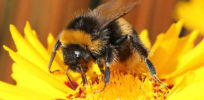
Is climate change to blame for disappearing bumblebees?
[Researchers] have discovered one of the reasons why bumblebees are disappearing – global warming’s effect on flowering times. Scientists at ...
Neanderthal ancestors may have endowed modern humans gift of allergies
The GLP aggregated and excerpted this blog/article to reflect the diversity of news, opinion and analysis. If you suffer from ...