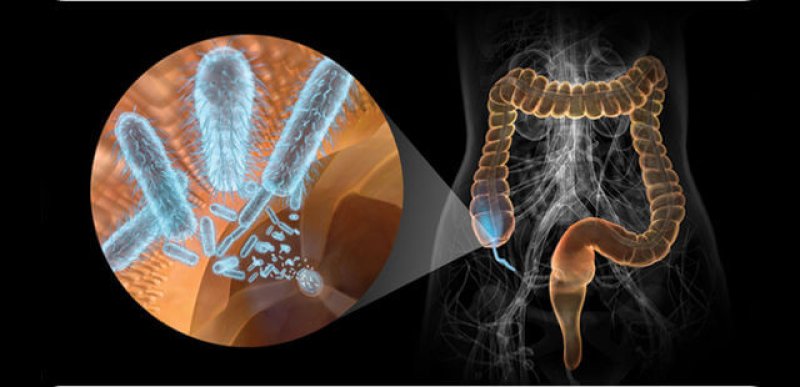
Despite professional science and health organizations such as the American Medical Association and the American Association for the Advancement of Science agreeing that current approved GMOs do not present any safety issues, recent ballot measures have invigorated concerns. One of the objections raised by anti-GMO campaigners is a proposition that foods from crops grown from genetically modified seeds in which farmers also used the herbicide glyphosate might disrupt intestinal microbiota, the community of numerous friendly bacteria that live in our gut, consisting of trillions of single celled organisms.
Such claims, often presented with alarmist headlines, have become a staple of anti-GMO websites, often citing one-off studies. “Roundup Herbicide Linked To Overgrowth of Deadly Bacteria,” claimed one typical article, this posted on a natural products and supplement selling website, GreenMedInfo.
Over the years, modern medicine has become increasingly aware of the importance of gut microbes to the point that probiotics supplements have been shown, in good scientific studies, to improve treatment of various medical conditions, while also reducing side effects of needed medications, such as antibiotics. Additionally, modern medical practice now uses a procedure called fecal transplantation for individuals whose gut biota have been disrupted by a deadly bacterial species, and the treatment has saved lives.
As awareness of the gut microbiota issue spreads through the general public, it’s been hypothesized to be a factor in the genesis of a range of health conditions, and consequently anti-GMO groups have targeted this as well. Their concern revolves around the herbicide glyphosate which is used in the growing of certain GMO crops. They make the case that while the agent is not toxic to crops engineered to be herbicide resistant, it can impact other types of life, including bacteria. Although many articles cite individual studies and the data are presented out of context, some of the articles cite multiple sources supporting the idea that under certain conditions the glyphosate can affect bacteria and even animals, negatively.
But the problem is that their concern rests on the levels of glyphosate in the food, and they disagree with the US Environmental Protection Agency regarding what the permitted levels should be. Glyphosate is considered by the mainstream science community to be comparatively harmless at typical levels of exposure. Its toxicity level, known as LD 50, is less than that of salt and of many natural herbicides commonly used in organic agriculture. It is not carcinogenic, does not bioaccumulate and is biodegradable in the environment. Glyphosate, sold in hardware stores as RoundUp, has been used safely for more than 30 years.
The EPA website points out that the permitted levels are based on a broad international scientific consensus involving a wide range of animal studies. While this should mean that there’s no reason for any serious concern, the EPA also notes that it monitors ongoing studies and that the study of the chemical should continue. A European Union commissioned group just re-reviewed glyphosate’s safety profile earlier this year and concluded that it poses even less potential harm than previously thought, and recommended significantly relaxing tolerance levels.

In other words, it’s a reasonable issue to investigate, if for no other reason than to address public concerns. Furthermore, while health effects resulting from major disruption of intestinal bacterial species would show up in animal safety studies, smaller changes might only produce subtle health effects, or health effects appearing only years later. Based on this possibility, microbiologists have conducted some very good research.
One German study published last year in a reputable microbiology journal tested a range of intestinal bacteria strains, some that are pathogenic (disease causing) and others that help to maintain good health by competing against the pathogenic bacteria. The pathogenic strains included several that most people have heard of in the context of disease, such as Salmonella and Clostridium. One species of Clostridium causes botulism and another causes a life threatening condition the survival from which has been improving mostly because of the fecal transplant procedure that we discussed earlier. The study looked at the effects of glyphosate on these pathogenic bacteria and also on several important friendly bacterial strains. It turns out that the Clostridium and Salmonella are fairly resistant to glyphosate, while several friendly strands are moderately to highly susceptible to glyphosate, meaning that they might be killed off.
This type of study provides a scientific basis for concern that should keep the issue on the table. However, there’s an important caveat. Along with other studies on the effects of glyphosate on intestinal microbiota, this recent German study was in vitro. In other words, bacterial strains were tested in laboratory culture, and their susceptibility to glyphosate assessed individually, which is not how the intestinal microbiology environment works. In other words, the possibility of intestinal microbiota effects is theoretically possible, but the issue now requires future studies to be conducted in vivo–in the real life intestinal environment of animals similar to humans–and looking at the effects of glyphosate in terms of quantity of the agent. Many times, issues that show up in in vitro studies do not translate into concerns in living beings.
So what’s the take home message? Concern about subtle effects of GMO products on gut microorganisms is appropriate to pursue, which is why microbiology investigators are studying the issue. But like every other health issue, results from in vitro studies, do not constitute a reason for a sea change. What they do provide is a basis for expanded study.
David Warmflash is an astrobiologist, physician, and science writer. Follow @CosmicEvolution to read what he’s saying on Twitter.