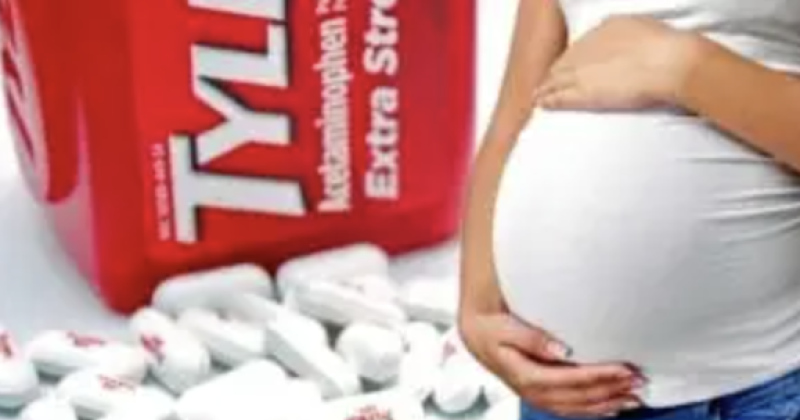

A federal appeals court today revived more than 500 lawsuits alleging that Tylenol maker Kenvue failed to warn consumers that taking the pain reliever during pregnancy could increase the risk of autism and attention-deficit/hyperactivity disorder (ADHD) in children, Reuters reported.
The 2nd U.S. Circuit Court of Appeals in New York found that a lower court improperly excluded testimony from three expert witnesses offered by parents and guardians pursuing the claims.
In a 64-page decision, Circuit Judge Guido Calabresi wrote for a unanimous three-judge panel that the experts’ methodologies reflected approaches used by other scientists and “constitute acceptable interpretations of scientific evidence where scientists may, and in fact do, disagree.”
Calabresi stressed that the appeals court was not deciding whether acetaminophen causes autism or ADHD, or whether elected officials should take additional steps to protect public health. Instead, the ruling found that the testimony should be heard as the litigation moves forward.
Attorney Ray Flores, who has represented families in vaccine and pharmaceutical litigation but is not involved in the Tylenol multidistrict litigation, said the appeals court concluded the U.S. District Court for the Southern District of New York had exceeded its role in evaluating expert evidence.
“The 2nd Circuit ruled that the District Court ‘overstepped its gatekeeping function’ to ‘shield the jury’ from ‘junk science’ by excluding expert testimony,” Flores told The Defender. “The appellate court ruled that these doctors could offer acceptable interpretations of evidence linking Tylenol to autism and ADHD when taken during pregnancy.”
The experts whose testimony was reinstated are Andrea Baccarelli, M.D., Ph.D., faculty dean of Harvard University’s School of Public Health; Dr. Eric Hollander, a psychiatry professor at Albert Einstein College of Medicine; and Brandon Pearson, Ph.D., a toxicologist at Columbia University, Reuters reported.
“We are pleased that the panel unanimously found that our key experts reliably applied their scientific methods and principles,” Ashley Keller, an attorney representing the parents, said in an email to Reuters.
The court upheld the exclusion of two other experts, and declined to express “any opinion about the correctness” of a third.
The ruling sends the lawsuits back to U.S. District Judge Denise Cote for further proceedings.
In 2024, judge excluded experts’ testimony as unreliable
The lawsuits allege that Kenvue concealed risks associated with prenatal exposure to acetaminophen, the active ingredient in Tylenol.
Doctors and major medical organizations have long considered acetaminophen the preferred pain reliever during pregnancy, and Kenvue has consistently maintained that the product is safe.
In a statement quoted by the Financial Times, Kenvue said [the ruling] “does not change the fact that credible, independent science shows no proven link between taking acetaminophen and autism or attention-deficit hyperactivity disorder.”
Kenvue was spun off from Johnson & Johnson in 2023, after the company had manufactured Tylenol for more than 60 years.
Monday’s decision reverses a December 2024 ruling by Cote, who dismissed the consolidated lawsuits after excluding testimony from the plaintiffs’ expert witnesses. Cote concluded that the experts’ methodologies were unreliable, leaving plaintiffs without admissible expert testimony to support their claims.

In November 2025, Kleenex and Huggies maker Kimberly-Clark announced plans to acquire Kenvue in a deal valued at more than $40 billion, The Guardian reported. In January 2026, shareholders overwhelmingly approved the acquisition.
The Financial Times reported that Kenvue shares fell about 1% after Monday’s decision. The company’s stock remains down 12% from a year earlier amid ongoing litigation and political scrutiny surrounding Tylenol.
Trump, Kennedy announcements intensified scrutiny
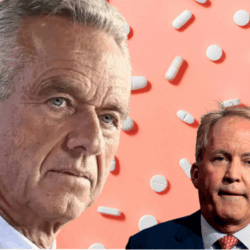
The case drew heightened national attention in September 2025 when President Donald Trump and U.S. Health Secretary Robert F. Kennedy Jr. announced that federal health agencies would undertake extensive research into all possible causes of autism, including vaccines.
At the same White House event, officials also announced that the U.S. Food and Drug Administration (FDA) would add warnings to Tylenol and other acetaminophen-containing products advising pregnant women of a possible link between prenatal acetaminophen exposure and autism.
Officials also said they would advise physicians and the public about the potential risks.
During the announcement, Kennedy said federal officials intended to revisit questions that had not received adequate scientific scrutiny.
“One area that we are closely examining … is vaccines,” Kennedy said. “We will perform the studies that should have been performed 25 years ago. Whatever the answer is, we will tell you what we find.”
Trump pointed to rising autism diagnoses and called for further investigation into potential causes, including the childhood vaccination schedule.
In 2025, the Centers for Disease Control and Prevention reported that an estimated 1 in 31 (3.22%) 8-year-old children had an autism spectrum disorder diagnosis in 2022, up from 1 in 36 (2.8%) in 2020 and 1 in 1,000 children in the 1990s.
The White House announcement prompted criticism from legacy media, Kenvue, TikTok influencers and the American College of Obstetricians and Gynecologists, which maintained that acetaminophen remains safe for use during pregnancy.
Media coverage included a Reuters article, “Tylenol is safe, doctors tell worried pregnant moms” and a BBC report stating that “US doctors face anxious Tylenol conversations after Trump’s autism announcement.”