Uganda is slowing evolving into a center for biotechnological research. Will it become a beacon for other countries?
A Tanzanian delegation comprised of Ministers, Permanent Secretaries, Members of Parliament and researchers recently visited Uganda’s biotech facilities to learn how research is proceeding in Uganda. Despite the absence of the biotechnology and biosafety law that is awaiting enactment, Uganda has several biotech trials in confined fields, all in advanced stages:
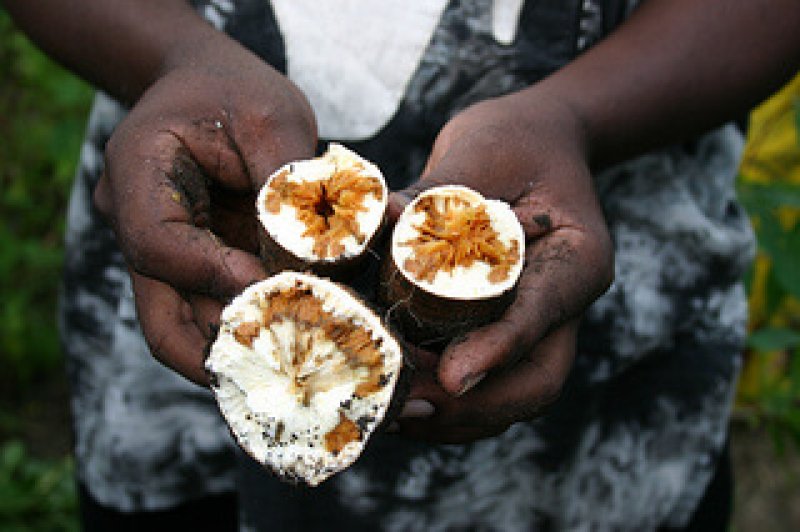
- resistance to one of the deadliest crop diseases in the world, the cassava brown streak disease using the gene silencing or RNi interference method
- improvement of rice to tolerate low levels of water and nitrogen
- drought tolerance and insect resistance in maize
- resistance to banana bacterial wilt and black sigatoka
- enhancement of beta carotene in both the cooking and sweet banana
- weevil resistance in sweet potatoes
Uganda has a biotechnology and biosafety policy in place and a law under the National Council of Science and technology that allows it to oversee any research in Uganda. Under the science council, The East African country also has a National Biosafety Committee comprised of various professionals and farmer representative to oversee biotech research. Tanzania already has a biotechnology and bio-safety law in place which is prohibitive and has confined the research to laboratories while Uganda’s research is now under field conditions.
After being briefed by Uganda’s senior scientists, national regulators, and the Minister of Agriculture, the delegates, one after the other, declared that the visit had dramatically influenced their thinking, and they would return home to push for serious research in the biotechnologies.Many of the challenges that affect Uganda’s Agriculture, like banana bacterial wilt, cassava brown streak disease and insufficient beta carotene in staples, are the same faced by their country.
They later visited biotech facilities, including the field trials and saw that the research were being conducted in Uganda by Ugandans for Ugandans addressing the problems associated with Uganda’s staples like cassava, banana and sweet potatoes, which are all vegetatively propagated. There has been no intervention from seed companies or fears of multinationals taking over.

The challenge the two countries face is the opposition from local civil societies organizations funded by anti-GMO agents from outside Africa. Friends of the Earth, Greenpeace and Food Rights Alliance, among others, do not offer solutions to the current farming challenges but rather take an extremist environmental perspective perpetrating the idea that low-tech farming is “natural” while whatever man does to help improve yields is artificial.
There is a groundswell of popular support for crop biotechnology among farmers. In Burkina Faso, farmers have been cultivating Bt cotton for years, and they’ve become a pilgrimage site for laggards from other African countries and beyond to take skeptics on what they call their “seeing-is-believing” tour. The Tanzanians who saw and believed when they visited Uganda must act on their new found beliefs if their trip is to bring hope to farmers in the Kagera region of Tanzania who have lost their bananas to the deadly banana bacterial wilt.
Tanzania enjoys a cordial relationship with Uganda as they helped Uganda oust its Dictator Idi Amin Dada in 1979. This time Uganda would help them oust the most devastating crop diseases, the cassava brown streak disease and banana bacterial wilt that are ravaging important staples causing millions in losses.
Isaac Ongu is an Agriculturist and Consultant on Agricultural information dissemination and an advocate on science based intervention in solving Agricultural challenges in developing countries. Follow Isaac on twitter @onguisaac