The United States remains the leading grower of biotech crops in the world but developing countries are fast catching up.
In the latest annual report of the International Service for the Acquisition of Agri-biotech Applications (ISAAA), which supports the commercialization of biotech products, 20 of the 28 countries that grow biotech crops are developing countries in Latin America, Africa and Asia including two South-East Asian nations.
“For the third consecutive year, developing countries planted more biotech crops than industrial countries,” said Rhodora Aldemita, ISAAA senior program officer who presented the report to Philippine media last 27 February in Makati City.
Developing countries now account for 96 million hectares of land planted to biotech crops, representing nearly 53 percent of the global total of 181.5 million hectares.
The US remains the largest grower of genetically modified crops in 2014 with 73.1 million hectares, roughly 40 percent of the total and with a declining percentage share. Brazil is second, with 42.2 million hectares. Argentina is third, followed by India, Canada and China.


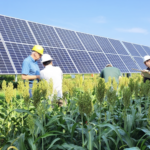


In South-East Asian, the Philippines placed 12th in the global ranking, with 800,000 hectares planted to biotech maize, while Myanmar took the 15th spot, with 300,000 hectares for cotton.
Biotech is the fastest growing crop technology that has been adopted by 18 million farmers, says the report. In 2014, nine out of 10 of these farmers were small cultivators in developing countries. The adoption rate has seen a 100-fold increase since biotech crops were first planted in 1996.
Read full, original article: Developing nations now dominate GM crop production