On [April 27, 2026], the Supreme Court is set to hear oral arguments in Monsanto Company v. Durnell. John Durnell, a Missouri man who developed non-Hodgkin’s lymphoma, is arguing that glyphosate’s manufacturer, Monsanto, failed to warn users of the chemical’s danger. The company claims that it should not have to add a cancer warning to product labels because the Environmental Protection Agency does not classify the herbicide as a carcinogen.
The ruling will determine whether thousands of similar lawsuits can continue, even as Bayer, which acquired Monsanto in 2018, pursues a multibillion-dollar settlement. That settlement may look like an admission that glyphosate causes cancer, but it’s an effort to reduce the unpredictable costs of years of litigation, jury awards and reputational damage.
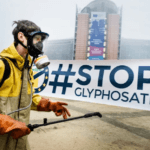
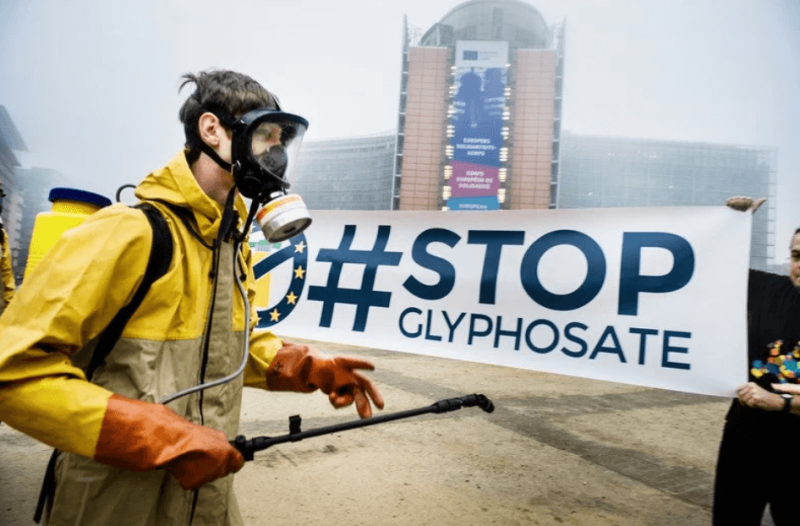
The case lands at a moment in which public opposition to glyphosate is at a fever pitch. President Donald Trump signed an executive order in February aimed at strengthening domestic production of glyphosate, and congressional Republicans have repeatedly proposed curbing states’ ability to impose pesticide warning requirements. Those moves have enraged MAHA supporters, who see them as a betrayal by an administration some of them helped elect. MAHA activists and other advocates plan to rally outside the Supreme Court in support of Durnell.
If the lawsuits and the MAHA movement have their way, the result will not be healthier or more sustainable farming. It will be more soil erosion, increased loss of wildlife and greater risk to farmers.
Glyphosate’s critics focus on the chemical’s alleged harms in isolation, imagining an idealized future without any herbicide use. But if access to glyphosate is curbed, farmers would probably need to turn to more harmful weed-management approaches. Glyphosate is less toxic to mammals, birds and many other forms of wildlife than almost all other herbicides used on the same crops. Paraquat, for instance, is toxic to birds, poses a range of human health concerns and is banned in more than 70 countries. Acetochlor, often sprayed on cornfields, is toxic to fish, and the EPA determined that there is “suggestive evidence” that acetochlor has carcinogenic potential.
Glyphosate also poses little risk to human health. Nearly two decades of data from over 50,000 pesticide applicators shows no statistically significant association between glyphosate exposure and non-Hodgkin’s lymphoma. Most major regulatory agencies around the world, including the European Union’s, have concluded glyphosate is not likely carcinogenic and does not pose significant health risks at typical exposure levels. The International Agency for Research on Cancer classified it as probably carcinogenic to humans in 2015 based on limited evidence. Glyphosate’s relatively low risks, combined with its effectiveness and low cost, are exactly why it came to dominate the market.
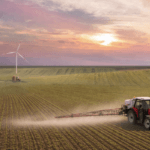
The popular herbicide’s biggest environmental advantage, though, may be the practices it lets farmers avoid. Glyphosate has enabled farmers to reduce or eliminate soil tillage on millions of acres. Before farmers had reliable weed control, they had to plow more often. That meant more tractor passes, more diesel burned, more dust in the air causing respiratory issues and more soil and fertilizer washing off from fields after a heavy rain.
Glyphosate is not harmless. It’s designed to kill a wide range of plants, including some of the vegetation that wildlife like monarch butterflies depend on. The EPA’s most recent environmental assessment also found glyphosate-based products may harm some fish and birds. Despite this, it is still one of the safest and most effective herbicides available.

The widespread opposition to glyphosate illustrates a broader fallacy in how critics judge modern agriculture. Labor-intensive approaches that eschew modern technologies may work in a home garden or backyard chicken coop, but they rarely scale to commercial farms. Skeptics of modern agriculture condemn synthetic fertilizer without reckoning with the additional land that would need to be farmed if yields fell. They denounce pesticides without confronting the fact that up to 40 percent of crops are already lost to pests annually, and that more would be lost without modern herbicides.
Driving less harmful farming inputs off the market won’t make people safer or food healthier. Improving these tools will. Farmers should find ways to use glyphosate more judiciously, and companies should develop lower-impact, more effective herbicides. Start-ups and multinational agribusinesses alike are already developing replacements for glyphosate.
Developing safer and more effective tools requires consistent government support for agricultural research and federal regulatory systems that can evaluate and approve new products quickly. In the 2024 fiscal year, more than three-quarters of the EPA’s pesticide registration applications were delayed. Compounding the issue, the Agriculture Department is nearly always behind schedule in reviewing new herbicide-tolerant, genetically modified crops.
If policymakers and advocates want farmers to move beyond glyphosate, they should make it easier to bring new alternatives to market. It’s unlikely herbicides will ever be harmless, but research and innovation could make them less toxic and more effective. In agriculture, as elsewhere, the standard should be improvement, not purity.
Dan Blaustein-Rejto is the Director of the Food and Agriculture program at Breakthrough Institute. Follow Dan on X @danrejto
A version of this article was originally posted at The Washington Post and has been reposted here with permission. Any reposting should credit the original author and provide links to both the GLP and the original article. Find Breakthrough Institute on X @TheBTI and The Washington Post @washingtonpost