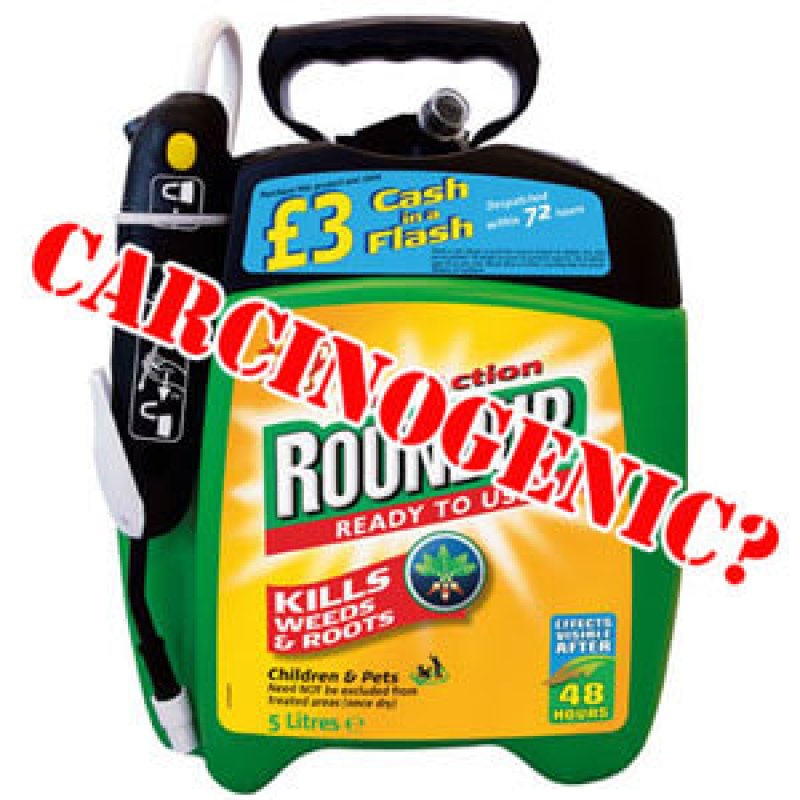
The International Agency for Research on Cancer (IARC) departed from the scientific consensus on March 20 to declare glyphosate, the active ingredient in the Monsanto-created herbicide Roundup, to be a class 2A “probable human carcinogen”.
This conclusion, published in The Lancet Oncology, contradicts a strong and long standing consensus supported by a vast array of data and real world experience, and comes from an organization that rarely addresses potential pesticide carcinogenicity, perhaps because the real concerns in this area are minimal, and lie elsewhere. The IARC statement is not the result of a thorough, considered and critical review of all the relevant data. It is beyond the pale. Here’s why.
A vast body of relevant information, including dozens of detailed genotoxicity, studies, animal bioassays, peer-reviewed publications and regulatory assessments, that show no evidence of carcinogenicity, and confirm its safety were presented to the IARC, but seem to have been ignored. On the other hand, witnesses report one paper so severely criticized and discredited that it was condemned by the scientific community and withdrawn by the publisher was actually taken on board by IARC.
That the IARC seems to have even considered such a fatally flawed and withdrawn paper triggers the Séralini Rule: “If you favorably cite the 2012 Séralini rats fed on Roundup® ready maize study, you just lost the argument.” The fact that IARC seems to be taking seriously this laughingstock publication suggests they have run thoroughly off the rails, gone beyond anything defensible as science, and well into fictional realms.
Scientific experts who have considered the body of relevant research do not agree with a categorization of glyphosate as likely carcinogen for a very simple reason–it’s clearly not. There is nothing in the data to support such claims, and nothing in the deep reservoir of real world experience with glyphosate, to justify such a move. Let’s be clear here. The IARC reviewed the data for less than a week before making its decision. It did not consider any new research or data, and all the information considered has already been evaluated by regulatory bodies around the world. The most recent of these reviews was conducted by Germany on behalf of the European Union. That study took more than a year and concluded—in accord with almost every major independent review of the herbicide–that it posed no serious health hazards and was certainly not carcinogenic.


IARC, a semi-autonomous extension of the World Health Organization, has been criticized before for advancing unsupportable prrecaution-based conclusions reached using flawed methodology. But IARC’s assault on glyphosate breaks new ground, which is all the more ironic given its clearly superior safety profile compared to the likely alternatives.
Glyphosate lacks the chemical structural characteristics of known carcinogens, and neither IARC nor anyone else has ever offered an even remotely plausible mechanism of carcinogenicity. No new data have been advanced to support this categorization, which can be reached only by ignoring and defying a vast body of data and experience. One might be forgiven for suspecting the intrusion of politics into the process; a suspicion not weakened by noting that one of the participants is employed by the Environmental Defense Fund, an organization of professional campaigners that has recently faced charges of manufacturing chemophobic alarms without scientific basis.
It seems IARC is in dire need of some adult supervision. Whether WHO finds the bureaucratic courage to apply such, and correct this policy miscarriage, remains to be seen. If they don’t, will IARC start picking off other safe but controversial agrochemicals as campaigning by advocacy groups heats up?
Val Giddings is senior fellow at The Information and Technologies Innovation Center. He previously served as vice president for Food & Agriculture of the Biotechnology Industry Organization (BIO) and at the Congressional Office of Technology Assessment and as expert consultant to the United Nations Environment Programme, the World Bank, USDA, USAID, and companies, organizations and governments around the world. E-Mail: [email protected]. Follow him on twitter @prometheusgreen.