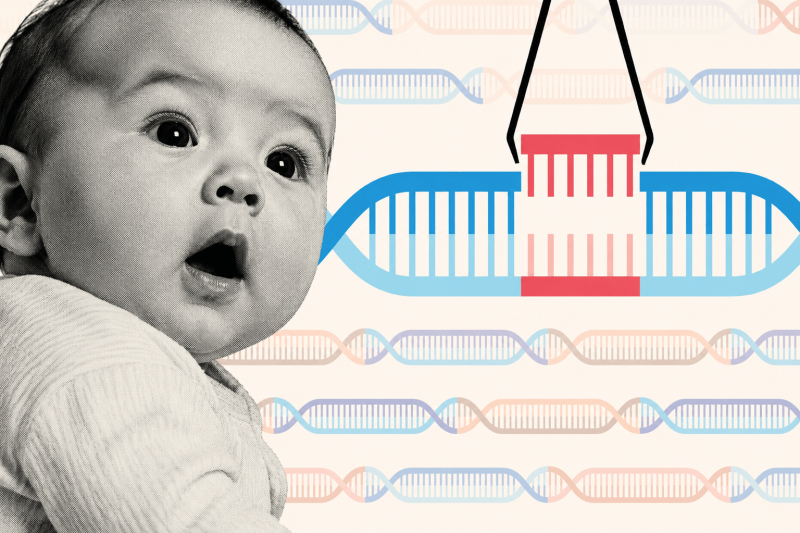
Will hi-tech genetic fortune-telling really help parents make healthier children?

Like high-tech fortune-telling, the screening estimates the chances that embryos will produce children at risk for thousands of illnesses, from rare inherited disorders such as Tay-Sachs and cystic fibrosis to common diseases with genetic factors such as cancer, heart disease, diabetes and Alzheimer’s.

“We call it genetic optimization,” says Kian Sadeghi, founder and CEO of Nucleus Genomics. “We help people have their best babies. ” …

But the American College of Medical Genetics and Genomics and the American Association of Reproductive Medicine say the science of polygenic risk scores hasn’t progressed enough to produce reliable estimates. Beyond genes, the environment and lifestyle are important factors for many diseases. Some also argue the screening raises troubling moral, ethical and societal concerns.

Follow the latest news and policy debates on sustainable agriculture, biomedicine, and other ‘disruptive’ innovations. Subscribe to our newsletter.

Some fear parents will be disappointed if the babies don’t live up to their expectations.

“The thought would be: … “We paid for you to not have cancer. How can you have developed cancer?'” says James Tabery, a bioethicist at The University of Utah. “There’s this illusion of control that doesn’t actually exist. And if you are the product of that perceived control that doesn’t exist, you can be targeted as the problem.”


This is an excerpt. Read the original post here

{{ reviewsTotal }}{{ options.labels.singularReviewCountLabel }}
{{ reviewsTotal }}{{ options.labels.pluralReviewCountLabel }}
{{ options.labels.noReviewsLabel }}
{{ options.labels.newReviewButton }}
{{ userData.canReview.message }}

Related Articles

Infographic: Global regulatory and health research agencies on whether glyphosate causes cancer

Infographic: Global regulatory and health research agencies on whether glyphosate causes cancer

Does glyphosate—the world's most heavily-used herbicide—pose serious harm to humans? Is it carcinogenic? Those issues are of both legal and ...

Most Popular

ChatGPT-Image-Mar-10-2026-01_39_01-PM
Viewpoint—“Miracle molecule” debunked: Why acemannan supplements don’t work
Screenshot 2026-07-11 094410
Growing animal muscle and fat cells inside rice grains and calling it beef: One of numerous genetically engineered products shaking up our ecosystem
Screenshot 2025-09-17 at 12.41
Misinformation alert: No, glyphosate use in Canadian forests is not spurring more wildfires
ChatGPT-Image-Jun-25-2026-12_23_17-PM
No, Bill Gates did not secretly engineer ticks to promote veganism
Screenshot 2026-07-16 at 8.49
Pete Hegseth’s bizarre Viagra commercial as Trump administration endorses ‘hormone replacement therapy’
Screenshot-2026-07-16-at-11.32.12-AM
Viewpoint: Trump appoints climate change hoax promoter to head influential government policy project
file-f-d-d-
Facts & Fallacies Podcast: Europe's AC debacle underscores fatal flaw in green activism
ChatGPT-Image-Jul-9-2026-02_39_22-PM
Viewpoint: Polyphenols or NAD+ supplements to combat aging: No, Gwenyth Paltrow and followers, don’t waste your money.
Screenshot-2026-07-16-at-6.02.54-PM
Wellness grifters overwhelm information channels in the developing world, and the problem is escalating

Sorry. No data so far.

glp menu logo outlined

Get news on human & agricultural genetics and biotechnology delivered to your inbox.