Selective breeding for shorter plant stems contributed to ‘Green Revolution’ yield gains

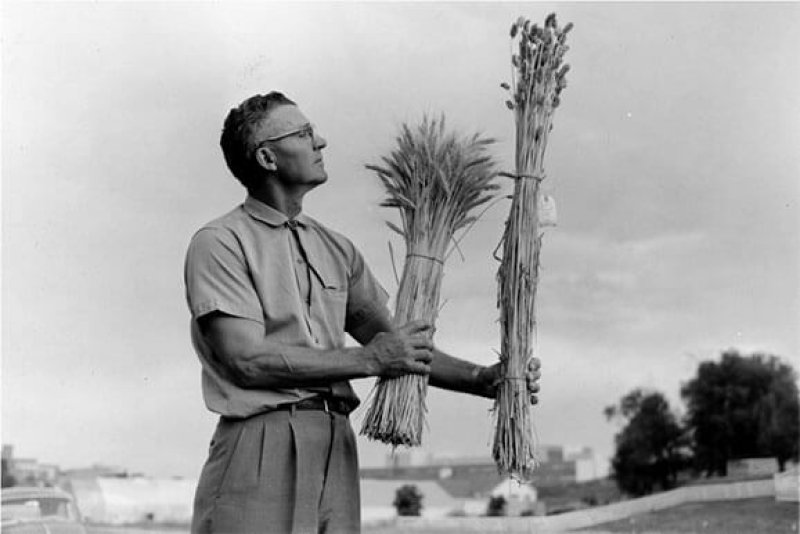
vogel comparing wheat
Orville Vogel compares Gaines wheat (left), which he developed, with Omar wheat, a traditional variety. Vogel's introduction of semi-dwarf genes increased yields by 25 percent.

Untangling the genetics that control and regulate the yield of a crop is a complicated, but potentially rewarding puzzle. High-yielding dwarf varieties of wheat and barley were developed in the 1950โ€™s and 60โ€™s, during the โ€œgreen revolutionโ€ when plant breeders selected for mutations that were short-stemmed.

Plants with shorter stems are less likely to fall over in the field, and as a result greater yields are harvested. These new variants, of crops such as barley, wheat, and rice had the beneficial shorter stems, but inadvertently also included another important trait that reduced the potential yield of the crop.

Professor Robert Sablowski and his team at the John Innes Centre study the role of DELLA proteins, which cause a range of growth responses in plants. It was mutations of the DELLA genes that the breeders of the green revolution were selecting for in their efforts to increase yield through reduced stem length.

This breakthrough means that plant breeders can now select for new mutations that separate the desirable and undesirable traits conferred by DELLA proteins – short stemmed crop plants with larger meristems. Successfully selecting for both would increase the potential crop yield, helping to address global food security challenges.

[Read the full study hereย (behind paywall)].

The GLP aggregated and excerpted this article to reflect the diversity of news, opinion and analysis. Read full, original post: Green revolution genes promise additional yield


{{ reviewsTotal }}{{ options.labels.singularReviewCountLabel }}
{{ reviewsTotal }}{{ options.labels.pluralReviewCountLabel }}
{{ options.labels.newReviewButton }}
{{ userData.canReview.message }}

Related Articles

Infographic: Global regulatory and health research agencies on whether glyphosate causes cancer

Infographic: Global regulatory and health research agencies on whether glyphosate causes cancer

Does glyphosateโ€”the world's most heavily-used herbicideโ€”pose serious harm to humans? Is it carcinogenic? Those issues are of both legal and ...

Most Popular

ChatGPT-Image-Mar-10-2026-01_39_01-PM
Viewpointโ€”โ€œMiracle moleculeโ€ debunked: Why acemannan supplements donโ€™t work
Screenshot 2025-07-30 at 10.48
Can gene editing eliminate Down syndrome? Scientists have done it in lab-grown cells
Screenshot 2026-05-26 at 10.15
Viewpoint: Double standardโ€”Why does the wellness industry get a free pass while Big Healthcare is treated as morally suspect?
ChatGPT-Image-Jun-4-2026-01_27_58-PM
Viewpointโ€”N.A.D.+: Why Gwenyth Paltrowโ€™s heralded anti-aging supplement doesnโ€™t work
ChatGPT-Image-May-26-2026-07_51_21-AM-2
Viewpoint: There are more than 1,000 chemicals in a cup of coffeeโ€”including many substances that can cause cancer. Why isnโ€™t it banned?
ChatGPT-Image-Jun-4-2026-11_49_36-AM-2
โ€˜You donโ€™t understand Tolkienโ€™: Skeptic Pope trolls tech giants about the exaggerated, risk-less benefits of AI
downsyndrome_compilation_MID_1
CRISPR breakthrough that can remove the chromosome responsible for Down syndrome raises ethical questions
tick-DNA
GLP podcast: Spread meat allergy with gene-edited ticks? Bioethicists pose vile โ€˜thought experimentโ€™

Sorry. No data so far.

glp menu logo outlined

Get news on human & agricultural genetics and biotechnology delivered to your inbox.