Stem cell study identifies early issues in Rett syndrome

feimage medium x

Neural stem cells from people with Rett syndrome show early signs of dysfunction, according to unpublished research presented at the 2012 Society for Neuroscience annual meeting in New Orleans. The results come from a comprehensive analysis of protein expression in neural progenitor cells, which mark the developmental stage between stem cells and neurons.

“What we’re trying to do is see if we can find the earliest molecular changes in patient-derived stem cells,” says senior investigator Anirvan Ghosh, professor of neurobiology at the University of California, San Diego, and head of discovery for the central nervous system at Swiss drugmaker Roche.

View the original article here: Stem cell study identifies early issues in Rett syndrome —

Disabled woman ponders wisdom of pre-natal and preimplantation genetic screening

genetic test magnified

As a disabled feminist, I’m often asked about my views on medical procedures like pre-natal screening and preimplantation genetic diagnosis, or PGD (where IVF embryos are screened for genetic characteristics). Tests for some conditions, such as Down Syndrome, have become par for the course in recent years, and the list of conditions routinely screened for is growing all the time.

Most people accept that the purpose of such procedures and techniques is to identify and eliminate genetic conditions by terminating foetuses affected by them or, in the case of PGD, select embryos that are unaffected by the conditions for implantation and intended pregnancy.

View the original article here: Disabled woman ponders wisdom of pre-natal and preimplantation genetic screening

U.S. panel urges end to secret DNA testing

Blood stains from bandages and tampons? Ship them in a paper envelope for paternity, ancestry or health testing. EasyDNA also welcomes cigarette butts (two to four), dental floss (“do not touch the floss with your fingers”), razor clippings, gum, toothpicks, licked stamps and used tissues if the more standard cheek swab or tube of saliva isn’t obtainable.

If the availability of such services seems like an invitation to mischief or worse – imagine a discarded tissue from a prospective employee being tested to determine whether she’s at risk for an expensive disease, for instance – the Presidential Commission for the Study of Bioethical Issues agrees.

View the original article here: U.S. panel urges end to secret DNA testing

Scientists call out French researchers to release GMO test data

More than 700 scientists and academicians have signed petitions calling on French researcher Gilles-Eric Seralini to release research data behind his recently publicized health claims associated with biotech crops. The signers include senior scientists, prize winning researchers and respected academics from a wide range of highly regarded research institutions, international organizations and universities from around the globe.

View the original article here: Scientists call out French researchers to release GMO test data – Western Farm Press

Scientists create transgenic chicken unable to contract Avian Flu

The H5N1 avian flu virus, which ministers of health propaganda around the world have been using for years to generate overblown panic and fear, is the subject of a new biotechnology project involving genetically-modified (GM) chickens. According to the U.K.’s Guardian, genetic manipulators have developed a transgenic variety of chicken that they claim is unable to transmit avian flu to other birds, even after contracting it themselves.

View the original article here: GMO madness: Frankenscientists develop genetically-modified …

Genes and immune system shaped by childhood poverty, stress

A University of British Columbia and Centre for Molecular Medicine and Therapeutics (CMMT) study has revealed that childhood poverty, stress as an adult, and demographics such as age, sex and ethnicity, all leave an imprint on a person’s genes. And, that this imprint could play a role in our immune response.

View the original article here: Genes and immune system shaped by childhood poverty, stress – Medical Xpress

Personal genomics in the classroom: Students sequence themselves

Medical and graduate students will get the chance to sequence and interpret their own genomes in what is being billed as the first-ever course to offer whole-genome sequencing. Mount Sinai Medical School in New York is offering an elective course called ‘Practical Analysis of Your Personal Genome’ this year. The goal is to teach upcoming physicians how sequencing information might affect clinical care.

Students can choose to sequence their own or an anonymous genome. This will reveal several million variants, many with known implications for disease and health, and many more with unclear significance. Students may learn their risk for common diseases such as cancer or diabetes and also whether they carry mutations that could cause single-gene disorders in their children.

View the original article here: Personal genomics in the classroom: Students sequence themselves

Supreme Court to hear farmer’s challenge Monsanto’s intellectual property restrictions

supreme court building

Monsanto claims its genetically modified seeds — and all offspring of those seeds — as its intellectual property. If farmers save and replant any part of their harvest; if they do, Monsanto takes them to court and demands damages. In a move that surprised many observers, the U.S. Supreme Court has decided to consider whether such practices are legal.

View the original article here: Supreme Court to hear farmer’s challenge Monsanto’s intellectual property restrictions

India: Genetically modified foods capped for 10 years by Supreme Court panel

The fate of genetically modified (GM) food crops in India has been virtually sealed. After the damning report of the parliamentary committee on agriculture, a panel of technical experts appointed by the Supreme Court has recommended a 10-year moratorium on field trials of all GM food and termination of all ongoing trials of transgenic crops.

View the original article here: India: Genetically modified foods capped for 10 years by Supreme Court panel 

Europe lags Uruguay, Pakistan, Philippines in biotech crop cultivation

Europe lags

For more than 20 years, bucking a worldwide scientific consensus, the European Union (EU) has fallen behind much of the rest of world in exploiting the potential benefits of DNA-modified crops by maintaining nonsensical laws and regulations that focus not on the risk-related characteristics of new plant varieties but on the process — recombinant DNA technology — used to create them.

View the original article here: Europe lags Uruguay, Pakistan, Philippines in biotech crop cultivation

Indian Scientific Advisory Council recommends GM crops for nutrition security

The Scientific Advisory Council (SAC) on Biotechnology and Agriculture to the Prime Minister of India recommended a judicious blend of traditional farming and new technologies like genetically modified crops to ensure food and nutrition security. The members of the SAC deliberated on the important issue of application of biotechnology for social and economic advancement of the country particularly in the area of agriculture. They emphasized that the current debate on GM crops is demoralizing and isolating Indian scientists in the sector whose skills have been built with painstaking effort and large investment.

View the original article here: Indian Scientific Advisory Council recommends GM crops for nutrition security

Syria: Assad approves law on GM food as deadly conflict rages

a x

President Bashar al-Assad of Syria, where more than 33,000 people have been killed in 19 months of conflict, issued a law on GM food Thursday to preserve human life, state-run SANA news agency reported.

Assad, whose forces are locked in a bloody confrontation with armed rebels opposed to his rule, “has approved a law on the health security of genetically modified organisms… to regulate their use and production,” SANA reported.

View the original article here: Assad approves law on GM food as deadly conflict rages – AFP

Malpractice on Dr. Oz: Pop health expert hosts anti-GM food rant; Scientists push back

pretty gm tomatoes

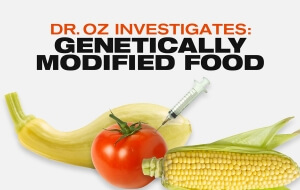
The talk show health and science advice program hit a new low with Dr. Mehmet Oz’s recent foray into the debate over genetically modified crops and foods. The Genetic Literacy Project’s Jon Entine reports.

View the original article here: Malpractice on Dr. Oz: Pop health expert hosts anti-GM food rant; Scientists push back

Malpractice on Dr. Oz: Pop health expert hosts anti-GM foods rant; Scientists respond

dr oz and gmo foods

Dr. Mehmet Oz, a popular television celebrity, is a living example of why talk show health and science should never be confused with the real thing. He is infamous among public health professionals for exaggerating the latest scare concern: origins of autism, vaccines, dangers of BPA and chemical additives, arsenic in foods. But even by his low standards Oz’s ability to do public mischief has reached new heights with is recent foray into the debate over genetically modified crops and foods.

Oz’s latest adventure in questionable pop science was an October 12 program titled “GMO Foods: Are They Dangerous to Your Health?” During the show, which was promoted as an “investigation,” Oz provided uncritical time for Jeffrey Smith, an activist with no scientific or medical background, and Dr. Robin Bernhoft, a California doctor known as a leading proponent of unconventional medical interventions and a belief, unsupported by mainstream science, that most chronic medical problems are caused by “ toxic environmental exposures.” Both have Neither has the slightest expertise in the science of genetics or agricultural genomics and both are known for their near-hysterical criticism of biotech foods.

On Oz’s show, the two activists displayed graphic images of tumor-riddled laboratory rats in an attempt to link biotech crops to increases in human health problems ranging from cancer to ulcerative colitis to gastrointestinal disorders. The pictures were lifted from the infamous maize study, published in September by Gilles-Eric Séralini, which has been dismissed by the mainstream science community and even liberal journalists as a prototypical example of biased, activist science at its worst.

Both smith and Bernhoff, with Oz’s encouragement, also attacked the US Food and Drug Administration for ‘ignoring’ these problems.  In fact, agricultural biotechnology has been under continuous review by the FDA for decades and no dangers unique to GM technology have yet been identified. Numerous federal agencies in the US and around the world have found no evidence that GM foods are processed by the body any differently than conventional or organic foods.

The Oz show, which also showcased his endorsement of California Proposition 37, the controversial regulation, widely opposed by mainstream science and health groups, which would impose mandatory labeling on GM foods, has led to extraordinarily sharp and public reactions from mainstream scientists.

In a highly unusual move, Academics Review, an association with global membership including academics, researchers, teachers and authors who commit to peer review for the purpose of establishing sound science, savaged the Oz program for relying on activist boilerplate criticisms rather than peer reviewed science for information about biotech crops.

Bruce Chassy, Professor Emeritus of Food Science, Nutritional Sciences at the University of Illinois at Urbana-Champaign and a member of Academic Review, had been contacted by the producers before the program aired. (The only scientist to appear on the show—Martina Newell-McGloughlin, who directs the Biotechnology Research and Education Program at all ten University of California campuses and is one of the world’s most respected plant geneticists, was given only a few minutes to balance the mountain of misinformation that preceded her before she was whisked off stage to make way for an appearance of another GM critic.)

Well before the program aired, Chassy said, he had advised Oz’s producers of Jeffrey Smith’s dubious credentials. Although Oz would later refer to him on the show as a “scientist,” Smith’s employment history consists of a stint as a ballroom dance teacher, yogic flying instructor and political candidate for the Maharishi cult’s natural law party before assuming the mantel of anti-GM crusader.

Based on his conversations with show producers and concerned that crop biotechnology would face a ‘kangaroo court’ on the Oz show, Chassy wrote an open letter to the program’s producers and its production company, Oprah Winfrey’s Harpo Studios, requesting that Oz present a more scientific perspective on GM foods and crops, and he asked that the show disavow unsubstantiated claims of health dangers.

“Thousands of published and peer reviewed studies conducted over the past thirty-plus years contradict [Oz’s] claims and bizarre hypotheses associating health dangers linked to foods derived using biotechnology production methods,” reads the letter posted on Academics Review. “This is corroborated by such respected scientific and medical authorities as the American Medical Association, World Health Organization with the Food & Agriculture Organization of the United Nations, Institute for Food Technologists and the American Dietetic Association. Regulatory bodies including the U.S. Food and Drug Administration (FDA), European Food Safety Authority (EFSA) and Food Safety Commission of Japan (FSCJ) all confirm this safety.

“Your assurances and the tactics of the Dr. Oz show fall short of even the lowest standards of media and medical ethics,” the letter concluded.

Considering the audience reach of his program, Dr. Oz had a chance to elevate the quality of public discourse on a widely misunderstood subject. Instead, he rang the hysteria bell. The Dr. Oz show represents a new low in the sometimes-elusive quest to encourage genetic literacy.

Jon Entine is executive director of the Genetic Literacy Project.

Junk science used to promote Proposition 37

not GM foods

Even if the California ballot measure mandating the labeling of genetically modified food measure goes down, the campaign on behalf of it will mark an important milestone in politics: the deployment of weapons-grade junk science. That’s disgraceful when multibillion-dollar industries, tens of thousands of jobs, and the health and well-being of millions of consumers are at stake.

View the original article here: Junk science used to promote Proposition 37


DNA from phony ‘chewing gum survey’ solves 1976 cold case

A DNA sample from a phony “chewing gum survey” led to the arrest of a man who has been charged with killing a 70-year-old woman in 1976, making this the oldest cold case to ever be cracked in Maine.

Gary Sanford Raub, 63, was arrested on Monday in Seattle and charged with murdering 70-year-old Blanche Kimball in Augusta, Maine.

View the original article here: DNA from phony ‘chewing gum survey’ solves 1976 cold case

Kenyan farmer to California voters: Your vote on Prop 37 will impact me

When the United States votes on November 6, many Kenyans will want to see if Americans will re-elect President Obama, with whom we share a kinship through his Kenyan father. Yet there’s another election that matters even more to us–not just as Kenyans, but as Africans who live on a hungry continent, where food insecurity poses a daily threat. Nobody outside California can vote on Proposition 37, a ballot initiative that would require labels for many types of food that contain genetically modified (GM) ingredients. If it passes, however, Proposition 37 will hurt global efforts to improve food production through modern technology.

View the original article here: Kenyan Farmer to California Voters: Your vote on Prop 37 will impact me

Artist uses epigenetics to practice ‘experimental philosophy’

a x

The man in the bow tie says he can transform you into anyone you want. At the Modernism Gallery in San Francisco, California, conceptual artist Jonathon Keats is applying his ‘experimental philosophy’ to epigenetics, one of the hottest and most rapidly advancing fields in biology. The art exhibit opened this weekend. Billing himself as a ‘dispensing epigeneticist’, Keats explained the logic behind his services: organisms are similar genetically. It’s epigenetics — control over how genes are turned on and off — that matters, and gene expression is determined by the environment. Therefore, by simulating key environmental factors, one can perform what Keats calls epigenetic cloning, a transformation without handling any DNA.

View the original article here: Epigenetics inspires philosophical experiments – Nature.com (blog)