Label GMO foods to protect consumers, urge activists

Civil society groups yesterday petitioned the government to ensure that genetically modified food in the country is labelled to protect consumers. The activists, who marched from Uhuru Park’s Freedom Corner to Harambee House and the Office of the Prime Minister before proceeding to Parliament, said research has shown that GM food is harmful to human health. The group included farmers representatives, organisations, animal welfare activists, religious organisations, consumer networks and civil society among others.

View the original article here: Label GMO Foods to Protect Consumers, Urge Activists – AllAfrica.com

DNA from phony ‘chewing gum survey’ solves 1976 cold case

A DNA sample from a phony “chewing gum survey” led to the arrest of a man who has been charged with killing a 70-year-old woman in 1976, making this the oldest cold case to ever be cracked in Maine.

Gary Sanford Raub, 63, was arrested on Monday in Seattle and charged with murdering 70-year-old Blanche Kimball in Augusta, Maine.

View the original article here: DNA from phony ‘chewing gum survey’ solves 1976 cold case

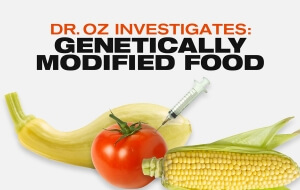
Malpractice on Dr. Oz: Pop health expert hosts anti-GM food rant; Scientists push back

pretty gm tomatoes

The talk show health and science advice program hit a new low with Dr. Mehmet Oz’s recent foray into the debate over genetically modified crops and foods. The Genetic Literacy Project’s Jon Entine reports.

View the original article here: Malpractice on Dr. Oz: Pop health expert hosts anti-GM food rant; Scientists push back

Malpractice on Dr. Oz: Pop health expert hosts anti-GM foods rant; Scientists respond

dr oz and gmo foods

Dr. Mehmet Oz, a popular television celebrity, is a living example of why talk show health and science should never be confused with the real thing. He is infamous among public health professionals for exaggerating the latest scare concern: origins of autism, vaccines, dangers of BPA and chemical additives, arsenic in foods. But even by his low standards Oz’s ability to do public mischief has reached new heights with is recent foray into the debate over genetically modified crops and foods.

Oz’s latest adventure in questionable pop science was an October 12 program titled “GMO Foods: Are They Dangerous to Your Health?” During the show, which was promoted as an “investigation,” Oz provided uncritical time for Jeffrey Smith, an activist with no scientific or medical background, and Dr. Robin Bernhoft, a California doctor known as a leading proponent of unconventional medical interventions and a belief, unsupported by mainstream science, that most chronic medical problems are caused by “ toxic environmental exposures.” Both have Neither has the slightest expertise in the science of genetics or agricultural genomics and both are known for their near-hysterical criticism of biotech foods.

On Oz’s show, the two activists displayed graphic images of tumor-riddled laboratory rats in an attempt to link biotech crops to increases in human health problems ranging from cancer to ulcerative colitis to gastrointestinal disorders. The pictures were lifted from the infamous maize study, published in September by Gilles-Eric Séralini, which has been dismissed by the mainstream science community and even liberal journalists as a prototypical example of biased, activist science at its worst.

Both smith and Bernhoff, with Oz’s encouragement, also attacked the US Food and Drug Administration for ‘ignoring’ these problems.  In fact, agricultural biotechnology has been under continuous review by the FDA for decades and no dangers unique to GM technology have yet been identified. Numerous federal agencies in the US and around the world have found no evidence that GM foods are processed by the body any differently than conventional or organic foods.

The Oz show, which also showcased his endorsement of California Proposition 37, the controversial regulation, widely opposed by mainstream science and health groups, which would impose mandatory labeling on GM foods, has led to extraordinarily sharp and public reactions from mainstream scientists.

In a highly unusual move, Academics Review, an association with global membership including academics, researchers, teachers and authors who commit to peer review for the purpose of establishing sound science, savaged the Oz program for relying on activist boilerplate criticisms rather than peer reviewed science for information about biotech crops.

Bruce Chassy, Professor Emeritus of Food Science, Nutritional Sciences at the University of Illinois at Urbana-Champaign and a member of Academic Review, had been contacted by the producers before the program aired. (The only scientist to appear on the show—Martina Newell-McGloughlin, who directs the Biotechnology Research and Education Program at all ten University of California campuses and is one of the world’s most respected plant geneticists, was given only a few minutes to balance the mountain of misinformation that preceded her before she was whisked off stage to make way for an appearance of another GM critic.)

Well before the program aired, Chassy said, he had advised Oz’s producers of Jeffrey Smith’s dubious credentials. Although Oz would later refer to him on the show as a “scientist,” Smith’s employment history consists of a stint as a ballroom dance teacher, yogic flying instructor and political candidate for the Maharishi cult’s natural law party before assuming the mantel of anti-GM crusader.

Based on his conversations with show producers and concerned that crop biotechnology would face a ‘kangaroo court’ on the Oz show, Chassy wrote an open letter to the program’s producers and its production company, Oprah Winfrey’s Harpo Studios, requesting that Oz present a more scientific perspective on GM foods and crops, and he asked that the show disavow unsubstantiated claims of health dangers.

“Thousands of published and peer reviewed studies conducted over the past thirty-plus years contradict [Oz’s] claims and bizarre hypotheses associating health dangers linked to foods derived using biotechnology production methods,” reads the letter posted on Academics Review. “This is corroborated by such respected scientific and medical authorities as the American Medical Association, World Health Organization with the Food & Agriculture Organization of the United Nations, Institute for Food Technologists and the American Dietetic Association. Regulatory bodies including the U.S. Food and Drug Administration (FDA), European Food Safety Authority (EFSA) and Food Safety Commission of Japan (FSCJ) all confirm this safety.

“Your assurances and the tactics of the Dr. Oz show fall short of even the lowest standards of media and medical ethics,” the letter concluded.

Considering the audience reach of his program, Dr. Oz had a chance to elevate the quality of public discourse on a widely misunderstood subject. Instead, he rang the hysteria bell. The Dr. Oz show represents a new low in the sometimes-elusive quest to encourage genetic literacy.

Jon Entine is executive director of the Genetic Literacy Project.

President’s Bioethics Commission Report on Genomics and Privacy

PresidentialSeal
The Presidential Commission for the Study of Bioethical Issues has just released a statement in which it recognizes that although inexpensive whole genome sequencing “holds enormous promise for human health and medicine,” there is “potential for misuse of this very personal data.”
 
It recommends that Congress should “protect individual privacy by prohibiting unauthorized whole genome sequencing without the consent of the individual from whom the sample came.” It also recommends that DNA should be handed over in legal cases only after informed consent has been obtained.
 

Junk science used to promote Proposition 37

not GM foods

Even if the California ballot measure mandating the labeling of genetically modified food measure goes down, the campaign on behalf of it will mark an important milestone in politics: the deployment of weapons-grade junk science. That’s disgraceful when multibillion-dollar industries, tens of thousands of jobs, and the health and well-being of millions of consumers are at stake.

View the original article here: Junk science used to promote Proposition 37


Personalized medicine research strikes early for heart genes

A landmark paper identifying genetic signatures that predict which patients will respond to a life-saving drug for treating congestive heart failure has been published by a research team co-led by Stephen B. Liggett, MD, of the University of South Florida. The study, drawing upon a randomized placebo-controlled trial for the beta blocker bucindolol, apprears this month in the online international journal PLoS ONE. In addition to Dr. Liggett, whose laboratory discovered and characterized the two genetic variations, Christopher O’Connor, MD, of Duke University Medical Center, and Michael Bristow, MD, PhD, of ARCA biopharma and the University of Colorado Anschutz Medical Campus, were leading members of the research team.

View the original article here: Personalized medicine research strikes early for heart genes – News-Medical.net

Kenyan farmer to California voters: Your vote on Prop 37 will impact me

When the United States votes on November 6, many Kenyans will want to see if Americans will re-elect President Obama, with whom we share a kinship through his Kenyan father. Yet there’s another election that matters even more to us–not just as Kenyans, but as Africans who live on a hungry continent, where food insecurity poses a daily threat. Nobody outside California can vote on Proposition 37, a ballot initiative that would require labels for many types of food that contain genetically modified (GM) ingredients. If it passes, however, Proposition 37 will hurt global efforts to improve food production through modern technology.

View the original article here: Kenyan Farmer to California Voters: Your vote on Prop 37 will impact me

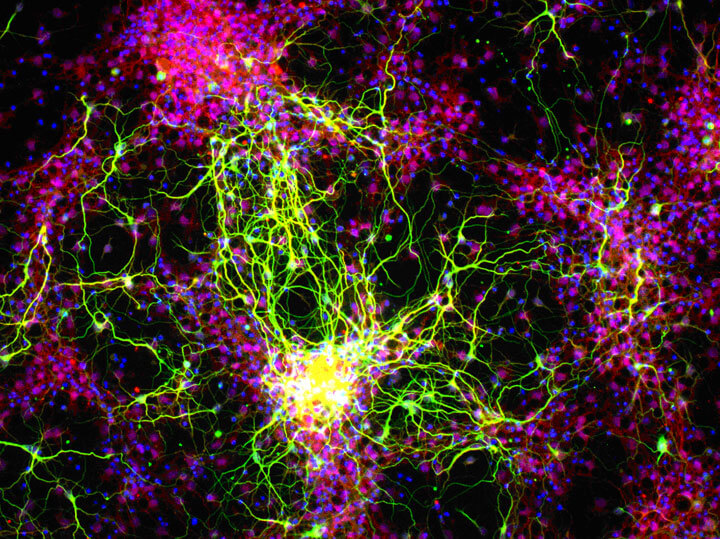
Wild West of stem cells?

stemcells

Stem cell therapy remains a brave new world with a spotty ethical and medical track record. Is that starting to change?

The Food and Drug Administration may be stepping up its oversight of companies selling unproven and unlicensed stem-cell therapies. This past week the FDA released a letter, sent in September, informing Celltex Therapeutics that it is illegally marketing an unlicensed drug.

The Sugar Land, Texas company has been in the public spotlight since it was revealed that a Houston doctor used stem cells from Governor Rick Perry to treat the governor during back surgery in July 2011 and in follow-up therapy. The stem cells were stored and grown at Celltex. The FDA also sent what is essentially a cease-and-desist letter to Texas Applied Biomedical Services, the review board that approved Celltex’s activities. Celltex has issued a response.

This is not Celltex’s first brush with controversy. Last summer, the FDA criticized the company, which has ties to a controversial stem cell firm in South Korea, after responding to a complaint sent by Leigh Turner, a University of Minnesota bioethics professor who expressed concerns about patient safety, quality of scientific research supporting the proposed business model and whether both conform to federal and state laws and regulations.

It’s not clear if the FDA’s response to Celltex’s problems signals that the agency intends to take a more aggressive stance going forward. It is an indication that the science and regulatory landscape for stem cells remains wide open.

The meteoric rise and crash-landing of University of Tokyo stem-cell researcher Hisashi Moriguchi suggests that even more serious problems may lie ahead. Earlier this month, Yomiri Shimbun, Japan’s biggest daily newspaper, with a circulation of 10 million, ran a front page story hailing claims by Moriguchi that he had used induced pluripotent stem cells to successfully treat heart-failure patients. As David Cyranoski recounted soon after in Nature, the story was full of holes and his claims blew up in a matter of days.

It also turns out that in July, a Yomiuri Shimbun article on the successful cryopreservation of human ovarian cortex tissue, which would enable a cancer patient to become pregnant four years after being cured, had incorrectly introduced Moriguchi as a visiting Harvard lecturer. Moriguchi himself now admits his career as a researcher is almost certainly over.

As Cyranoski writes, this pathetic incident could be explained away as a one-time aberration by a sick individual, but it’s just as likely a sign of deeper troubles in the stem cell field. The risk remains, he adds, that some clinicians might take advantage of the hype surrounding iPS cells and start to offer untested treatments, before their safety and efficacy can be proven in the same way that adult stem cells have become a booming, unregulated business.

“In theory, anyone can buy human iPS-cell production kits and starter cells,” says Paul Knoepfler, a stem-cell researcher at the University of California, Davis. “All it would take is one negative patient outcome to set the field back for years”.

The first clinical trial of cells derived from iPS cells will probably take place in Japan next year. “In theory, anyone can buy human iPS-cell production kits and starter cells,” says Knoepfler. “All it would take is one negative patient outcome to set the field back for years”.

Jon Entine is executive director of the Genetic Literacy Project.

Crop genome plasticity and its relevance to food safety of genetically engineered breeding stacks

Genetically engineered (GE) stacks (also known as stacked or combined events) are produced by combining two or more single transgenic events in a plant through conventional breeding. Although generating varieties with combined traits is fundamental in conventional breeding, GE stacks are sometimes viewed differently from conventionally bred non-GE crops with respect to risk and safety assessment. Two fundamental questions regarding safety assessment of GE stacks are: (1) Does the presence of more than one event increase genomic instability, and could such instability be hazardous, and (2) can interactions between the products of the transgenes impact safety?

View the original article here: Crop Genome Plasticity and Its Relevance to Food and Feed Safety …

Genetic test to tell your athletic potential: Would you take it?

As reported by the New York Times, in a landmark 2010 study scientists looked for a genetic answer to the question of why some people respond to endurance exercise so well and others don’t. “Some lucky men and women take up jogging, for example, and quickly become much more aerobically fit. Others complete the same program and develop little if any additional endurance.” The researchers examined the muscle tissue of “several groups of volunteers who had completed 6 to 20 weeks of endurance training. They found that about 30 variations in how genes were expressed had a significant effect on how fit people became.” Eventually they found certain patterns of genetic material that indicated someone would be a “low responder” to aerobic exercise and – naturally – developed a test so people can find out for sure whether or not they (or their kid) is the next Lance Armstrong.

View the original article here: There’s Now a Genetic Test to Tell Your Athletic Potential: Would …

Scientists discover new blood-vessel-generating cells

Researchers claim to have discovered stem cells that play a decisive role in new blood vessel growth, paving way for treatment of cardiovascular diseases and cancer. Researchers from the University of Helsinki, Finland are learning to isolate and efficiently produce these stem cells found in blood vessel walls which could lead to treatment of various diseases. The growth of new blood vessels, also known as angiogenesis, is needed in adults when repairing damaged tissue or organs.

View the original article here: Scientists discover new blood-vessel-generating cells – Business Standard

Food security challenges: Biotechnology to the rescue in Africa?

It is imperative for Nigeria to embrace the modern food production techniques that have come in the form of Agricultural Biotechnology and which, in Africa, are being introduced by Biosciences for Farming in Africa, B4FA. This technology is aimed at improving crop and livestock production through biotechnology tools that include conventional plant breeding, tissue culture and micro-propagation, molecular breeding or marker assisted selection, genetic engineering and genetically modified, GM, crops and Molecular Diagnostic Tools according to scientists.

View the original article here: Food Security Challenges – Biotechnology to the Rescue – AllAfrica.com

Are politics holding back animal engineers?

beb x

When she saw the trailer for the documentary Genetic Roulette, Alison Van Eenennaam wanted to laugh, then cry. The film touts the risks of genetically engineered (GE) organisms, calling them “the most dangerous thing facing human beings in our generation”. For Van Eenennaam, a geneticist at the University of California, Davis, the scientifically unfounded assertions — that transgenic foods are responsible for increased incidence of autism, Alzheimer’s disease and type 2 diabetes in the United States — cannot be taken seriously. But the film reflects attitudes that have thwarted Van Eenennaam’s research into the genetic modification of animals to reduce food costs and improve quality.

View the original article here: Politics holds back animal engineers – Nature.com

Monsanto expands biotech wheat field tests, anti-GM activists unhappy

The Monsanto Co. has nearly tripled the acreage of its permitted field tests for genetically engineered wheat in 2012, bringing the total to 900 acres, according to USDA data. Last year, the biotech developer obtained permits for 360 acres of transgenic wheat field tests, its first since 2004, when the company shelved plans for a glyphosate-resistant variety of the crop. Experts say the expanding field tests indicate Monsanto is making progress in its development of new biotech wheat cultivars, though commercialization is still up to a decade away.

View the original article here: Monsanto Expands Biotech Wheat Field Tests

Geneticists take on Dr. Oz’s anti-science attack on GM foods

Dr Oz

In a recent program, the Dr. Oz Show aired graphic images of tumor-riddled laboratory rats and charts implying associations with the use of biotechnology crops and alleged increases in human health issues ranging from ulcerative colitis to gastrointestinal disorders. Academic and science health experts, invited to appear on the program, informed the program producers that the graphics provided by Jeffrey Smith, a well known anti-GM campaigner, were based on discredited studies and had no medical relevance but were ignored.

View the original article here: Geneticists take on Dr. Oz’s anti-science attack on GM foods