Walking the ethical edge: ‘Made-to-order’ embryos address genuine needs

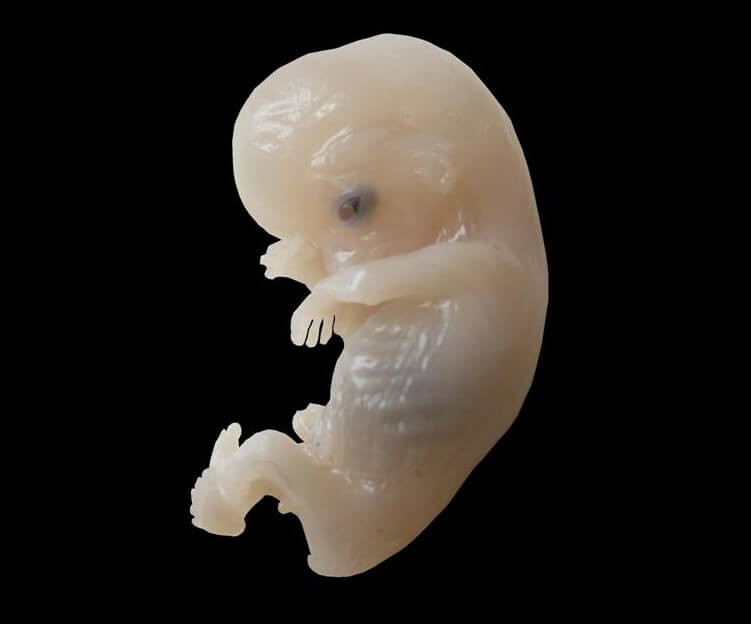
Human embryo e

An important debate has erupted around the desire for infertile couples to have children and how best to service this growing need.

The latest round of ethical contretemps is an intriguing April article in The New England Journal of Medicine, “Made-to-Order Embryos for Sale—A Brave New World?” which discusses—comprehensively and dispassionately—many of the concerns raised about embryo donations, whether gifted or for sale.

It was a response to the controversy touched off last fall by a report in the Los Angeles Times featuring a Davis, California for-profit embryo selling business that opened in 2010. That story stirred an ethical tizzy. “I am horrified by the thought of this,” the article quoted Andrew Vorzimer, a Los Angeles fertility lawyer, who voiced his belief that there was a huge and disturbing distinction between clinics that arranged “friendly” donations of embryos and ones that paired anonymous ones. “It is nothing short of the commodification of children.”

As if on cue, the NEJM report written by I. Glenn Cohen, a lawyer and Co-Director of the Petrie-Flom Center for Health Law Policy, Biotechnology, and Bioethics at Harvard University and Eli Y. Adashi, physician-scientist and Immediate Past Dean of Medicine and Biological Sciences at Brown University, brought out a familiar rebuke from the Center for Genetics and Society, which called the made-for-order’ IVF model “truly terrifying.”

Fist, let’s acknowledge the “eeeew” factor. The idea of selling any body part, let alone the combination of sperm and egg that leads to the formation of an embryo, can be disconcerting at first (or even second) thought. I would argue it’s far less provocative than aborting embryos (disclosure: I’m a strong abortion rights supporter), a key point CGS—known for its selective and highly idiosyncratic ethical choices—only obliquely addresses, and then in a way dismissive of abortion opponents.

The question that CGS fails to ask—though more mainstream ethics groups and abortion rights advocates address it all the time—is to what degree we “own” our own bodies. There are already several ways in which people can sell their bodily parts or products, ranging from livers to breast milk to bone marrow, and from blood to hair. In fact, the shortage of sperm and egg donors (in 2010, the last year for which data in the United States were available, fewer than 1000 embryo donations were recorded) has prompted robust discussions around the world about the potential benefits and challenges of a for-profit model.

Twenty-five years ago, I reported a story for NBC News about the nascent market for selling kidneys that was then budding in India. The practice was condemned by many people in the US, particularly ideological liberals, as a commodification of human life—even as thousands of people died each year on waiting lists because of a shortage of donated kidneys. Now the New York Times runs opinion pieces endorsing it. “People should not have to beg their friends and family for a kidney, nor die while waiting for one,” wrote Andrew Berger, a research analyst for GiveWell, a nonprofit that works closely with donors, last year.

There’s now a groundswell of support for the kidneys-for-sale model, particularly among those with kidney disease and their families, disgusted by the authoritarian views of so-called ethical gatekeepers that have intimidated lawmakers. Many bioethics organizations such as the Markkula Center for Applied Ethics at Santa Clara University—which 15 years ago objected to the buying and selling of kidneys—have now come full circle, favorably featuring those who believe a for-profit model has virtues. Center assistant director Miriam Schulman recently cited an article in the Kidney International Journal of the International Society of Nephrology, quoting AD Friedman and AL Friedman:

At least debating the controlled initiation and study of potential regimens that may increase donor kidney supply in the future in a scientifically and ethically responsible manner, is better than doing nothing more productive than complaining about the current system’s failure.

It’s clear from the Los Angeles Times article that California Conceptions, one of small number of for-profit embryo donation centers in the US, is serving a genuine need. For infertile couples, making babies is not cheap. The clinic appears to be thriving by providing a service to desperate infertile couples that cannot afford the astronomical price tag, which starts at $20,000 and can sometimes exceed $100,000, for the hit-and-miss adventure of multiple rounds of in vitro fertilization (IVF) using donated embryos. Dr. Ernez Zeringue offers his Davis, Ca. patients a reassuring guarantee: $9,800 or your money back.

Invoking the specter of eugenics, as CGS does, is unpersuasive. Forced eugenics, as practiced in the 1920s and 30s and supported most aggressively by “reformers” on the left and right (including the founder of Planned Parenthood) who championed sterilization laws, is clearly inappropriate. That’s not what’s on the table, however. We practice eugenics—which merely means ‘good genes’—all the time. Birth control, nonprofit embryo donations, pre-conception DNA screening tests, amniocentesis and even Match.com for baby-desirous singles who “select” potential mates based on targeted qualities, such as income and education, are all forms of eugenics—accepted and even celebrated by society. Abortion, widely supported by libertarians and political liberals, is a form of eugenics. The selective approbation attached to for-profit embryo donation comes across as just plain odd.

Cohen and Adashi, the NEJM article authors, offer thoughtful guidance through the ethical thicket of embryo donation. As they note, there is really only one critical difference between the current, expensive model that excludes the majority of people who need this service and the for-profit model: a legal framework. The sale of gametes—human eggs and sperm—is already legal and widespread around the world. The crucial issue, it would seem, is “the lack of clear legal guidance as to the parentage of the embryos in question.”

As the NEJM authors note, “[I]t may be difficult to claim that respect for personhood requires that the sale of embryos be prohibited at a time when parentally sanctioned embryonic destruction (with or without the generation of a human embryonic stem-cell line) is being practiced. Even if one believes that embryos deserve special respect not granted to gametes, it is far from clear why the sale of embryos to facilitate family building is any more contrary to that respect than the destruction thereof.”

Carping about or in some cases ignoring the failures of the current IVF system, seems the preferred choice for those opposed to even debating the benefits and challenges of a for-profit embryo market. Unless we as a society are determined to reserve the right of reproduction by infertile couples to the wealthy, we should welcome options.

Jon Entine, executive director of the Genetic Literacy Project, is a senior fellow at the Center for Health & Risk Communication and STATS (Statistical Assessment Service) at George Mason University.

The ignorance of Whole Foods

fd e e

The following is an excerpt.

STANFORD, Calif. — Whole Foods markets are big business in this part of the world, upscale havens for rich shoppers seeking “healthy” foods. But notwithstanding their financial success, the two co-CEOs of the company are utterly clueless.

When one of them, John Mackey, gave a talk to Stanford MBA students in 2010, it was replete with airy-fairy New Age ideas. “Why should the purpose of business be to make money?” he asked.

Whole Foods is widely referred to as “Whole Paycheck” — because that’s what you’ll spend shopping there.

There are more holes in Mackey’s worldview than in his stores’ insect-ravaged organic arugula. 

View the original article here: Would you buy food from morons? (If not, don’t go to Whole Foods.)

Additional Resources:

General Mills maintains opposition to labeling GMOs

The following is an edited excerpt.

Ken Powell, chairman and CEO of General Mills, restated his opposition to mandatory labeling of genetically modified organisms. The conference, called Brainstorm Green, was put on by Fortune.

In an unedited transcript posted by the magazine, Powell said GMOs are safe and they’re part of a solution to feeding the world’s growing population. Powell said he didn’t have a problem with specialty retailer Whole Foods’ recent announcement it would require GMO information on labels.

View the original article here: General Mills’ Powell maintains opposition to labeling GMOs

Activist groups pressures Abbott to remove GMOs from infant formula

The following is an edited excerpt.

Shareholders of Abbott Laboratories will vote on whether the manufacturer of Similac, a leading brand of infant formula, should adopt a policy of sourcing ingredients that have not been genetically engineered. The vast majority of corn and soy-based ingredients in processed foods in the United States, including infant formula, come from genetically engineered crops.

“Based on the body of existing research, nobody should be eating GMO foods, especially not babies,” says Charlotte Vallaeys, Policy Director at Cornucopia. The Cornucopia Institute, a farm and food policy research group, filed the resolution, in calling on Abbott Laboratories shareholders to vote yes on the resolution. Cornucopia also recently launched a social media campaign, on Facebook and Twitter, and a petition drive.

View the original story here: Pressure Mounts to Remove GMOs from Infant Formula; Abbott Laboratories Shareholders Set To Vote on Non-GMO Policy


Scientists clash over future of GM crops in India

The following is an excerpt.

Science sought to shed light on the issues and future of GM food crops in India by bringing together two prominent voices in the scientific community in a debate. Speaking for the technology’s backers was G. Padmanaban, a biochemist and former director of the Indian Institute of Science in Bangalore. Speaking for opponents of GM food crops was Pushpa M. Bhargava, a biochemist and former director of the Centre for Cellular and Molecular Biology (CCMB) in Hyderabad. The debate was moderated by Bruce Alberts, Science’s editor-in-chief, and held here at CCMB on 4 April.

View the original article here: Scientists Clash Swords Over Future of GM Food Crops in India

Washington: One grocer already labeling GMO products

The following is an edited excerpt.

Before Stephen Trinkaus slapped “GMO Alert!” labels on dozens of products in his Bellingham grocery store, he asked customers what they wanted. The choices were: do nothing, label products that contain genetically modified ingredients (GMO means genetically modified organisms) or get rid of the items altogether.

Customers overwhelmingly chose labels, which began appearing on Terra Organica’s shelves in March.

View the original article here: Customers pushing for GMO in labeling in state

Made-to-order embryos: You want to sell what?!

 This is an excerpt.

With political dividing lines carved deep into the collective consciousness, wading through the ethical minefield of embryo creation and destruction is a challenge.  A recent New England Journal of Medicine article, “Made-to-Order Embryos for Sale — A Brave New World?” by I. Glenn Cohen and Eli Y. Adashi tackles the controversial issue of for-profit embryo creation. Possibly in an attempt to come out on a particular side of the political line, it sweeps what is truly terrifying about the practice under the rug.

The issue gained prominence last November, when the Los Angeles Times covered a Davis fertility clinic, California Conceptions.  California Conceptions creates batches of embryos from donated sperm and eggs, keeps them in an embryo bank on site, and divvies them up to sell to multiple parties for a profit. As the LA Times reporter put it, “The clinic, not the customer, controls the embryos, typically making babies for three or four patients while paying just once for the donors and the laboratory work.”

View the original article here: Made-to-Order Embryos: You Want to Sell What?! 

Genomes provide clues for treating leukemia, endometrial cancers

This is an edited excerpt.

Efforts to sequence the human genome have revealed genetic risk for disease, and taught us about our early ancestors. Now, efforts to sequence the genomes of cancer cells — to pinpoint the changes that occur in cancer cells’ DNA when a person has the disease — are pointing to ways to target cancer treatment.  Researchers working on the National Institutes of Health’s Cancer Genome Atlas Project detailed new discoveries about two deadly types of cancer: acute myeloid leukemia and endometrial cancer(which arises in the uterine lining.)  Both studies revealed subtypes of the diseases — the different sets of genetic mutations that seem to cause cancers in different groups of patients.

View the original article here: Genomes provide clues for treating leukemia, endometrial cancers

What big data can tell you about your genome

Faster and cheaper computing power and software has meant that decoding work on the human genome, which took months of painstaking study a decade ago, can now be done in hours.

As of October last year, the going rate for sequencing a genome was $6,618. Hardly a snip, but compare that to $7 million five years ago, and a staggering $95.3 million in 2001. Sequencing a single genome these days means analysing half a terabyte of data – very Big Data indeed.

Personal genomics is definitely a daunting new world of information for which there are as yet few meaningful applications and a minefield of ethical questions. What does it mean to have one of the genes that predispose for breast cancer? And might that affect someone’s ability to get health insurance?

View the original article here: What Big Data can tell you about your genome – and why it matters

Could biotech bring back the American chestnut?

The following is an excerpt.

Once upon a time, according to folklore, a squirrel could travel through America’s chestnut forests from Maine to Florida without ever touching the ground. The chestnut population of North America was reckoned then to have been about 4 billion trees.

No longer. Axes and chainsaws must take a share of the blame. But the principal culprit is Cryphonectria parasitica, the fungus that causes chestnut blight. In the late 19th century, some infected saplings from Asia brought C. parasitica to North America. By 1950 the chestnut was little more than a memory in most parts of the continent.

American chestnuts may, however, be about to rise again—thanks to genetic engineering. This month three experimental patches will be planted, under the watchful eye of the Department of Agriculture, in Georgia, New York and Virginia.

View the original article here: Into the Wildwood

Call it genetically engineered Salmon, not “Frankenfish”

The following is an edited excerpt.

When you Google “genetically engineered salmon,” the second link that appears is titled “Stop Frankenfish.” Several non-profits have begun campaigns in the last several months demanding the FDA reject this product, many with similarly hyperbolic titles, among them “Stop the Frankenfish Attack.” Unfortunately, the term ‘Frankenfish’ has become synonymous with genetically engineered salmon, which brings to mind a much more gruesome and destructive picture than the fish is in reality. Genetically engineered salmon doesn’t have to mean the end of the world and has the potential to provide cheaper, healthier food to people, something the left usually supports.

View the original article here: Call it Genetically Engineered Salmon, not “Frankenfish”

Transgenics: A new breed of crops

The following is an edited excerpt.

A whole new generation of GM crops is now making their way from laboratory to market. Some of these crops will tackle new problems, from apples that stave off discoloration to ‘Golden Rice’ and bright-orange bananas fortified with nutrients to improve the diets of people in the poorest countries.

Other next-generation crops will be created using advanced genetic-manipulation techniques that allow high-precision editing of the plant’s own genome. Such approaches could reduce the need to modify commercial crops with genes imported from other species — one of the practices that most disturbs critics of genetic modification. And that, in turn, could conceivably reduce the public disquiet over GM foods.

View the original article here:  Transgenics: A New Breed of Crops

Ag biotech’s new secret weapon: Moms

The following is an edited excerpt.

Betsie Estes is a mother of two young kids who lives in suburban Chicago. Last week, Estes was in the audience at BIO, the annual biotechnology industry conference in Chicago.

After the gathering, Estes jotted a few thoughts on her blog

“There’s a pervasive thought that the people who are anti-GMO are operating from a purely altruistic place,” she wrote. “But make no mistake, just as there is big money in biotech, there is big money in opposing the technology. Entire brands, both corporate and personal, have been developed around the concept that GM foods are bad.”

That’s the kind of message the industry wants to hear — and it’s the Betsie Esteses of the “momosphere” who are, increasingly, being invited to convey it.

View the original article here: PR push by ag and biotech industries has a secret weapon: Moms

California: Sen. Boxer seeks nationwide labeling of genetically modified foods

The following is an edited excerpt.

Following the defeat of Proposition 37 last November, Sen. Barbara Boxer is proposing federal legislation that would require labeling for genetically-modified foods nationwide.

California voters failed to pass the measure last year, which would have made the state the first to require labeling for genetically-modified foods.

But Boxer is getting wide-ranging support from chefs and restaurateurs in the Bay Area.

View the original article here: Sen. Boxer seeks nationwide labeling of genetically modified foods

Scottish scientists make embryonic stem cell find

Scottish scientists have made a discovery which sheds light on how embryonic stem cells develop and grow.  The researchers at Edinburgh University focused on the process which causes these stem cells – the building blocks of the body with the ability to turn into different types of cell and tissue – to renew themselves and increase in number.

The researchers say they now have a better understanding of how the properties of embryonic stem cells are controlled after finding a  protein could be harnessed to boost their growth.

View the original article here: Edinburgh University scientists’ stem cell find

Cancers united by common genetic patterns

breast cacer

The following is an excerpt.

Scientists have discovered that the most dangerous cancer of the uterine lining closely resembles the worst ovarian and breast cancers, providing the most telling evidence yet that cancer will increasingly be seen as a disease defined primarily by its genetic fingerprint rather than just by the organ where it originated.

The study of endometrial cancer — the cancer of the uterine lining — and another of acute myeloid leukemia, published simultaneously on Wednesday by Nature and The New England Journal of Medicine, are part of a sprawling, ambitious project by the National Institutes of Health to scrutinize DNA aberrations in common cancers.

View the original article here: Cancers Share Gene Patterns, Studies Affirm

Additional Resources:

Nature’s must-read issue on genetically modified organisms

px C plum pox resistant plum

The following is an editorial summary

Over at his Collide-a-Scape blog, Keith Kloor has dissected and summarized Nature magazine’s special issue devoted to the controversial topic of genetically modified organisms. The coverage ranges from a series of debunkings to a report on the technology that’s creating the next generation of biotechnology crops. As Kloor writes, Kudos to Nature for finding that “messy middle ground” of nuance and subtlety that eludes most coverage of genetically modified organisms.

View Kloor’s article here: Nature’s Must-Read Special Issue on GMOs

View Nature’s special issue here: GM CROPS: PROMISE AND REALITY

Could dwarf lemur genomes hold the key to long-distance space travel?

b f z

When an animal hibernates, its metabolism slows, allowing it to go without food or water for long periods of time. Plenty of animals hibernate, including bats and bears and chipmunks, but new research has revealed that two species of dwarf lemur—primate relatives of humans—also hibernate. By mining the genomes of these species, scientists might uncover biological pathways that could allow us to achieve suspended animation for long-distance space travel, writes io9’s Joseph Bennington-Castro:

The new discovery may eventually help scientists figure out how to induce hibernation in people. “There is a lot of research into that topic,” Blanco says. Currently, there are scientists who are looking at what’s going on physiologically during hibernation, while other researchers are focusing on the gene expression of the behavior. “Because the lemurs are primates, our biology is more similar to them than to squirrels, so hopefully we will be able to find similar genes and processes that could help us hibernate,” she says.

Read the full article here: Are these dwarf lemurs the key to long-distance space travel?

Glowing plants and DIY bio

The following is an edited excerpt.

In the last week, over 3,000 people on Kickstarter backed the now fully-funded “Glowing Plants: Natural Lighting with no Electricity” campaign.

The funds will be used to create a transgenic plant that has a soft blue-green glow to act as an electricity-free nightlight. Backer rewards, each glowing, include an arabidopsis plant, a rose plant, and arabidopsis seeds.

We check in as the Glowing Plants team heads towards their first stretch goal and look at how this project is part of a bigger trend in DIY biology. But be warned: this is not your grandma’s seed catalog.

View the original article here: Glowing plants and DIY bio succeed on Kick starter