California: Sen. Boxer seeks nationwide labeling of genetically modified foods

The following is an edited excerpt.

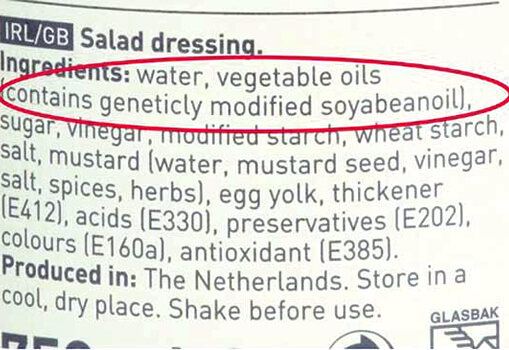
Following the defeat of Proposition 37 last November, Sen. Barbara Boxer is proposing federal legislation that would require labeling for genetically-modified foods nationwide.

California voters failed to pass the measure last year, which would have made the state the first to require labeling for genetically-modified foods.

But Boxer is getting wide-ranging support from chefs and restaurateurs in the Bay Area.

View the original article here: Sen. Boxer seeks nationwide labeling of genetically modified foods

Ag biotech’s new secret weapon: Moms

The following is an edited excerpt.

Betsie Estes is a mother of two young kids who lives in suburban Chicago. Last week, Estes was in the audience at BIO, the annual biotechnology industry conference in Chicago.

After the gathering, Estes jotted a few thoughts on her blog

“There’s a pervasive thought that the people who are anti-GMO are operating from a purely altruistic place,” she wrote. “But make no mistake, just as there is big money in biotech, there is big money in opposing the technology. Entire brands, both corporate and personal, have been developed around the concept that GM foods are bad.”

That’s the kind of message the industry wants to hear — and it’s the Betsie Esteses of the “momosphere” who are, increasingly, being invited to convey it.

View the original article here: PR push by ag and biotech industries has a secret weapon: Moms

New stem cell book highlights the patient perspective

The following is an excerpt.

The Healing Cell, just out from Hachette Press, deals with promising stem cell therapies from the patient perspective– and that’s a good thing.

Written by Robin Smith, CEO of NeoStem  and Monsignor Tomasz Travny of the Vatican’s Pontifical Council for Culture and Max Gomez, medical correspondent for CBS New York, the book is part of the non-profit Stem for Life Foundation’s ongoing efforts to highlight the promising therapies using stem cells taken from the patient’s own body.

The Healing Cell is a positive contribution to the stem cell field–and the collected cases of the patients alone (both the ones that end happily and the ones that don’t) make it a must-have book for anyone interested in the promise of regenerative medicine.

View the original article here: New Stem Cell Book Highlights The Patient Perspective

Genetics helps determine where the H7N9 bird flu came from

The following is an excerpt.

The new H7N9 bird flu strain continues to spread across China. Currently, more than 120 cases had been reported across 10 provinces, and 24 deaths. Yet no one knows where the virus started, which hampers efforts to contain it. But a promising new antiviral drug may help tackle flu in the future.

In an attempt to find the source, Chinese labs have tested 68,000 samplessince early March. They have been taking swabs on farms and live animal markets, both from birds and the surfaces they’ve been in contact with. Only 46 of those samples, scattered across central and eastern China, carried the H7N9 virus: 44 from markets selling live poultry, one from urban racing pigeons and one from a wild pigeon. “Not one farm tested positive,” says Juan Lubroth, chief veterinary officer of the UN Food and Agriculture Organization in Rome, Italy.

Genetic differences between the samples suggest the virus has been spreading in animals for a few months. But which animals? The carriers found to date were too far apart to sustain an epidemic.

View the original article here: Where has H7N9 bird flu come from?

How do ribosomes translate RNA into proteins?

The following is an excerpt.

Machines can be large and complex. Take a car, for instance. It has an engine that allows it perform the task of driving us humans from one place to another. A single misstep or damage to one of many car parts and the machine would stop working all together. For example, a rusted car engine would prevent the car from starting, let alone moving it forward. Now consider this machine idea in biology. Just like their man-made counterparts, biological machines can be complex and large, and can perform tasks with tremendous power. ATP Synthase, for example, is a large protein machine in cells that functions by rotating itself to power its ATP (energy) molecule production. Similarly, we have ribosomes as the protein-making (translating) machines in cells. Either functioning freely in the cytoplasm or embedded within the membranes in compartments of the cell, these machines work tirelessly to make new proteins. Ribosomes in the cytoplasm of the cell are like cars, driving along the messenger RNA strand (mRNA), trailing the growing protein chain with it until it reach its final destination stop (the stop genetic code on mRNA) to finish protein synthesis (2). Found in all living organisms that make proteins, how does this machine achieve its mighty feat of a role?

View the original article here: Scicurious Guest Writer! Ribosomes: ‘Prepare to be translated’

Junk DNA and 5 other examples of human evolutionary remnants

The following is an excerpt.

People have speculated over the nature of seemingly useless physical characteristics in living things for thousands of years. It wasn’t until the late 18th and early 19th centuries, though, that the idea of vestigiality would enter the public imagination via the writings of a couple of French naturalists and pre-emptive Darwinists, Étienne Geoffroy Saint-Hilaireand Jean-Baptiste Lamarck. Darwin would, of course, go on to redefine the field of human biology some half-century later with On the Origin of Species, but it was his second book, 1871’s The Descent of Man, where he listed a number of the structures we know today as vestigial for the first time, among them the appendix, tail bone, and wisdom teeth.

View the original article here: 6 Surprising Examples of Human Vestigiality


Even if gene therapy does work, how will a stretched NHS foot the bill?

The following is an excerpt.

Gene therapy is one of those medical “breakthroughs” that has unfortunately failed to live up to expectations. Several clinical trials, usually involving inherited diseases caused by defects in single genes, have ended in failure and, in at least one case, the death of patients.

But if gene therapy proves to work, the big question is whether the NHS will be able to afford yet another new treatment, costing several thousand pounds a shot. 

View the original article here: Steve Connor: Even if gene therapy does work, how will a stretched NHS foot the bill?

Genetic mutation linked with typical form of migraine

The following is an excerpt.

A UC San Francisco-led research team has identified a genetic mutation that is strongly associated with a typical form of migraine.

In a paper published on May 1 in Science Translational Medicine, the team linked the mutation with evidence of migraine in humans, in a mouse model of migraine and in cell culture in the laboratory.

The mutation is in the gene known as casein kinase I delta (CKIdelta).

“This is the first gene in which mutations have been shown to cause a very typical form of migraine,” said senior investigator Louis J. Ptácek, a Howard Hughes Medical Institute investigator and a professor of neurology at UCSF. “It’s our initial glimpse into a black box that we don’t yet understand.”

View the original article here: Genetic Mutation Linked with Typical Form of Migraine

A forward-looking Kenya can lead the movement for global food sufficiency

The following is an excerpt.

A newly-elected government provides a country with a rare opportunity for a fresh start, and President Uhuru Kenyatta’s nomination this week of Mr Felix Kiptarus Kosgey to become Kenya’s next Cabinet Secretary for Agriculture, Livestock, and Fisheries offers our nation a remarkable opening to make a hard push for food security.

Success, however, will require President Kenyatta, Deputy President William Ruto, Mr Kosgey, and the rest of our new government to set aside the bad mistakes of the recent past and embrace biotechnology.

View the original article here: A forward-looking Kenya can lead the movement for global food sufficiency

Will genetically engineered food feed a hungry world?

The following is an excerpt.

Dick Tracy was right. So was Captain James T. Kirk and Maxwell Smart. Through their characters, they showed the world what could be possible with technology. And what was once considered pure science fiction is now a daily reality.

It makes one wonder if ol’ Dick enjoyed his breakfast cereal made with genetically engineered (GE) corn while talking into his wristwatch.

Indeed, while technology has overwhelmed the world in many ways, society has cast a leery eye toward advances in food production. And that, says Alison Van Eenennaam, University of California-Davis Extension animal genomics and biotechnology specialist, is hampering agriculture’s ability to feed an increasingly hungry world.

View the original article here: Will Genetically Engineered Food Feed A Hungry World?

Gene therapy combats heart failure, provides renewed hope for genetic medicine

b a e

The following is an excerpt.

Gene therapy may offer new hope for those with heart failure struggling to live a normal life if the first British trials in humans, announced on Tuesday, are successful.

The two trials, involving about 250 patients, will look at whether the pioneering treatment is safe, reduces emergency admissions and improves quality and length of life.

Over a decade ago gene therapy, in which working copies of missing or faulty genes are inserted into the human body, was widely viewed as a panacea, but until now it has failed to deliver on its early promise. Scientists hope the two heart failure trials will be a turning point for the technique, as well as benefitting people with a devastating condition.

Read the full article here: Pioneering gene therapy trials offer hope for heart patients

Further reading:

Why scientists and science advocates shouldn’t fight the GM-labeling movement

GMOlabel

Ramez Naam has contributed to the GLP with a two-part feature “Greener than green,” (Part I, Part II). In this guest post at the Collide-a-Scape blog, he makes the argument that — despite the scientific evidence for the safety of genetically modified crops — fighting the GM-labeling movement is only fanning the flames of fear and consumer mistrust. Excerpt below.

I believe in science, and I believe that science tells us that our currently approved GMOs are safe for humans and good for the planet, and that next generation GMOs will be even better.

So why label them?

The short answer is this: by fighting labeling, we’re feeding energy to the opponents of GMOs.  We’re inducing more fear and paranoia of the technology, rather than less.  We’re persuading those who might otherwise have no opinion on GMOs that there must be something to hide, otherwise, why would we fight so hard to avoid labeling?

Read the full post here: Why GMO Supporters Should Embrace Labels

Additional resources:

Tanzania: Biotechnology to increase cotton production

The following is an excerpt.

Recently, the Ministry of State in the Vice-President’s Office (Environment) convened a meeting for stakeholders in the science community to deliberate on how crop genetic engineering can be used in the interest of agriculture and the local people in general.

At the meeting some stakeholders had concerns on whether there is conclusive research findings that show genetically engineered crops have no harm on human beings.

The same week, a renowned Harvard University scholar, Prof Calestous Juma visited East Africa and said biotechnology and genetic engineering have the potential to do for agriculture, what mobile technology has done for the communications sector in Africa.

View the original article here: Tanzania: Biotechnology – Cotton Production Set to Increase

London School of Economics enters biotech crop discussion

The following is an excerpt.

The prestigious London School of Economics (LSE) and the Information Technology and Innovation Foundation and have entered the GMO discussion with a new report entitled “Feeding the Planet in a Warming World.”

To quote the summary:

“Even in the most ideal circumstances, diffusing existing agricultural technologies and practices is not enough to address the challenges we will face in the coming decades. In light of this, we propose several solutions.  In particular, we argue that the critical, game changing solutions for building global agricultural resilience will come only from expanding the innovation and adoption of next-generation crops and agricultural practices. We need new and improved crop varieties that use less water, deliver increased yields and improved nutrition, and have built-in means for repelling insect pests, resisting disease, and withstanding extreme heat, cold, rain and drought. Agriculture will need every existing tool in the box, as well as the development of new ones, including the use of demonstrably safe crops improved through modern biotechnology, commonly referred to as genetically modified organisms (GMOs) or transgenics…

View the original article here: LSE Enters the GMO Discussion

Biotech crops do help poor farmers

The following is an excerpt.

According to a just-released economic analysis by U.K.-based PG Economics of the impacts of genetic engineering in agriculture from 1996-2011, the net economic benefit at the farm level in 2011 was $19.8 billion, which translates to an average increase in income of $329 per acre. For the entire 16-year period, the increment in global farm income was $98.2 billion—49% of which resulted from lower pest predation and weed-related losses and improved genetics, while the remainder came from reductions in the costs of production.

In 2011, just over half of the gains in farm income accrued to farmers in developing countries, 90% of whom are cash poor and small operators.

View the original article here: GMO Crops Do Help Poor Farmers

5 points in favor of intellectual property for agricultural biotechnology

The following is an excerpt.

CropLife International has identified the top five facts everyone should know about the importance of intellectual property (IP) to agricultural innovation.

Understanding how IP protections can encourage new innovations and drive the growth of agriculture, as well as supporting effective IP rights, will be critical to meeting future food demands:

View the original article here: 5 facts about ag innovation and intellectual property

The promise, the reality, and the future of GM crops

main

A special issue of Nature News separates fact from fiction when it comes to GMOs. It’s worth a read. Here’s an excerpt from the overview:

The introduction of the first transgenic plant 30 years ago heralded the start of a second green revolution, providing food to the starving, profits to farmers and environmental benefits to boot. Many GM crops fulfilled the promise. But their success has been mired in controversy with many questioning their safety, their profitability and their green credentials. A polarized debate has left little room for consensus. In this special issue, Nature explores the hopes, the fears, the reality and the future.

Read the special issue here: GM Crops: Promise and Reality 

Young girl receives lifesaving windpipe transplant made from her stem cells

The following is an excerpt.

Hannah Warren was born without a trachea but now has one made from plastic fibers and a stew of her own stem cells.

The 2-year-old Korean Canadian has spent every day of her life in intensive care, kept alive by a tube that substituted for the windpipe that was supposed to connect her mouth to her lungs. But nearly a month after her transplant, the toddler is mostly breathing on her own and is responding to doctors and nurses.

Read the full article here: Young Girl Receives Lifesaving Windpipe Transplant Made From Her Stem Cells

Synthetic biology research community grows significantly

The following is an excerpt.

The number of private and public entities conducting research in synthetic biology worldwide grew significantly between 2009 and 2013, according to the latest version of an interactive map produced by the Synthetic Biology Project at the Woodrow Wilson International Center for Scholars.

Read the full article here: Synthetic Biology Research Community Grows Significantly