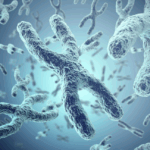
Clinician’s take on the promise of therapeutic CRISPR editing in humans

A powerful new genetics tool has the potential to correct human disease in a way that was unimaginable a few years ago.

This new technique involves gene editing — correcting mistakes in mutated DNA — to restore normal cell function. The enabling discovery is a biological system called CRISPR-Cas, which was discovered during research on bacterial immune systems.

Bacteria must defend themselves against viruses and other foreign invaders, just as we do. Most types of bacteria have the ability to cut invading, harmful virus DNA away from the bacterial host DNA.

The prospect of human clinical trials seems likely in a few years. The diseases amenable to this approach might number in the hundreds or thousands.

Read the full, original story: Pediatric research | Genetic editing promises to correct DNA mistakes

{{ reviewsTotal }}{{ options.labels.singularReviewCountLabel }}
{{ reviewsTotal }}{{ options.labels.pluralReviewCountLabel }}
{{ options.labels.newReviewButton }}
{{ userData.canReview.message }}

Related Articles

Infographic: Global regulatory and health research agencies on whether glyphosate causes cancer

Infographic: Global regulatory and health research agencies on whether glyphosate causes cancer

Does glyphosate—the world's most heavily-used herbicide—pose serious harm to humans? Is it carcinogenic? Those issues are of both legal and ...

Most Popular

ChatGPT-Image-May-7-2026-12_16_37-PM-2
Viewpoint: Are cancer rates ‘skyrocketing’ as RFK, Jr. and MAHA claims? The evidence says mostly the opposite
Screenshot-2026-04-22-at-10.46.29-AM
Viewpoint: How to counter science disinformation? Science journalist offers 12 practical tips
Screenshot-2026-04-13-at-1.39.26-PM
Viewpoint: ‘Safer for children?’ Stonyfield yogurt under fire for deceptive organic marketing

Sorry. No data so far.

glp menu logo outlined

Get news on human & agricultural genetics and biotechnology delivered to your inbox.