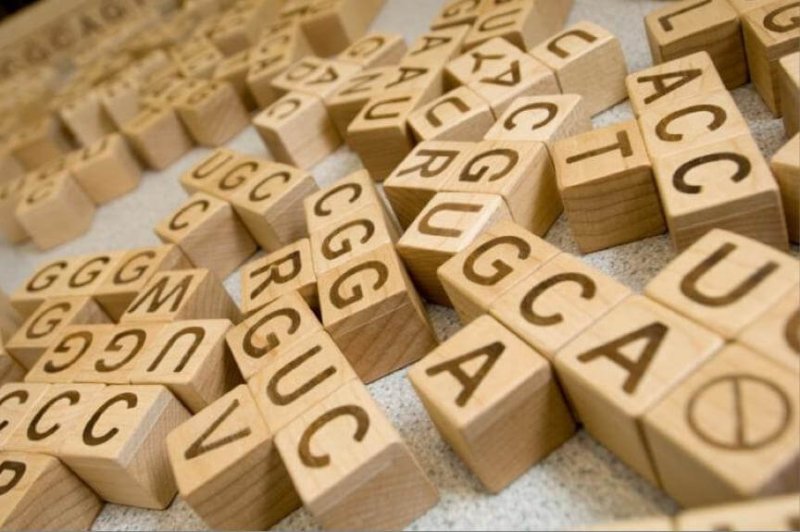
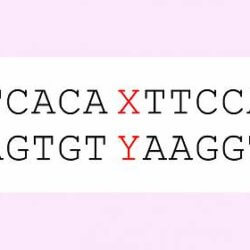
It’s not just A, T, C, and G anymore. The letters, shorthand for the four bases that make up the code of DNA — adenine, thymine, cytosine, and guanine — can add two lab-created fellows called d5SICS and dNaM to their previously exclusive club.
Until now, it wasn’t even clear it would be possible for life to work with bases other than the four we knew. Nature’s Ewen Callaway reports:
Scientists first questioned whether life could store information using other chemical groups in the 1960s. But it wasn’t until 1989 that Steven Benner, then at the Swiss Federal Institute of Technology in Zurich, and his team coaxed modified forms of cytosine and guanine into DNA molecules. In test-tube reactions, strands made of these “funny letters”, as Benner calls them, copied themselves and encoded RNA and proteins.
The new base-pairs go far beyond these funny letters, earning the title “alien” from Callaway. It took 15 years, but a team led by chemical biologist Floyd Romesberg at the Scripps Research Institute has essentially expanded the genetic alphabet from 4 letters to 6.
“What we have now is a living cell that literally stores increased genetic information,” Romesberg told Callaway.
Romesberg’s team coaxed E. coli bacteria to incorporate the ‘alien’ bases and found that the bacteria successfully replicated its DNA with the novel bases for a nearly a week, until the supply of foreign base materials supplied by the scientists ran out.


Callaway explains the next steps:
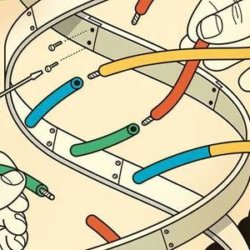
Romesberg’s group is working on getting foreign DNA to encode proteins that contain amino acids other than the 20 that together make up nearly all natural proteins. Amino acids are encoded by ‘codons’ of three DNA letters apiece, so the addition of just two foreign DNA ‘letters’ would vastly expand a cell’s ability to encode new amino acids. “If you read a book that was written with four letters, you’re not going to be able to tell many interesting stories,” Romesberg says. “If you’re given more letters, you can invent new words, you can find new ways to use those words and you can probably tell more interesting stories.”
Potential uses of the technology include the incorporation of a toxic amino acid into a protein to ensure that it kills only cancer cells, and the development of glowing amino acids that could help scientists to track biological reactions under the microscope. Romesberg’s team has founded a company called Synthorx in San Diego, California, to commercialize the work.
Read Ewen Callaway’s original article at Nature News: “First life with ‘alien’ DNA“
Additional Resources:
- “Organism reproduces with six-base DNA. Hot paper gets a cool reception,” Faye Flam | Knight Science Jouranlism Tracker
- “Scientists Add Letters to DNA’s Alphabet, Raising Hope and Fear,” Andrew Pollack | New York Times
- “Culture wars threaten synthetic biology’s future: Debate on open source versus closed door,” Kenrick Vezina | Genetic Literacy Project