Human language gene linked to early attentional multi-tasking

Neuroscientists have found that a gene mutation that arose more than half a million years ago may be key to humans’ unique ability to produce and understand speech.

Researchers from MIT and several European universities have shown that the human version of a gene called Foxp2 makes it easier to transform new experiences into routine procedures. When they engineered mice to express humanized Foxp2, the mice learned to run a maze much more quickly than normal mice.

The findings suggest that Foxp2 may help humans with a key component of learning language — transforming experiences, such as hearing the word “glass” when we are shown a glass of water, into a nearly automatic association of that word with objects that look and function like glasses, says Ann Graybiel, an MIT Institute Professor, member of MIT’s McGovern Institute for Brain Research, and a senior author of the study.
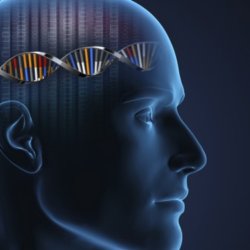

“This really is an important brick in the wall saying that the form of the gene that allowed us to speak may have something to do with a special kind of learning, which takes us from having to make conscious associations in order to act to a nearly automatic-pilot way of acting based on the cues around us,” Graybiel says.

Read the full, original story: Neuroscientists identify key role of language gene

{{ reviewsTotal }}{{ options.labels.singularReviewCountLabel }}
{{ reviewsTotal }}{{ options.labels.pluralReviewCountLabel }}
{{ options.labels.newReviewButton }}
{{ userData.canReview.message }}

Related Articles

Infographic: Global regulatory and health research agencies on whether glyphosate causes cancer

Infographic: Global regulatory and health research agencies on whether glyphosate causes cancer

Does glyphosate—the world's most heavily-used herbicide—pose serious harm to humans? Is it carcinogenic? Those issues are of both legal and ...

Most Popular

Screenshot-2026-04-22-at-12.21.32-PM
Viewpoint: Why the retracted Monsanto glyphosate study doesn’t change the science—the world’s most popular herbicide is safe 
Picture1
The FDA couldn’t find a vaccine safety crisis, so it buried its own research
ChatGPT-Image-May-1-2026-11_42_59-AM-2
Viewpoint: NAD is the wellness grifters latest evidence-lite longevity fad. At least the mice are impressed.
global warming
‘Implausible’: Top climate scientists reject worst-case scenario—soaring temperatures and fast-rising sea levels
Screenshot-2026-05-21-at-12.15.17-PM
UK gene-editing milestone: Livestock barley that increases ruminant value and reduces methane emissions is first-approved CRISPR crop
vax-misinformation-main
Facts & Fallacies Podcast: Limit free speech to blunt social media misinfo?
Screenshot-2026-05-21-at-3.15.53-PM
Chiropractors may no longer be modern-day snake oil salesmen, but the benefits of their therapy are limited–at best
ChatGPT-Image-Apr-16-2026-02_56_53-PM
Financial incentives, over diagnosis, and weak oversight: Autism claims are driving up Medicare costs
ChatGPT-Image-May-12-2026-11_27_01-AM-2
AI likely to improve health care, research shows—but not for blacks and ethnic minorities
Screenshot-2026-05-20-at-5.11.17-PM
Viewpoint: No, sugar doesn’t ‘feed’ cancer — common cancer myths, debunked

Sorry. No data so far.

glp menu logo outlined

Get news on human & agricultural genetics and biotechnology delivered to your inbox.