Korea expands GMO labeling requirements

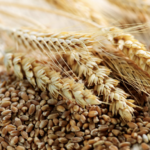
In the future, companies that use genetically modified organisms, or GMOs, as ingredients in their products will have to label them as such regardless of the amount the products contain. This decision means that the Korean government is partially accepting demands by the opposition party and civic groups – including the Citizens’ Coalition for Economic Justice (CCEJ) – to adopt a system for labeling all GMOs.

However, since the labeling requirement still only applies when genetically modified proteins remain in the final product, critics argue that the system does not adequately guarantee consumers’ right to know.

On Jan. 25, the Ministry of Food and Drug Safety announced the system is being altered to make it mandatory for all genetically modified ingredients in products to be labeled. This reflects criticism that numerous loopholes were undermining customer choice and consumers’ right to know.

Until now, companies were only required to label GMOs when they were one of the five main ingredients. As a result, it was common for companies to not label GMOs even when they were used to make soybean oil, snacks, and bread.

Read full, original article: Regardless of amount, GMO products to now be labeled, ministry says

{{ reviewsTotal }}{{ options.labels.singularReviewCountLabel }}
{{ reviewsTotal }}{{ options.labels.pluralReviewCountLabel }}
{{ options.labels.newReviewButton }}
{{ userData.canReview.message }}

Related Articles

Infographic: Global regulatory and health research agencies on whether glyphosate causes cancer

Infographic: Global regulatory and health research agencies on whether glyphosate causes cancer

Does glyphosate—the world's most heavily-used herbicide—pose serious harm to humans? Is it carcinogenic? Those issues are of both legal and ...

Most Popular

Screenshot-2026-05-01-at-1.29.41-PM
Viewpoint: What happens when whole grains meet modern food manufacturing? Labels don’t tell the whole story.
S
As vaccine rejectionism spreads, measles may be taking a more dangerous turn
Screenshot 2026-05-06 at 2.56
Singularity crisis ahead? Can super babies save us from rogue AI geniuses?
Screenshot-2026-05-06-at-2.07.43-PM
Manufacturing a conspiracy: The timeline of how  the White House embraced the fringe claim that scientists are being mysteriously murdered
Screenshot-2026-03-13-at-12.14.04-PM
The FDA wants to make many popular prescription drugs OTC—a great idea. Here’s why it’s unlikely to happen
Screenshot-2026-04-20-at-2.26.27-PM
Viewpoint — Food-fear world: The latest activist scientists campaign: Cancer-causing additives
Screenshot-2026-04-30-at-2.19.37-PM
5 myths about summer dehydration that could damage your health — or even kill you
Screenshot-2026-04-03-at-11.15.51-AM
Paraben panic: How a flawed study, media hype, and chemophobia convinced the public of the danger of one of the safest classes of preservatives
Screenshot-2026-05-01-at-11.56.24-AM
‘Science moves forward when people are willing to think differently’: Memories of DNA maverick Craig Venter
ChatGPT-Image-May-6-2026-03_41_05-PM
‘Protecting the integrity of science’: Kennedy’s FDA blocks release of taxpayer-funded studies finding COVID and shingles vaccines safe
glp menu logo outlined

Get news on human & agricultural genetics and biotechnology delivered to your inbox.