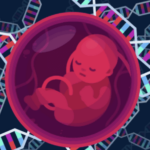
Singularity crisis ahead? Can super babies save us from rogue AI geniuses?

Credit: Columbia University

Mathematician Tsvi Benson-Tilsen once worked at the Peter Thiel–funded Machine Intelligence Research Institute, where he was one of many experts tasked with figuring out how to ensure AI doesn’t eventually destroy humankind. After seven years, he concluded that he’s not smart enough to figure it out. As of today, he doesn’t think anybody is.

The 33-year-old is racing against a threat known as “the singularity,” the moment when superintelligent machines, having surpassed the feeble cognitive abilities of humans, begin to act in ways contrary to the interests of humanity. “If it’s smarter than you, you cannot tell what’s dangerous necessarily, and you cannot tell what it’s thinking, because it could hide its thoughts,” Benson-Tilsen explains.

Even the sector’s leading thinkers don’t really comprehend how their systems work and thus cannot guarantee their models won’t try to deceive, overthrow, or even kill us.

Follow the latest news and policy debates on sustainable agriculture, biomedicine, and other ‘disruptive’ innovations. Subscribe to our newsletter.

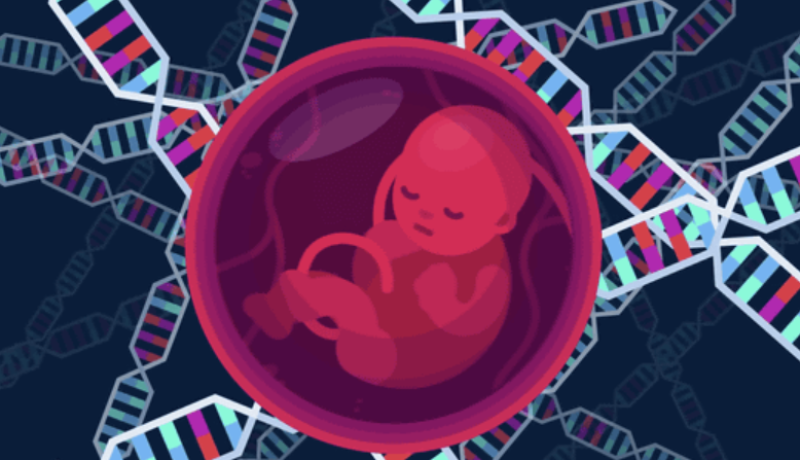
In Benson-Tilsen’s ideal tomorrow, … some of the wunderkinds optimized for superior intelligence will have quashed the threat of advanced AI, and the technology needed to have healthier and smarter babies will be widely accessible and affordable. 

This is an excerpt. Read the original post here

{{ reviewsTotal }}{{ options.labels.singularReviewCountLabel }}
{{ reviewsTotal }}{{ options.labels.pluralReviewCountLabel }}
{{ options.labels.newReviewButton }}
{{ userData.canReview.message }}

Related Articles

Infographic: Global regulatory and health research agencies on whether glyphosate causes cancer

Infographic: Global regulatory and health research agencies on whether glyphosate causes cancer

Does glyphosate—the world's most heavily-used herbicide—pose serious harm to humans? Is it carcinogenic? Those issues are of both legal and ...

Most Popular

Screenshot 2026-05-06 at 2.56
Singularity crisis ahead? Can super babies save us from rogue AI geniuses?
Screenshot-2026-03-13-at-12.14.04-PM
The FDA wants to make many popular prescription drugs OTC—a great idea. Here’s why it’s unlikely to happen
Screenshot-2026-04-20-at-2.26.27-PM
Viewpoint — Food-fear world: The latest activist scientists campaign: Cancer-causing additives
Screenshot-2026-05-01-at-11.56.24-AM
‘Science moves forward when people are willing to think differently’: Memories of DNA maverick Craig Venter
Screenshot-PM-24
Viewpoint: The herbicide glyphosate isn’t perfect. Banning it would be far worse.
images
The never-ending GMO debate: Pros and cons
Screenshot-2026-04-30-at-2.19.37-PM
5 myths about summer dehydration that could damage your health — or even kill you
Screenshot-2026-04-03-at-11.15.51-AM
Paraben panic: How a flawed study, media hype, and chemophobia convinced the public of the danger of one of the safest classes of preservatives
79d03212-2508-45d0-b427-8e9743ff6432
Viewpoint: The Casey Means hustle—Wellness woo opportunism dressed up as medical wisdom
Screenshot-2026-05-01-at-1.29.41-PM
Viewpoint: What happens when whole grains meet modern food manufacturing? Labels don’t tell the whole story.
Screenshot-2026-05-06-at-2.07.43-PM
Manufacturing a conspiracy: The timeline of how  the White House embraced the fringe claim that scientists are being mysteriously murdered
glp menu logo outlined

Get news on human & agricultural genetics and biotechnology delivered to your inbox.