House Republicans propose voluntary non-GMO food label

gmo labeling balint radu jpg

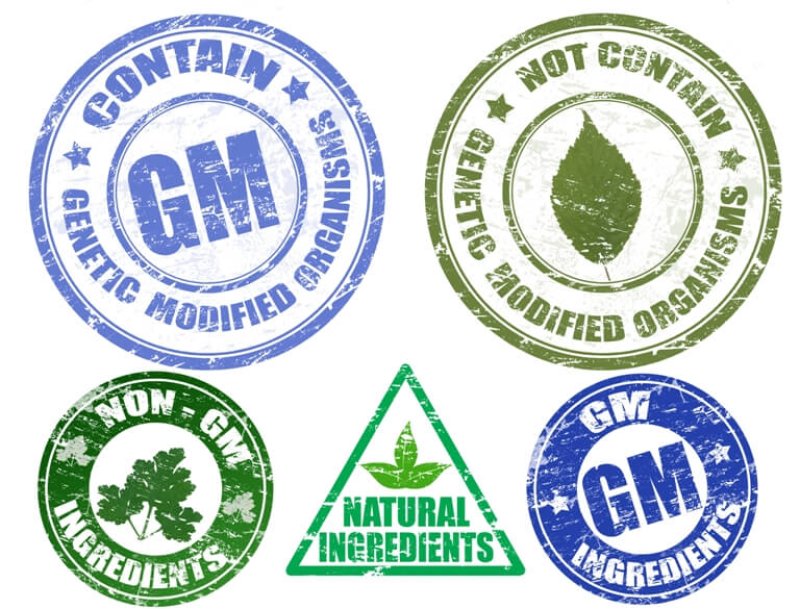
Inspired by the popular “USDA organic” label, House Republicans are proposing a new government certification for foods free of genetically modified ingredients.

The idea is part of an attempt to block mandatory labeling of foods that include genetically modified organisms, or GMOs. The certification would be voluntary, says Rep. Mike Pompeo, R-Kan., who is including the idea in legislation he is introducing Wednesday.

Pompeo says a government-certified label would allow companies that want to advertise their foods as GMO-free to do so, but it would not be mandatory for others. The food industry, which backs Pompeo’s bill, has strongly opposed individual state efforts to require labeling, saying labels would be misleading because GMOs are safe. The bill would also override any state laws that require the labeling.

Under the legislation, the Agriculture Department would oversee the certification, as it does with organics. But while organic foods must be USDA-certified to carry any organic label on a package, the department’s non-GMO certification would not be required for every food that bills itself as free of genetically modified ingredients. The idea is that foods the department certifies as free of GMOs would have a special government label that companies could use to market their foods. User fees would pay for the program.

The bill also steps up FDA review of genetically modified foods. Currently, food companies must comply with FDA guidance if they want to claim that foods are free of engineered ingredients.

Read full, original article: Bill would create organic-type labels for nonmodified foods

{{ reviewsTotal }}{{ options.labels.singularReviewCountLabel }}
{{ reviewsTotal }}{{ options.labels.pluralReviewCountLabel }}
{{ options.labels.newReviewButton }}
{{ userData.canReview.message }}

Related Articles

Infographic: Global regulatory and health research agencies on whether glyphosate causes cancer

Infographic: Global regulatory and health research agencies on whether glyphosate causes cancer

Does glyphosate—the world's most heavily-used herbicide—pose serious harm to humans? Is it carcinogenic? Those issues are of both legal and ...

Most Popular

ChatGPT-Image-Mar-10-2026-01_39_01-PM
Viewpoint—“Miracle molecule” debunked: Why acemannan supplements don’t work
ChatGPT-Image-Jul-7-2026-12_01_35-PM
Viewpoint: 21 worthless wellness trends inspired by RFK, Jr.’s ill-informed MAHA followers that can harm or even kill you.
ChatGPT-Image-Jun-25-2026-12_23_17-PM
No, Bill Gates did not secretly engineer ticks to promote veganism
Screenshot-2026-07-06-at-12.30.23-PM
2,300 endangered species: Controversial de-extinction company Colossal Biosciences joins U.S. effort to preserve their DNA
ChatGPT-Image-Jul-9-2026-10_36_24-AM
Deeply-flawed ivermectin study revives scientifically unsupported miracle cancer drug myth
ChatGPT-Image-Jul-1-2026-03_33_49-PM
‘Alternative’ cancer treatments that could kill you
Screenshot 2026-07-08 at 10.13
What happens when a pro-life congresswoman needs an abortion?
Screenshot-2026-07-09-at-9.48.49-AM
Do cold plunges and contrast therapy work?
ChatGPT-Image-Jul-8-2026-04_10_51-PM-1
Kennedy-founded Children's Health Defense doubles down on support for Idaho mother charged by a grand jury with murdering her twins last year after claiming vaccines killed them
ChatGPT-Image-Jun-30-2026-10_27_31-AM
Viewpoint: Europe clears the way for gene-edited crops — but fear-driven restrictions still slow their full potential

Sorry. No data so far.

glp menu logo outlined

Get news on human & agricultural genetics and biotechnology delivered to your inbox.