What’s behind knee jerk concerns about glyphosate, GMOs?

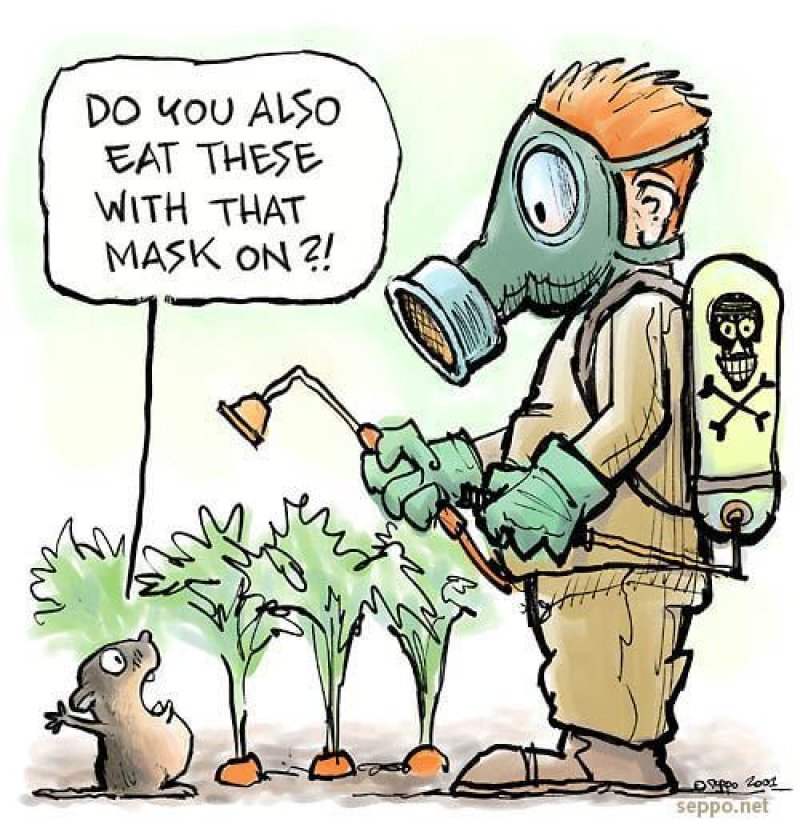
monsanto eat with mask on

The world’s most commonly sprayed herbicide—glyphosate—is currently trapped in a familiar media cycle. The cycle goes something like this: 1) a report delivers bad news—the International Agency for Research on Cancer recently classified glyphosate as a probable carcinogen; 2) big media voices stoke outrage—Mark Bittman wrote that glyphosate should be taken off the market; 3) others try to offer perspective—Grist reminded us that “the list of things that probably causes cancer includes … just about everything”; and, finally, 4) a concerned public becomes embroiled in a comment-section melee on social media.

This last venue matters, if only because it’s where the rhetoric of food reform is ultimately forged. It’s also a place where cooler heads rarely prevail. This is especially true when the topic is glyphosate, the active ingredient in Roundup, an herbicide produced by Monsanto to control weeds for genetically engineered crops. Glyphosate’s association with genetic modification dooms it to castigation. Despite the fact that toxicological experts downplayed the dangers of glyphosate in the wake of the IARC report, the bottom line for citizen experts is that, as Bittman writes, we’re being used “as guinea pigs for the novel chemicals that industry develops.”

How is it that so many highly intelligent people can so quickly agree with such a simplistic position? How is it that the opponents of genetic engineering—a process that Bittman himself admits appears safe—have so successfully demonized the plant breeding technique with so little evidence to do so? From whence comes this knee-jerk cynicism?

The simplest—and least interesting—answer is willful distortion. This kind of thing is, of course, commonplace when it comes to controversial subjects, so one need not dwell too much on hucksters who capitalize on the public’s genetic illiteracy to profit from a fear-driven and distorted agenda.do

Read full, original article: ‘Ban GMOs: That Shit Ain’t Food’

{{ reviewsTotal }}{{ options.labels.singularReviewCountLabel }}
{{ reviewsTotal }}{{ options.labels.pluralReviewCountLabel }}
{{ options.labels.newReviewButton }}
{{ userData.canReview.message }}

Related Articles

Infographic: Global regulatory and health research agencies on whether glyphosate causes cancer

Infographic: Global regulatory and health research agencies on whether glyphosate causes cancer

Does glyphosate—the world's most heavily-used herbicide—pose serious harm to humans? Is it carcinogenic? Those issues are of both legal and ...

Most Popular

Screenshot-2026-04-22-at-12.21.32-PM
Viewpoint: Why the retracted Monsanto glyphosate study doesn’t change the science—the world’s most popular herbicide is safe 
Picture1
The FDA couldn’t find a vaccine safety crisis, so it buried its own research
ChatGPT-Image-May-1-2026-11_42_59-AM-2
Viewpoint: NAD is the wellness grifters latest evidence-lite longevity fad. At least the mice are impressed.
global warming
‘Implausible’: Top climate scientists reject worst-case scenario—soaring temperatures and fast-rising sea levels
vax-misinformation-main
Facts & Fallacies Podcast: Limit free speech to blunt social media misinfo?
ChatGPT-Image-Apr-16-2026-02_56_53-PM
Financial incentives, over diagnosis, and weak oversight: Autism claims are driving up Medicare costs
Screenshot-2026-05-21-at-12.15.17-PM
UK gene-editing milestone: Livestock barley that increases ruminant value and reduces methane emissions is first-approved CRISPR crop
Screenshot-2026-05-21-at-3.15.53-PM
Chiropractors may no longer be modern-day snake oil salesmen, but the benefits of their therapy are limited–at best
ChatGPT-Image-May-12-2026-11_27_01-AM-2
AI likely to improve health care, research shows—but not for blacks and ethnic minorities
red-meat-cancer-connection-1030x749
Meat sits atop the U.S.-RFK, Jr. food pyramid. How healthy is the carnivore diet?
glp menu logo outlined

Get news on human & agricultural genetics and biotechnology delivered to your inbox.