Former UK Greenpeace chief says anti-GMO campaigners “morally unacceptable”

max greenpeace

Campaigning against the use of Genetically Modified crops in Britain is “morally unacceptable”, according to the former head of the UK arm of protest group Greenpeace.

Stephen Tindale accused green groups like Greenpeace of “putting ideology before the need for humanitarian action” by repeatedly targeting the development of GM crops in the UK.

GM seeds, which are made by altering their genetic material, can increase yields for farmers by introducing resistance to certain pest and diseases.

Over the past two decades European Union scientists have passed 40 crops as safe; yet only one – a GM version of maize – is grown in Spain as animal feed.

Tindale was a major critic of the GM industry when he ran Greenpeace UK from 2001 to 2005. Greenpeace International is a leading opponent of GM crops.
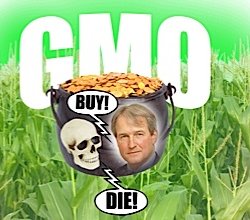

But speaking on a BBC Panorama programme, titled “GM Food – Cultivating Fear”, on Monday night, he said: “The overwhelming majority of scientists think that it is safe. It is in my view unacceptable, morally unacceptable to stand out against these new technologies.”

He continued: “I worry for Greenpeace and the other green groups because they could, by taking such a hard line on GM, they could be seen to be putting ideology before the need for humanitarian action.”

The GLP aggregated and excerpted this blog/article to reflect the diversity of news, opinion and analysis. Read full, original post: Campaigning against GM crops is ‘morally unacceptable’, says former Greenpeace chief

Related Articles

Infographic: Global regulatory and health research agencies on whether glyphosate causes cancer

Infographic: Global regulatory and health research agencies on whether glyphosate causes cancer

Does glyphosate—the world's most heavily-used herbicide—pose serious harm to humans? Is it carcinogenic? Those issues are of both legal and ...

Most Popular

Strawberry Clamshell with Warning Sticker
Viewpoint: Activists hype ‘dangerous level’ of pesticide residues in Driscoll berries: Separating health concerns from fear-mongering
ChatGPT-Image-Mar-10-2026-01_39_01-PM
Viewpoint—“Miracle molecule” debunked: Why acemannan supplements don’t work
Generations United for Immunization
Police raid Guinea-Bissau offices of RFK Jr.-backed vaccine researchers, seize hepatitis B doses
Nutrition and Supplements Infinity Collage
Drugs and supplements can extend life and five other longevity myths
Screenshot-2026-10-20-at-2.25.49-PM
RFK Jr.’s anti-vaccine obsession and fear of MAHA derailed bird flu containment plan
Rustic Skillet of Raw Brains
‘Weird food’? Testicle- and brain-eating, supplement-gulping MAHA health food enthusiasts defend their ‘natural’ diets
Magnifying Glass Highlights NIH Logo
Latest Trump administration proposal to change NIH research grant system draws scientists’ ire
Golden-GM-Emblem-with-EU-Stars
As Europe inches forward in its embrace of gene-edited crops, hopes abound that opposition to GMOs might fade
png_cheese_Raw_milk
100% raw milk, 100% misguided: As MAHA-fueled demand for unpasteurized milk soars, American Academy of Pediatrics renews call for a ban on its sale and distribution
Screenshot 2026-10-16 at 5.38
PFAS in Agriculture: Science, Uncertainty, and Risk Communication
Screenshot-2026-10-19-at-12.04.51-PM
Victims of their own success: As memories of killer diseases fade, vaccine rejectionism soars
Government Briefing on Autism Trends
Viewpoint: ‘Statistical murder’: Kennedy’s expanding record of “duplicity and mendacity”
Screenshot-2026-10-20-at-10.53.36-AM
World Health Organization calls Kennedy- and CDC-backed Guinea-Bissau hepatitis B vaccine study designed to ‘prove’ the danger of vaccines “unethical”
Serene Mature Woman in Abstract Waves
Testosterone’s growing appeal to women: It anecdotally mildly improves sex life, but are there any other potential benefits—or red flags?
glp menu logo outlined

Get news on human & agricultural genetics and biotechnology delivered to your inbox.