What really sets humans apart form other species?

The GLP aggregated and excerpted this blog/article to reflect the diversity of news, opinion and analysis.ย 

Ever since Darwin, the researchers who study human evolutionย have been preoccupied with the characteristics that set humans apart from the other great apes: our large brains, bipedalism, hunting, abstract thought, and the use of technology.

Itโ€™s long been assumed that these features came bundled together, according to William Kimbel, Director of Arizona State Universityโ€™s Institute of Human Origins. Kimbel conducts fieldwork studies in East Africa in search of the origins of our species, and he thinks that shedding the assumption of the โ€œpackage dealโ€ can open up newย clues about the origin of our lineage.

Without the benefit of a fossil record, itโ€™s reasonable to think that these featuresย evolved in tandem, but โ€œitโ€™s a model that remains firmly entrenched in paleoanthropology today,โ€ Kimbel told Ars Technicaโ€”even though a picture is starting to emerge that looks very different.
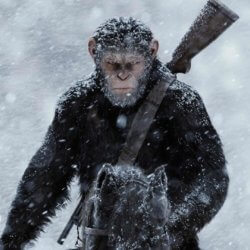
As one intriguing fossil discovery after another has made headlines over the past year, our understanding of our speciesโ€™ history has started to shift, and a new story is emerging: one where our extinct relatives share many of the traits we had thought were uniquely human, and our own species is not that special after all.

One of the biggest question marks hanging over our understanding of human evolution has been the emergence of the genus Homo. This is the group of hominids (great apes) that includes our own species, Homo sapiens, as well as other, extinct species of human like Neanderthals, Homo erectus,ย and Homo habilis.

Read full, original post:ย Humans aren’t so special after all: The fuzzy evolutionary boundaries ofย Homo sapiens

{{ reviewsTotal }}{{ options.labels.singularReviewCountLabel }}
{{ reviewsTotal }}{{ options.labels.pluralReviewCountLabel }}
{{ options.labels.newReviewButton }}
{{ userData.canReview.message }}

Related Articles

Infographic: Global regulatory and health research agencies on whether glyphosate causes cancer

Infographic: Global regulatory and health research agencies on whether glyphosate causes cancer

Does glyphosateโ€”the world's most heavily-used herbicideโ€”pose serious harm to humans? Is it carcinogenic? Those issues are of both legal and ...

Most Popular

Picture1
The FDA couldnโ€™t find a vaccine safety crisis, so it buried its own research
Screenshot-2026-04-22-at-12.21.32-PM
Viewpoint: Why the retracted Monsanto glyphosate study doesnโ€™t change the scienceโ€”the worldโ€™s most popular herbicide is safeย 
ChatGPT-Image-May-7-2026-12_32_36-PM
Viewpoint: The state of U.S. vaccine policy? Dismal nationally, but some states are stepping up.
_20250221_nib_rfk_trump
Viewpoint: 'Crisis of public trust': Autism support community shocked RFK continues to peddle false claims about the danger of vaccines
placebo
Viewpoint โ€” Alternative medicine and the placebo effect: Selling a reassuring illusion of health
ChatGPT-Image-May-18-2026-01_45_05-PM-2
Newest hantavirus conspiracy: Online disinformation turns outbreak into latest ivermectin grift
Screenshot-2026-05-19-at-11.23.34-AM
West-originated vaccine disinformation sparks murders of health care workers across Africa
ChatGPT-Image-May-18-2026-12_06_18-PM-2
Defying death: The immortality movement goes mainstream
Screenshot-2026-04-13-at-1.39.26-PM
Viewpoint: โ€˜Safer for children?โ€™ Stonyfield yogurt under fire for deceptive organic marketing
Screenshot-2026-04-22-at-10.46.29-AM
Viewpoint: How to counter science disinformation? Science journalist offers 12 practical tips
Defense_Secretary_Ash_Carter_tours_the_Microsoft_Cybercrime_Center_in_Seattle_March_3_2016
How criminals are using AI to target social media users and steal their money and confidential data
glp menu logo outlined

Get news on human & agricultural genetics and biotechnology delivered to your inbox.