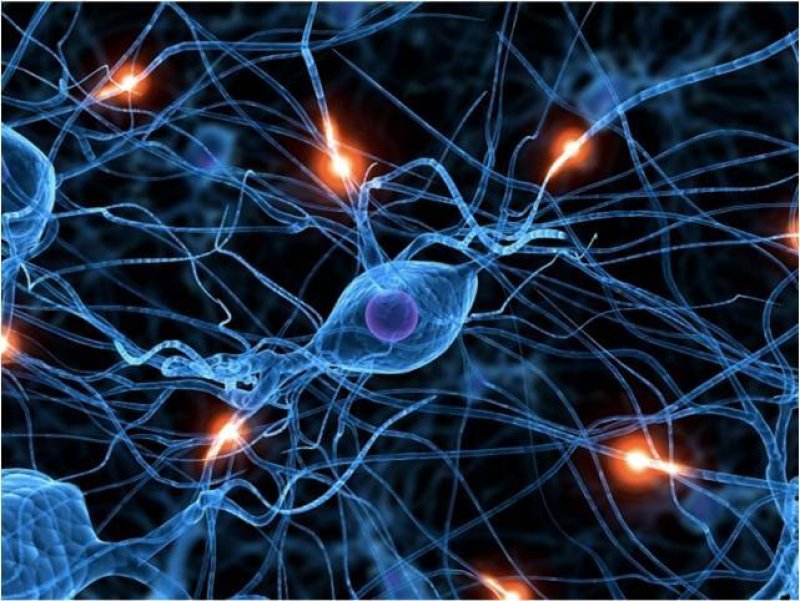
When faced with questions about brain function, the conversation can ultimately be reduced to neuroscience and the related neurobiological/neurochemical structures and effects going on. This has led to fascinating avenues of new study where, for example, the percepts of a thought or motor action can be seen to occur micro- or milliseconds before a study subject reports a thought or feeling or motor action.
Similarly, correlations between what we see in functional magnetic resonance imaging studies (fMRI) and the thoughts or behaviors that manifest give early indications of what brain regions seem to be most active during certain functions.
What is very new in the field, however, is the ability to actually ‘see’ the brain’s neurons communicating by electrical signals. For decades, students in the field learning about neuroscience have been (correctly) taught about inhibitory or excitatory post-synaptic potentials (IPSPs or EPSPs) which are the basis for brain function. These actually refer to voltage potentials, and are the fundamental way that electroencephalograms (EEGs) monitor brainwave activity – they are detecting and recording changes in electrical activity over time.
Now what these signals tell us are an overall picture of encephalic activity in-aggregate; the signals we monitor in this way are the net activity of inhibitory and excitatory synaptic discharges over a period of time. What we don’t see, and until this recent line of research – have never seen – is the actual propagation of impulse signals from synapses through dendrites, and out to neighboring neurons.
It has been possible in the past to measure voltage changes at neurons and synaptic junctions (called ‘patch clamping’), but the difference between the old measurements and this new picture is like previously putting a voltage meter on a line at your house, and measuring if there is a current flowing or not – compared with now being able to see through your walls and actually being able to view (over 10-microsecond timeframes) the flow of current to different rooms and outlets in real time.
Check out this video via New Scientist here, produced by the researchers (Hochbaum et al.). Their new research involved using genes which makes the neurons fluoresce when they fire – as the electrical impulse moves from the synapse to the neuronal branches, the surface glows.




Therapeutic potential
Clearly, being able to do side-by-side comparison of neuronal activity between healthy brain tissue and diseased brain tissue would allow for new avenues for treatment advances; And indeed, current prospective research is investigating the potential of this visualization-to-therapy model for neurodegenerative diseases like ALS.
Further research will be done on epilepsy, in order to investigate the underlying causes of synchronized synaptic firing, which is the hallmark of the condition.
Additionally, this new technology could be used as a screening technology for new drug treatments which may augment (or potentially impair) neuron activity, or for that matter, heart muscle function (because that, too is mediated by electrical impulses): Irregular heart muscle firing (proarrhythmia) can be induced in vitro (in a lab dish) by certain drugs which are associated with heart risk; This new electrical impulse visualization technology could be used to screen existing drugs or new drug candidates to see how they behave in a proxy condition (in vitro test) before introducing them to wider human trials.
Ben Locwin, Ph.D., MBA is a contributor to the Genetic Literacy Project and is an author of a wide variety of scientific articles for books and magazines. He is also a researcher and consultant for a variety of industries including behavioral and psychological, food and nutrition, pharmaceutical, and academic. Follow him at @BenLocwin.