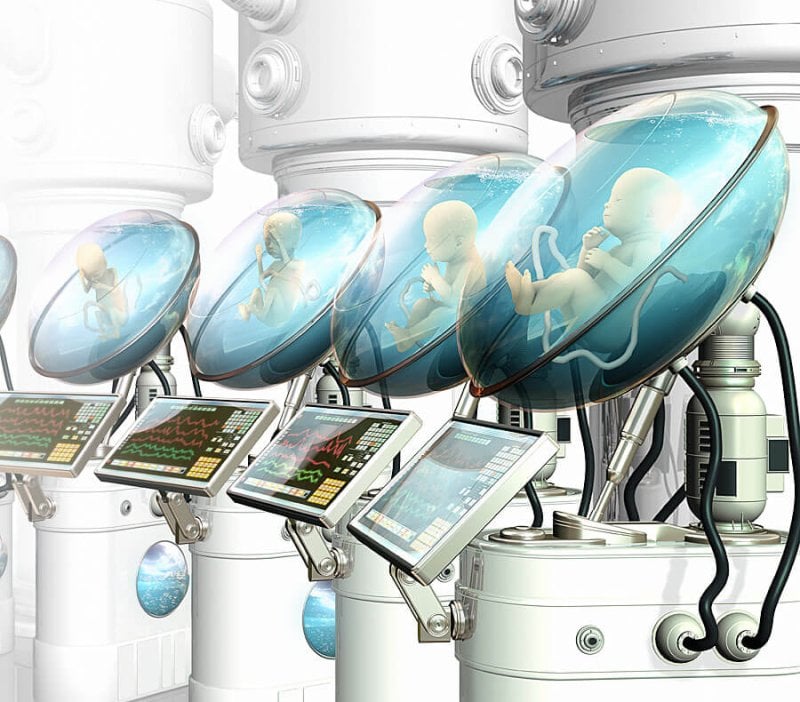
Artificial wombs: Will they become possible and what does it mean for reproductive rights?

artificial womb

The GLP aggregated and excerpted this blog/article to reflect the diversity of news, opinion and analysis. 

Hold onto your ovaries folks, womb transplants are here. Ten UK women have been approved for the procedure, and babies born from donated uteruses could crawl among us as early as next year.

Leaving aside the ethical considerations of womb transplantation, our ability to gestate humans in novel locations is developing so quickly that it’s worth looking ahead to the next development: artificial wombs, or ectogenesis.

What would it mean for the uterus – and therefore, the biological necessity of women’s reproductive labour – if it were to become obsolete?

Unlike other contested biotechnologies like human cloning, the demand for surrogacy speaks to a natural community of probable supporters for ectogenesis.

Not having to contend with the biological limitations of ordinary pregnancy would be a gift to those suffering from infertility, gay men, trans women, and many other groups whose longing for children is circumscribed to varying extents. Our cultural understanding of family grows ever more inclusive, and access to reproductive technology could play a large role in supporting that pluralism.

Nevertheless, growing humans outside women’s bodies raises the prospect of new forms of surveillance, control and coercion.

Our most accepted rationale for abortion rests on the pregnant person’s right to control over her own body – what we call bodily autonomy. So what happens when it’s possible to extract a foetus from a uterus without killing it, and place it in the WombPro9000 for the remaining gestational period?

Read full, original post: Feminists: get ready: pregnancy and abortion are about to be disrupted

{{ reviewsTotal }}{{ options.labels.singularReviewCountLabel }}
{{ reviewsTotal }}{{ options.labels.pluralReviewCountLabel }}
{{ options.labels.newReviewButton }}
{{ userData.canReview.message }}

Related Articles

Infographic: Global regulatory and health research agencies on whether glyphosate causes cancer

Infographic: Global regulatory and health research agencies on whether glyphosate causes cancer

Does glyphosate—the world's most heavily-used herbicide—pose serious harm to humans? Is it carcinogenic? Those issues are of both legal and ...

Most Popular

ChatGPT-Image-Mar-10-2026-01_39_01-PM
Viewpoint—“Miracle molecule” debunked: Why acemannan supplements don’t work
ChatGPT-Image-Jun-25-2026-12_23_17-PM
No, Bill Gates did not secretly engineer ticks to promote veganism
ChatGPT-Image-Jul-7-2026-12_01_35-PM
Viewpoint: 21 worthless wellness trends inspired by RFK, Jr.’s ill-informed MAHA followers that can harm or even kill you.
Screenshot 2026-07-08 at 10.13
What happens when a pro-life congresswoman needs an abortion?
Screenshot-2026-07-06-at-12.30.23-PM
2,300 endangered species: Controversial de-extinction company Colossal Biosciences joins U.S. effort to preserve their DNA
ChatGPT-Image-Jul-1-2026-03_33_49-PM
‘Alternative’ cancer treatments that could kill you
ChatGPT-Image-Jul-9-2026-10_36_24-AM
Deeply-flawed ivermectin study revives scientifically unsupported miracle cancer drug myth
ChatGPT-Image-Jun-30-2026-10_27_31-AM
Viewpoint: Europe clears the way for gene-edited crops — but fear-driven restrictions still slow their full potential

Sorry. No data so far.

glp menu logo outlined

Get news on human & agricultural genetics and biotechnology delivered to your inbox.