How much do you really want to know about your baby’s genes, health risks?

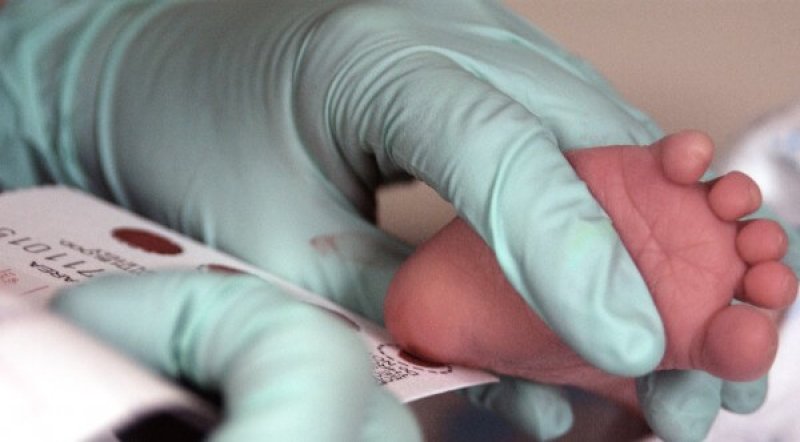
newborn screening
(Credit: U.S. Air Force Staff Sgt Eric T. Sheler, via Wikimedia Commons.)

Newborn screening is mandatory in most states…However, now that scientists have developed methods for sequencing the entire genome, what would happen if states began incorporating genome sequencing to find out more about baby’s health? What should parents learn about their baby’s genome? What shouldn’t they?

To study these questions, researchers and doctors across the country have formed a consortium called Newborn Sequencing In Genomic medicine and public HealTh, dubbed NSIGHT….

This consortium is working with parents – and conducting genomic sequencing on newborns – to develop evidence that may support guidelines for how this new technology could be effectively and appropriately incorporated into newborn screening or the care of newborns.

“Where is the boundary of parental responsibility to learn important health information about their child versus delving too far into genetic information that could take away from that child’s ability to make decisions for themselves?” said Jonathan Berg, MD, PhD, associate professor of genetics at the UNC School of Medicine…”This is one of the main bioethics questions of our time.”

As genomic technology accelerates and costs decrease, it is easy to imagine a future where newborn babies are empowered with their genetic information from the beginning of their lives.

[Study can be found here.]

The GLP aggregated and excerpted this blog/article to reflect the diversity of news, opinion, and analysis. Read full, original post: Are you ready to explore your baby’s genome?

{{ reviewsTotal }}{{ options.labels.singularReviewCountLabel }}
{{ reviewsTotal }}{{ options.labels.pluralReviewCountLabel }}
{{ options.labels.noReviewsLabel }}
{{ options.labels.newReviewButton }}
{{ userData.canReview.message }}

Related Articles

Infographic: Global regulatory and health research agencies on whether glyphosate causes cancer

Infographic: Global regulatory and health research agencies on whether glyphosate causes cancer

Does glyphosate—the world's most heavily-used herbicide—pose serious harm to humans? Is it carcinogenic? Those issues are of both legal and ...

Most Popular

Screenshot-2026-07-09-at-1.09.25-PM
Anti-vaccine myths rattle health care
ChatGPT-Image-Mar-10-2026-01_39_01-PM
Viewpoint—“Miracle molecule” debunked: Why acemannan supplements don’t work
ChatGPT-Image-Jul-10-2026-12_21_03-PM
Viewpoint: Is there new evidence that the animal deworming drug ivermectin decreases the risk of Covid and cancer? Don’t waste your money.
Picture1
Hiroshima at 81: America’s new nuclear bomb, a buried Iranian target, and a question no one wants to ask
ChatGPT-Image-Jun-25-2026-12_23_17-PM
No, Bill Gates did not secretly engineer ticks to promote veganism
leeteam
How Kennedy and his family could pocket millions from Merck’s $50 million vaccine injury settlement that he oversaw
Screenshot-2026-07-30-at-2.30.35-PM
Climate scientists claim conservative activists are promoting ‘lies’ that Europe’s summer heatwaves are far from unusual
Screenshot-2026-07-30-at-3.07.42-PM
Controversy over WNBA star Sophie Cunningham’s comment opposing trans females in women’s sports reinvigorates the culture wars

Sorry. No data so far.

glp menu logo outlined

Get news on human & agricultural genetics and biotechnology delivered to your inbox.