Campbell’s Soup works with federal agencies to craft national GMO label

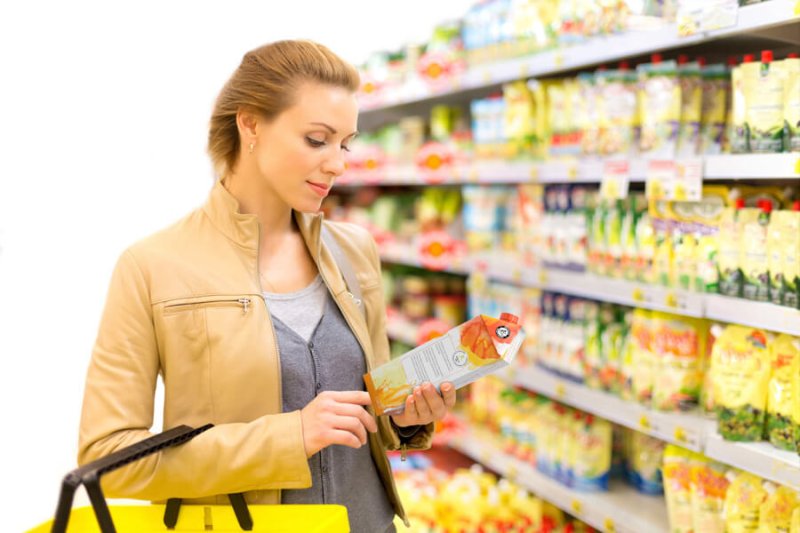
FDA Reading Food Label Woman Grocery Store Nutrition Label Changes

Drawing on extensive consumer research, The Campbell Soup Co.’s GMO disclosure labels on packs and online could serve as a model for USDA in crafting the mandatory national bioengineering label standard and other companies looking for solutions.

Legislation passed and signed into law last July [2016] … spared food manufacturers from complying with Vermont’s GMO labeling law and the inevitable patchwork of state standards that would have followed, but in exchange it mandated that within two years the US Department of Agriculture would create a “national mandatory bioengineered food disclosure standard.”

The Campbell Soup Co. is “working very closely with USDA and FDA on the best, consumer-friendly labeling for GMOs,” Jeff George, vice president of Americas research and development at Cambell Soup Co. [said]….

Campbell’s current GMO disclosure label.

He explained that qualitative and quantitative research conducted by Campbell’s … revealed that “[consumers] want the on-pack message to be concise with the opportunity for them to get deeper information and other information via other methods, like Smart Label or [Campbell’s informational website] whatsinmyfood.com.”

George said the … disclaimer that an item could be “partially produced with GMOs” was “unsatisfying to customers” and made them feel like the company was “hiding something….”

The GLP aggregated and excerpted this blog/article to reflect the diversity of news, opinion, and analysis. Read full, original post: Campbell Soup Co.’s GMO disclosure could serve as model for national label

{{ reviewsTotal }}{{ options.labels.singularReviewCountLabel }}

{{ reviewsTotal }}{{ options.labels.pluralReviewCountLabel }}
{{ options.labels.newReviewButton }}
{{ userData.canReview.message }}

Related Articles

Infographic: Global regulatory and health research agencies on whether glyphosate causes cancer

Infographic: Global regulatory and health research agencies on whether glyphosate causes cancer

Does glyphosate—the world's most heavily-used herbicide—pose serious harm to humans? Is it carcinogenic? Those issues are of both legal and ...

Most Popular

ChatGPT-Image-May-7-2026-12_32_36-PM
Viewpoint: The state of U.S. vaccine policy? Dismal nationally, but some states are stepping up.
Screenshot-2026-04-22-at-10.46.29-AM
Viewpoint: How to counter science disinformation? Science journalist offers 12 practical tips
Screenshot-2026-04-13-at-1.39.26-PM
Viewpoint: ‘Safer for children?’ Stonyfield yogurt under fire for deceptive organic marketing
the magic of mRNA
Viewpoint: Anti-vax fake ‘turbo cancer’ claims threaten cancer treatment breakthroughs
ChatGPT-Image-May-7-2026-12_16_37-PM-2
Viewpoint: Are cancer rates ‘skyrocketing’ as RFK, Jr. and MAHA claim? The evidence says mostly the opposite
Picture1-1
Cooling the planet with balloons: Could a geoengineering gamble slow global warming?
artificial intelligence brain think illustration md
Viewpoint — Digital gods and human extinction: Will we be the first species ever to design our own descendants?
Defense_Secretary_Ash_Carter_tours_the_Microsoft_Cybercrime_Center_in_Seattle_March_3_2016
How criminals are using AI to target social media users and steal their money and confidential data
ChatGPT-Image-May-7-2026-01_23_27-PM-2
Viewpoint: Will AI democratize personalized cancer treatment or fuel medical misinformation?
Screenshot-2026-04-23-at-11.00.36-AM
Regulators' dilemma: Thalidomide, Metformin, and the cost of getting drug approvals wrong
ChatGPT Image May 12, 2026, 01_21_30 PM
How big health brands are funding online medical misinformation 
glp menu logo outlined

Get news on human & agricultural genetics and biotechnology delivered to your inbox.