Cancer’s weak spots identified with CRISPR, gene editing

DNA sequence hero

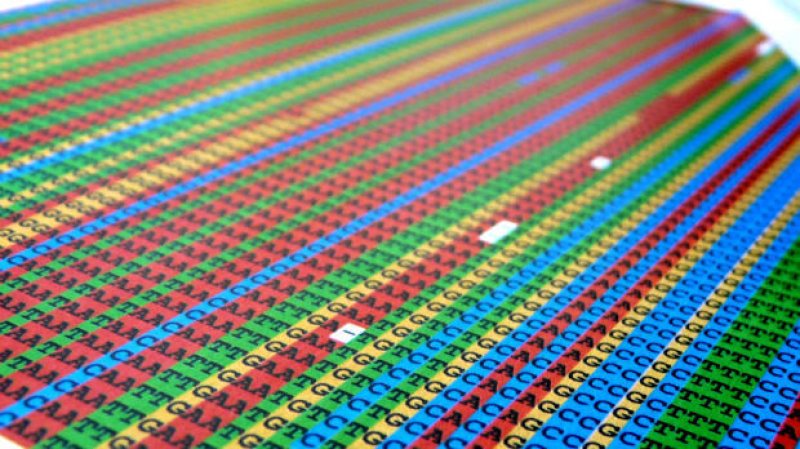
A UC San Diego-led research team has put the hot gene-editing technology CRISPR/Cas9 to a novel use, finding more than 120 new leads for cancer drugs.

With the gene editing technology, large numbers of genes can be tested simultaneously for their effect on cancer, said John Paul Shen, one of the study’s lead authors.

CRISPR has made the once cumbersome process of gene editing, faster and more precise, leading to comparisons with the impact of the word processor. But in this study, Shen and colleagues turned CRISPR on its head to selectively introduce disabling errors.

In this study, researchers looked for gene pairs that exhibit “synthetic lethality.” This is when inactivating both genes kills the cells, but if one gene in the pair is active, the cells survive. So cancers driven by a synthetic lethal mutation can be killed by inactivating the other gene in the pair, leaving normal cells unharmed.

Some existing drugs work this way, such as the ovarian cancer drug olaparib, Shen said. Sold under the brand name Lynparza, the drug was approved for in December 2014 for cancers with disabling mutations in the BRCA1 or BRCA2 genes.

[Read the full study here.]

The GLP aggregated and excerpted this blog/article to reflect the diversity of news, opinion, and analysis. Read full, original post: Gene editing used to find cancer’s genetic weak spots

For more background on the Genetic Literacy Project, read GLP on Wikipedia.

{{ reviewsTotal }}{{ options.labels.singularReviewCountLabel }}
{{ reviewsTotal }}{{ options.labels.pluralReviewCountLabel }}
{{ options.labels.newReviewButton }}
{{ userData.canReview.message }}

Related Articles

Infographic: Global regulatory and health research agencies on whether glyphosate causes cancer

Infographic: Global regulatory and health research agencies on whether glyphosate causes cancer

Does glyphosate—the world's most heavily-used herbicide—pose serious harm to humans? Is it carcinogenic? Those issues are of both legal and ...

Most Popular

Screenshot-PM-24
Viewpoint: The herbicide glyphosate isn’t perfect. Banning it would be far worse.
79d03212-2508-45d0-b427-8e9743ff6432
Viewpoint: The Casey Means hustle—Wellness woo opportunism dressed up as medical wisdom
d-b
Blocked arteries, kidney stones, nausea, constipation, fatigue: Long list of health problems caused by too much vitamin D 
ChatGPT-Image-Mar-10-2026-01_39_01-PM
Viewpoint—“Miracle molecule” debunked: Why acemannan supplements don’t work
ChatGPT-Image-Apr-30-2026-05_00_48-PM
Wellness grifter physician turned wellness influencer out as surgeon general nominee
Screenshot-2026-04-30-at-11.33.46-AM
Anti-seed-oil to anti-vax pipeline: MAHA movement spreads to teen influencers
lab grown meat research kelly schultz lehighuniversity main
Profiles of the 10 top global cultured meat companies
ChatGPT-Image-Mar-27-2026-11_27_05-AM
The myths of “process”: What science says about the “dangers’ of synthetic products and ultra-processed foods
glp menu logo outlined

Get news on human & agricultural genetics and biotechnology delivered to your inbox.