EU Food Safety Authority: Risk from pesticide residue on foods low, unlikely to pose health risk

IMG x

[Editor’s note: The following is from the EFSA’s 2015 European Union report on pesticide residues in food, published April 11, 2017.]

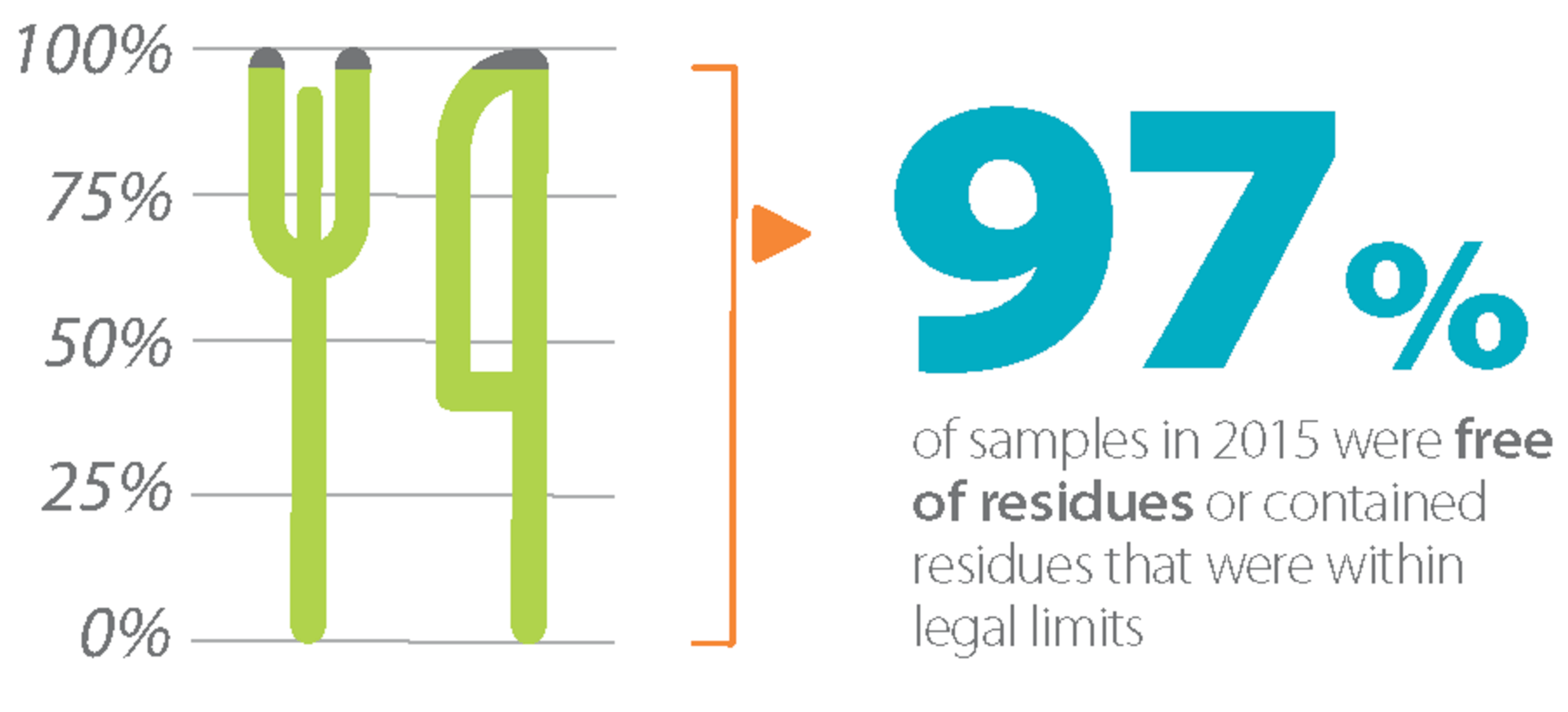
Food consumed in the European Union continues to be largely free of pesticide residues or to contain residues that fall within legal limits, new figures show. The latest monitoring report published by EFSA reveals that more than 97% of food samples collected across the EU in 2015 were within legal limits, with just over 53% free of quantifiable residues. The figures are in line with those recorded in 2014.

Overall, the results of the 2015 pesticide monitoring gave comparable results with previous years. Thus, similar to the previous year EFSA concludes that based on the results of the 2015 monitoring programmes, the long-term dietary exposure to those pesticides covered by the EU-coordinated monitoring programme for which toxicological data are available was unlikely to pose a health risk to consumers.
Screen Shot at PM

For the six pesticides without reliable toxicological assessments where quantified residues were reported, a final conclusion on possible consumer health concern cannot be derived. However, the dietary exposure estimated with conservative methodologies was found to be low.

The GLP aggregated and excerpted this blog/article to reflect the diversity of news, opinion, and analysis. Read full, original post: Pesticide residues in food: risk to consumers remains low

For more background on the Genetic Literacy Project, read GLP on Wikipedia

{{ reviewsTotal }}{{ options.labels.singularReviewCountLabel }}
{{ reviewsTotal }}{{ options.labels.pluralReviewCountLabel }}
{{ options.labels.newReviewButton }}
{{ userData.canReview.message }}

Related Articles

Infographic: Global regulatory and health research agencies on whether glyphosate causes cancer

Infographic: Global regulatory and health research agencies on whether glyphosate causes cancer

Does glyphosate—the world's most heavily-used herbicide—pose serious harm to humans? Is it carcinogenic? Those issues are of both legal and ...

Most Popular

Screenshot-2026-04-22-at-12.21.32-PM
Viewpoint: Why the retracted Monsanto glyphosate study doesn’t change the science—the world’s most popular herbicide is safe 
Picture1
The FDA couldn’t find a vaccine safety crisis, so it buried its own research
ChatGPT-Image-May-1-2026-11_42_59-AM-2
Viewpoint: NAD is the wellness grifters latest evidence-lite longevity fad. At least the mice are impressed.
global warming
‘Implausible’: Top climate scientists reject worst-case scenario—soaring temperatures and fast-rising sea levels
Screenshot-2026-05-21-at-12.15.17-PM
UK gene-editing milestone: Livestock barley that increases ruminant value and reduces methane emissions is first-approved CRISPR crop
ChatGPT-Image-Apr-16-2026-02_56_53-PM
Financial incentives, over diagnosis, and weak oversight: Autism claims are driving up Medicare costs
vax-misinformation-main
Facts & Fallacies Podcast: Limit free speech to blunt social media misinfo?
Screenshot-2026-05-21-at-3.15.53-PM
Chiropractors may no longer be modern-day snake oil salesmen, but the benefits of their therapy are limited–at best
ChatGPT-Image-May-12-2026-11_27_01-AM-2
AI likely to improve health care, research shows—but not for blacks and ethnic minorities
Screenshot-2026-05-20-at-5.11.17-PM
Viewpoint: No, sugar doesn’t ‘feed’ cancer — common cancer myths, debunked

Sorry. No data so far.

glp menu logo outlined

Get news on human & agricultural genetics and biotechnology delivered to your inbox.