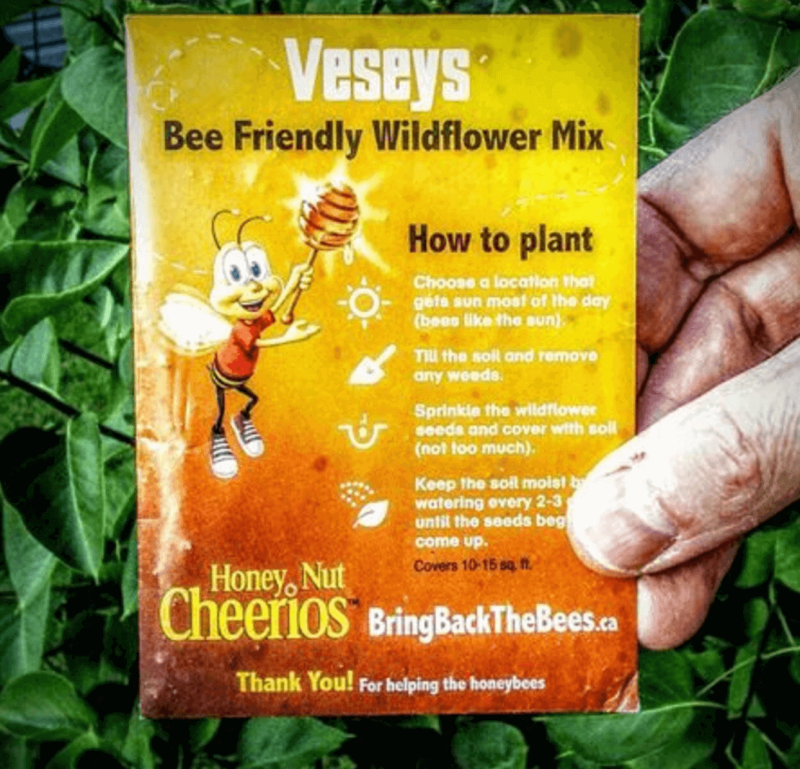
Bee experts say ditch Cheerios’ wildflower seeds, plant native ones to fight pollinator decline

Screen Shot at PM

[Editor’s note: Jenna Gallegos is a 5th year plant biology PhD student at the University of California, Davis.]

Honeybees are okay, but wild pollinators are at risk. The biggest threat is habitat loss, but climate change, insecticides, and diseases also spell trouble. Certain agricultural practices can help, and we can all do our part by planting flowers instead of keeping grassy lawns and encouraging city planners to do the same. If you got one of those wildflower packages from Cheerios, consider ditching those seeds for native ones instead.

[A]nything designed to kill insects — from commercial insecticides to organic alternatives to home remedies — certainly can’t help. On the other hand, banning specific pesticides may not be the best approach. Farmers have to control pests somehow, and alternatives might not prove any friendlier to pollinators or farmworkers.

All our experts agreed that planting wildflowers is a great idea, but you should really try to plant flowers native to your home region.

That said, General Mills has really done some great things to help pollinators. As have other corporations including Bayer, Haagen-Daz, Monsanto, and more. Their efforts should be applauded.

The GLP aggregated and excerpted this blog/article to reflect the diversity of news, opinion, and analysis. Read full, original post: 8 bee experts weigh in on pollinator decline & Cheerios’ bid to save them

For more background on the Genetic Literacy Project, read GLP on Wikipedia

{{ reviewsTotal }}{{ options.labels.singularReviewCountLabel }}
{{ reviewsTotal }}{{ options.labels.pluralReviewCountLabel }}
{{ options.labels.newReviewButton }}
{{ userData.canReview.message }}

Related Articles

Infographic: Global regulatory and health research agencies on whether glyphosate causes cancer

Infographic: Global regulatory and health research agencies on whether glyphosate causes cancer

Does glyphosate—the world's most heavily-used herbicide—pose serious harm to humans? Is it carcinogenic? Those issues are of both legal and ...

Most Popular

Screenshot-2026-04-22-at-12.21.32-PM
Viewpoint: Why the retracted Monsanto glyphosate study doesn’t change the science—the world’s most popular herbicide is safe 
Picture1
The FDA couldn’t find a vaccine safety crisis, so it buried its own research
ChatGPT-Image-May-1-2026-11_42_59-AM-2
Viewpoint: NAD is the wellness grifters latest evidence-lite longevity fad. At least the mice are impressed.
global warming
‘Implausible’: Top climate scientists reject worst-case scenario—soaring temperatures and fast-rising sea levels
Screenshot-2026-05-21-at-12.15.17-PM
UK gene-editing milestone: Livestock barley that increases ruminant value and reduces methane emissions is first-approved CRISPR crop
ChatGPT-Image-Apr-16-2026-02_56_53-PM
Financial incentives, over diagnosis, and weak oversight: Autism claims are driving up Medicare costs
vax-misinformation-main
Facts & Fallacies Podcast: Limit free speech to blunt social media misinfo?
Screenshot-2026-05-21-at-3.15.53-PM
Chiropractors may no longer be modern-day snake oil salesmen, but the benefits of their therapy are limited–at best
ChatGPT-Image-May-12-2026-11_27_01-AM-2
AI likely to improve health care, research shows—but not for blacks and ethnic minorities
Screenshot-2026-05-20-at-5.11.17-PM
Viewpoint: No, sugar doesn’t ‘feed’ cancer — common cancer myths, debunked

Sorry. No data so far.

glp menu logo outlined

Get news on human & agricultural genetics and biotechnology delivered to your inbox.