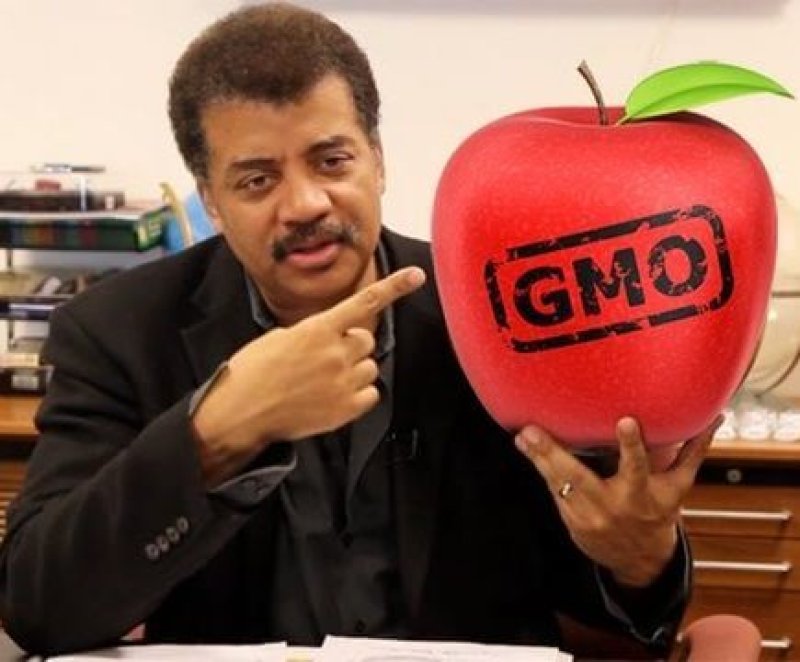
Neil deGrasse Tyson on why we need GMOs

scientist gmo e

When it comes to food … there is one topic that Tyson is constantly addressing: GMOs. Most recently, he discussed genetically modified organisms with Dr. Pamela Ronald, a plant pathologist, geneticist, and professor at UC Davis, on his StarTalk podcast.

While the entire episode is certainly worth a listen, the video segment published by Mashable provides a concise look at GMOs from a food science perspective and why both Tyson and Ronald don’t necessarily agree with the arguments surrounding GMOs.

“We’ve been modifying organisms ever since the dawn of agriculture,” says Tyson in the clip. “There are no herds of wild milk cows wandering the countryside. We cultivated, or genetically changed, corn from whatever cavemen ate to these big ol’ sticks of corn that we now munch on. This is essentially true for every food in the grocery store.”

According to Tyson and Ronald, all seed at this point has been modified through either selective breeding or crossing strains and the bigger problem facing American consumers might actually be ingesting pesticides (sprayed onto crops or sometimes even engineered into seeds) rather than genetically modified foods.

The GLP aggregated and excerpted this article to reflect the diversity of news, opinion and analysis. Read full, original post: Neil deGrasse Tyson Explains Why The Term “GMO” Is Misleading


 

{{ reviewsTotal }}{{ options.labels.singularReviewCountLabel }}
{{ reviewsTotal }}{{ options.labels.pluralReviewCountLabel }}
{{ options.labels.newReviewButton }}
{{ userData.canReview.message }}

Related Articles

Infographic: Global regulatory and health research agencies on whether glyphosate causes cancer

Infographic: Global regulatory and health research agencies on whether glyphosate causes cancer

Does glyphosate—the world's most heavily-used herbicide—pose serious harm to humans? Is it carcinogenic? Those issues are of both legal and ...

Most Popular

ChatGPT-Image-Mar-27-2026-11_47_30-AM-2
FDA’s expedited drug reviews are hailed in some quarters but other approval practices are problematic
Farmers can talk to plants
Farmers are a major source of misinformation—about farming
Screenshot-2026-05-01-at-1.29.41-PM
Viewpoint: What happens when whole grains meet modern food manufacturing? Labels don’t tell the whole story.
ChatGPT-Image-Apr-13-2026-02_20_22-PM
Viewpoint: Misinformation infodemic? Why assessing evidence is so challenging 
S
As vaccine rejectionism spreads, measles may be taking a more dangerous turn
Screenshot 2026-05-06 at 2.19
Vaccine shootout at the CDC 
What explains Homo sapiens’ huge brains? Ancient climate change played a role
Viewpoint: Internal White House documents detail administration’s strategy to undermine climate science
ChatGPT-Image-May-7-2026-11_28_04-AM-2
‘Conflict entrepreneurs’ are driving disinformation and shaping public opinion
Screenshot-2026-04-20-at-2.26.27-PM
Viewpoint — Food-fear world: The latest activist scientists campaign: Cancer-causing additives
ChatGPT-Image-May-6-2026-03_41_05-PM
‘Protecting the integrity of science’: Kennedy’s FDA blocks release of taxpayer-funded studies finding COVID and shingles vaccines safe
Screenshot-2026-05-06-at-2.07.43-PM
Manufacturing a conspiracy: The timeline of how  the White House embraced the fringe claim that scientists are being mysteriously murdered
bigstock opioids on chalkboard with rol
GLP podcast: 'Safe injection sites': enabling drug addiction or saving lives?
circular-bioeconomy-should-focus-on-sustainable-wellbeing
GLP podcast: What's wrong with 'doomsday' environmentalism? It's false.
Screenshot-2026-04-03-at-11.15.51-AM
Paraben panic: How a flawed study, media hype, and chemophobia convinced the public of the danger of one of the safest classes of preservatives
glp menu logo outlined

Get news on human & agricultural genetics and biotechnology delivered to your inbox.