Monsanto targets bee-killing varroa mites through RNA interference

bee varroa mite

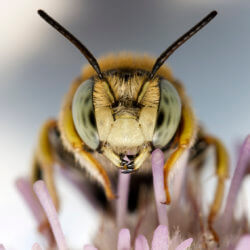
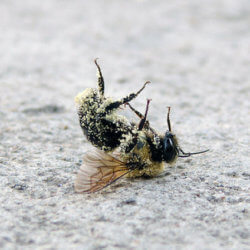
The 11th annual national survey of honey bee colonies was recently released and reports of seasonal honey bee losses across the United States continue to be of great concern. The Varroa mite – a parasite that attaches to the body of a honey bee or honey bee larva, weakening the bee’s immune system and spreading viruses – is thought to be a leading contributor to honey bee losses. Finding safe and sustainable solutions to control these dangerous parasitic mites is critical and scientists at Monsanto are researching a product that aims to control Varroa mite infestations, improving bee health and colony survival.

The product is fed to honey bees in a sugar syrup that can dial down gene activity through a natural process called RNA interference, which can suppress the mite’s gene, but is harmless to honey bees. The appeal of this approach is the ability to target just the Varroa mite, while reducing the application of chemical pesticides in honey bee colonies.

…
Field trials with the product will be conducted in 2017 throughout beekeeping areas of North America. If successful, it may take the might out of the mite.

The GLP aggregated and excerpted this article to reflect the diversity of news, opinion and analysis. Read full, original post: Scientists develop cutting edge approach to protect honey bees


Related Articles

Infographic: Global regulatory and health research agencies on whether glyphosate causes cancer

Infographic: Global regulatory and health research agencies on whether glyphosate causes cancer

Does glyphosate—the world's most heavily-used herbicide—pose serious harm to humans? Is it carcinogenic? Those issues are of both legal and ...

Most Popular

ChatGPT-Image-Mar-10-2026-01_39_01-PM
Viewpoint—“Miracle molecule” debunked: Why acemannan supplements don’t work
Diet Soda with Measuring Tape 2
Science challenges anti-soda activists: No, sodas won’t make you fat
Strawberry Clamshell with Warning Sticker
Viewpoint: Activists hype ‘dangerous level’ of pesticide residues in Driscoll berries: Separating health concerns from fear-mongering
Silhouettes Beneath the Mosquito Nets
Guinea-Bissau halts widely condemned RFK Jr.-backed vaccine trial that would have withheld life-saving vaccines from thousands of newborns
Author-Presenting-Good-Energy
'Disillusioned': Controversial RFK Jr. ally and MAHA leader Calley Means quits Trump advisory role
Rustic Skillet of Raw Brains
‘Weird food’? Testicle- and brain-eating, supplement-gulping MAHA health food enthusiasts defend their ‘natural’ diets
Generations United for Immunization
Police raid Guinea-Bissau offices of RFK Jr.-backed vaccine researchers, seize hepatitis B doses
Vibrant Social Media Confetti Explosion
Health misinformation minefield: Countering online deluge by copying its style
Justice Under Prideful Skies
Supreme Court blocks Trump’s order halting transgender surgeries and hormone treatments for inmates
Screenshot-2026-10-21-at-10.38.39-AM
Viewpoint: The libertarian case for getting the government out of the business of regulating food choices
Screenshot-2026-10-19-at-12.04.51-PM
Victims of their own success: As memories of killer diseases fade, vaccine rejectionism soars
Prescription Capsules Scattered on Twenty-Dollar Bills
Facts & Fallacies podcast: America's health care system is broken. A doctor explains how to fix it, Part 2
Screenshot 2026-10-16 at 5.38
PFAS in Agriculture: Science, Uncertainty, and Risk Communication
glp menu logo outlined

Get news on human & agricultural genetics and biotechnology delivered to your inbox.