New, hyper-accurate CRISPR gene editor developed

crispr editorial

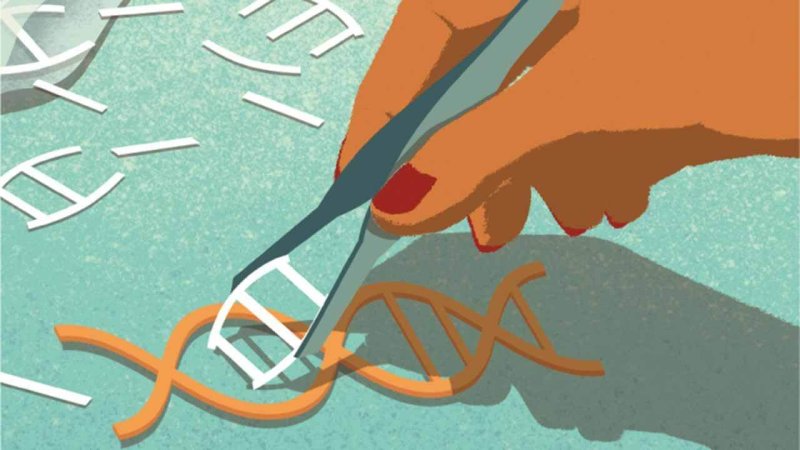
Scientists at the University of California, Berkeley and Massachusetts General Hospital have identified a key region within the Cas9 protein that governs how accurately CRISPR-Cas9 homes in on a target DNA sequence, and have tweaked it to produce a hyper-accurate gene editor with the lowest level of off-target cutting to date [read the full study here (behind paywall)].

The protein domain the researchers identified as a master controller of DNA cutting is an obvious target for re-engineering to improve accuracy even further, the researchers say. This approach should help scientists customize variants of Cas9 – the protein that binds and cuts DNA – to minimize the chance that CRISPR-Cas9 will edit DNA at the wrong place….

While improved fidelity benefits basic research, it is absolutely critical when editing genes for clinical applications, since any off-target DNA cutting could disable key genes and lead to permanent, unexpected side effects.

Within the last two years, two teams engineered highly accurate Cas9 proteins – an enhanced specificity one called eSpCas9(1.1) and a high-fidelity one called SpCas9-HF1 – and [researchers Janice Chen and Jennifer Doudna] sought to learn why they cut with higher specificity than the wild-type Cas9 protein from Streptococcus pyogenes used widely today.

The GLP aggregated and excerpted this article to reflect the diversity of news, opinion and analysis. Read full, original post: Discovery helps engineer more accurate Cas9s for CRISPR editing


{{ reviewsTotal }}{{ options.labels.singularReviewCountLabel }}
{{ reviewsTotal }}{{ options.labels.pluralReviewCountLabel }}
{{ options.labels.newReviewButton }}
{{ userData.canReview.message }}

Related Articles

Infographic: Global regulatory and health research agencies on whether glyphosate causes cancer

Infographic: Global regulatory and health research agencies on whether glyphosate causes cancer

Does glyphosate—the world's most heavily-used herbicide—pose serious harm to humans? Is it carcinogenic? Those issues are of both legal and ...

Most Popular

ChatGPT-Image-Jun-9-2026-01_11_37-PM
Turmeric supplements: More risks than benefits
wuhan institute of virology main entrance
​​COVID lab leak? Making a case that the Wuhan market origins theory is wrong
ChatGPT-Image-Mar-10-2026-01_39_01-PM
Viewpoint—“Miracle molecule” debunked: Why acemannan supplements don’t work
Screenshot-2026-06-05-at-2.12.30-PM
Some plants can poison you. So how did humans figure out what is safe to eat?
ChatGPT Image May 26, 2026, 08_42_17 AM (1)
Viewpoint: Greenpeace and poison: How environmental advocacy groups rely on compliant (and often ignorant) journalists to spread disinformation and spark litigation
Screenshot-2026-06-17-at-9.44.03-AM
Viewpoint: Embryos are becoming the newest battleground of love, loss, and legal uncertainty
ChatGPT-Image-Jun-14-2026-09_41_44-AM-2
Viewpoint—‘The gleeful efficiency of an arsonist’: Administration’s health and science research cuts are ‘sabotaging’ America’s future
ChatGPT-Image-Jun-11-2026-01_15_03-PM
Selective Pressure, Selective Silence

Sorry. No data so far.

glp menu logo outlined

Get news on human & agricultural genetics and biotechnology delivered to your inbox.