CRISPR gene-edited cassava could help stave off food crisis in Nigeria

Cassava USAID
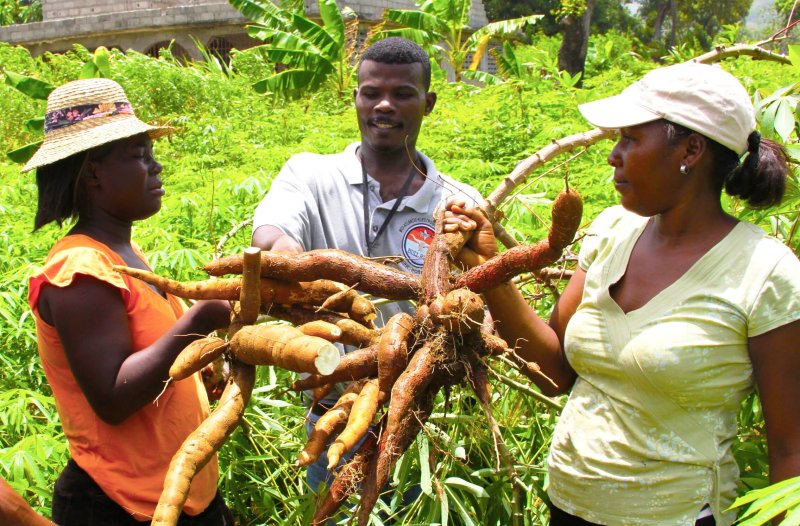
Bt Cassava would help farmers fight off pests that threaten crop yields

Cassava brown streak disease can keep a cassava farmer awake at night. It can lead to complete crop loss, is difficult to detect and resistant varieties of the crop are proving to be not-so-resistant.

“It’s an epidemic in eastern Africa, and by all accounts, this is going to get to West Africa, and it’s going to hit Nigeria,” said Nigel Taylor, interim director of the Institute for International Crop Improvement at the Donald Danforth Plant Science Center located in St. Louis, Missouri. “Nigeria is the largest cassava-producing country in the world. There will be a food security issue when it gets there.”

Nigel and other researchers are working to stay ahead of cassava brown streak using a new technology: Clustered Regularly Interspaced Short Palindromic Repeat, or CRISPR. CRISPR allows geneticists to identify a specific genetic sequence within an organism’s DNA, bind an enzyme to that sequence and cut it off, effectively shutting off the expression of the genes in the targeted sequence.

CRISPR technology has edited two genes in cassava, disabling the virus’s ability to replicate and infect the plant. Scientists plan to edit the remaining five genes that influence the disease in the coming months.

The GLP aggregated and excerpted this article to reflect the diversity of news, opinion and analysis. Read full, original post: CRISPR Gene Editing Aims to Improve ‘Orphan Crops’

{{ reviewsTotal }}{{ options.labels.singularReviewCountLabel }}
{{ reviewsTotal }}{{ options.labels.pluralReviewCountLabel }}
{{ options.labels.newReviewButton }}
{{ userData.canReview.message }}

Related Articles

Infographic: Global regulatory and health research agencies on whether glyphosate causes cancer

Infographic: Global regulatory and health research agencies on whether glyphosate causes cancer

Does glyphosate—the world's most heavily-used herbicide—pose serious harm to humans? Is it carcinogenic? Those issues are of both legal and ...

Most Popular

Screenshot-2026-04-22-at-12.21.32-PM
Viewpoint: Why the retracted Monsanto glyphosate study doesn’t change the science—the world’s most popular herbicide is safe 
ChatGPT-Image-Apr-16-2026-02_56_53-PM
Financial incentives, over diagnosis, and weak oversight: Autism claims are driving up Medicare costs
Picture1
The FDA couldn’t find a vaccine safety crisis, so it buried its own research
ChatGPT-Image-May-1-2026-11_42_59-AM-2
Viewpoint: NAD is the wellness grifters latest evidence-lite longevity fad. At least the mice are impressed.
Screenshot-2026-05-21-at-12.15.17-PM
UK gene-editing milestone: Livestock barley that increases ruminant value and reduces methane emissions is first-approved CRISPR crop
global warming
‘Implausible’: Top climate scientists reject worst-case scenario—soaring temperatures and fast-rising sea levels
Screenshot-2026-05-21-at-3.15.53-PM
Chiropractors may no longer be modern-day snake oil salesmen, but the benefits of their therapy are limited–at best

Sorry. No data so far.

glp menu logo outlined

Get news on human & agricultural genetics and biotechnology delivered to your inbox.