Key to understanding Down syndrome may rest in chromosomes

down syndrome iceland e

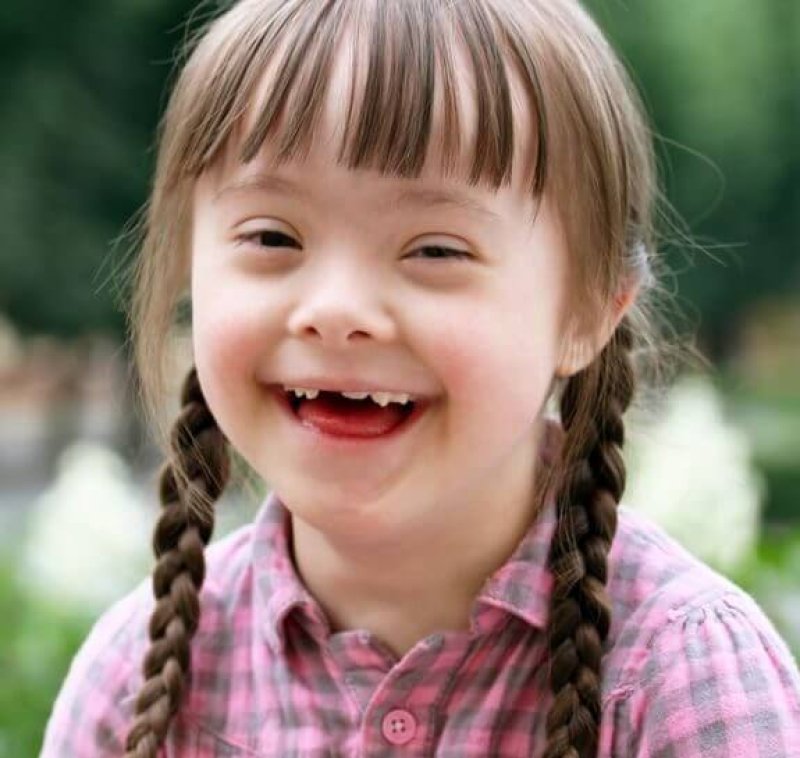
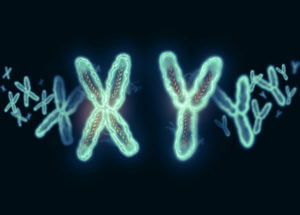
Some scientists call it the “final frontier” of our DNA—even though it lies at the center of every X-shaped chromosome in nearly every one of our cells. It’s called the centromere, and it plays a crucial role in the everyday cell division that keeps us healthy. Which also makes it a key suspect in birth defects, cancers and other diseases that arise from cell division problems. Now, a new technique may force this mysterious stretch of DNA to give up its secrets at last. Already, the first test of the approach has yielded clues about the role of centromeres in Down syndrome, which arises when a child inherits an extra copy of chromosome 21.

In the new paper, [Rafael] Contreras-Galindo, [David] Markovitz, active emeritus U-M professor Mark Kaplan, M.D., and a team of collaborators report results from their comparison of centromeres from individuals with and without Down syndrome. They show a strong link between the condition and instabilities found on chromosome 21––both in the centromere and in the stretches of DNA that flank it, called pericentromeres. Unstable centromeres and pericentromeres could help explain why people with Down syndrome inherit an extra copy of that chromosome, although much work remains to test this hypothesis.

The GLP aggregated and excerpted this blog/article to reflect the diversity of news, opinion, and analysis. Read full, original post: New approach to studying chromosomes’ centers may reveal link to Down syndrome and more


Related Articles

Infographic: Global regulatory and health research agencies on whether glyphosate causes cancer

Infographic: Global regulatory and health research agencies on whether glyphosate causes cancer

Does glyphosate—the world's most heavily-used herbicide—pose serious harm to humans? Is it carcinogenic? Those issues are of both legal and ...

Most Popular

ChatGPT-Image-Mar-10-2026-01_39_01-PM
Viewpoint—“Miracle molecule” debunked: Why acemannan supplements don’t work
Screenshot-2026-09-10-at-11.50.46-AM
Did COVID vaccines kill 2,500 service members? RFK Jr. hires an investigator who compares vaccine promoters to Nazi doctors
Screenshot-2026-09-11-at-2.26.23-PM
Newly approved GMO chestnut trees planted across from the White House are stirring debate
ChatGPT-Image-Sep-13-2026-10_24_17-AM
Bayer urges court to approve $7.25 billion Monsanto Roundup settlement that could limit its future liabilities
ChatGPT-Image-Sep-15-2026-06_05_13-PM
CRISPR fine-tuning unlocks vitamin C-rich potatoes without yield loss
ChatGPT-Image-Sep-15-2026-05_59_18-PM
RFK Jr. spent two years distancing himself from Children’s Health Defense. Now he’s keynoting its anti-vaccine DC conference.
Screenshot-2026-09-10-at-12.20.19-PM
'Jet fuel didn't melt the steel': 9/11 conspiracy theories debunked
ChatGPT-Image-Aug-28-2026-03_33_46-PM
Viewpoint: Bad science—Five bogus Trump administration claims about vaccines and autism
Screenshot-2026-09-15-at-11.04.54-AM
Viewpoint: Childhood deaths in dispute: Why the CDC vs Pennsylvania conflict over measles vaccines matters
Screenshot 2026-09-10 at 11.28
A meaty problem: How to make cell-grown protein taste like steak, chicken, and seafood
ChatGPT-Image-Aug-14-2026-11_16_47-AM
Fibermaxxing: Latest Instagram diet craze raises hope that a fiber-rich diet can improve health
organic-labeling-slide-dcba-aa-c-a-dde-a-fcd-e-c-d-
Viewpoint: Organic food costs more—but is it healthier, safer, and more nutritious? The latest science findings may surprise you.

glp menu logo outlined

Get news on human & agricultural genetics and biotechnology delivered to your inbox.