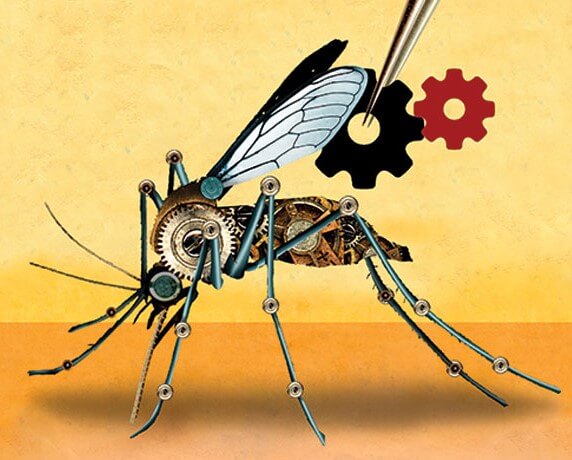
[Gene drives] can quickly disseminate genetic modifications in wild populations through an organism’s offspring, prompting some activists to call for it to be shelved. Yet gene drives might not be as effective as activists think. Recent research has identified a major hurdle to using them to eliminate diseases and vanquish invasive pests: evolution.
Organisms altered by gene drives, including mosquitoes, have shown promise in proof-of-conceptlaboratory experiments. But wild populations will almost certainly develop resistance to the modifications. Researchers have begun identifying how this occurs so that they can address the problem.
…
Just as antibiotics enable the rise of drug-resistant bacteria, population-suppressing gene drives create the ideal conditions for resistant organisms to flourish.
One source of this resistance is the CRISPR system itself, which uses an enzyme to cut a specific DNA sequence and insert whatever genetic code a researcher wants. Occasionally, however, cells sew the incision back together after adding or deleting random DNA letters. This can result in a sequence that the CRISPR gene-drive system no longer recognizes, halting the spread of the modified code.
The researchers building the mosquito cage in Italy, part of a multimillion-dollar project called Target Malaria, found this form of resistance in some mosquitoes.
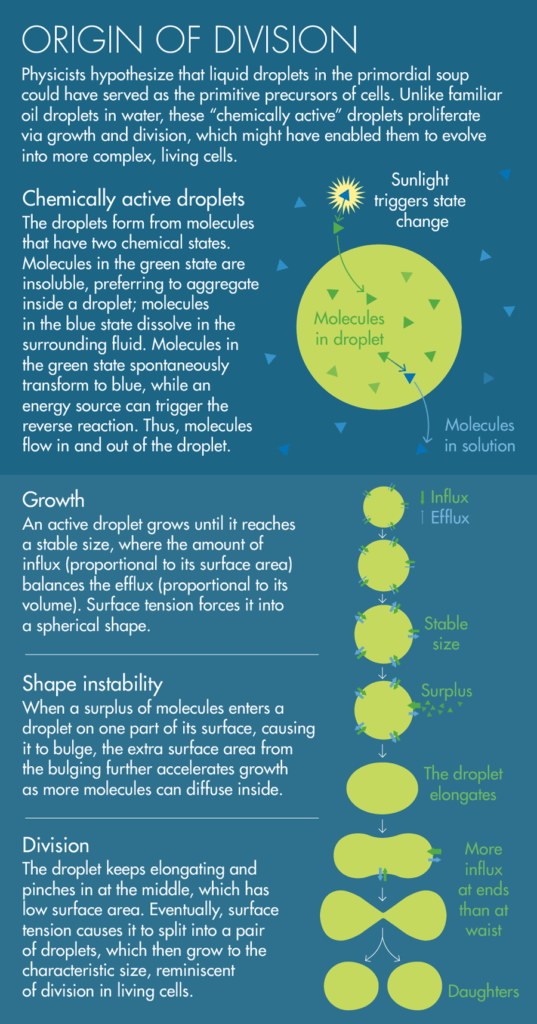
A collaboration of physicists and biologists in Germany has found a simple mechanism that might have enabled liquid droplets to evolve into living cells in early Earth’s primordial soup.
…
The central question about the origin of life has been how the first cells arose from primitive precursors. What were those precursors, dubbed “protocells,” and how did they come alive?
…
Now, the new work by David Zwicker and collaborators at the Max Planck Institute…suggests an answer. The scientists studied the physics of “chemically active” droplets…and discovered that these droplets tend to grow to cell size and divide, just like cells.
…
If chemically active droplets can grow to a set size and divide of their own accord, then “it makes it more plausible that there could have been spontaneous emergence of life from nonliving soup,” said Frank Jülicher, a biophysicist in Dresden….
…
However, David Deamer, a biochemist at the University of California, Santa Cruz, and a longtime champion of the membrane-first hypothesis, argues that while the newfound mechanism of droplet division is interesting, its relevance to the origin of life remains to be seen. The mechanism is a far cry, he noted, from the complicated, multistep process by which modern cells divide.
Credit: Lucy Reading-Ikkanda/Quanta Magazine.
[The study can be found here.]
Two children treated with gene-edited cells to kill their cancers are both doing well more than a year later. The baby girls were both given the experimental treatment only as a last resort, but clinicaltrials of the therapy are now getting underway in children and adults in the UK.
An 11-month-old girl called Layla was the first to get the treatment, in June 2015. When the team treated her,…they stressed that it was too soon to say if she was cured.
But 18 months on, Layla is doing well with no sign of the leukemia returning. A second child, who was treated in December 2015 when she was 16 months old, is also healthy.
…
The treatment is a form of so-called CAR-T cell therapy. This involves using a virus to add a gene to immune cells that make them target specific cancers.
Crime dramas are an entertainment staple across the world. But as DNA becomes a more powerful tool for identifying the guilty,…it is essential, argues UK charity Sense About Science, that public and professional expectations of the technology are based in reality and not TV crime fiction.
Which is why the organisation has published a new guide called Making Sense of Forensic Genetics, which challenges unrealistic perceptions of DNA evidence, and explains where the big differences between reality and fiction lie.
For example, your DNA is found at a crime scene. How did it get there? In CSI or Law and Order, that would immediately imply guilt. But in reality, we all shed DNA into our environments all the time.
…
Data privacy is just as critical a topic for forensics as it is for health databases…According to Making Sense of Forensic Genetics:“Some people have argued that if everyone in a country were held on a national DNA database, far more crimes would be solved, but many are opposed to this idea on the grounds of personal privacy and human dignity.”
The GLP aggregated and excerpted this blog/article to reflect the diversity of news, opinion, and analysis. Read full, original post: What can DNA tell you about a crime?
[Editor’s note: Kevin Folta, a molecular biologist and chairman of the Horticultural Sciences Department at the University of Florida, offers advice to fellow scientists considering a march for science in Washington D.C.]
Recent Presidential mandates drew quite a reaction from the scientific community, some appropriate, but some overstepped. That’s a major problem.
…
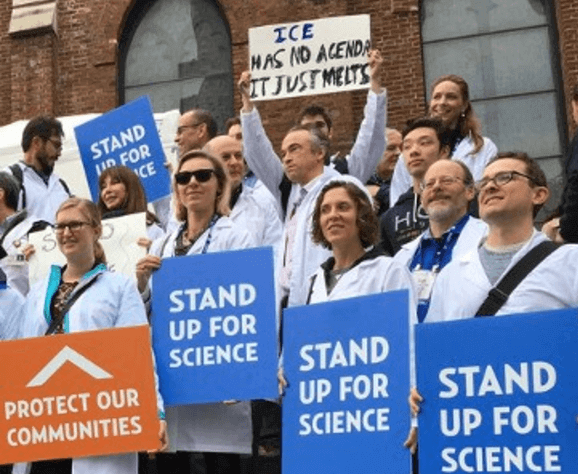
Everyone [is]…calling for a Science March on Washington, a chance to show solidarity among those that value the scientific method and embrace the truths that science gives us…Not me. The best way I can support science and scientists it to create durable work and actively create the change I want to see….
Rather than coming off as whining complainers for 20 seconds on Fox News, let’s be the proactive teachers we are, and then use social media networks to tell the world about what proactive teachers we are.
…
Again, it is nice to see a little rage bubbling from within the lab coat…The challenge now is to channel the energy properly. At this point, we need to be sure that our efforts are appropriate and consistent with the evidence. Then let’s avoid knee-jerk reactions and implement effective and visible means to protest, flooding social media with overwhelming acts of good.
…
[W]e’ve lived in the midst of science denial for a long time and are poised to fight back…Let’s not jump the gun and look bad doing it. Rather than simply creating a stir, let’s invest that energy and create change.
The GLP aggregated and excerpted this blog/article to reflect the diversity of news, opinion, and analysis. Read full, original post:Scientists: Be Effective with Your Rage
[Editor’s note: Excerpts are from an opinion piece written by Lori Marino, executive director of the Kimmela Center for Animal Advocacy and a former faculty member in neuroscience at Emory University.]
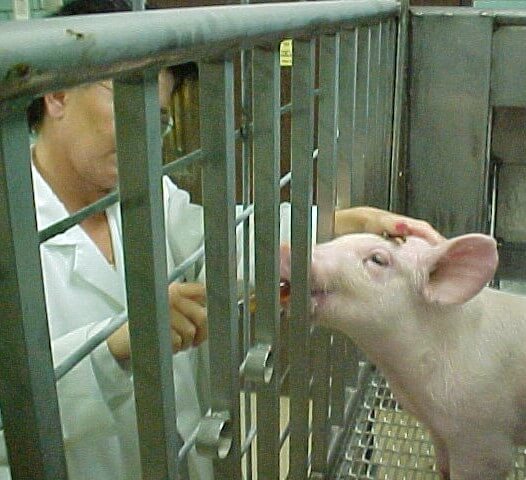
As a neuroscientist, I appreciate groundbreaking research [regarding the creation of a human-pig chimera]…But I also believe that science should be guided by ethics, and this work seems to be jumping ahead of ethical considerations.
…
This work is part of a larger trend toward increasingly invasive and manipulative practices: monkeys that show symptoms of autism, transgenic mice with altered vocalizations so they “stutter,” [and] cows that produce “humanized” milk….
The possibilities have many researchers giddy with excitement. But they also raise serious ethical dilemmas about the moral status of these part-human animals.
…
As we continue down the path of this unprecedented manipulation of sentient beings and pour funding into it, we simultaneously limit funding for alternative solutions to our health problems, including prevention, consensual human trials, [and] incentives for organ donation…All too soon, when we look back on the path of chimeric research that we’ve chosen, we may not like what we see. But by then it will be too late.
…
Tens of millions of animals are sickened, injured, genetically manipulated, and killed in biomedical labs every year…That leads to the inescapable conclusion that we have already crossed a number of moral lines.
Stephane Budel has an idea for an app: You get your DNA sequenced to find out which comic book superhero you are….
We are, to be clear, talking about fictional superheroes and the idea for a hypothetical app. But Budel really is serious. …As the economics of DNA sequencing change, consumer genetic tests aimed at lifestyle and wellness—rather than health—are a burgeoning unregulated market. These DNA tests won’t tell you about your cancer risk, but they might give you wine based on your taste genes or suggest personalized exercise regimens.
…
What these kinds of DNA test start to resemble are magazine quizzes or horoscopes. At times, the science connecting DNA sequence and test result is just as shaky. And in the case of superheroes, well, it’s an explicit leap into fantasy…We once looked to the stars to amuse, enlighten, and guide us; now we can look to DNA.
…
[Y]ou’re not probably going to shell out $2000 for a DNA test that’s just for fun. But might you pay $200 or $20? The world of lifestyle genetic tests can only exist because sequencing DNA has gotten so much cheaper.
…
That’s not to dismiss real information that can be gleaned from genetics. In some cases, single genes lead to a clear outcomes, but in most cases, scientists don’t have a complete grasp of the complexity [of many genes]. But still, we look to DNA for answers, our desire to understand outstripping our actual understanding of it.
The GLP aggregated and excerpted this blog/article to reflect the diversity of news, opinion, and analysis. Read full, original post:The DNA Test as Horoscope
President Donald Trump has offered federal agencies a regulatory 2-for-1 deal they can’t refuse… Trump’s latest executive order, signed Monday, cracks down on federal regulations under the guise of helping small business, requiring that two regulations be slashed for every new one that is undertaken.
There are a lot of questions about how Trump’s executive order will be implemented across the federal government. Much will depend on how agencies interpret it in coming months. It remains to be seen whether agencies will have the ability to amend existing regulations without having to identify rules to cut.
Back in July, the rare congressional demonstration of bipartisanship that became the GMO labeling bill instructed USDA to come up with regulations governing disclosure of genetically modified ingredients. Many in the food and agriculture industries lobbied aggressively for federal preemption to spare them from the expenses that a patchwork of state labeling standards would have presented. The law gives USDA two years to draw up those rules, but now that task will be a much heavier lift, as USDA will have to eliminate two regulations to make it happen.
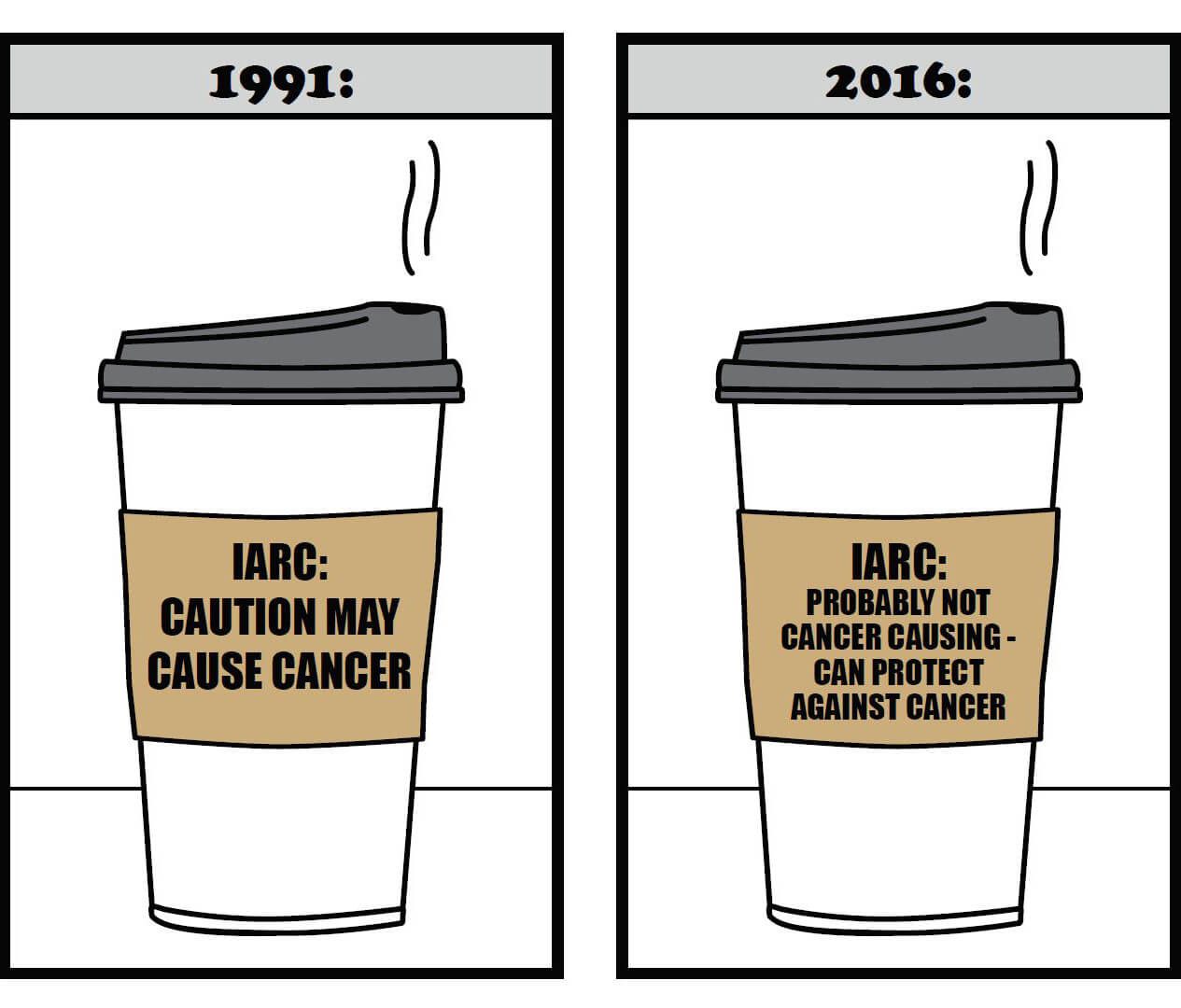
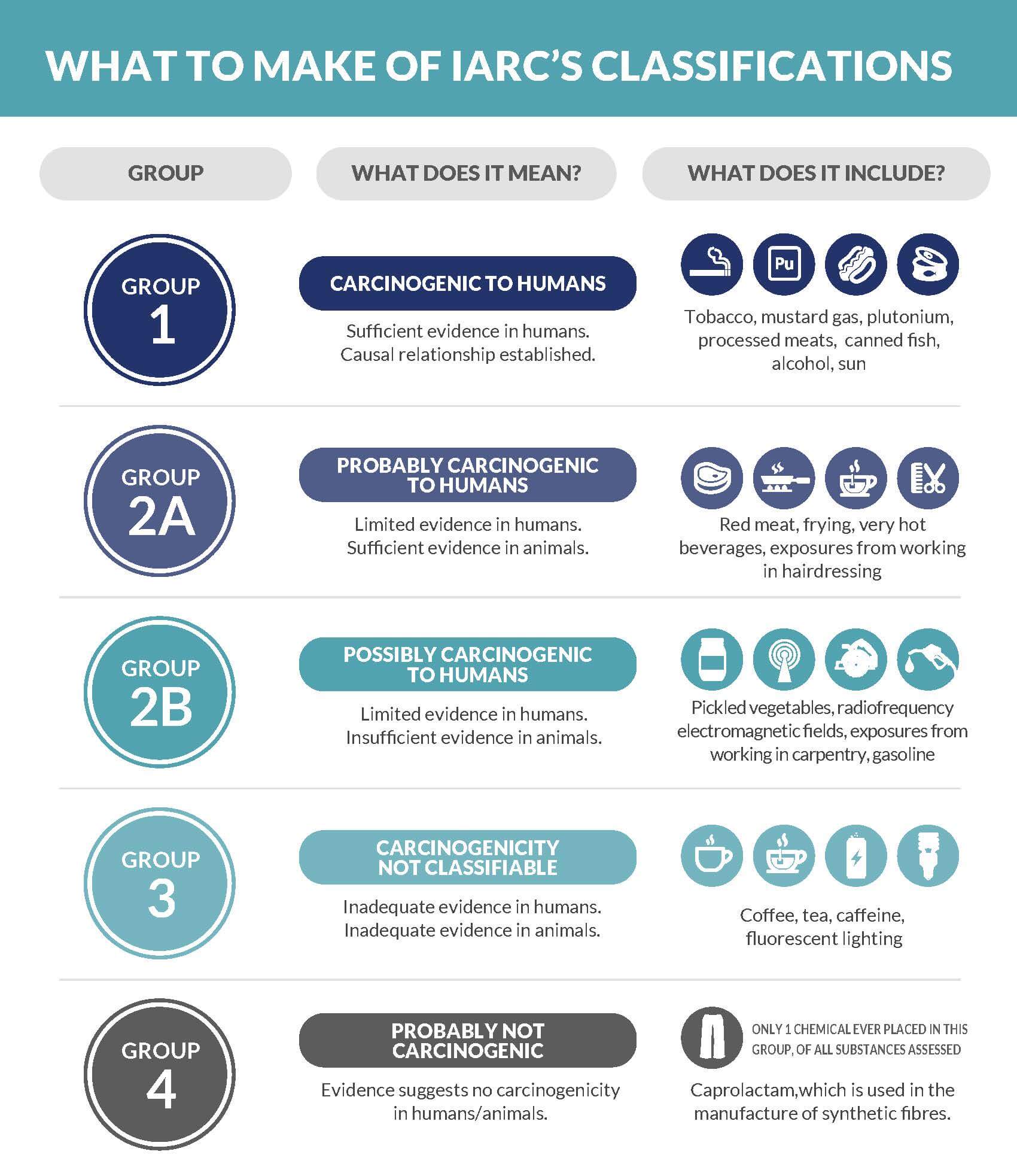
For decades, the International Agency for Research on Cancer (IARC) warned coffee drinkers that their favorite beverage might cause cancer. Finally, IARC revisited its decision and reclassified coffee, downgrading it from “possibly carcinogenic” to “not classifiable.” While this decision is a step in the right direction, it raises new questions and concerns.
BACKGROUND:
In 1991, IARC classified coffee as a Group 2B carcinogen (possibly carcinogenic). IARC claimed the data was “consistent with a weak positive relationship between coffee consumption and the occurrence of bladder cancer” but conceded that “the possibility that this is due to bias or confounding cannot be excluded.” No other cancer associations were found by IARC.
In June 2016, IARC acknowledged its finding was inconsistent with two decades of scientific study, and updated its assessment of coffee to Group 3 or “Not classifiable as carcinogenic to humans.”
It was surprising IARC did not categorize coffee in Group 4 in light of the considerable evidence supporting the significant health benefits of coffee consumption including protection against Parkinson’s disease, liver disease, type 2 diabetes and liver cancer.
“We can’t say that it’s completely safe because proving a negative is very difficult, but it has moved down a step in terms of the hierarchy of concern.”– Dana Loomis, Deputy Section Head of IARC Monographs (July 18, 2016)
[Amrit] Pradhan is one of 66,000 farmers from Sikkim [a state in northeast India] who are part of a far-reaching experiment. Since last year, the state’s farmers have become 100% organic – their produce is free of [synthetic] chemical pesticides or genetic modification [Editor’s note: there are no approved genetically modified fruits or vegetables approved or grown in India, anywhere].
It also means their fruit and vegetables are smaller, less colourful, and more expensive than the imported, non-organic produce from the city of Siliguri in the neighbouring state of West Bengal.
Last year, prime minister Narendra Modi lauded Sikkim for its organic farming, a programme that had gradually been rolled out across the state since 2003.
The farming techniques [in India’s Green Revolution] produced dramatic increases in yield, and new prosperity for farmers, especially in northern states such as Punjab and Haryana. India went from being a food-deficient country to a leading agricultural power. Food prices fell, but the farming methods took their toll on the environment – increased water use, soil degradation and chemical run-off – raising questions about the sustainability of such practices.
Amrit Pradhan
In 2016, Sikkim’s state government made the use of chemical pesticides a criminal offence, carrying a heavy penalty of 100,000 rupees (£1,170) and up to three months in jail.
In Sikkim, years of failed crops could affect tens of thousands of families while the land adjusts to the new methods….
[Farmer Amrit] Pradhan says the organic crop he produces does not sell well in Sikkim. Pradhan supports the government’s organic initiatives, but fears the project will fail unless Sikkim’s residents start buying into the idea.
A ban on planting genetically modified corn in Mexico is likely to continue for years as a slow-moving legal battle grinds on, said a top executive of U.S.-based seed and agrochemical company Monsanto Co.
[On January 26] a Mexican court upheld a late 2013 ruling that temporarily halted even pilot plots of GMO corn following a legal challenge over its effects on the environment.
“It’s going to take a long while for all the evidence to be presented,” Monsanto regional corporate director Laura Tamayo said in an interview. “I think we’re talking years.”
…
Several years ago, Monsanto submitted two applications for the commercial planting of GMO corn in Mexico. Both sought 700,000 hectares (1.7 million acres) in the northwestern state of Sinaloa, the country’s largest corn-producing area.
…
Monsanto’s main business in Mexico is developing and selling conventional corn seeds and vegetable seeds, but Tamayo says the company is determined to defend the benefits of genetically modified crops on scientific grounds.
Nevertheless, she noted that for years Monsanto did not see the need to persuade consumers and focused exclusively on convincing farmers to buy its products, allowing some environmental organizations to dominate the debate.
In order to clear up some misunderstandings and outright lies about GMO, here’s a list of 10 examples of genetically modified foods with full explanations. [List includes: Sugar Beets, Corn, Papaya, Squash, Potato, Canola, Tomato, Soybeans, Milk and Rice]
[Here are excerpts]:
8. Papaya
Hawaii’s papaya industry was on the brink of annihilation in late the 1990s and early 2000s, with the ringspot virus causing a 50 percent decrease in production. Fortunately, the answer was found in genetically modified papaya resistant to the virus. It saved papaya farmers worldwide.
7. Squash
Genetically modified squash is only planted in the United States. It became commercially available in 1995. The genetic modification included higher virus resistance, mainly Squash mosaic virus, which were destroying as much as 80 percent of the harvest in the United States and Canada.
6. Potato
The potato is one of the most recent additions to the list of genetically modified crops. Its use has been approved by the FDA only in 2015. Designed by J. R. Simplot Company, genetically modified potatoes offer several advantages, like resistance to blackspot bruising and browning, and containing less asparagine. This is significant because asparagine turns into Acrylamide during frying, which is suspected to be cancerogenic.
Editor’s note: This article was written by Mike Johanns, former agriculture secretary under President George W. Bush, and Dan Glickman, former agriculture secretary under former President Bill Clinton.
Looking forward, we see headwinds acting against the livelihoods and future global competitiveness of American farmers and the security of our national food supply: the unmanageable cost of innovation and the need for a strong, focused American-owned agriculture company.
Dow and DuPont are each huge conglomerates within which their relatively small agriculture businesses must compete for resources against other businesses. By coming together, they intend to then create a single, independent, U.S.-based and -owned pure agriculture company capable of competing effectively against their still larger global peers.
Given the current landscape, now more than ever America’s farmers need what Dow and DuPont are proposing – a strong, focused American agriculture company that is American-owned, championing the interests of the American farmer in a marketplace that may soon be dominated by foreign-owned behemoths. Without such an enterprise, totally and completely focused on agriculture, with every minute of every day devoted to working in partnership with farmers and the full range of entities working to feed an ever-expanding need for sustainable food sources, the American farmers who grow our food lose out – and the people who eat it do, too.
Preliminary results are in from NASA’s unprecedented twin study— a detailed probe of the genetic differences between astronaut Scott Kelly, who spent nearly a consecutive year in space, and his identical twin Mark. Measurements taken before, during and after Scott Kelly’s mission reveal changes in gene expression, DNA methylation and other biological markers that are likely to be attributable to his time in orbit.
From the lengths of the twins’ chromosomes to the microbiomes in their guts, “almost everyone is reporting that we see differences”, says Christopher Mason, a geneticist at Weill Cornell Medicine in New York City.
…
Studies of the twins’ telomeres, the caps on the ends of their chromosomes, showed that during spaceflight Scott’s telomeres grew to be longer than his brother’s. “That is exactly the opposite of what we thought,” says Susan Bailey, a radiation biologist at Colorado State University in Fort Collins.
Once Scott returned to the ground, the length of his telomeres returned to his pre-flight levels relatively quickly. The scientists are working to figure out what this means, and are running a separate study of telomere length in ten unrelated astronauts that, when completed in 2018, may shed more light on how spaceflight affects telomeres.
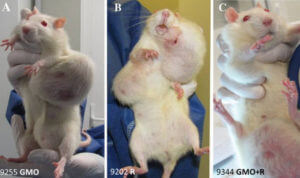
In what seems like a scene from the movie Groundhog Day, another rat study has come out of the laboratory of Dr. Giles-Eric Séralini (Read GLP profile here), only in this case, it is Roundup and not GMOs that are under fire. When I read the title of the paper, “Multiomics reveal non-alcoholic fatty liver disease in rats following chronic exposure to an ultra-low dose of Roundup herbicide”, I assumed a new study had been performed by the laboratory showing what this specific title appears to conclude i.e. that rats exposed to low levels of Roundup developed non-alcoholic fatty liver disease. However, when I read further I found that this was a study on tissues from a subset of the same lumpy rats that were involved in the famously retracted (and subsequently republished) paper from 2012 – the rats with horrific tumors (not fatty livers) due to GMOs (not glyphosate) that was breathlessly reported on the Doctor Oz show I participated in, and by media throughout the world.
I think if my work had been roundly criticized by scientific peers for poor experimental design and pathology data inadequacies, and critiqued by a multitude of separate national biosafety committees from Belgium, Brazil, European Union, Canada, France, Germany, Australia/New Zealand, and The High Council on Biotechnology, I would not double down and continue to analyze 5-year old samples from that same experiment. What is weird is that although I vividly remember the images of grotesque tumors on the white Sprague Dawley female rats, (one does not forget those images with a “GMO” label contrasted against the shocking tumors) I did not recall any mention of non-alcoholic fatty liver disease. So I went back to the original paper and searched for the term “fatty liver disease”. Nada.
Giles-Eric Séralini
In fact, the only data on livers in that retracted/republished 2012 paper was presented for the male rats. According to the 2012 paper, the males that received the low levels of Roundup (50 ng/L glyphosate equivalent dilution) displayed liver “congestions” and “macroscopic and microscopic necrotic foci”, not fatty liver disease. I asked a Laboratory Animal pathologist at UC Davis who specializes in rodent health to review the data in the paper to determine if it suggested the rats had fatty liver disease. There was no histopathologic evidence of hepatic lipidosis presented in males and no data on female livers was presented at all. Many of the “anatomical pathologies” observed are common aging-related findings and this was not taken into account or discussed. They suggested the term “anatomopathological analysis” was a very irregular term for a veterinary pathologist to use and that the use of hepatodigestive tract and liver as separate categories of pathology incidence were redundant. They kept doggedly going back to the fact that no fatty liver phenotype data were ever presented on female livers so they could make no determination as to whether or which rats were suffering from fatty liver disease.
If you want a really interesting read from a group of veterinary pathologists who reviewed the pathology data in the 2012 Séralini study, their review contains the following understated scientific barbs (bold emphasis mine):
The sentence ‘The largest palpable growths (…) were found to be in 95% of cases non-regressive tumors, and were not infectious nodules.’ is very confusing. We hope that differentiating inflammatory from neoplastic lesions was not a challenge for the authors. Another clear example illustrating the lack of accuracy of the results is found in Fig. 3 where microscopic necrotic foci in the liver are grouped with clear-cell focus and basophilic focus with atypia. The first finding refers to a degenerative process whereas the remaining two refer to a proliferative one (Thoolen et al., 2010). Such basic error would be considered as a disqualifying mistake at an examination for pathologists.
Ouch.
They then go on to ask why there was no mention of which pathologist did the analyses, and why the rats were not euthanized earlier:
…as most members of the ESTP [European Society of Toxicologic Pathology] are veterinarians, we were shocked by the photographs of whole body animals bearing very large tumors.When looking at the lesions, we believe those animals should have been euthanized much earlier as imposed by the European legislation on laboratory animal protection.
and then conclude their diatribe with the following:
The ESTP comes to the conclusion that the pathology data presented in this paper are questionable and not correctly interpreted and displayed because they don’t concur with the established protocols for interpreting rodent carcinogenicity studies and their relevance for human risk assessment. The pathology description and conclusion of this study are unprofessional. There are misinterpretations of tumors and related biological processes, misuse of diagnostic terminology; pictures are not informative and presented changes do not correspond to the narrative.
For those who are not immersed in science – these are damning criticisms.
So back to the 2017 study, it cites a 2015 “transcriptomics” study by the same group for the observations on the female livers. In that study livers from 10 control females and the 10 females from the R (A) group from the 2012 study (for those of you paying attention) were analyzed using “transcriptomics”. So I went to read the 2015 paper to see if the Roundup-ingesting females perhaps had some liver data, and again there was no discussion of a fatty liver disease phenotype. There was, however, an interesting discussion of why tissues from the females were used for the analysis in both the 2015 “transcriptomics” and 2017 “multiomics” paper.
In the 2012 study that started it all, apparently:
Most male rats were discovered after death had occurred. This resulted in organ necrosis making them unsuitable for further analysis. We therefore focused our investigation on female animals where freshly dissected tissues from cohorts of 9-10 euthanized and untreated rats were available. Female control and Roundup-treated animals were respectively euthanized at 701 ± 62 and 635 ± 131 days. Anatomopathological analysis of organs from these animals revealed that the liver and kidneys were the most affected organs.
Well, the fact that the males got to a stage of necrosis because no one discovered they were dead seems strange in a study where rats were presumably checked every day as required by every animal care protocol I am familiar with. However, such protocols would also have required the rats to be sacrificed long before the tumors were able to grow to the size that were clearly evident in the photos associated with this study. And the fact that the liver and kidneys were the most affected organs might well have been true for the male rats (and these apparently necrotic tissues were analyzed and reported for these males), but for the female rats, according to the 2012 paper, it was all about the tumors!
Image from Seralini et al. 2012.
That was the whole basis of the sensational 2012 paper that actually resulted in entire African countries rejecting all GMO imports. Reread that previous sentence because it shows the power of this one, poorly-designed study with 120 rats.
So livers were being harvested from these 20 females – several of which were compromised and euthanized “early” (2 from the control group, and 5 from the “treatment” group) at different ages due to the tumor load. Is it not obvious that these additional factors of tumor load and different ages would confound any data collected from their livers?
The 2015 paper goes on to show electronic microscope analysis of liver sections from females. But it turns out the photograph of the control female was actually the same photo at a different magnification as that shown for the control male hepatocyte image in the 2012 paper. The authors have since stated that was an honest mistake and have submitted a corrigendum, but go on to suggest that there are differences in the hepatocytes from Roundup-treated rats, specifically showing “a disruption of glycogen dispersion”, a disruption of nucleolar function and an overall decreased level of transcription. How transcription can be determined based on an electron micrograph is unclear. No mention is made of the “fatty liver disease” promised in the 2017 paper’s title.
So let me sum this up for those of you who may be lost. The original, highly-controversial 2012 study was done on 120 rats. The most recent study was performed on the livers of a subset of 10 female control rats and 10 female rats from that same 2012 study that were in “Roundup group (A)” which received 50 ng/L glyphosate equivalent dilution in their water. We do not know their water intake so have no idea of actual dosage of “Roundup”; we have little histological data on female liver samples – let alone a diagnosis of fatty liver disease; we know that the control and “treated” rats were euthanized at a variety of differing ages, and that the majority of these female rats had huge tumors that required several of the rats in both the control and Roundup groups to be euthanized before two years of age. And the livers from these 20 rats were the basis of the most recent “omics” paper. There is a saying in science (and perhaps other disciplines): “garbage in – garbage out”.
So let’s plow on – and read the 2017 paper which concludes that the metabolome and proteome analyses of the livers from the “Roundup-drinking” rats versus the controls “showed a substantial overlap with biomarkers of non-alcoholic fatty liver disease and its progression to steatohepatosis”. Hooray – now THERE is a testable hypothesis – so what ARE the biomarkers of non-alcoholic fatty liver disease? In other words, what proteins and metabolites might you expect to see upregulated (or downregulated) if in fact animals had non-alcoholic fatty liver disease? I have read the paper several times now and seen no reference to a paper that answers that question. So in the absence of knowledge of fatty liver biomarkers, and given the fact no pathology diagnosed “fatty liver disease”, to conclude that “Multiomics reveal non-alcoholic fatty liver disease in rats following chronic exposure to an ultra-low dose of Roundup herbicide” is – to put it kindly – overstating the results of the research and making conclusions beyond that supported by the data.
Interestingly the bioinformatics analysis in this 2017 paper appears to be an improvement on previous works by this group in that the p-values were adjusted to account for the fact there were a high number of metabolites measured (1906 proteins and 673 metabolites), and there was therefore a need to do corrections for multiple comparisons to try to minimize the number of false positives. The authors even include a discussion of the need for corrections for multiple comparisons on page 9, and correctly state that there is a need to do this when measuring hundreds or thousands of observations to reduce the chance of making a type I error (false positive). However, they then lament the fact that there was a lack of statistical significance following the multiple comparison correction for all but three metabolites, due to the small sample size. That is the point! That is why these studies need to have sample size determinations based on the hypothesis being tested.
This study, which was based on the experimental design of a 90 day subchronic toxicity study (OECD, 1998) such that 10 animals were assigned to each group, was critiqued by the German Federal Institute for Risk Assessment (BfR) for small sample size for that very reason:
…subchronic studies show a substantially lower variation of age-related pathological changes between animals within a group while those changes are inevitable in long-term studies. As the published study has confirmed, the two-year duration of the study is of the order of the expected life span in rats including the Sprague Dawley strain that was used in the study. This strain, provided by the breeder Harlan, is known to develop spontaneous tumors, particularly mammary and pituitary tumors, at relatively high rates compared to other strains (Brix et al., 2005; Dinse et al., 2010). Therefore, it can be expected that a significant number of animals develop age-related illnesses or die for diverse reasons already during conduct of the study. The distribution of the cases of death between groups can be random, and a number of 10 animals per sex and group is too low to confirm a trend or an effect. Furthermore, no statements on statistically significant dose-response-relationships can be made. Larger sample sizes, as recommended for carcinogenicity studies in OECD Test Guidelines No. 451 or No. 453, would be required in order to allow precise statements with respect to the findings.
In other words you need to have bigger sample sizes to perform long term studies because many changes are associated with old age – especially when working with a rat strain that is known to develop spontaneous tumors, particularly female mammary and pituitary tumors!
Frustratingly, when the multiple comparisons removed all but three of the 673 metabolites as being statistically significant due to multiple comparison correction in the 2017 paper, the authors just went ahead and included the 55 that had a significant uncorrected p value(!), because “the non-adjusted statistically significant levels” fit a narrative, and so were revived from the statistical trash can on the basis that “they were found to be non-random and thus biologically meaningful”. This is the very definition of confirmation bias which is what multiple comparison correction and correct experimental design is trying to weed out because scientists are people too, and they are not without their own preconceived notions of how the world works.
More concerning, this 2017 paper is yet another in a string of papers from this group that was accepted in a peer-reviewed journal, in this case Scientific Reports, an online journal from the publishers of Nature. The problems in experimental design, lack of supporting pathology data on the test subjects, and wildly subjective overinterpretation of the results should have been grounds for soundly rejecting this manuscript. We live in an age of the willful neglect of scientific evidence, and the emergence of “alternative facts” and realities. As a scientist it worries me that papers like this are published in apparently respected journals. I remember once hearing a member of the activist industry say that “peer-reviewed journals are the tool of the enemy” suggesting they were the gold standard communication tool for scientists to report inconvenient facts. At the time I did not appreciate the importance of that statement, and concerningly it appears that this in no longer the case. If we can’t trust the peer-review process to ensure the integrity of papers published in scientific journals, what can we trust? This is a problem that should worry the entire scientific community, not only those concerned with the topic of this particular paper.
A version of this article originally appeared on the BioBeef blog as “Another Day, Another Séralini study,” and has been republished here with permission from the author.
Alison Van Eenennaam, Ph.D. is an animal geneticist and Cooperative Extension specialist in the Department of Animal Science at the University of California, Davis. Follow her on Twitter @BioBeef
[Editor’s note: This article is an interview with environmental writer McKay Jenkins about his new book Food Fight: GMOs and the Future of the American Diet.]
The whole GMO issue is one of the most tribal issues I’ve ever written about. You find people with deep prejudices about whether or not you know what you’re talking about. One group thinks GMOs are the best possible way to feed the world and the other group feels it’s the worst thing to enter the food system ever.
…
I spoke with world-renowned plant researchers who said that if it turns out some day that GMOs will be part of a grander idea of sustainable agriculture, then there is no reason not to use them. So the GMO question is hot but really, in a way, it’s a distraction from what’s more important: The global food system is so dramatically not sustainable today that we might consider using GMOs as part of a package of making the system itself more sustainable.
…
GMOs did not create this problem and are not the most important part of this problem. The question of whether eating a GMO corn chip will cause you cancer is not the right question to ask. The bigger question is what is your relationship to food and the land?
The GLP aggregated and excerpted this blog/article to reflect the diversity of news, opinion, and analysis. Read full, original post: We’re Asking The Wrong Questions About GMOs
Genes are the future of coffee. Not nitro cold brewing or beans pooped out by civets, but genes. And coffee’s gene-fueled future just drew nearer, now that scientists have sequenced the genome of the Coffea arabica coffee plant—the species that makes up the vast majority of global production—and made the data public.
…
With this information in hand, producers can begin to more accurately breed coffee varieties, as opposed to traditional selective breeding where you see a trait you like and breed for it. As scientists work their way through the genome, those traits may at some point have a known genetic basis.
And that’s increasingly important given the climate chaos spreading across the world. Global warming isn’t just about a generally warmer earth, but regions enduring dramatically different climates. Coffee will start doing better in some places and worse in others, as erratic temperatures and weather make life difficult for farmers.
“Sequencing the genome will allow geneticists to identify certain genes which indicate a plant’s resistance to a certain pest or determine that particular plants yield, cherry color, growth pattern, and flavor profile,” [says Lindsey Mesta of Good Land Organics.]
First, the overreaching agency claims it has the authority to regulate genetically improved livestock as a “new animal drug.” As the agency points out all new animal drugs are “deemed unsafe” unless it has approved a new animal drug application. Treating each version of new improved livestock as a drug is really bad news for developers and consumers, since it takes years for a new drug to get through the FDA process at an average cost of more than $1 billion.
The new FDA proposal is also ridiculously bad science….Researchers have pleaded for years that regulation, if needed, be based on whether the end product poses novel risks, not on the method by which it is created. Under the new idiotic FDA guidance, any intentional change to a single-nucleotide base pair would make the entire animal a regulated drug. Let’s put this into perspective. DNA, the chemicals that make up genes, are safe to eat….In fact, by one estimate you eat more than 100 trillion genes that are in your food every day. Eating the DNA that specifies the production of snake venom is no more dangerous than eating any other DNA….
Launching what it called a campaign for accuracy in public health research, the American Chemistry Council, which represents U.S. chemical companies, said the International Agency for Research on Cancer’s (IARC) evaluations “have a significant impact on U.S. public policy” and should be based on “transparent, thorough assessment of the best available science”.
…
As part of its work on cancer research, IARC publishes evaluations – known as monographs – on whether certain chemicals, lifestyles and activities may cause cancer … IARC has repeatedly defended its work as scientifically sound and says its monographs are “widely respected for their scientific rigor, standardized and transparent process and … freedom from conflicts of interest”.
…
The WHO agency is also embroiled in a row with Congress, the U.S. National Institutes of Health and the European Food Safety Authority over its review of the weedkiller glyphosate.
IARC classifies glyphosate, a key ingredient of Monsanto Co’s herbicide Roundup, as “probably carcinogenic”, but that assessment is at odds with many government regulators, including those in the United States, Europe, Canada, Japan and New Zealand, who say it is unlikely to pose a cancer risk to humans.