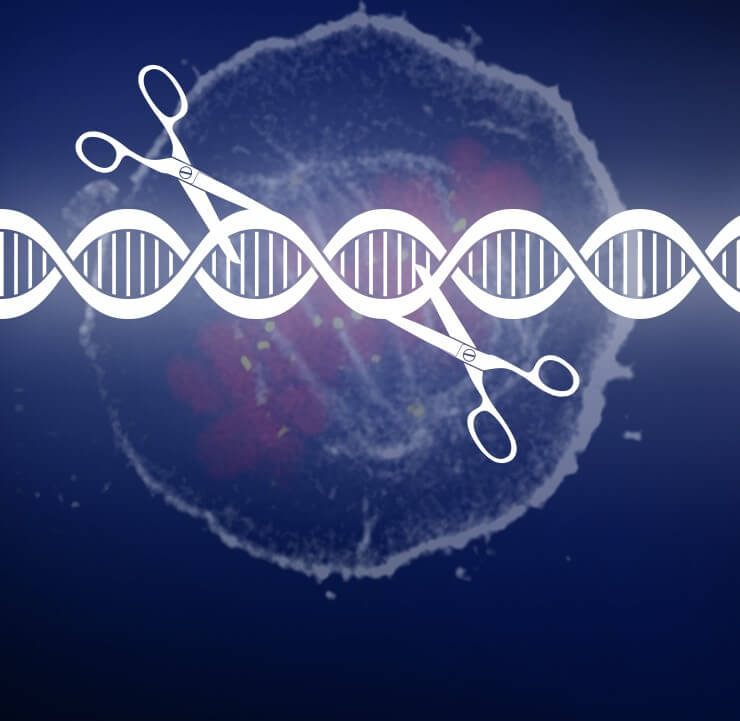
Elephant grass shown to be higher yielding biofuel than switchgrass

Screen Shot at AM

Scientists have confirmed that Miscanthus [elephant grass], long speculated to be the top biofuel producer, yields more than twice as much as switchgrass in the U.S. using an open-source bioenergy crop database….

To understand yield trends and variation across the country for our major food crops, extensive databases are available…” said lead author Stephen Long … [of the] University of Illinois. “But there was nowhere to go if you wanted to know about biomass crops, particularly those that have no food value such as Miscanthus, switchgrass, willow trees, etc.”

To fill this gap, researchers at the Energy Biosciences Institute at the Carl R. Woese Institute for Genomic Biology created BETYdb, an open-source repository for physiological and yield data that facilitates bioenergy research. The goal of this database is not only to store the data but to make the data widely available and usable.

. . . .

To demonstrate the database’s value, researchers used BETYdb to definitively establish that Miscanthus is 2.4 times more productive than Switchgrass in the U.S. under a wide range of environmental and management conditions (e.g. fertilization rates, stand ages, planting densities), as reported in Global Change Biology Bioenergy.

More information: Global Change Biology BioenergyDOI: 10.1111/gcbb.12420

The GLP aggregated and excerpted this blog/article to reflect the diversity of news, opinion and analysis. Read full, original post: Open-source plant database confirms top US bioenergy crop

Sri Lankan tea industry faces devastating crop losses following glyphosate ban

Screen Shot at AM

The Planters Association of Ceylon (PA), faced with devastating crop losses in excess of Rs. 15 billion in 2016, is urging the Government to immediately provide a rational and effective solution to the management of chemical weeding in the estate sector in a commercially viable manner.

Since the Government imposed its blanket ban of glyphosate-based weedicides in May 2015, agricultural productivity – particularly in the estate sector – has been slowly collapsing.

Commenting on the unprecedented dangers facing his industry, PA Media Convener, Roshan Rajadurai warned … that if an alternative chemical weedicide capable of matching up to the commercially viability of glyphosate was not presented by the Government on an urgent basis, the quality and productivity of Sri Lankan tea would be irreversibly compromised as a result of deteriorating ground conditions.

. . . .

He added that while the Regional Plantation Companies (RPCs) had long ago adopted comprehensively integrated weed management systems and techniques – comprising of biological, cultural, manual and chemical weeding techniques – on par if not better than international agricultural and plantation best practices, chemical-based weedicides have remained a necessity throughout.

The GLP aggregated and excerpted this blog/article to reflect the diversity of news, opinion and analysis. Read full, original post: Major crisis in Sri Lankan plantations due to ban on weedicides

Biotech industry’s nutrition-related GM crops falling short of hopes

Screen Shot at PM

Editor’s Note: This blog by geneticist Anastasia Bodnar evaluates whether the biotechnology industry’s nutrition-related claims about GM crops are true or not.

Do GMOs live up to the promises of the biotech industry? … [The claim here is] that “Biotech is helping to feed the world by: Developing crops with enhanced nutrition profiles that solve vitamin and nutrient deficiencies; Producing foods free of allergens … and Improving food and crop oil content to help improve cardiovascular health.”

Improving food and crop oil content to help improve cardiovascular health

Verdict: Promise not yet met.

There is a genetically engineered soybean with an improved fatty acid profile on the market in the US:  Monsanto’s Vistive Gold … Among other benefits, Vistive Gold oil results in fried foods with reduced saturated fat and almost zero trans fats. While Vistive Gold is available, not much of it is planted relative to other soybean varieties, and not much of this improved soybean oil is produced compared to unimproved oil.

Developing crops with enhanced nutrition profiles

Verdict: Promise met. As the promise is phrased, the crops with enhanced nutrition profiles are under development, which is true … Unfortunately, for a variety of reasons that I won’t go into here, none of these are on the market yet.

Producing foods free of allergens

Verdict: Promise not yet met.

There have been a few reduced-allergen foods developed, including apple, soy, peanut, and milk. For a variety of reasons that I won’t go into here, none of these is on the market yet.

The GLP aggregated and excerpted this blog/article to reflect the diversity of news, opinion, and analysis. Read full, original post: The Promise of GMOs: Nutrition

Alzheimer’s linked gene may protect brain from parasites

shutterstock

People who carry one copy [of the ApoE4 gene] have a three-fold higher risk of Alzheimer’s than those with none…Even if ApoE4 carriers manage to dodge Alzheimer’s, they aren’t out of the woods. Compared to the general population, they tend to have higher cholesterol levels, a higher risk of heart disease, and a faster pace of mental decline during old age…Despite all these drawbacks, the ApoE4 variant is surprisingly common.

“It doesn’t make sense,” says Ben Trumble, from Arizona State University. “You’d have thought that natural selection would have weeded out ApoE4 a long time ago.”

Trumble has now found an answer to this puzzle after studying the Tsimane, a group of indigenous people from the Bolivian Amazon…Among the Tsimane with the heaviest parasite burdens, ApoE4 actually protects against mental decline in old age…Among the parasite-infected Tsimane, it’s more of a “the remembering gene.”

It’s not clear why. The ApoE gene affects the movement of cholesterol and fatty acids through the brain. Perhaps the E4 variant keeps these nutrients away from parasites…That might, in turn, protect the brain.

The GLP aggregated and excerpted this blog/article to reflect the diversity of news, opinion, and analysis. Read full, original post: Why Do Humans Still Have a Gene That Increases the Risk of Alzheimer’s?

Monsanto’s public relations stumbles partly responsible for GMOs bad reputation

march against monsanto

Despite the company’s chequered history, the general public was largely unaware Monsanto…[but t]hat all changed in 1996…when Monsanto attempted to sell its first products in Europe…despite regulatory approval from the EU, consumers in the UK rebelled against Round-Up Ready seeds, leading supermarkets to boycott GM foods and tabloids to coin the term ‘frankenfoods’.

Monsanto was caught off guard, dubbing the British the “sad sacks of Europe” for querying the use of GMOs – hardly a masterstroke of public relations … A subsequent and ill-advised campaign … ran into trouble with both environmental activists and industry watchdogs.

Environmental organisations encouraged the fallout with a series of high-profile campaigns against the company and GMOs in general.

It has taken some years, but the evidence in favor of GMOs is beginning to take hold in the public consciousness.

Director at Cornell Alliance for Science, an organization that supports “evidence-based decision-making in agriculture,” Sarah Davidson Evanega said:

We’ve had a lot of studies that have suggested there’s no reason to think that the nature of how these plants are bred would pose any danger to human health and the environment, and that of course is based on the crops we have today.

In response, the media is beginning to change its tune….Indeed, a lot of the bad press about GMOs lacks scientific evidence and makes nonsensical comparisons.

The GLP aggregated and excerpted this blog/article to reflect the diversity of news, opinion, and analysis. Read full, original post: The GMO debate: sowing the seeds of the controversy

Will the public be more accepting of next-generation gene-edited crops than GMOs?

Screen Shot at AM

A new generation of crops known as gene-edited rather than genetically modified is coming to the market. Created through new tools that snip and tweak DNA at precise locations, they, at least for now, largely fall outside of current regulations.

Hundreds of acres of gene-edited crops have already been grown in several states … And a few people have eaten them already. “This is not Frankenfood,” said André Choulika, chief executive of Cellectis, one of the companies developing gene-edited crops.

Choulika said he considered GMOs safe, but that the gene-editing techniques like those used by Calyxt, a subsidiary of Cellectis, would be more acceptable to consumers. Often in GMOs, the inserted genes came from unrelated species, like the bacterial genes that were added to cotton so that it would exude a toxin to repel bollworms, a mixing of species known as transgenesis.

Richard C. Mulligan, a professor of genetics at Harvard Medical School, said he was not sure that people would see much difference between gene-edited and genetically modified. “The objection that people have is a more visceral and vague objection to messing with DNA,” he said. “It’s hard to see that the public would see the difference.”

The GLP aggregated and excerpted this blog/article to reflect the diversity of news, opinion, and analysis. Read full, original post: These Food Aren’t Genetically Modified but They Are ‘Edited’

Who needs a dentist? Our teeth could repair themselves through stem cell stimulation

teeth

The stem cells in our teeth can be energized to fill in chips, cracks, and cavities, researchers say, and the findings could one day possibly make dental cement obsolete.

The work has been conducted just in mice so far, but the research…highlights a way to motivate stem cells to repair tooth defects at a scale they normally can’t, with a drug that already has some safety testing behind it. It also demonstrates the potential of a type of stem cell therapy in which the cells are stimulated in place, rather than taken out, manipulated, and put back in.

“We’re mobilizing stem cells in the body and it works,” said Paul Sharpe, a researcher at King’s College London. “If it works for teeth, chances are it could work for other organs.”

Sharpe and other researchers around the world have been studying if and how teeth stem cells could be used to regenerate a whole tooth, possibly one day replacing dentures or implants.

The GLP aggregated and excerpted this blog/article to reflect the diversity of news, opinion, and analysis. Read full, original post: Kicking stem cells into high gear could naturally repair tooth damage

Video GMO story: The near death and rescue of the Hawaiian papaya

Screen Shot at AM

The tiny anti-GMO movement in Hawaii grew into a sizable force in 2013-14, thanks largely to funding and directional support from organizations on the US mainland. As the movement expanded and sought to destroy the GM seed crops that comprise the most valuable sector of Hawaii agriculture, it deeply divided  rural communities throughout the state.

University of Hawaii researchers and conventional farmers were suddenly under intense scrutiny, especially farmers growing papayas that had been genetically engineered to resist the devastating ringspot virus.

As a longtime Hawaii reporter who had extensively chronicled the fear-mongering and false information spread by the anti-GMO movement, I saw the need to inform people about the situation in the Islands and the reality of biotechnology. The result is this documentary, which I wrote, directed and produced for the Cornell Alliance for Science. It tells the story of what happened in the Islands  from the perspective of a papaya farmer and his daughter, with University of Hawaii scientists and other farmers weighing in.

Their message is one of inclusivity, dialogue and discussion to help bridge the divide and ensure the success of agriculture in the Islands and elsewhere.

Joan Conrow is a longtime Hawaii journalist and blogger who has written extensively about agricultural, environmental and political issues. She is a Visiting Fellow at the Cornell Alliance for Science and a member of its multimedia team. @joanconrow

Premature babies show signs of abnormal brain activity before birth

Even before they are born, premature babies may display alterations in the circuitry of their developing brains, according to a first-of-its kind research study by Yale School of Medicine researchers and their colleagues at the National Institutes of Health (NIH) and Wayne State University.

According to the authors, 10% to 11% percent of American babies are born prematurely. This new study suggest that factors contributing to early birth might also impact the brain’s development in the womb, leading to significant neurodevelopmental disorders, such as autism, attention deficit hyperactivity disorder, and cerebral palsy.

The team found that systems-level neural connectivity was weaker in fetuses that would subsequently be born preterm. The findings were localized in left-hemisphere, pre-language regions of the brain.

“It was striking to see brain differences associated with preterm birth many weeks before the infants were prematurely-born,” said Dustin Scheinost.

Laura Ment, professor of pediatrics and neurology at Yale School of Medicine, said these findings suggest that some prematurely born infants show changes in neural systems prior to birth.

The GLP aggregated and excerpted this blog/article to reflect the diversity of news, opinion, and analysis. Read full, original post: Brain impairments in premature infants may begin in the womb

Rare gene mutation more dangerous to the heart than previously thought

anatomy male coherence crop

Around 1% of the population carries a genetic mutation which can have a strong impact on their heart health.

It all comes down to a special protein in the body called titin…[A] mutation in the TTN gene…can cause the heart to fail because…it can’t pump blood around the body efficiently.

It was previously thought that the titin mutation would not affect people carrying the mutated gene, so long as it wasn’t expressed. However, new research from The National Heart Center Singapore and others has shown that hearts of all 1% of people with the mutation could be at risk of heart failure, not just those in whom the gene is expressed.

“We could directly show the impact of the mutations on the titin protein production which has an impact on the heart,” Dr. Sebastian Schäfer, a Genetics professor at the National Heart Centre Singapore, said in a statement. “Even though the heart appears healthy initially, it reacts to this genetic stress on many levels such as changes to its gene expression and energy source.

The GLP aggregated and excerpted this blog/article to reflect the diversity of news, opinion, and analysis. Read full, original post: There’s a genetic mutation which means 35 million people have a heart that is at risk of failing

Why design babies when we can sift through ideal embryos instead?

Brave New World has become the inevitable reference point for all media discussion of new advances in reproductive technology…But the prospect of genetic portraits of IVF embryos paints a rather different picture. If it happens at all, the aim will be not to engineer societies but to attract consumers. Should we allow that?

Besides, there seems to be little need for gene editing in reproduction. It would be a difficult, expensive and uncertain way to achieve what can mostly be achieved already in other ways, particularly by just selecting an embryo that has or lacks the gene in question. “Almost everything you can accomplish by gene editing, you can accomplish by embryo selection,” says bioethicist Henry Greely of Stanford University in California.

Because of unknown health risks and widespread public distrust of gene editing, bioethicist Ronald Green of Dartmouth College in New Hampshire says he does not foresee widespread use of Crispr-Cas9 in the next two decades, even for the prevention of genetic disease….

The simplest and surest way to “design” a baby is not to construct its genome by pick’n’mix gene editing but to produce a huge number of embryos and read their genomes to find the one that most closely matches your desires.

The GLP aggregated and excerpted this blog/article to reflect the diversity of news, opinion, and analysis. Read full, original post: Designer babies: an ethical horror waiting to happen?

Did humans and Neanderthals make a love connection?

x

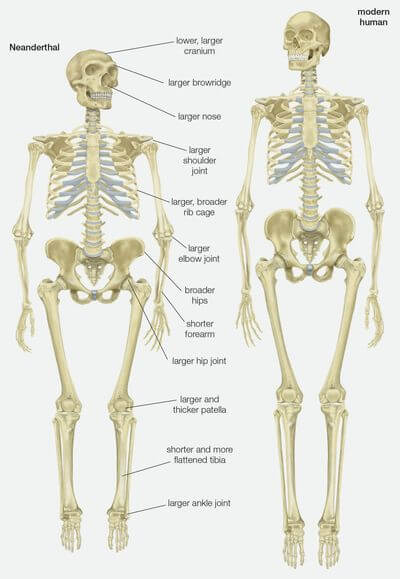
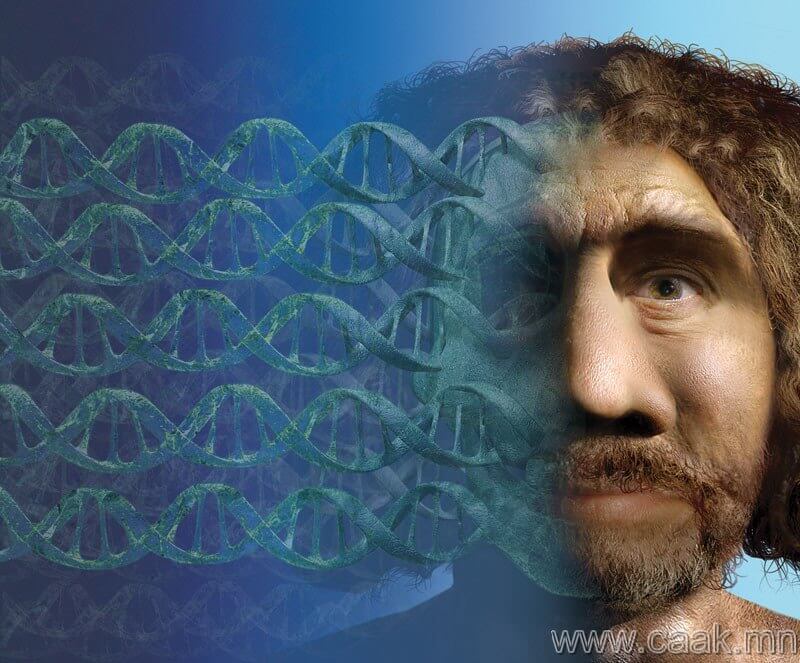
Neanderthal genomes recently sequenced by scientists have revealed that we humans mated with Neanderthals over thousands of years…Just about every human today…has around 1 to 4 percent Neanderthal genes in every cell of their body.

Humans have been around for 200,000 years. But only 6,000 years of it has been recorded. New genetic science is starting to fill in the gaps. And the story it’s starting to tell is gripping.

So, yes, humans and Neanderthals had sex. But…could a human and a Neanderthal fall in love?

“All we really know is that some offspring of humans and Neanderthals eventually got incorporated into human populations, because what we see is small fragments of genomes in human populations,” says [Adam Siepel, a genetics researcher at the Cold Spring Harbor Laboratory].

These hybrid individuals, stuck between two species and probably a little less healthy for the intermixing, were accepted into our human society enough to start families. To kick off the chain of moms and dads that has left its mark on so many of us.

GettyImages copy
How different were the Neanderthals from us? “If you were to compare two random modern human chromosomes, you’d see a difference every thousand base pairs,” Josh Akey, a genetics researcher at University of Washington, told me. With Neanderthals, you’d see a difference once every 750 base pairs.

The GLP aggregated and excerpted this blog/article to reflect the diversity of news, opinion, and analysis. Read full, original post: Humans and Neanderthals had sex. But was it for love?

Evolution erasing our Neanderthal genes, rooting out harmful variants

Although the Neanderthals went extinct 30,000 years ago, their genes live on in human beings. A new study at the University of California, Davis, has found, however, that those strands of DNA are systematically being erased through natural selection.

“On average, there has been weak but widespread selection against Neanderthal genes,” said Graham Coop, professor at the universit[y]s’ department of Evolution and Ecology. The selection may have come about as a consequence of a small number of Neanderthals interacting with a substantially larger modern human population.

[However,] there wasn’t a strong selection against a small number of their genes but rather …weak and widespread selection opposing Neanderthal DNA and gradually bringing about its removal from the modern human genome.

Coop asserted that that is in keeping with the understanding that a minor Neanderthal population mixed with a much greater human one. Whereas inbreeding within small populations causes genetic variants to be relatively common, even if harmful, when mixed with a significantly larger population, the process of natural selection goes against the variants – rooting them out.

The GLP aggregated and excerpted this blog/article to reflect the diversity of news, opinion, and analysis. Read full, original post: Evolution is killing off the Neanderthal’s leftover genes

Aggressive brain tumors temporarily halted using genetically modified immune cells

is brain glioblastoma cancer x

One of the most deadly types of cancers are glioblastomas – a particularly aggressive form of brain tumor. Patients diagnosed with glioblastoma have an average life expectancy of 12-15 months and there is no cure or effective treatment that extends life.

[S]cientists from the City of Hope in southern California reported…a new cell-based therapy that melted away brain tumors in a patient with an advanced stage of glioblastoma.

[In CAR-T therapy,] scientists extract immune cells, called T-cells, from a patient’s blood and re-engineer them in the laboratory to recognize unique surface markers on cancer cells. These specialized CAR T-cells are then put back into the patient to attack and kill off cancer cells.

screen shot at am
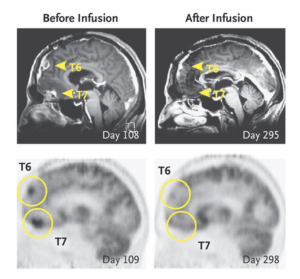
CAR T-cell therapy reduces brain tumors when infused into the spinal fluid.
[In the patient, Richard Grady’s, case,] CAR-T cells were first infused into his brain through a tube in an area where a tumor was recently removed. No new tumors grew in that location of his brain….Three infusions of the CAR T-cell treatment shrunk Richard’s tumors noticeably, and a total of ten infusions was enough to melt away Richard’s tumors completely.

The effects of the immunotherapy lasted for seven-and-a-half months. Unfortunately, his glioblastoma did come back, and he is now undergoing radiation treatment. Instead of being discouraged by these results, we should be encouraged.

The GLP aggregated and excerpted this blog/article to reflect the diversity of news, opinion, and analysis. Read full, original post: Genetically engineered immune cells melt away deadly brain tumors

Stomachs grown from stem cells could yield secrets of digestion

Stem Cells

Stomach-related diseases are common, affecting millions of people. An estimated 25 percent of individuals in the United States are affected by gastrointestinal disorders.

Principal investigator Jim Wells, Ph.D., director of the Pluripotent Stem Cell Facility at Cincinnati Children’s, has made it his mission to develop reliable, consistent models of the organs involved in digestion – specifically, the intestines, stomach, pancreas, and esophagus.

His team has designed ways to use pluripotent stem cells to grow organs.

[Study link here]

[T]he team recently designed a method to grow the stomach’s corpus/fundus region. This is the uppermost section of the stomach, near to the cardiac sphincter where the organ is attached to the esophagus.

Additionally, now that the team has access to both a stomach and intestine model, they hope to study how nutrients are absorbed, how the body controls digestion, and a range of gut disorders.

As technology advances and the resultant organoids become ever more naturalistic, research into gastrointestinal conditions will become easier, quicker, and more productive.

The GLP aggregated and excerpted this blog/article to reflect the diversity of news, opinion, and analysis. Read full, original post: Organoid advances: How to grow a stomach in the lab

Risk of kidney failure could be predicted by DNA coding

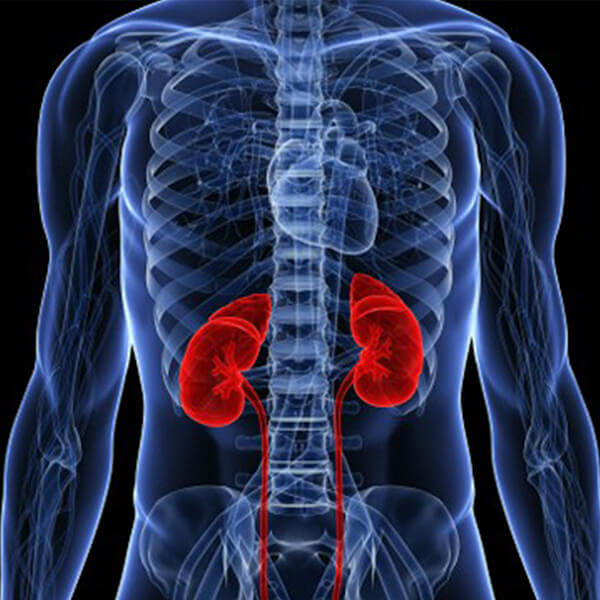
Counting the number of times a string of letters appears in the genome could bring us closer to predicting kidney failure, suggests an international team of researchers. They found that fewer copies of a gene which produces an important defense protein [that] increases a person’s risk of developing a common form of kidney inflammation.

The findings could help explain why Chinese people are more susceptible to the condition known as immunoglobulin A nephropathy (IgAN),…[which] is a leading cause of kidney disease in this population.

“The contribution of this locus to the IgAN risk equals the sum of all the other genetic risk factors that have been discovered so far,” says [Jianjun Liu, who led the study at the A*STAR Genome Institute of Singapore]. He and his team wanted to explore this region further by quantifying patterns of repetition…in a specific gene called DEFA1A3. The number of times a gene repeats can influence disease development and progression.

They found that the IgAN patients had significantly fewer repetitions of the DEFA1A3 gene, which was associated with an increased risk of developing the disease.

The GLP aggregated and excerpted this blog/article to reflect the diversity of news, opinion, and analysis. Read full, original post: Copy That? The Genetics of Kidney Failure

Eggs in IVF treatments need both nature and nurture

Fotolia Subscription Monthly M

Nurture is as important as nature when it comes to IVF, scientists have found, after showing that the chemical ‘soup’ in which embryos are placed during their first days of life is crucial to their success.

…[E]xperts found that by simply switching the conditions in which fertilised eggs live before implantation [in] the womb, they can double the number of healthy embryos.

Previously it was thought that all genetic problems in embryos stemmed from DNA errors in the egg and sperm of the mother and father, and could not be altered.

But the new study proves that chromosomes – which hold the DNA – are still malleable even after fertilisation and the environment they live in has a huge impact on how well they will form, and ultimately the health of a baby.

Pregnancy loss was 3.5 times higher for embryos which grew in one ‘soup’ compared to the other.

The study also has implications for natural pregnancy, because it suggests that if conditions are not right within the womb, then a growing embryo [could] develop genetic abnormalities.

The GLP aggregated and excerpted this blog/article to reflect the diversity of news, opinion, and analysis. Read full, original post: Nurture is as important as nature when it comes to IVF, scientists find

7 ways CRISPR gene editing could transform our lives

CRISPR Cancer HeroArt
[W]e asked a variety of scientists what they think are realistically the most exciting ways that scientists might one day change the world using CRISPR.

Figure out what different genes actually do

By knocking out certain genes and then looking at what effects that has, the technology has the potential to help scientists vastly improve their understanding of different genomes. “That’s one of the most exciting uses,” says Jennifer Doudna, one of the early CRISPR pioneers at the University of California Berkeley.

Develop new cancer treatments

Scientists have already been exploring how CRISPR might be used to treat certain types of cancer for a few years…Luke Gilbert of the University of California San Francisco tells us that he’s excited about using CRISPR to make safer and more effective suppressors for tumors caused by “mistakes” in the DNA.

Destroy viruses like HIV, herpes, and hepatitis

Bryan Richard Cullen at Duke Medical Center says CRISPR can be used to target and destroy these persistent DNA viruses in ways researchers haven’t be able to before.

The GLP aggregated and excerpted this blog/article to reflect the diversity of news, opinion, and analysis. Read full, original post: CRISPR will be a huge story in 2017. Here are 7 things to look for.

Talking Biotech: Marketing expert Jay Baer’s tips on communicating about GMOs

Cet M jUUAA Y o

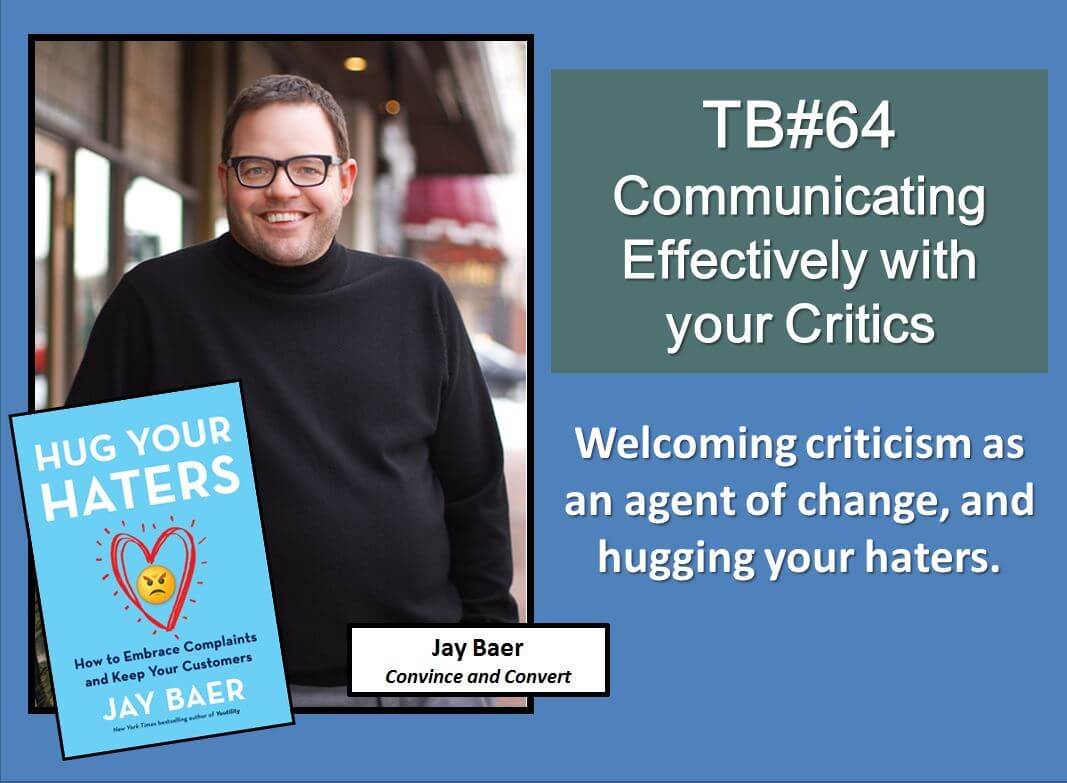
When we discuss new technology with the public, there is inevitable fear and push back with at least a fraction of those we are trying to reach. How we address this is critical to our own credibility. Jay Baer, president of Convince and Convert, a digital marketing and customer relations consulting firm, is an author and consultant in customer service and marketing. He has written the book Hug Your Haters, a book that outlines the value of criticism and the proper ways to address it. These concepts are especially important in the days of social media.

These tips from marketing translate well to science communication, as we attempt to share science with an oftentimes skeptical audience.

Follow Jay Baer on Twitter @jaybaer | Blog: Jaybaer.com | Convinceandconvert.com

Follow Kevin Folta on Twitter @kevinfolta | Facebook: Facebook.com/kmfolta/ | Lab website: Arabidopsisthaliana.com | All funding: Kevinfolta.com/transparency

Stitcher | iTunes | Player FM | TuneIn

Visit Kevin Folta’s Talking Biotech