Aggressive brain tumors temporarily halted using genetically modified immune cells

is brain glioblastoma cancer x

One of the most deadly types of cancers are glioblastomas – a particularly aggressive form of brain tumor. Patients diagnosed with glioblastoma have an average life expectancy of 12-15 months and there is no cure or effective treatment that extends life.

[S]cientists from the City of Hope in southern California reported…a new cell-based therapy that melted away brain tumors in a patient with an advanced stage of glioblastoma.

[In CAR-T therapy,] scientists extract immune cells, called T-cells, from a patient’s blood and re-engineer them in the laboratory to recognize unique surface markers on cancer cells. These specialized CAR T-cells are then put back into the patient to attack and kill off cancer cells.

screen shot at am
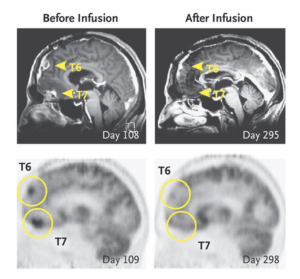
CAR T-cell therapy reduces brain tumors when infused into the spinal fluid.
[In the patient, Richard Grady’s, case,] CAR-T cells were first infused into his brain through a tube in an area where a tumor was recently removed. No new tumors grew in that location of his brain….Three infusions of the CAR T-cell treatment shrunk Richard’s tumors noticeably, and a total of ten infusions was enough to melt away Richard’s tumors completely.

The effects of the immunotherapy lasted for seven-and-a-half months. Unfortunately, his glioblastoma did come back, and he is now undergoing radiation treatment. Instead of being discouraged by these results, we should be encouraged.

The GLP aggregated and excerpted this blog/article to reflect the diversity of news, opinion, and analysis. Read full, original post: Genetically engineered immune cells melt away deadly brain tumors

Stomachs grown from stem cells could yield secrets of digestion

Stem Cells

Stomach-related diseases are common, affecting millions of people. An estimated 25 percent of individuals in the United States are affected by gastrointestinal disorders.

Principal investigator Jim Wells, Ph.D., director of the Pluripotent Stem Cell Facility at Cincinnati Children’s, has made it his mission to develop reliable, consistent models of the organs involved in digestion – specifically, the intestines, stomach, pancreas, and esophagus.

His team has designed ways to use pluripotent stem cells to grow organs.

[Study link here]

[T]he team recently designed a method to grow the stomach’s corpus/fundus region. This is the uppermost section of the stomach, near to the cardiac sphincter where the organ is attached to the esophagus.

Additionally, now that the team has access to both a stomach and intestine model, they hope to study how nutrients are absorbed, how the body controls digestion, and a range of gut disorders.

As technology advances and the resultant organoids become ever more naturalistic, research into gastrointestinal conditions will become easier, quicker, and more productive.

The GLP aggregated and excerpted this blog/article to reflect the diversity of news, opinion, and analysis. Read full, original post: Organoid advances: How to grow a stomach in the lab

Risk of kidney failure could be predicted by DNA coding

Counting the number of times a string of letters appears in the genome could bring us closer to predicting kidney failure, suggests an international team of researchers. They found that fewer copies of a gene which produces an important defense protein [that] increases a person’s risk of developing a common form of kidney inflammation.

The findings could help explain why Chinese people are more susceptible to the condition known as immunoglobulin A nephropathy (IgAN),…[which] is a leading cause of kidney disease in this population.

“The contribution of this locus to the IgAN risk equals the sum of all the other genetic risk factors that have been discovered so far,” says [Jianjun Liu, who led the study at the A*STAR Genome Institute of Singapore]. He and his team wanted to explore this region further by quantifying patterns of repetition…in a specific gene called DEFA1A3. The number of times a gene repeats can influence disease development and progression.

They found that the IgAN patients had significantly fewer repetitions of the DEFA1A3 gene, which was associated with an increased risk of developing the disease.

The GLP aggregated and excerpted this blog/article to reflect the diversity of news, opinion, and analysis. Read full, original post: Copy That? The Genetics of Kidney Failure

Eggs in IVF treatments need both nature and nurture

Fotolia Subscription Monthly M

Nurture is as important as nature when it comes to IVF, scientists have found, after showing that the chemical ‘soup’ in which embryos are placed during their first days of life is crucial to their success.

…[E]xperts found that by simply switching the conditions in which fertilised eggs live before implantation [in] the womb, they can double the number of healthy embryos.

Previously it was thought that all genetic problems in embryos stemmed from DNA errors in the egg and sperm of the mother and father, and could not be altered.

But the new study proves that chromosomes – which hold the DNA – are still malleable even after fertilisation and the environment they live in has a huge impact on how well they will form, and ultimately the health of a baby.

Pregnancy loss was 3.5 times higher for embryos which grew in one ‘soup’ compared to the other.

The study also has implications for natural pregnancy, because it suggests that if conditions are not right within the womb, then a growing embryo [could] develop genetic abnormalities.

The GLP aggregated and excerpted this blog/article to reflect the diversity of news, opinion, and analysis. Read full, original post: Nurture is as important as nature when it comes to IVF, scientists find

7 ways CRISPR gene editing could transform our lives

CRISPR Cancer HeroArt
[W]e asked a variety of scientists what they think are realistically the most exciting ways that scientists might one day change the world using CRISPR.

Figure out what different genes actually do

By knocking out certain genes and then looking at what effects that has, the technology has the potential to help scientists vastly improve their understanding of different genomes. “That’s one of the most exciting uses,” says Jennifer Doudna, one of the early CRISPR pioneers at the University of California Berkeley.

Develop new cancer treatments

Scientists have already been exploring how CRISPR might be used to treat certain types of cancer for a few years…Luke Gilbert of the University of California San Francisco tells us that he’s excited about using CRISPR to make safer and more effective suppressors for tumors caused by “mistakes” in the DNA.

Destroy viruses like HIV, herpes, and hepatitis

Bryan Richard Cullen at Duke Medical Center says CRISPR can be used to target and destroy these persistent DNA viruses in ways researchers haven’t be able to before.

The GLP aggregated and excerpted this blog/article to reflect the diversity of news, opinion, and analysis. Read full, original post: CRISPR will be a huge story in 2017. Here are 7 things to look for.

Talking Biotech: Marketing expert Jay Baer’s tips on communicating about GMOs

Cet M jUUAA Y o

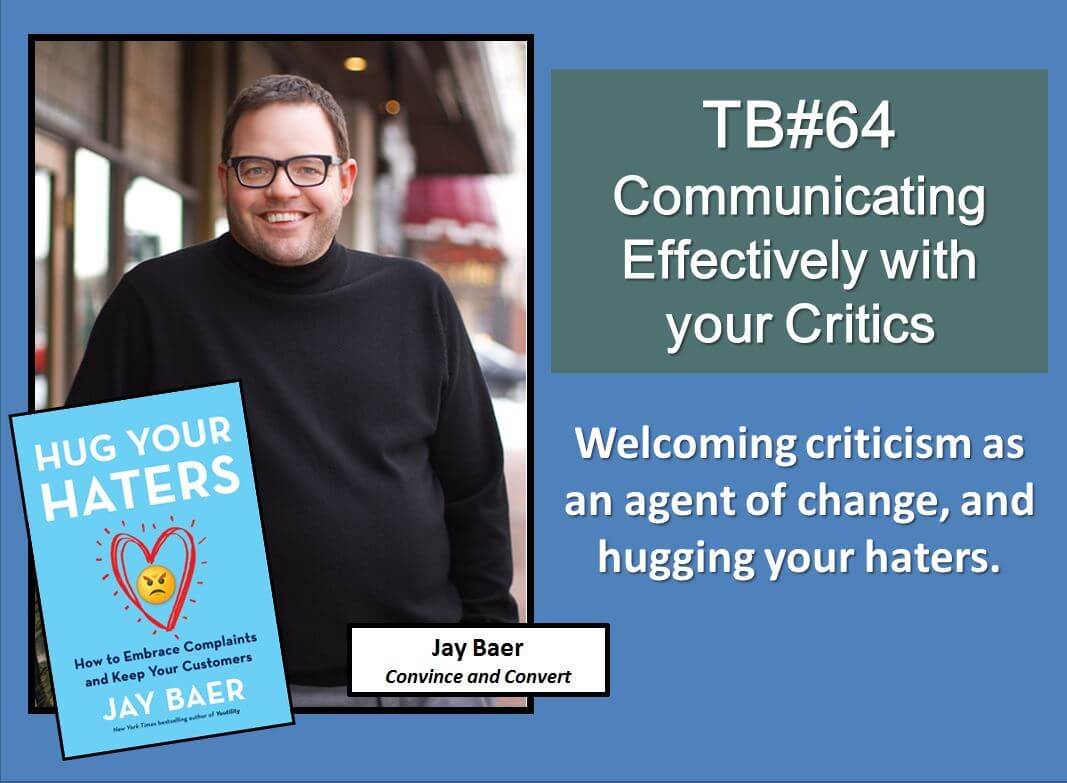
When we discuss new technology with the public, there is inevitable fear and push back with at least a fraction of those we are trying to reach. How we address this is critical to our own credibility. Jay Baer, president of Convince and Convert, a digital marketing and customer relations consulting firm, is an author and consultant in customer service and marketing. He has written the book Hug Your Haters, a book that outlines the value of criticism and the proper ways to address it. These concepts are especially important in the days of social media.

These tips from marketing translate well to science communication, as we attempt to share science with an oftentimes skeptical audience.

Follow Jay Baer on Twitter @jaybaer | Blog: Jaybaer.com | Convinceandconvert.com

Follow Kevin Folta on Twitter @kevinfolta | Facebook: Facebook.com/kmfolta/ | Lab website: Arabidopsisthaliana.com | All funding: Kevinfolta.com/transparency

Stitcher | iTunes | Player FM | TuneIn

Visit Kevin Folta’s Talking Biotech

Scotts GMO grass, nearing approval, under fire in Oregon for ‘contamination’ claims

Screen Shot at AM

[Scotts Miracle-Gro‘s unapproved genetically modified] grass has taken root in Oregon…the self-professed grass seed capital of the world with a billion-dollar-a-year industry at stake. The grass has proven hard to kill because it’s been modified to be resistant to Roundup, the ubiquitous, all-purpose herbicide.

….

The battle pits farmer against farmer, regulator against regulator, seller against buyer. Scotts spokesman Jim King insists the company has done its part and significantly reduced the modified grass’s territory. The US Department of Agriculture, which for 14 years had refused to deregulate the controversial grass on environmental concerns, suddenly reversed course last fall and signaled it could grant the company’s request.

Scotts launched field trials throughout the country, including in Canyon County, Idaho, and Jefferson County, Oregon.

On two occasions in August 2003, hot afternoon winds whipped through the fields north of Madras, scattering the modified seed seed for miles, including into the Crooked River National Grasslands. Signs of the altered grass were found 13 miles away from the test fields, according to federal documents.

Jefferson County grass seed growers have already been dealing with contamination. The altered grass has at times sprouted in their fields of Kentucky bluegrass, requiring them to implement laborious seed cleaning processes.

The GLP aggregated and excerpted this blog/article to reflect the diversity of news, opinion, and analysis. Read full, original post: GMO grass that ‘escaped’ defies eradication, divides grass seed industry

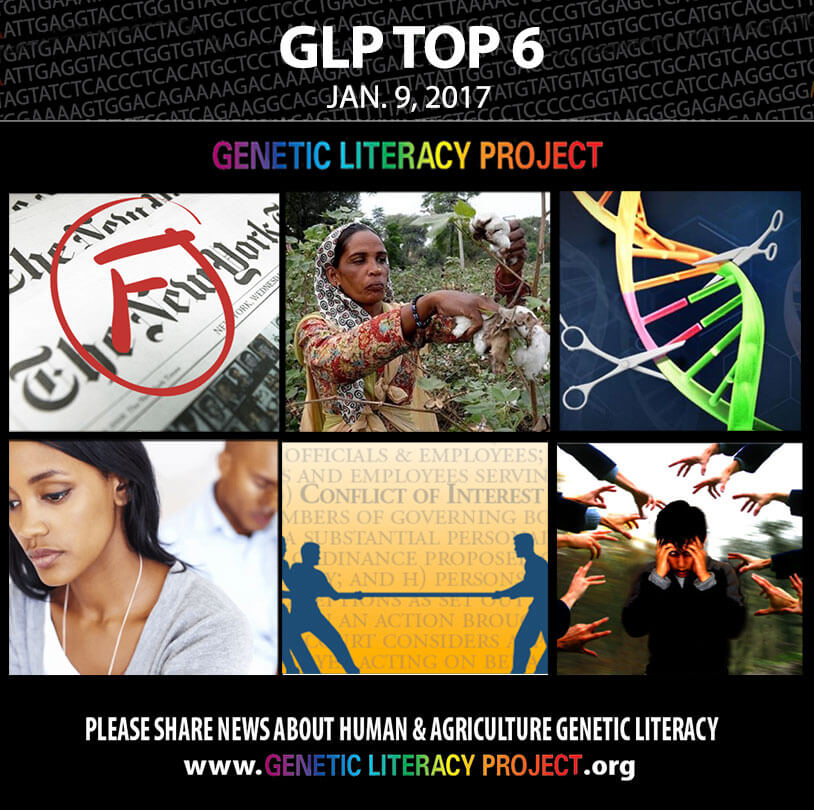
Genetic Literacy Project’s Top 6 Stories for the Week, January 9, 2017

glptop web

From this past week, here are the #GLPTop6 among many great stories on human and agriculture genetics around the world. Please share and help spread the news!

  1. Teenager raped to death in US Animal Research Center (NY Times’ Michael Moss’ F in journalism) by Alison Van Eenennaam
  2. Why business journalists should not write on science: Washington Post botches India GMO cotton exposé by Stephen Neidenbach
  3. Gene editing tool conundrum: CRISPR competitor NgAgo challenged over unreproducible results by Elizabeth Newbern
  4. Transcranial magnetic stimulation: Can strong magnetics revive your sex drive? by Meredith Knight
  5. ‘Agrochemical academic complex’: Should industry fund research? by Alison Van Eenennaam
  6. Can prenatal supplements reduce schizophrenia risk? by Ben Locwin

All this and more! Be sure to sign up for the newsletters and follow us on Social Media. We are on FacebookGoogle+TwitterPinterest! Please feel free to share all the news about human and agricultural genetic literacy!

What genetics reveals about traditional Chinese medicine

Screen Shot at PM

The 2015 Nobel Prize in Physiology or Medicine, shared by Chinese scientist Youyou Tu for her development of an effective antimalarial treatment derived from the wormwood plant Artemisia annual, put the ancient practice of Chinese medicine under a spotlight. It showed the positive side of combining more recent scientific methods with traditional medicine.

But a light was also shined on long-held concerns about traditional medicines.

Ancient healing meets modern medicine

Chinese traditional medicine, which includes the use of acupuncture and complex mixes of herbs, is ancient, with practices that reach back thousands of years. Over the past few decades, these practices have become popular in the West, particularly in the US and Europe. Mainstream medical institutions, such as a complementary and alternative health program at the University of New Hampshire, today study how herbal preparations are made and what benefits they might provide patients. Alternative medicine information is also available from a range of reputable sources, including the National Institutes of Health, which has its own National Institute of Complementary and Integrative Health.

Other organizations are not so reliable. “Disappointed with your current healthcare?” asks one website that sells what it calls Chinese herbs. “Traditional Chinese medicine has helped millions of people with their health concerns.”

Traditional Chinese practices, if used correctly, may be the original “precision medicine,” if you ask their practitioners. Typically, a “patient” will visit with a traditional specialist, who will concoct a cocktail of sorts, a suspension of a wide variety of herbs, spices and other (usually) organics that is supposed to be tailored to that patient’s ills.

Impacting genes

Can Chinese medicine impact the human genome, and deliver on its promises? A variety of individual responses to these therapies might be explained by epigenetic influences on gene expression.

  • A Korean research team found in mice that stimulating a specific acupuncture point associated with neurostimulation and Parkinson’s disease changed the expression levels of 799 genes. These genes could become biomarkers that indicate changes in neuronal activity and possibly point to treatments for the disease.
  • A Chinese group found changes in mRNA and protein expression in mouse lung tissue after stimulation of three acupoints with acupuncture needles. These expression changes appear to affect regulation of macromolecular biosynthesis, transportation and metabolism, the team reported.
  • A Taiwanese team analyzing 3,294 medicinal herbs and other compounds found that 36 percent of them worked with histone-modifying enzymes, and one-third of those promoted chromatin condensation, which compacts chromosomes and affects DNA repair and gene expression.

Natural isn’t harmless

Not all traditional medicines are beneficial, however. In fact, any responsible practitioner or specialist will warn that herbal treatments can be hazardous.

Aristolochic acid, which is part of many traditional Chinese preparations for menstrual cramps, rheumatism and (sometimes) weight loss, was also associated with kidney failure and urinary tract cancer, two studies reported.

In addition, traditional Chinese preparations have been found to contain heavy metals and plant toxins. Cases of adverse reactions have been reported, including some deaths. These concoctions are not regulated in either the US or Europe as drugs, but they can have powerful actions by themselves and equally powerful interactions with prescription drugs.

Another issue with Chinese traditional medicines has been identifying the ingredients of any individual herbal preparation. This issue has stemmed from either contaminants or the use of a substitute compound from similar, but not identical, species of plant. Since more than 5,000 species are used for therapies, and most of them are animal- or plant-derived organics, such identification has been difficult. But high-throughput screening and new whole-exome or whole-genome sequencing analysis has permitted scientists to more precisely determine what’s in the mix.

These techniques also have uncovered compounds derived from endangered animal and plant species, including bear bile powder from the endangered Asiatic black bear, and horn powder from the endangered Saiga antelope. The presence of these compounds is a violation of the Convention on International Trade in Endangered Species (CITES). Other compounds that were not declared by the makers were not endangered, but still a matter of concern: water buffalo, cow, deer and sheep DNA was discovered in 78 percent of preparations tested by an Australian team. “Even in the 15 (traditional Chinese medicines) tested here, the occurrence of CITES-listed species, potentially toxic/allergenic plants and non-declared constituents was all too common,” the researchers said.

There’s no question that traditional medicines, including Chinese herbal therapies, have a physiological effect, including an effect on disease. And many treatments, including the anti-malarial that won Professor Tu a Nobel Prize, can best any western-invented treatments. It’s important to note, however, that traditional Chinese medicine, Ayurvedic and other Asian medical traditions are not just interesting chemicals that can be part of western medicine—all these traditions come with their own, equally ancient philosophy and unique views on existence and health. Such treatments as artemisinin and acupuncture were developed under these philosophies, not western ones. For Asian traditional therapies and therapists as well as for western medicine, it’s about a meeting of minds as much as matter.

Andrew Porterfield is a writer, editor and communications consultant for academic institutions, companies and non-profits in the life sciences. He is based in Camarillo, California. Follow @AMPorterfield on Twitter.

Real story of anti-GMO sensation Rachel Parent: Idealist or pawn of ‘natural’ marketers?

Screen Shot at AM

Imagine. You come home after a hard day at school. You’re hungry, so you reach for a bag of delicious corn chips. You don’t know what’s in there because there’s no label, so you eat it…

OMG, there’s GMOs in it! You didn’t know! You might be harmed! That’s why we need food labeling, to protect innocent children being targeted by evil corporations!

That’s the gist of anti-GMO campaigner Rachel Parent’s stump speech, delivered at schools and on television programs around the world. She’s only 18 years old, but the Canadian high school student has become a canny, international crusader in the effort to ‘protect the world’ against the ecological and health dangers of foods made from genetically engineered crops. You can watch her 2014 Tedx talk in Toronto three years ago here.

We urge you to watch this. She is an excellent presenter. The tone of her voice, smug chuckling, and the shake of her her head were all perfectly timed, sending a message that you’d have to be crazy not to agree with her that GMO corn is something you’d want to avoid. That’s why, she insisted, kids have a “right to know”.

Who is Rachel Parent?

Most recently, Parent could be seen in The Hague last year at the circus anti-GMO Monsanto witchIMG x burning tribunal. She delivered a grave speech about the ‘evils’ of Monsanto and ‘Big Ag’ and their  “conspiratorial links” with corrupt governments in the US, Canada and elsewhere that is turning the world into ‘chemical junkies’, hooked on the seed industry’s latest Frankensteinian creations, in a focused effort to ‘control the world foods supply–all to serve capitalist greed. Think this description is overheated? Just read what she has written and what she has said.
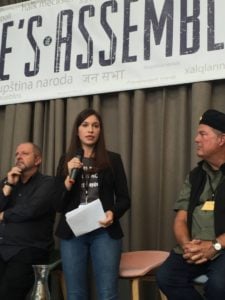
In case you are not familiar with her name, let us bring you up to date. In her TEDx talk and elsewhere, Parent has said that she was drawn to the GMO issue at age 12, when she had to give a school speech for a 6th grade project. As she prepared for her talk, she’s said, she “saw how GMOs were negatively impacting the entire ecosystem — the environment, soil, water, plants, animals, insects and people. Just everything and everyone.” So, snap, the self-created myth goes, shortly after her speech was well received at her school, she founded an organization called Kids Right to Know to spread what had been revealed to her.
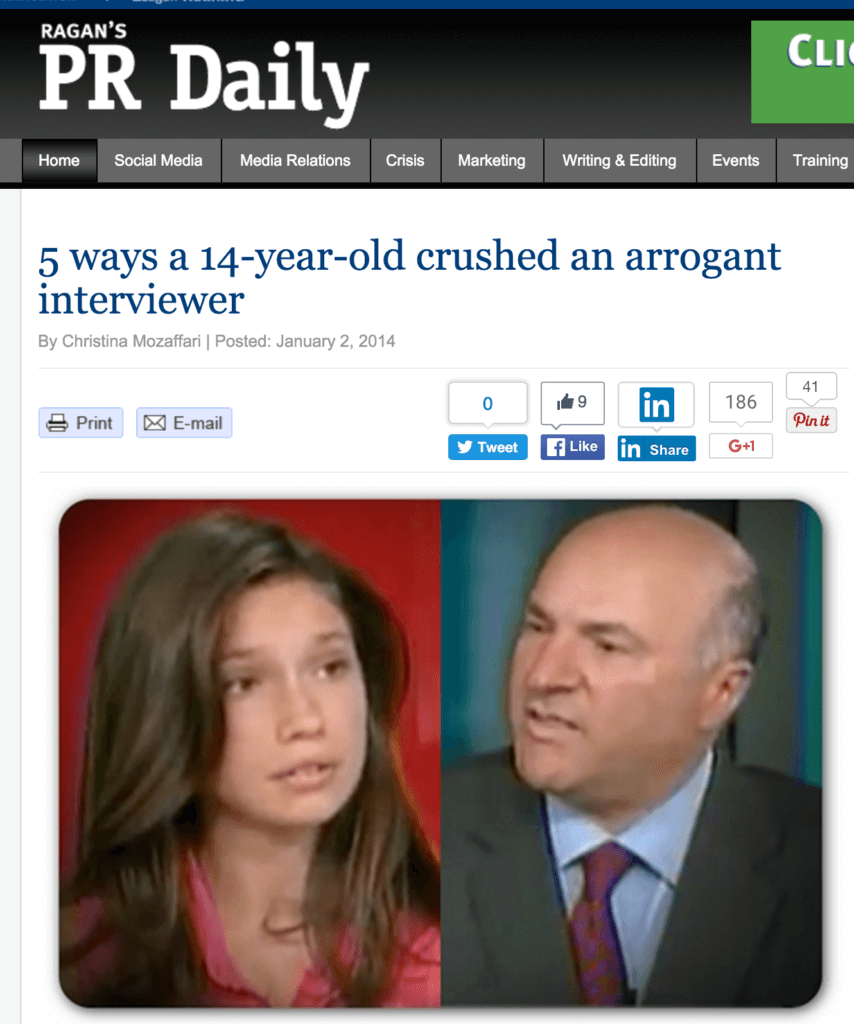
Screen Shot 2016-02-07 at 3.51.22 PMParent became a folk hero among the anti-GMO crowd when, shortly after entering high school, she debated labeling and the safety of GMOs with TV personality Kevin O’Leary on a Canadian Broadcasting Company program. Her ‘debate’ went viral. Headlines such as this one — “5 ways a 14-year-old crushed an arrogant interviewer” — flooded the web.

Like most anti-GMO activists, Parent asks people to support mandatory GMO labeling but does not directly call for a ban of genetic technology in agriculture. But during her talk and in her debate with O’Leary and on other programs, she tries to convince people that the ingredients derived from genetically engineered plants pose ‘hidden dangers.’ Like most pro-labeling supporters who claim to support a ‘right to know’ but in less guarded moments make it clear they would love to rid the planet of genetic engineering technologies altogether (see Genetic Literacy Project infographic and article by Jon Entine here), Parent tries to make her doubts about GM food safety sound science based.

For example, on her website, Kids’ Right to Know, she cites a stream of studies that raise all kinds of safety concerns. They come across as alarming, if one is not familiar with the scientific literature on GMOs. In actuality, they are mostly a combination of fringe research in predatory pay-for-play journals, and a familiar collection of discredited, misconstrued and biased studies reviewed and rejected by some 270 international independent science organizations which have issued statements declaring that foods containing ingredients from genetically-engineered plants are as safe or safer than conventional or organic foods. But Parent presents these fringe, flawed studies as mainstream science, and her fresh sincerity goes a long way toward convincing the credulous.

She also lapses into common strawman arguments and half-truths, such as claiming that Third World hunger is due to poverty and not a food supply issue, when in reality both of those things are factors and the supply issue will get worse as we move toward a 9 billion plus population around mid-century. Here is a well reasoned critical analysis of Rachel Parent’s views by Swedish science writer Emil Karlson, author of the respected Debunking Denialism blog.

But something else is never disclosed on her website and in her talks. Why did Parent suddenly get so interested in GMOs? And how did this precocious teenager explode upon the foodie world with a polished website with layered arguments that mimicked the most sophisticated anti-GMO websites? It wasn’t disclosed in the TEDx talk, nor at the anti-GMO marches and other events where Parent gives interviews and talks, but the Parent family owns a franchise of stores called Nutrition House.

Screen Shot 2016-02-07 at 6.21.53 PMWhat is Nutrition House? Think brick and mortar version of online stories like Mike Adam‘s Natural News and Dr. Joseph Mercola, which are well known as websites peddling dietary supplements and natural products. These products — widely considered unnecessary at best and killer dangerous at worst — are virtually unregulated and their purveyors have managed to block repeated attempts at mandatory labeling.

According to an article on the Canadian Business Journal, “Nutrition House has positioned itself well to capitalize on the $4 billion (Canadian) natural health products industry.” Worldwide, it’s a $400 billion industry — unlabeled and unregulated, with no purity standards or testing.

Nutrition House, her parent’s multi-million dollar business, has more than 70 stores throughout Canada, plus one in Atlanta, mostly in upscale shopping malls. Products include nutritional supplements, herbal remedies, “sports nutrition” (protein powders and such), and a host of other products, most of which come in jars in capsule or power form. Basically, it’s like the supplement section of the Whole Foods Market, and if you look into many of the products, you will see that they’re guaranteed to be GMO-free, and free of almost any nutritional benefit as well.

Rachel’s father, Wayne Parent, is the CEO of Nutrition House. His Facebook page suggest that he himself is an activist against GMOs. In other words, teenage Rachel is not just a leading spokesperson for labeling advocates; whether she will acknowledge it or not she’s a front for the ‘natural products’ anti-GMO movement who have done everything in the power to deny the public a right to know about the very real dangers of many “natural” supplements.

How ironic that the literal poster child for the anti-GMO ‘right to know’ movement is the daughter of a family who has made millions of dollars selling quack notions to the public about supplements while fighting tooth-and-nail to prevent the public from knowing the truth about the scientifically demonstrated dangers of the mostly useless, unlabeled products that they sell. So much for Rachel and her parents commitment to a ‘right to know.’

Because of those concerns, the Genetic Literacy Project contacted Parent and her father’s company by email and through her website contact forms with requests for a statement to include in this article. Neither Rachel, nor her father’s business has responded, but we do hope that they’ll send comments now that this article is published.

Rachel Parent and the Kevin Folta affair

The Rachel Parent backstory — that she and her family are deeply embedded in the anti-GMO industry — helps put in perspective the recent attack by Parent and her advocates against University of Florida plant scientist Kevin Folta. Folta has been a tireless advocate in recent years on the potential risks and benefits of agricultural biotechnology, appearing for no fees at public conferences, university lectures and TV and radio programs, while engaging the public in online chat lines and podcasts and in hundreds of blogs and articles each year. We’ve known Professor Folta for years; he is whistle clean and a dogged advocate for transparency. His undeniable success at campaigning for empirical based science has made him a perennial target for anti-GMO groups, particularly fringe natural product organizations.

The antis finally scored last summer after the organic industry funded group US Right to Know secured emails under various state freedom of information acts of more than 45 professors and science communicators who USRTK claimed had ‘dangerous’ industry ties. Among them was Folta, who has received exactly zero dollars in his career from ‘Big Ag’ to support his research. USRTK cherry picked one email that showed that Folta’s university had received $25,000 from Monsanto as an “unrestricted gift” (university jargon for no deliverables expected) to cover the cost of travel and other incidentals for unpaid talks to various organizations to teach scientists how to effectively engage the public in discussions on genetic engineering.

Folta himself pocketed nothing from these talks, all done for free in open public forums. In one sloppily written article, in the New York Times, Folta was profiled extensively while the work of Charles Benbrook, a well known GMO critic, was only briefly referenced. As it turned out, 100 percent of Benbrook’s research dollars — hundreds of thousands of dollars — came from anti-GMO and pro-organic industry sources, in contrast to the zero industry dollars that supported Folta’s research.

The controversy led Folta to suspend, at least temporarily, his science outreach efforts. But the unsubstantiated attacks have continued, most recently spurred by the Parent family. In an article by Allison Vuchichon on the Global News Canada website, “Documents reveal Canadian teenager target of GMO lobby,” Rachel and her parents maintained that they were the targets of a “GMO lobby” financed attacked headed up by Folta.

“To think at this point, I was on their radar and I had no clue,” Vulchicohon quoted Rachel as saying.

The article highlighted an email Folta had written to a friend suggesting that Rachel’s website KidsRighttoKnow.com was deceptive and that a website should be established to counter the unscientific claims by teaching STEM (science and technology issues) to teenagers. The Parent site is in fact filled with unsubstantiated claims that mirror the mostly anti-consensus science views of the natural products industry — like her parent’s company, Natural House.

Anti-GMOers see it differently. “It’s mostly scientists that they attack, but Rachel is a standout. The agrichemical industry is plainly quite threatened by this teenage schoolgirl, so that’s why they’re after her,” the article quoted Gary Ruskin, the co-director of USRTK, who had procured the emails. Ruskin referred to Folta as the GMO industry’s “attack dog” — an absurd comment to anyone who has met Folta or is familiar with his engaging, professorial and non-confrontational style. The article portrayed Folta as the industry’s serpent’s head targeting a helpless Canadian truth teller:

Later that year [2014], while attending a roundtable in Washington, D.C., Folta was asked by public relations firm Ketchum to make a video about Parent.

The email request to Folta read, “How do you agree/disagree with 14-yr old GMO Labeling activist Rachel Parent, who is, in her own words ‘not anti-science’ but ‘for responsible science and ethical progress?’”

But, the email added, “we try to refrain from personally attacking folks, so don’t worry too much about Rachel specifically.”

Nine days later, a video appeared online that was quite specific, entitled, “How do you agree/disagree with 14 year old GMO Activist?”

The video discussed Parent’s activism, her belief that all GMO food products should be labelled, and addressed her apparent lack of scientific knowledge.

“So when I think about answering Rachel Parent, who’s the activist child – well, young woman – who’s running the website ‘Kids Right to Know…The things I just adore about Rachel is that she’s clearly very articulate, clearly intelligent,” Folta said in the video.

“The problem that I have is when Rachel starts to let non-scientific thinking really kind of cloud her final decision-making process.”

Parent said she finds the tone of the video “almost degrading.”

She also defended the information on her organization’s website as scientifically sound.

“People can say whatever they want about me, but as long as I know what I am doing is right, their opinion doesn’t matter.”

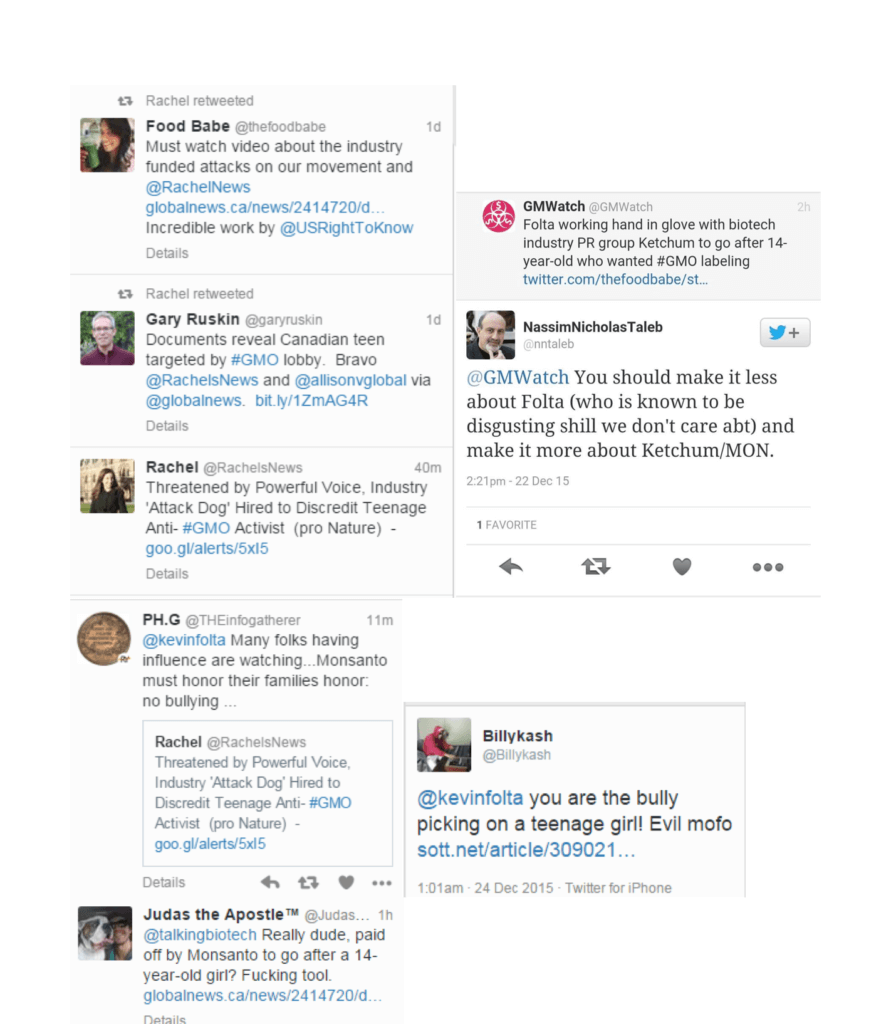
The article, written with a decided bias by Vuchichon, who gave a platform for a renewed attack on Folta and did not disclose the financial conflict of interests of the young campaigner and her parents, let to a torrent of vicious emails and social media personal attacks against Folta. The fusillade was touched off by GMOFreeUSA using an attack voiced by Stacy Malkan, the co-founder of USRTK.Screen Shot 2016-02-07 at 5.34.13 PM
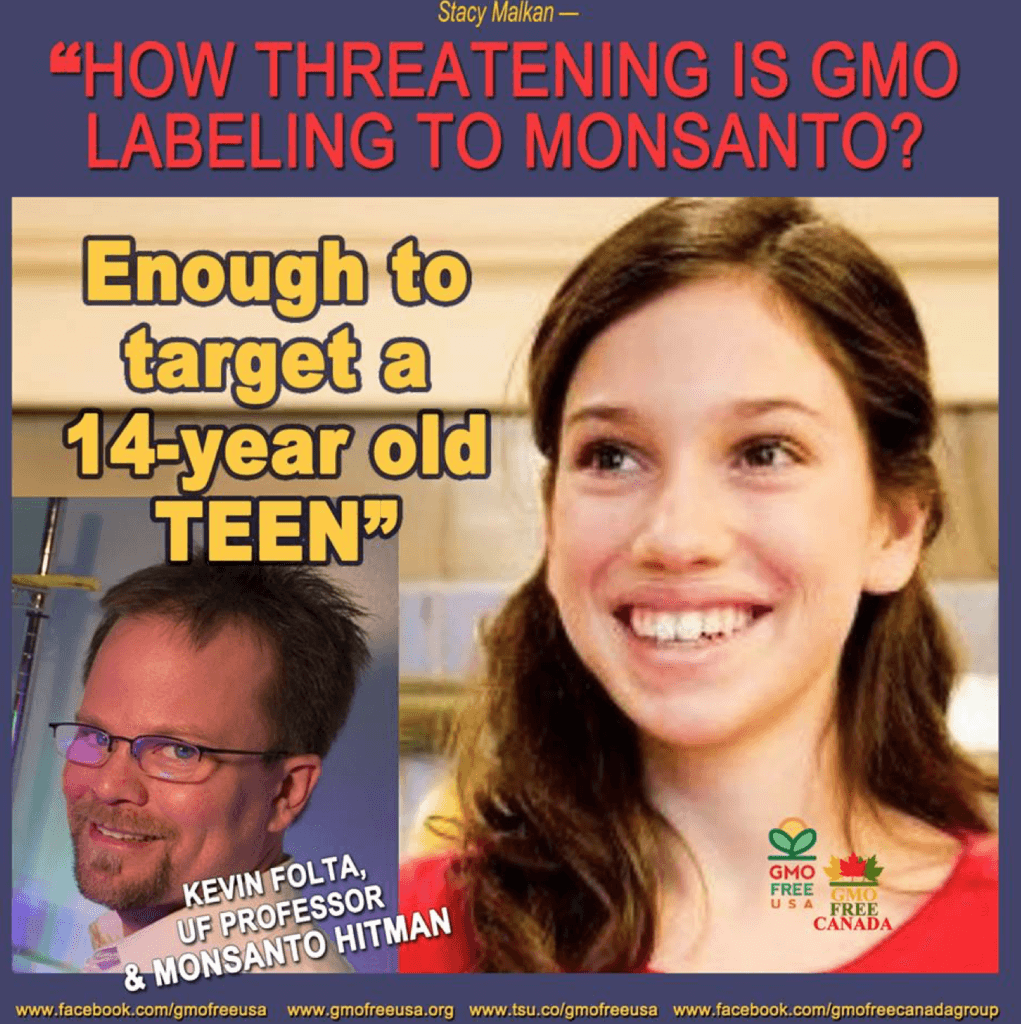
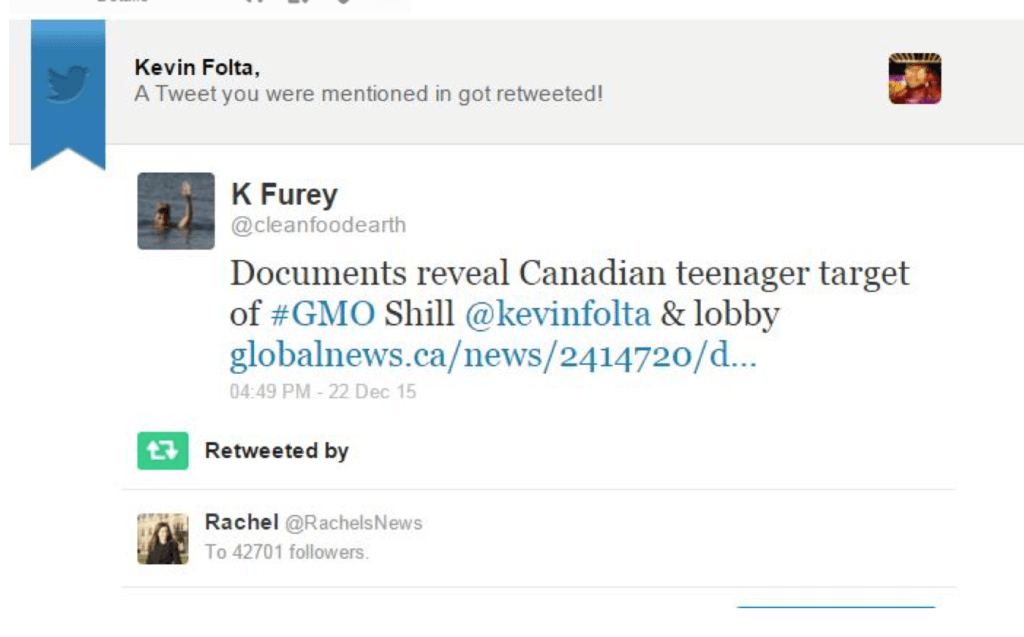
Malkan and USRTK co-founder Gary Ruskin then mounted a Twitter offensive, echoed by the anti-GMO chorus that haunts the Internet, sweeping in such influential anti-GMO campaigners as Nassem Taleb, Pete Meyers and Vani Hari, the self-proclaimed Food Babe.

Screen Shot 2016-02-07 at 5.38.38 PMScreen Shot 2016-02-07 at 5.45.09 PM

Rachel Parent jumps in to promote this conspiracy mongering to her followers — again, never disclosing her family’s personal financial stake as fringe medicine promoters in trying to discredit anti-science critics like professor Folta.Screen Shot 2016-02-07 at 5.42.10 PMThe attackers that sought to defame scientists and communicators like Folta ended up exploiting an idealistic, if misguided teenager; she’s become a tool for their ideological goals, although she is old enough to distance herself from their views. Again and again, her parents and their allies portray her as a valiant warrior and innocent victim of bullying, when no bullying words were ever spoken. And Parent has even endorsed and retweeted false allegations against a public scientist.
Anti-science fanaticism?

What we have is this: A scientist critical of Rachel’s deceptive claims on her website and the distorting impact they might have on innocent children suggests a science-based remedy — a STEM-based website to counter misinformation — exactly the kind of engagement we would hope that public scientists would be doing. No website was ever made, and the domain Folta suggested as a venue for a genuinely open discussion of the science, “kidsrighttotruth.org”, is actually owned by Parent’s father. Folta’s off-the-cuff comment was twisted into some sort of attack on Parent coordinated by Monsanto.

These distortions continue the trend established and propagated by USRTK: Misuse FOIA to secure tens of thousands of emails, cherry pick short passages, and then re-interpret them in false narratives that are damaging to scientists. All in all quite a fiasco… in this case prompted by Rachel Parent — who the media, by and large, has portrayed as an idealistic teenager promoting the ideals of transparency and democracy.

The truth, clearly, is far different. Parent is entitled to her opinions, of course. But let’s be clear. Whatever her personal views, she is servicing the perspectives of campaigning ideologues who would like nothing more than oversee the end of genetic engineering, CRISPR, gene editing and other technological breakthroughs that have proven so beneficial–though not without complications. This mission coincides with the financial interests of the natural products and supplement industry (and her family’s multi-million dollar company), which has fought tooth-and-nail against the public’s ‘right to know’ when it pertains to their own products.

From mommy bloggers to the President, we all recognize how important it is for young women to become trained and active in STEM disciplines. In the case of Parent, it is sad to see ideology steer her away from science and into promoting denialism and its profitable products. Everyone has acknowledged that she is bright and articulate. Unfortunately, she’s being manipulated as a popular puppet to push bad science and unvetted products. That’s why we should not be critical of her personally. However, we must be critical about what she represents and of the those, including her parents, who are using her: she’s become spokesperson and dangerous role model for young people who see embrace the reactionary view that science is an ideological tool and little more. Rachel Parent is a poster child; not for bullying or the excesses of Big Ag but for the brazen hypocrisy of those who use the cloak of ‘right to know’ to deceive the credulous. 

Jon Entine is Executive Director of the Genetic Literacy ProjectFollow @JonEntine on Twitter.

David Warmflash is an astrobiologist, physician and science writer. Follow  @CosmicEvolution on Twitter.

Insect resistance to Bt crops and weed resistance to herbicides rose in 2016

Screen Shot at PM

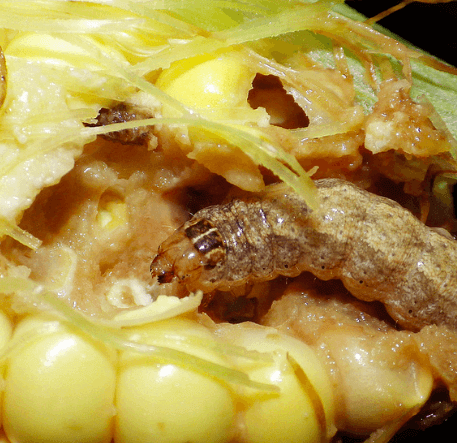
Insects and weeds pushed many chemical and genetic crop protection tools to their breaking point. A wealth of confirmed and suspected insect resistance to a number of Bt crops took many off guard in 2016. However, scientists say the problem had been mounting for years.

. . .

The next year is unlikely to offer relief. Many insecticides could be on the regulatory chopping block in 2017, and there are no new Bt traits on the immediate horizon.

[Texas A&M entomologist Pat Porter] speculated that “the era of the Cry toxin [Bt crops] seems to be ending.” Companies would disagree … but at the very least, farmers may have to re-evaluate their insect management plans carefully in 2017. Crop rotation, non-Bt crops and multiple modes of action in chemical insecticides will be more important than ever.

Herbicide-resistant weeds added new lands and new chemicals to their conquests this year. Southern growers continued to struggle with glyphosate-resistant Palmer amaranth… PPO-resistant Palmer and glyphosate-resistant Italian ryegrass….

. . .

Weed scientists left growers with a clear overall message …: The easy button [glyphosate] is broken. Answers can no longer come exclusively from the jug. Cover crops, mechanical seed destruction, crop rotation, tillage and a systems approach to managing weeds are now a reality.

The GLP aggregated and excerpted this blog/article to reflect the diversity of news, opinion and analysis. Read full, original post: Pests March On: Insect, Weed Resistance Likely to Plague Farmers in 2017

Pro and anti-GMO activists’ goals for food and environment are not that different

Screen Shot at AM

I, too, am concerned about … my children and grandchildren: will they have clean air and water? … You’re frustrated by the fact that … some politicians are ideologically driven to believe that climate change isn’t real. These ideologies are fueled by corporate lobbyists, so it’s natural that you don’t want corporations to be “tinkering” with our food.

. . . .

[I]n the next few decades, global warming and population growth will impact agriculture even further. As we confront these problems in agriculture, we need every tool at our disposal, including GMOs.

. . . .

I’ve been put in the uncomfortable position of defending companies whose actions I may not always agree with, but have developed the transgenic crops that I support. … I do this because the scientific consensus is that GMOs are as safe as traditionally bred crops. This is the same scientific consensus that you defend when you speak of global warming.

The elimination of GMOs is not a silver bullet that will somehow solve the issues in our society or our food system. We should focus our efforts on the real issues and not a convenient scapegoat that has been placed in front of us.

The GLP aggregated and excerpted this blog/article to reflect the diversity of news, opinion and analysis. Read full, original post: Pro-GMO or Anti-GMO, Our Goals Are Not That Different

Kauai council may repeal anti-GMO/anti-pesticide bill ruled invalid by federal court

f b a e image e

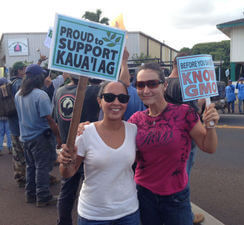
The County Council will take up a resolution to correct the serious public policy error made with enactment of Bill 2491, the 2013 anti-GMO measure later repurposed as pesticide legislation.

…federal courts at both trial and appellate levels ruled that Bill 2491 conflicted with state law, which grants the state of Hawaii the power to regulate both GMOs and pesticides.

In response, County Council Chair Mel Rapozo and Vice Chair Ross Kagawa have advocated repeal of Bill 2491. They make the simple argument that because federal courts have invalidated it and its proponents clearly do not plan to pursue further appeals, there is no earthly reason for this bad law to remain on the books.

Farming is a blend of art and science…simplistic fears of GMO crops lack factual justification…some pesticide use is a necessary aspect of farming on anything approaching a commercial scale. When sugar was king in Hawaii, industrial farming techniques were commonplace, including pesticide use.

With sugar now gone, Kauai’s future as an agricultural provider depends on taking farming to scale in a way that farmers of all types — including conventional, organic and GMO seed companies and even GMO crops grown on island — can all contribute to the food supply chain…

As a county, we have the ability and legal power to use existing and new zoning ordinances to create an economic climate more hospitable to diverse agriculture.

The GLP aggregated and excerpted this blog/article to reflect the diversity of news, opinion, and analysis. Read full, original post: Move past Bill 2491 to era in which all farmers can prosper

Anti-GMO ‘Merchants of Doubt’ crusaders: Danny Hakim, Eric Lipton, Carey Gillam

Trust Photo e

Editor’s Note: University of Florida horticulturist Kevin Folta addresses the latest journalist attack on  biotechnology and agriculture.

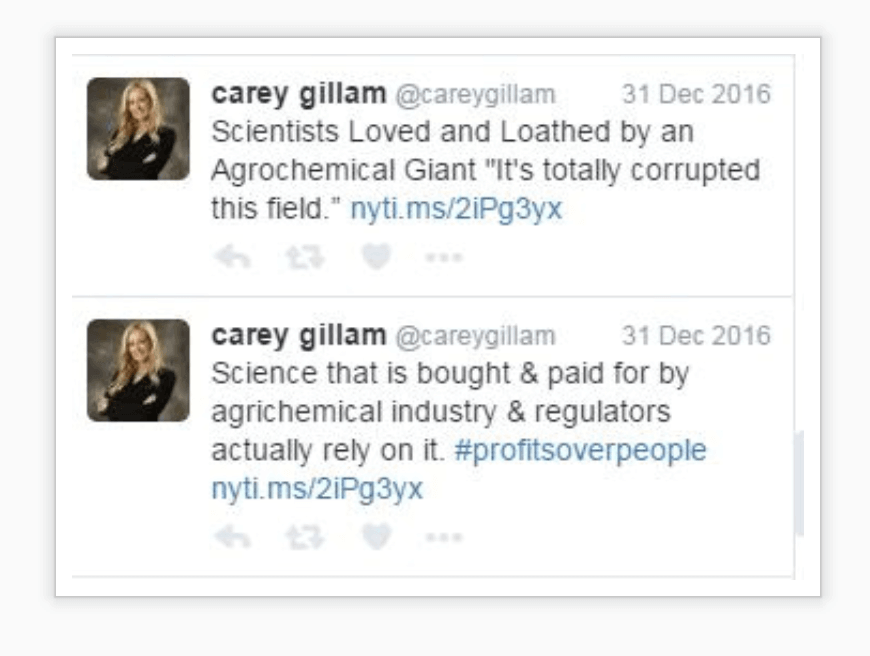
In last week’s New York Times [“Scientists Loved and Loathed by an Agrochemical Giant“], reporter Danny Hakim once again provides a political cherry picking that strives to harm public perception of science. Hakim is part of a cadre of journalists that clearly have personal disdain for conventional farming, particularly if it is supported by technologies from biotech seed companies. 

His series in the New York Times is called Uncertain Harvest, an ironic term seeing as though food security in this country and around the world has never been better. Thanks to improvements in genetics and production techniques, the harvest has never been more certain.

…journalists like Hakim attain a visible venue in a place like the New York Times that grants them presumptive authority to report news that isn’t news at all, but instead are veiled political statements. 

In the past, activist organizations like USRTK, financed by aggressive anti-biotech NGOs and corporations, provided cherry-picked stories to reporters like Eric Lipton.

This is about one thing– destroying trust.Screen Shot at AM

USRTK (funded by aggressive anti-biotech interests) writer Carey Gillam uses Hakim’s analysis of two researchers interactions with industry to paint the entire research community as untrustworthy.

This is the job of a new flavor of yellow journalism. It is to portray public servants as dupes of corporate interests and convince the public that science can’t be trusted. 

The GLP aggregated and excerpted this blog/article to reflect the diversity of news, opinion, and analysis. Read full, original post: Journalistic Merchants of Doubt Seek to Destroy Trust in Science

Could CRISPR revolution help streamline US, EU regulations of GM crop technology?

Screen Shot at AM

Under current US and contemplated EU regulation, when CRISPR is used to modify a handful of nucleotides to knockin or knockout one or more endogenous gene pathways in a crop organism, the resulting organism is not viewed as a GMO…[but] if CRISPR is used to introduce an entire exogenous gene sequence into an organism, it would be considered a GMO…[but] consider if CRISPR is used to introduce multiple copies of an endogenous gene to obtain higher levels of expression, without the introduction of foreign DNA. Should the US or EU view this as a GMO?

The classification of CRISPR-engineered crops as non-GM has the potential to exacerbate public distrust around GMOs if…not handled in an open and engaging way.

While in the past much of the EU has been reluctant to embrace GM crops, recent pressure from trade partners has led to speculation that the EU will move toward the position that crops which have been altered using [New Breeding Techniques] should be exempt from the regulations that currently control transgenic GM crops.

The agricultural biotech industry has not been well served by historical GMO messaging efforts. However, the awesome power of CRISPR to easily and inexpensively copy and paste genetic information has captured the public’s imagination…[and] offers a fresh opportunity for the industry to engage the public and shape policy and perception together, rather than after the fact.

The GLP aggregated and excerpted this blog/article to reflect the diversity of news, opinion, and analysis. Read full, original post: Genetic Engineering and Crops: The CRISPR Conundrum

Obesity changes gene activity which may predict diabetes risk study says

Screen Shot at AM

In what is being called the biggest study yet on the effect of body mass index (BMI) on DNA, researchers uncovered that significant changes were found in the expression of genes responsible for lipid metabolism and substrate transport…of individuals with high BMIs. Ultimately, the team was able to identify epigenetic markers that could predict the risk of type 2 diabetes.

“Our results allow new insights into which signaling pathways are influenced by obesity”, said Christian Gieger, a researcher involved in the study. “We hope that this will lead to new strategies for predicting and possibly preventing type 2 diabetes and other consequences of being overweight.”

However, while the results may sound dire, the team hope their findings could lead to better ways at identifying those most at risk of developing diabetes, [and] help them make changes in their lifestyle to ensure they do not go on to develop this condition.

The GLP aggregated and excerpted this blog/article to reflect the diversity of news, opinion, and analysis. Read full, original post: Being Overweight Changes Your DNA, Increasing Risk Of Diabetes For Offspring

We did not evolve small teeth because of brain development or primitive food-cutting tools

human evolution brain teeth

The human brain and teeth have not evolved together in humans, unlike what past studies had suggested.

Compared with other hominids, one of modern humans’ most distinctive feature is that they have large brains and small posterior teeth…Indeed, scientists believed that a bigger brain was linked to more complex behavior, such as the creation of stone tools to cut food, which reduced the need for big teeth and allowed for dental reduction.

However, this theory has recently been challenged by studies showing that tool use predated big brains. Australopithecus might already have used primitive stone tools some 3.3 million years ago.

A multitude of unrelated behavioral and ecological factors might have influenced the evolution of the teeth and the brain in the different hominid lineages.

“As for dental evolution, the rate is so constant it will be hard to pinpoint a single factor. We think it might be a gradual phenomenon that is related to the progressive gracilization of the human face”, concluded [Aida Gómez-Robles, from George Washington University].

The GLP aggregated and excerpted this blog/article to reflect the diversity of news, opinion, and analysis. Read full, original post: Myth buster: Our big brains and small teeth did not evolve at the same time

Video: Quick and simple guide to creating babies using IVF

low C IVF embryo light micrograph SPL

In vitro fertilization (IVF) has changed dramatically ever since the first baby to be conceived by IVF was born in 1977. Thanks to advances in IVF research, doctors can better help couples with fertility issues in producing a biological child by controlling the fertilization process. However, the process still features several complications and a less than 100% success rate. How do doctors specifically carry out this procedure and what sort of improvements are being made to make the process easier?

The GLP aggregated and excerpted this video to reflect the diversity of news, opinion and analysis. Watch the original video on YouTube: How Does IVF Make Babies?

3 ways genetic engineering could finally eliminate malaria

[D]espite modern disease management strategies…malaria still killed nearly half a million people [in 2015].

[However,] some scientists are experimenting with how they could alter the genetic code of mosquitoes to stop malaria transmission, then use a technique called gene drive to make sure those alterations spread throughout infected mosquito populations.

[There are] three different approaches that could stop the spread of disease: scientists could alter mosquito genetics to spread a fatal flaw through the entire population, reducing overall numbers; they could modify mosquitoes to produce more male offspring than female offspring, reducing the number of mosquito bites; or they could equip mosquitoes with genes to help them fend off malaria, reducing transmission of the disease within mosquito populations and thus to humans, too…In labs, all three of these approaches have shown early promise.

Researchers from the Institute for Disease Modeling, Oxford and the Imperial College of London decided to use mathematical modeling to test how these methods might fare in the wilds of sub-Saharan Africa…The results were optimistic: “[M]alaria elimination would move from aspiration to a rapidly implementable track, saving millions of lives and freeing up many billions of dollars in global health resources to solve other challenges,” they wrote.


The GLP aggregated and excerpted this blog/article to reflect the diversity of news, opinion, and analysis. Read full, original post: This Controversial Genetic Engineering Technology Could Eliminate Malaria