‘Hearts-in-a-dish’: Gene editing and stem cell technologies unravel mysteries of heart disease

Heart c horizontal

When a patient shows symptoms of cancer, a biopsy is taken…But the same can’t be done for heart disease, the leading cause of death among Americans. Not until now.

Dr. J. Travis Hinson, a physician-scientist [at] UConn Health and The Jackson Laboratory for Genomic Medicine (JAX), is using a novel system he pioneered to study heart tissue.

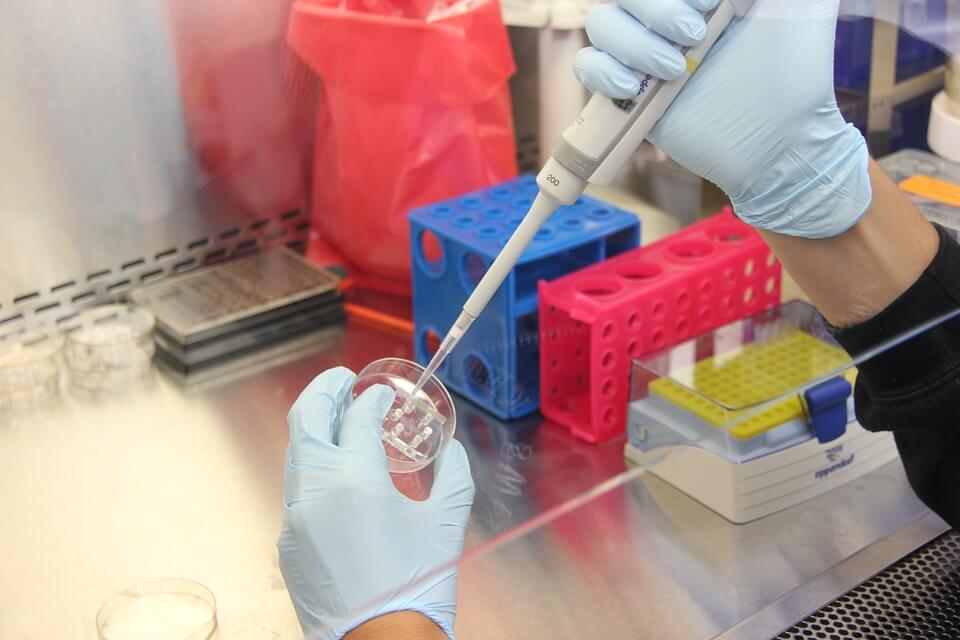
Hinson engineers heart-like structures with cells containing specific genetic mutations in order to study the genetics of cardiomyopathies, diseases of the heart muscle that can lead to heart failure and, ultimately, death.

“We basically try to rebuild a little piece of a patient’s heart in a dish,” says Hinson….

With his “heart-in-a-dish” technique, [Hinson] and his team are now unraveling the effects of genetic mutations on cardiac biology.

The system harnesses multiple recent advances in both stem cell and genome editing technologies. With these capabilities, Hinson and his colleagues can isolate skin or blood cells directly from cardiomyopathy patients and coax them to form heart muscle cells, making it possible to study the biological effects of patients’ own mutations. Moreover, he can correct those mutations, or create additional ones, to further probe how genetic differences influence heart biology.

The GLP aggregated and excerpted this blog/article to reflect the diversity of news, opinion, and analysis. Read full, original post: ‘Heart-In-A-Dish’ Sheds Light on Genetics of Heart Disease

Transcranial magnetic stimulation: Can strong magnetics revive your sex drive?

Screen Shot at PM

In their lifetimes, more than 40 percent of American women and 30 percent of American men report some kind of sexual dysfunction. And while Viagra and other pharmaceuticals have changed the landscape for erectile dysfunction, the most common problem for men, nothing has been developed to help women. Addyi, a pill billed as the ‘female viagra’, flopped after it’s release last year.

But, sex researchers recently reported some success in regulating libido using a technique that they claim can change brain activity. The technique called Transcranial Magnetic Stimulation (TMS) uses strong magnets to create an electric field that interacts with the electrical activity in brain regions related to pleasure and reward. Although that sounds invasive, it can be done in a normal doctor’s office or at home using a handheld device or headset and there are few to no side effects.

8966675-largeThe researchers gave twenty men and women TMS treatments. They received either continuous TMS which is known to decrease neural activity or intermittent TMS, known to excite neurons. Then they hooked the subjects up to electrical sensors to monitor brain activity and asked them to affix a vibrator to their genitals. They then monitored their brain activity as the research subjects received pleasurable buzzes. In this experimental, lower alpha waves in the brain indicated that subjects were more sexually aroused.

After the intermittent TMS, people had lower levels of alpha waves, which indicated they were more aroused. They also reported having more orgasms over the following weekend, either by themselves or with partners. From New Scientist:

As predicted, after excitatory TMS, participants’ alpha waves were weaker – suggesting they were more sexually aroused – than after inhibitory TMS. The team couldn’t measure any changes to people’s sex lives, as the effects of a single session of TMS are short-lived.

This experiment, published in PLOS One, draws heavily from TMS protocols that are currently used to treat depression. The TMS treatment used in this study even targeted the same brain region. Many severely depressed people don’t respond to medication or psychotherapy. TMS sessions multiple times a week for six to eight weeks are often a next step. TMS has few side effects and is non-invasive so it’s preferred treatment before a person might try electro-shock therapy or deep brain stimulation where electrodes must be surgically implanted in the brain.

TMS is FDA approved for depression therapy. That means there is significant safety data available and side effects are well-documented. Some depression patients have reported an increase in libido after the TMS therapy, but that hasn’t been studied well enough yet according to Nicole Prause who led the libido study.

2saaclq8rgdcxyudfv8wjvbmlys6hx2ydzavdqn3660-1There are personal TMS sets available on the market. If TMS proves to be beneficial for libido regulation in further, larger studies, people would be able to start using them quickly. Those sets could potentially be used not only to increase libido, but also to calm over-active sex drives, according to the paper. Aside from Viagra, which is only effective in men, there are not many other options for people with sexual dysfunction. Addyi didn’t sell well because it was largely ineffective according to a WNYC profiled of Prause:

When a “female Viagra”, called Addyi, was introduced last year to rev up women’s sex drives, it was received with far less enthusiasm than its male counterpart. Mainly it’s because the drug isn’t all that effective: it only helped 10 percent more people than the placebo. The drug also comes with caveats: like not being able to drink alcohol or combine it with other medication.

The Addyi story underscores a bigger problem with sex research—there isn’t enough of it. And most of it focuses on the genitals rather than the brain where desire starts. Alex M.F. Quicho writes at Broadly:

But in spite of the life-improving promises of consumer sex tech, the reality is that official, peer-reviewed studies remain crucial to reforming policy and education. Founded by Dr. Nicole Prause, Liberos Center is one of the few sex-centric research institutions in the United States. Much of its work investigates the relationship between psychology, physiology, and sex, with an emphasis on the hard data that is often lacking in sex tech.

Prause is the lead author on the PLOS libido study.

Because TMS is well-established as a depression treatment and has a long safety track record there is good reason to pursue further research. This study was too small and too short to definitely say the therapy is effective for libido control. But when something so common has so few available treatments the bar is set pretty low.

Meredith Knight is a frequent contributor to the Genetic Literacy Project. Follow her @meremereknight.

Will new dicamba and 2,4-d herbicide mixes pose drift threat to Texas wine growers?

Screen Shot at AM

As Paul Bonarrigo watched his grapevines dwindle, he was confident that heavy-duty herbicides, probably sprayed on crops by a nearby farmer, were drifting into his vineyards. …

Other Texas winegrowers have seen similar damage, and they blame it on dicamba and 2,4-D, two high-volatility herbicides commonly used on cereal crops, pastures and lawns. Now, the state’s vintners are alarmed that use of the chemicals may soon expand to include 3.7 million acres of cotton fields in the High Plains, where cotton is being invaded by weeds immune to the Roundup pesticide long used.

. . . .

The U.S. Environmental Protection Agency recently approved Monsanto’s new formulation, called XtendiMax with VaporGrip Technology, which contains dicamba. The agency has also proposed to register Enlist Duo, a Dow AgroSciences formulation that contains 2,4-D. 

Both formulations will be used on cotton crops planted with seeds genetically engineered to resist the spray. …

. . . .

But regulators say the new pesticides are formulated to drift less than old versions….

. . . .

But Irwin said it is unlikely farmers will buy the new low-volatility formulations because they are the most expensive. Farmers will probably instead stick to old dicamba and 2,4-D pesticides when they plant genetically modified seeds.

The GLP aggregated and excerpted this blog/article to reflect the diversity of news, opinion and analysis. Read full, original post: Texas winegrowers fear new herbicides will wipe out industry

Environmental groups push stricter pesticide rules, including glyphosate ban, in Hawaii

Screen Shot at AM

Hawaii residents concerned about pesticide use by major agriculture companies on the islands are planning a push to strengthen regulation over chemicals they fear harm their health.

The divisive issue has drawn thousands to the Legislature in recent years following incidents where schoolchildren and agriculture workers fell ill and some suspected their sickness was connected to pesticides sprayed by seed testing companies.

Several major agriculture companies test genetically engineered crops on the islands….

A recent study found there wasn’t enough evidence to show the pesticides … caused adverse health or environmental effects on the community. But the study encouraged the state to boost its environmental monitoring and data collection.

A court decision declaring it’s up to the state — not counties — to regulate agriculture and a change in committee leadership in the House have added momentum to the effort to enhance state regulation.

. . . .

Advocates are pushing bills to require companies to fully disclose when and where they’re spraying pesticides and to mandate buffer zones around schools and hospitals. Another proposal calls for the state and counties to stop using sprays containing glyphosate, an herbicide originally brought to market by Monsanto.

The GLP aggregated and excerpted this blog/article to reflect the diversity of news, opinion and analysis. Read full, original post: Hawaii residents renew push for stricter pesticide rules

Industry funding of university research complicated, unavoidable

research

[The New York Times article Scientists Loved and Loathed by an Agrochemical Giant] does present a prima facie case that some scientists…are playing fast-and-loose with the evidence related to pesticides and GM crops.

Industry funding of university-led scientific research is incredibly common, far more common than the public probably realizes. There are three reasons for that. First of all, universities are where many subject experts are based, of course. Secondly, scientific research is expensive: it requires staff, facilities, equipment, funding for overheads, etc. University researchers are therefore always hunting for money to enable them to carry out research….Thirdly, external income is an important performance indicator for universities and their constituent departments…

In general the public’s perception…is that most of that research is not being corrupted by the industry funding that is attached to it…

In much of the environmental sector that’s also the case….None of [the resulting research] has generated any negative perceptions, with the possible exception of some aspects of wastes management where issues such as “waste-to-energy” remain controversial.

In other areas of environmental research, however, there have always been accusations of bias levelled at university researchers who are perceived to be industry shills, especially if they are not seen to be toeing a particular line…

Money for the kind of research that’s done by [scientists] is always, always going to be in short supply and competitively pursued, and failure to obtain it will always be much more common than success. Unless funding to address important ecological research questions from government…and charities vastly increases, industry will be there to fund research in its own interests, and the perception of scientific bias will remain, whether or not it actually exists.

The GLP aggregated and excerpted this blog/article to reflect the diversity of news, opinion, and analysis. Read full, original post: Should scientists accept funding from agro-chemical companies? The devil’s in the details

Why business journalists should not write on science: Washington Post botches India GMO cotton exposé

e c e

India has become the world’s largest organic textile exporter following its rapid move from conventionally-grown saved seeds—which were often underproductive—to GMO Bt insect resistant seeds. (Bacillus Thuringiensis is a soil-dwelling bacterium, harmless to humans, that naturally repels many predators and was engineered into the seed; organic farmers spray their crops with Bt while GMO farmers use no spraying as the natural bacterium has been engineered into the plant.)

Introduced in India in 2002, Bt cotton is now grown by more than 90% of that country’s cotton farmers, and turned India from an importer to the world’s largest exporter of cotton. Socio-economic surveys confirm that Bt cotton continues to deliver significant and multiple agronomiceconomic, environmental and welfare benefits to Indian farmers and society including an 80%+ drop off in the use of certain insecticides and a dramatic increase in yields, as much as double in some cases.

At odds with scientists and independent global agricultural groups, anti-GMO groups have aggressively promoted their belief that the Bt cotton in India has been a ‘failed experiment.‘ They claim there has been a sharp increase in farmer suicides and that farmers are being ‘denied’ the opportunity to save and replant their seeds…memes repeated in this December 30 article in the Washington Post by Esha Chhabra, “The dirty secret about your clothes.” The report focused mainly on the appalling conditions in India’s cotton-based textile industry and links them to GMO cotton. The GLP offers some summary excerpts from the Washington Post story followed by an analysis.

Excerpts of Chhabra’s report:

[D]yeing is only one part of the manufacturing process. The clothing material itself, namely cotton, poses a separate threat to farmers. Only a decade ago, Indian farmers planted 80 percent of their crop using seeds saved from cotton grown the year before. But the advent of genetically modified (GMO) seeds drove that tradition out of the market. Farmers were originally attracted to the GMO varieties because they produced bigger yields than natural seeds, and were supposed to be weed-resistant.

But once they stopped replanting natural cotton seeds, those varieties disappeared from the local agriculture. Today, more than 90 percent of Indian cotton comes from GMO seeds, which has forced farmers into a cycle of debt, according to Vandana Shiva, an agricultural activist. GMO seeds are expensive, and because GMO plants don’t produce fertile seeds of their own, new seeds have to be bought each season. Furthermore, pesticides are used on the GMO cotton fields.

Since 2004, however, a cooperative that now numbers more than 35,000 organic-cotton and fair-trade Indian farmers is forgoing chemicals, and building a new seed bank of non-GMO cotton seeds.


Analysis by GLP:

Far from the critical eye of their science editors, an article appeared recently in the Washington Post business section that spread misinformation about organic and GMOs. In “The dirty secret about your clothes” author Esha Chhabra spins a tale that serves to raise fear and doubt in something as simple as a cheap cotton tee-shirt.

The majority of the article is about the dyeing process in factories. It even begins with an anecdote from a factory worker who claims to have suffered from an unnamed disease causing his skin. Factories in India are a concern for the environment especially, and factory workers have a long history of health concerns globally. Chhabra mentions the Noyyal River and how it has become severely polluted. Unfortunately she leaves out the major cause, which is a lack of enforcement of the regulations that would stop these factories from polluting in the first place. According to The Hindu:

“…the Tamil Nadu Pollution Control Board unearthed over 300 units involved in illegal operations and discharging of untreated effluents into the waterbodies and open grounds, polluting the groundwater table in Tirupur and its immediate suburbs.”

It’s a problem that won’t be solved simply by creating more factories with different methods, and certainly has nothing to do with the farming methods of cotton.

Chhabra writes that Indian farmers are suffering from GMOs, specifically genetically engineered (GE) cotton. She states that GMOs eliminated seed saving and that the GMOs were supposed to be weed resistant.

Currently the only GE cotton available in India is insect resistant, herbicide tolerant GE cotton (assuming that is what she meant by “weed resistant”) has yet to be approved there. Research has shown that from 2002 to 2008, GE cotton in India has “caused a 24% increase in cotton yield per acre through reduced pest damage and a 50% gain in cotton profit among smallholders” leading to a significant increase in the living standards of these farmers and a significant reduction in their exposure to insecticides.

As for seed saving, her claim could not be further from the truth. The introduction of Indian cotton varieties with foreign traits dates back hundreds of years. The East Indian Trading Company began importing American cotton seed in the 1840s, more than 150 yearsb before the first GE cotton varieties came to market. According to India’s Central Institute for Cotton Research:

There are four cultivated species of cotton viz. Gossypium arboreum, G.herbaceum, G.hirsutum and G.barbadense. The first two species are diploid (2n=26) and are native to old world… The last two species are tetraploid (2n=52) and are also referred to as New World Cottons… G.hirsutum is the predominant species which alone contributes about 90% to the global production… Perhaps, India is the only country in the world where all the four cultivated species are grown on commercial scale.

Only the G.hirsutum variety has had the gene for insect resistance added to it via genetic engineering.

Andrew Porterfield, writing for the Genetic Literacy Project, explains why it is that only activists (rather than farmers) complain about not saving seed. It is really more about an anti-corporation agenda rather than worrying about the farmers:

The first generation from F1 (aka, the second generation) will have half of the traits you want. Keep breeding like this, and you stand greater chances of losing the traits you want, and growing traits you don’t.

Using saved seeds are less reliable. Many times the traits you must value are just lost, or the risk of less than high quality crops is high. Farmers are hard nosed business people; they can’t afford to risk weak harvests; they are willing to pay a premium for seeds that grow true.

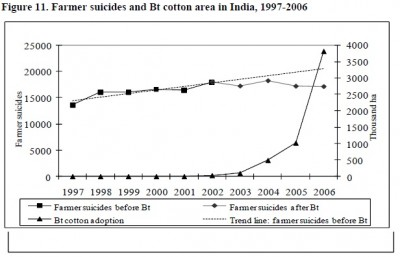
Chhabra’s misinformation may have come from the only source in the article she mentions in regards to GMOs, Vandana Shiva. “Vandana Shiva (born 1952) is an anti-globalization, anti-corporate, deep ecology and radical eco-feminist activist whose campaigns focus primarily on food and agriculture socio-economic issues and an opposition to GMOs, free trade and intellectual property rights. “ Shiva told Chhabra that GMOs have forced farmers into a cycle of debt and that GMOs do not produce fertile seeds of their own. Such GMOs are actually a myth and the overall rate of Indian farmer suicides (often due to debt) is actually at about the same level it was well before the introduction of GMOs.

Shiva should be more than aware of these facts because prior to the introduction of GMOs into India, she made many of the same arguments about “non-GMO” hybrids. A 1998 interview with Shiva finds her using those same arguments in regard to seeds she seems to want Indian farmers to go back to now.

Writing for Fashion Hedge, Theyarina explains why “organic” does not tell the consumer anything positive or negative about a cotton tee-shirt:

Summarizing, the use of pesticides is allowed, natural and synthetic (in moderate quantities). However, as a reminder, just because something is organic in nature, it doesn’t mean that is harmless…. It has also been found that some natural pesticides can be even more dangerous that synthetic ones…. there is nothing about it that helps saving water, as that is not one of the factors to be considered organic on any of the standards I have looked into. Organic cotton is just as bad as regular cotton in this aspect…

Let us also not forget what happened when a Bloomberg journalist looked into labor practices on organic cotton farms “where Victoria’s Secret usually buys up the entire fair trade and organic-certified cotton crop to make the lingerie it sells in the West. There, the magazine found children of 12 and 13, laboring in the fields on pain of being whipped with switches by their bosses the cotton farmers”.

This is what happens when one does not use modern technology to farm, you are left with the age old practice of child labor.

Yes, chemicals being used in factories in India are probably causing a problem for the environment and their workers. But to link those concerns to GMOs and an agricultural system that is showing many signs of helping India is just dishonest. The Washington Post’s science editors have done a great job over the years, perhaps the business editors should have run this by them.

Recapping 2016: 10 ways anti-GMO activists put ideology ahead of science

Screen Shot at AM

When they said we would have to add an extra second to the clocks at the end of 2016, there seemed to have been a collective groan. The year that started with the death of David Bowie seemed to just keep getting worse. … There were more attacks on scientists and research institutions – environmental campaigners learnt they can throw out any gibberish on glyphosate, GMOs, endocrine disruption and neonicotinoids and get a microphone. … Reasonableness was nowhere to be found.

What happened in 2016 was that Stupid got out of control.

. . . .

Here are [some of] the Risk-Monger’s Top 10 Worst Moments of 2016: The Year of Stupid

Organic’s Rejection of NBTs

New Plant Breeding Techniques (NBTs) are a series of technologies (at least seven) for accelerated plant breeding, most not involving any genetic modification. … potentially enabling farmers to produce more with fewer pesticides. The NBT plants are often indistinguishable from conventional plants.

In 2016, IFOAM, the organic food industry lobby, declared that NBTs were to be considered the same as GMOs, condemning organic farmers to lower yields and higher applications of second rate organic pesticides. When an organic food researcher suggested that the lobby should reconsider this position, he was roundly attacked. …

. . . .

Argumentum ad hominem

Last July, when more than 100 Nobel laureates condemned Greenpeace’s position on GMOs as unscientific and potentially a crime against humanity, their response was textbook – these scientists are all a bunch of industry-paid shills.

In 2016, activists did not have to respond to facts, evidence or logical argument; they just had to do a Google search to find evidence of a link in the last 50 years to an industry project. (A note of clarification: when the organic industry or an NGO funds the research, that is OK.) …

Glyphosate and Activist Cunning

…[T]he anti-glyphosate alliance has been fairly successful in blocking the glyphosate regulatory renewal in the EU, having it on the agenda at the EPA (despite the scientists) and creating all sorts of completely ridiculous fears … In 2016, glyphosate was a living case study in Stupid.

The Fake Monsanto Tribunal

Imagine 300 of the leading pro-organic gurus, zealots and activists, with a budget of half a million USD from the organic industry lobby, coming to The Hague to conduct a show trial to declare Monsanto guilty of ecocide. …

. . . .

…The event was a colossal waste of half a million dollars, generated little publicity, had a jury which failed to deliver the predetermined verdict as planned in December … all to be able to indict a company that will no longer exist by the end of 2017.

The GLP aggregated and excerpted this blog/article to reflect the diversity of news, opinion and analysis. Read full, original post: The Risk-Monger’s Top 10 Worst Moments of 2016: The Year of Stupid!

Biotech industry focuses on CRISPR, new gene breeding techniques to break regulatory logjam

a farmer tends to a wheat farm in the el dakahlia governorate north of cairo egypt february reutersmohamed abd el ghany e

Commodity groups, farm organizations and others considered the summer’s GMO labeling law a prudent compromise for what had become a divisive issue.

How the United States Department of Agriculture decides to lay out these new labeling rules over the next two years, particularly if they choose to focus on product rather than process, will cement the bill’s lasting impact.

Kent Bradford, distinguished professor of plant sciences at the University of California, Davis, and director of the Seed Biotechnology Center, believes the legislation was passed to satisfy the food industry and they, as the end user, will be the biggest benefactor.

It’s impossible to know what economic benefits could have resulted from more genetically engineered crops coming to market in the last two decades, but it’s not hard for Bradford to quantify lost opportunities as enormous.

“Specialty crops haven’t had an opportunity to make use of these tools and so many things could have been developed, especially on the production side, when it comes to pests and disease. Those have been our major goals, in addition to nutrition and flavor,” he said.

Bradford said he’s optimistic that new, innovative breeding techniques will lift the industry over the hurdles they face right now. The USDA nabbed plant scientists’ attention when they said new gene editing technology like CRISPR falls outside of their regulatory realm.

The GLP aggregated and excerpted this blog/article to reflect the diversity of news, opinion, and analysis. Read full, original post: What’s Next for Biotech?

Premenstrual dysphoric disorder: Debilitating form of PMS has genetic basis

Screen Shot at AM

It’s genetic – the debilitating form of premenstrual syndrome with very severe cramps, irritability, breast soreness and muscle aches known as premenstrual dysmorphic disorder has been linked to a group of genes that respond differently to sex hormones.

Between 2 and 5% of women are diagnosed with premenstrual dysphoric disorder (PMDD), which is a particularly severe form of the much more common premenstrual syndrome (PMS).

Researchers have now found that PMDD is caused by a group of genes that affects how sex hormones interact with other genes….

“This is a big moment for women’s health, because it establishes that women with PMDD have an intrinsic difference in their molecular apparatus for response to sex hormones – not just emotional behaviors they should be able to voluntarily control,” said study author David Goldman, a researcher at the US’s National Institutes of Health.

The finding is a significant one for women who suffer from PMDD. There has been relatively little research into PMDD or the more common condition PMS…But this finding may pave the way for better targeted treatments for the condition, which is so disruptive to women’s lives that it drives 15 per cent of PMDD sufferers to attempt suicide.

The GLP aggregated and excerpted this blog/article to reflect the diversity of news, opinion, and analysis. Read full, original post: ‘A big moment for women’s health’ – genetic basis found for premenstrual mood disorder

Advances in CRISPR, gene editing helping ‘clean tech’ get off ground after years of failure

YEAST superJumbo

A decade ago, a group of biologists, venture capitalists and computer whizzes…hoped to overturn polluting industries with microorganisms cheerily excreting industrial chemicals through the miracle of reprogramming nature’s genetic code. [Unfortunately, the] idea lost billions of dollars.

Now, a few clean tech companies are aiming for a comeback. And the big idea has not changed much: Create cheap, safe and natural materials for fuel, cosmetics and other goods….

This time around, they believe they have better tools for editing genetic codes, measuring results and automating how chemicals are produced at a large scale. They have also set their sights lower, for now targeting just a few chemicals, not remaking how the world powers cars.

It is natural to look at genetic engineering and think of H. G. Wells’s Dr. Moreau…At the same time, altering genes is what mankind has done for millenniums, breeding wolves into Chihuahuas and cobs of loose-podded maize into big, uniform ears of corn.

What is different, and troubling to some, are the tools and the time scale. By directly altering the genetic makeup of plants and animals, the creations happen a thousand or more times as fast.

The GLP aggregated and excerpted this blog/article to reflect the diversity of news, opinion, and analysis. Read full, original post: Clean Tech Rises Again, Retooling Nature for Industrial Use

Science of Star Trek: Would ‘Vulcans’ really look like humans?

Leonard Nimoy

After studying scenes from [the Star Trek fictional universe], Mohamed Noor, an evolutionary biologist at Duke University in North Carolina, posited that the galaxy-wide distribution of Earth-based life-forms could help to explain some of the resemblance between Kirk and Spock.

Life on Earth might not have originated on the planet itself. Scientists have long considered the possibility of panspermia, the idea that our planet’s life or its precursors came from outer space. After drifting, unplanned, into the habitable environment, the seed material might have developed into life as we know it today.

But Noor doesn’t buy it…Instead, he proposed that the seeding occurred much more recently than portrayed in the episode “The Chase” (Season 6, Episode 20). If the human ancestor Homo erectus, along with plants and other animals, were taken by the Preservers only a million years ago, rather than the proposed billion, and were seeded onto planets like Vulcan, the resulting life-forms could be more closely related, Noor said.

By comparing DNA samples from other human-like aliens to those of Earthlings, biologists would be able to discover the close genetic relationship between them, which would easily rule out the idea of random, undirected panspermia.

The GLP aggregated and excerpted this blog/article to reflect the diversity of news, opinion, and analysis. Read full, original post: ‘Star Trek’ Science: Why Vulcans (and Other Aliens) Look Like Humans

Lifestyle changes can directly affect rate of aging, authors of ‘The Telomere Effect’ argue

ui f a c

The main message of “The Telomere Effect,” [authored by Nobel Laureate Elizabeth Blackburn and psychologist Elissa Epel] being published Tuesday, is that you have more control over your own aging than you may imagine. You can actually lengthen your telomeres — and perhaps your life — by following sound health advice…

Telomeres sit at the end of strands of DNA, like the protective caps on shoelaces. Stress from a rough lifestyle will shorten those caps, making it more likely that cells will stop dividing and essentially die.

Too many of these senescent cells accelerates human aging, the pair say. This doesn’t cause any particular disease, but research suggests that it hastens the time when whatever your genes have in store will occur — so if you’re vulnerable to heart disease, you’re more likely to get it younger if your telomeres are shorter, said Epel.

Telomere research suggests that extreme exercise isn’t necessary to live healthier longer.

Also, Blackburn said, her research suggests that lengthening telomeres with medications could be dangerous — that lifestyle changes are far safer than a pill.

The GLP aggregated and excerpted this blog/article to reflect the diversity of news, opinion, and analysis. Read full, original post: You may have more control over aging than you think, say ‘The Telomere Effect’ authors

Could DNA-tailored exercise become the future of fitness?

Screen Shot at AM

Boot camps have become commonplace – but an emerging trend in this fitness space is the DNA boot camp. I signed up to 38 Degrees North‘s version, held in Ibiza….

The theory goes that through identifying specific markers in your DNA, your instructors will be able to determine not only what types of exercise are best suited to each participant specifically, but also identify which individual dietary requirements will best enable the healthiest possible version of “you”.

First, the diet: [A]ccording to my genes, I was highly sensitive to carbohydrates as compared to a “typical” person…In other words, I will get fatter more quickly eating pizza and pasta than someone without this gene profile.

The fitness briefing was not much cheerier. I had preferred weights and resistance exercises in the gym until now; however, the DNA test confirmed a 40/60 per cent split in favor of endurance exercise over power. Wonderful. More cardio coming my way, then.

After the five days of exercise and dieting, the results were strong…[W]ith this DNA version, I had lost four per cent body fat while maintaining the same weight. This is the ideal outcome for body conditioning….

The GLP aggregated and excerpted this blog/article to reflect the diversity of news, opinion, and analysis. Read full, original post: Want to get fit? Try a DNA-themed personalised fitness camp

Viewpoint: Rachel Carson’s “heedless and destructive acts”

RachelCarsonPg

This article originally appeared at Forbes and has been republished here with the author’s permission.

Environmental activists gathered last month in Washington DC to celebrate the legacy of the late author Rachel Carson, who gained fame for her book, “Silent Spring.” They’d have done better to pick up trash at a local park.

As the Competitive Enterprise Institute’s Dr. Angela Logomasini wrote:

Carson’s writings included many inflammatory and misleading claims about chemicals, claims that have long been rebuked by scientists. Yet her rhetoric spawned a radical environmental movement that promotes unwarranted bans and restrictions on pesticides that otherwise could be used to make food more affordable and fight mosquito-transmitted diseases such as malaria, the Zika virus, the West Nile virus, and more.

“Silent Spring,” which is widely credited with launching the modern environmental movement, was an emotionally charged but deeply flawed denunciation of the widespread spraying of chemical pesticides for the control of insects. It painted a dystopian picture of an environment so poisoned by chemicals that “no birds sing” and “one in four” people would die from cancers caused by exposure to chemicals.

The book is still revered by many (especially by those who haven’t actually read it), but its legacy is anything but positive.

As detailed by Roger Meiners and Andy Morriss in their scholarly yet very readable analysis, “Silent Spring at 50: Reflections on an Environmental Classic,” Carson exploited her reputation as a well-known nature writer to advocate and legitimatize “positions linked to a darker tradition in American environmental thinking.” Carson “encourages some of the most destructive strains within environmentalism: alarmism, technophobia, failure to consider the costs and benefits of alternatives, and the discounting of human well-being around the world.”

Carson’s proselytizing and advocacy raised substantial anxiety about DDT and led to bans in most of the world and to restrictions on other chemical pesticides. But the fears she raised were based on gross misrepresentations and scholarship so atrocious that, if Carson were an academic, she would be guilty of egregious academic misconduct. Her observations about DDT have been condemned by many scientists. In the words of Professor Robert H. White-Stevens, an agriculturist and biology professor at Rutgers University, “If man were to follow the teachings of Miss Carson, we would return to the Dark Ages, and the insects and diseases and vermin would once again inherit the earth.”

In 1992, San Jose State University entomologist J. Gordon Edwards, a long-time member of the Sierra Club and the Audubon Society and a fellow of the California Academy of Sciences, offered a persuasive and comprehensive rebuttal of “Silent Spring.” As he explained in “The Lies of Rachel Carson,” a stunning, point by point refutation, “it simply dawned on me that that Rachel Carson was not interested in the truth about [pesticides] and that I was being duped along with millions of other Americans.” He demolished Carson’s arguments and assertions, calling attention to critical omissions, faulty assumptions and outright fabrications.

Consider, for example, this passage from Edwards’ article:

This implication that DDT is horribly deadly is completely false. Human volunteers have ingested as much as 35 milligrams of it a day for nearly two years and suffered no adverse effects. Millions of people have lived with DDT intimately during the mosquito spray programs and nobody even got sick as a result. The National Academy of Sciences concluded in 1965 that ‘in a little more than two decades, DDT has prevented 500 million [human] deaths that would otherwise have been inevitable.’ The World Health Organization stated that DDT had ‘killed more insects and saved more people than any other substance.’

In addition, DDT was used with dramatic effect to shorten and prevent typhus epidemics during and after WWII when people were dusted with large amounts of it but suffered no ill effects, more persuasive evidence that the chemical is harmless to humans. The product was such a boon to public health that in 1948 the Nobel Prize in Physiology or Medicine was awarded to Dr. Paul Müller for his discovery of the “contact insecticidal action” of DDT.

Although the use of DDT is not risk-free, there is a vast difference between applying large amounts of it in the environment–as farmers sometimes did before it was banned in the United States–and using it carefully and sparingly to fight mosquitoes and other disease-carrying insects, as it is used in a handful of African and Asian countries even today. It is sprayed or dusted indoors in small amounts to prevent mosquitoes from nesting, so exposures are extremely low. The now well-known problems associated with the thinning of raptor’s eggshells–while always exaggerated–can be completely avoided by using DDT with care exclusively in residential areas, because the chemical remains largely near where it is sprayed. No study has ever linked DDT environmental exposure to harm to human health.

A basic principle of toxicology is that “the dose makes the poison” (in large amounts, licorice and nutmeg are toxic), and with modern regimens both environmental and human exposures would be very low. But “Silent Spring” condemned essentially all use of chemical insecticides and rejected the firmly established principle that products with known but small risks can offset far larger risks and provide a net safety benefit. Such tradeoffs are the essence of “comparative risk assessment,” the stock-in-trade of regulators worldwide.

Carson’s disingenuous proselytizing spurred public pressure to ban DDT in many countries, with disastrous consequences: a lack of effective control of mosquitoes that carry malaria and other diseases. Malaria imposes huge costs on individuals, families and governments, and it inflicts a crushing economic burden on malaria-endemic countries and impedes their economic growth. A study by the Harvard University Center for International Development estimated that a high incidence of malaria reduces economic growth by 1.3 percentage points each year. Compounded over the four decades since the first bans of DDT, that lost growth has made some of the world’s poorest countries an astonishing 40 percent poorer than had there been more effective mosquito control.

It is bad enough that the case against DDT was based on anecdote and innuendo, but Carson, her acolytes and the regulators who banned DDT failed to consider the inadequacy of alternatives. Because it persists after spraying, DDT works far better than many pesticides now in use, many of which are just as toxic to birds, mammals, fish and other aquatic organisms. And with DDT unavailable, many mosquito-control authorities are depleting their budgets by repeated spraying with expensive, short-acting and marginally effective insecticides. We’ve seen this most recently in southern Florida, where there has been massive and largely ineffectual spraying to control Aedes aegypti, the mosquitoes that transmit Zika virus (as well as the yellow fever, dengue fever and chikungunya viruses).

Another advantage of DDT is that even when mosquitoes become resistant to its killing effects, they are still repelled by it. Thus, an occasional dusting of window- and door-frames is extremely effective at keeping mosquitoes out of homes, schools, hospitals, and other buildings. When used in this way, the exploitation of DDT’s repellency also exposes people to lower amounts of insecticide than occurs with the only comparably effective alternative, bed nets soaked in various other pesticides. Moreover, limited DDT spraying does its work at a fraction of the cost.

In 1963, Carson said this in testimony before a congressional subcommittee on pesticides: “Our heedless and destructive acts enter into the vast cycles of the earth and in time return to bring hazard to ourselves.” She was right, but the “heedless and destructive acts” were her own—her fear-mongering about DDT and other pesticides.

The legacy of Rachel Carson is that tens of millions of human lives–mostly children in poor, tropical countries–have been sacrificed for the possibility of slightly improved fertility in raptors. This is one of the monumental human tragedies of the last century, recalling the observation of political scientist and risk analysis expert Aaron Wildavsky that although it is bad to be harmed, it is worse to be harmed in the name of health.

Henry I. Miller, a physician, is the Robert Wesson Fellow in Scientific Philosophy & Public Policy at Stanford University’s Hoover Institution.  He was the founding director of the FDA’s Office of Biotechnology. Follow him on Twitter @henryimiller.

Europe, Canada demonstrate challenges of regulating pesticides

Screen Shot at AM

The new Trump Administration is now taking shape, amid bountiful signals that it will not blindly accept or rubberstamp previous environmental prescriptions.

The European Union and Canada are providing object lessons in how not to regulate. Trump officials might want to take notice – and deliberately avoid their practices, or malpractices.

Anti-pesticide activists have long sought to blame neonics for honeybee health problems of recent years. In 2013, their well-funded advocacy campaigns played a major role in pushing the EU’s decision-making European Commission to impose a two-year ban on using neonicotinoids on bee-attractive crops.

…[D]espite accumulating evidence that managed bee populations are not now and never were in any danger of collapse or extinction. That evidence includes the EU’s very own … EPILOBEE studies, as well as nearly a dozen large-scale field studies from around the world.

. . . .

[The European Food Safety Authority’s, (EFSA)] entire assessment of these crop protection products is based on criteria for which data can be accepted and deemed relevant (and which can be ignored), as laid out in EFSA’s ‘Bee Guidance Reference Document’ (BGRD) – devised in 2013…

No chemical can both be effective in controlling crop pests and at the same time pass the unrealistically stringent tests imposed by the EU’s BGRD. …

That’s why EU member nation governments have refused to approve the BGRD for three years.

But … the mere fact that member governments have repeatedly refused to approve a guidance document … doesn’t prevent it from being used … to do precisely that: assess, estimate, or guess chemical risks to pollinators – as if the document actually had been approved.

The GLP aggregated and excerpted this blog/article to reflect the diversity of news, opinion and analysis. Read full, original post: How NOT to Regulate Pesticides: EU, Canada Lessons for Trump (Part I)

Farmers worry over weed control in corn as EPA mulls future of atrazine

pigweed

Corn is a great rotational crop from an agronomic standpoint, and [atrazine] has been recommended to assist with control of glyphosate-resistant pigweed.

“We can use a lot of different herbicide options and alternative modes of action in corn that aren’t available in other crops,” says Dr. Tom Barber, University of Arkansas weed scientist. “That can lead to a good, integrated management program for pigweed.”

The bad news, he says, is that the EPA is reconsidering atrazine registration. The open comment period closed in early October.

. . . .

“If atrazine is taken away, we’ll have to go with more dicamba or 2,4-D for pigweed control. … And if that’s the route we’re forced to take, remember that the Xtend crops are waiting for registration. If those are approved, dicamba will be going onto three crops, and we know where that path leads — just more resistance.

“For our 2017 plots we’re already planning to look at several herbicides we haven’t used on corn for a long time. That’s a response to the possibility of losing atrazine, and I feel I’m already at least a year behind on that.”

The GLP aggregated and excerpted this blog/article to reflect the diversity of news, opinion and analysis. Read full, original post: The importance of atrazine for corn weed control

Japan may expand GMO labeling laws, include more foods

Screen Shot at AM

Japan is considering expanding the scope of mandatory labeling of ingredients containing genetically modified crops from the current 33 food items, according to Consumer Affairs Agency sources.

The move is aimed at giving consumers a greater sense of security about the food they buy and eat amid growing imports of genetically modified crops and food products containing them.

. . . .

Currently eight genetically modified crops are subject to the labeling requirement in Japan. …

Japan mandates labeling if the three largest ingredients of a food product by weight contain substances from genetically modified crops and account for 5 percent or more of all ingredients.

Labeling is not required for items where genetically modified organisms cannot be detected, such as fermented food.

Some consumer organizations call for mandatory labeling of all food items containing genetically modified organisms.

The GLP aggregated and excerpted this blog/article to reflect the diversity of news, opinion and analysis. Read full, original post: Japan eyes stricter labeling of genetically modified food

More than skin deep: Discrimination can influence how genes express themselves and negatively impact health

GTY bully mar

It’s no secret that discrimination is stressful for those who experience it, but turns out the issue is more than skin deep — these stressors can interact with our genetics to negatively impact our health, a new University of Florida study shows.

Study researchers developed a novel measure of unfair treatment to study the effects of discrimination on health, particularly with respect to racial disparities in complex diseases, which are illnesses resulting from both genetic and environmental factors. They used the measure to investigate hypertension, which is more prevalent in African-Americans, and found that discrimination interacts with certain genetic variants to alter blood pressure.

“We’ve been missing a huge factor in explaining racial disparities in disease,” said [Connie Mulligan, a professor at UF’s department of anthropology and Genetics Institute]. “Our finding of an interaction between genetics and environment could explain why it’s been so hard to identify all the risk factors for complex diseases, particularly those that have racial disparities.”

Study authors suggest genetic variants that predispose some people to depression, anxiety or suicide might also make them more sensitive to the effects of discrimination and lead to higher blood pressure.

The GLP aggregated and excerpted this blog/article to reflect the diversity of news, opinion, and analysis. Read full, original post: Discrimination interacts with genetics, impacts health

From 2016 onwards: Gene therapy’s transition from idea to revolutionary medicine

iStock Large pic zoom x

For a few lucky patients, 2016 was the year when gene therapy turned from promises to cures. The technology…made big advances and began turning into a real business offering some of the world’s most expensive and revolutionary medicines.

Here’s what happened in 2016.

The dream of gene therapy is to fix your DNA so you’re not sick anymore—a “cure.” During 2016, Italian scientists at Milan’s San Raffaele Telethon Institute for Gene Therapy reported that they had cured 18 children of a rare but terrible immune deficiency disease, ADA-SCID.

In February, doctors in Texas were laying plans to inject genes from light-sensing algae into the eyes of a blind person, potentially restoring the ability to see. The test, carried out a month later, was the first time a whole gene from a different species had been used in a human being.

With so many promising results in human tests, 2017 will be the year that several gene therapies end up before the Food and Drug Administration. These include a treatment for hereditary blindness developed by Spark, Glaxo’s Strimvelis, and cancer treatments from Novartis and Kite Pharma.

The GLP aggregated and excerpted this blog/article to reflect the diversity of news, opinion, and analysis. Read full, original post: Everything You Need to Know About Gene Therapy’s Most Promising Year