Health Canada’s proposed ban of a neonicotinoid pesticide draws criticism

Screen Shot at PM

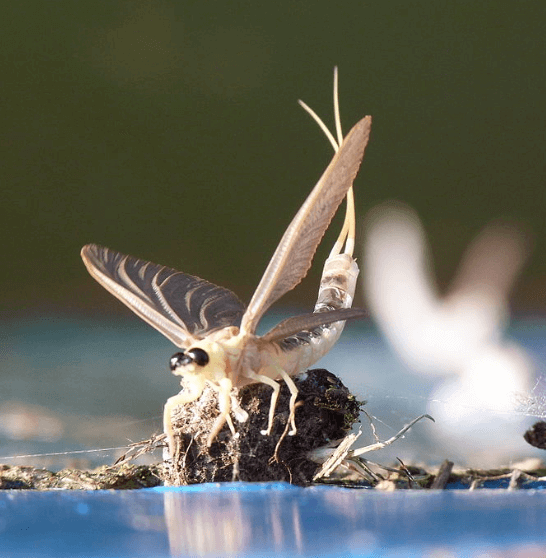
In November, Health Canada said that a nation-wide ban of imidacloprid, a neonicotinoid insecticide, was necessary because the chemical is a threat to aquatic insects.

In late December a University of Guelph expert said the government’s conclusion was an “over-reaction” and a mistake.

“I’m not in agreement with the decision to ban (imidacloprid)…. I don’t agree that the weight of evidence suggests that that particular action is needed,” said Paul Sibley, a … professor in environmental sciences.

“I do think some action is needed, but I think that (a ban) is essentially a politicized response, much as we saw in Europe when they banned (neonicotinoids) because of a pollination concerns.”

. . . .

“There is a heavy, heavy lobby from beekeepers and others, largely environmentalists, to outright ban these chemicals,” Sibley said.

. . . .

“There are a number of so-called best management practices that we could incorporate, (which) would lead to a reduction in the environmental concentration of the neonics. The decision … to phase out, I think that’s where the politics comes in…. ”

Sibley studies how pesticides affect aquatic species….

Based on [his graduate] student’s lab research, Health Canada’s proposed thresholds for imidacloprid are too low, Sibley said.

The GLP aggregated and excerpted this blog/article to reflect the diversity of news, opinion and analysis. Read full, original post: PMRA’s proposed neonic ban called political

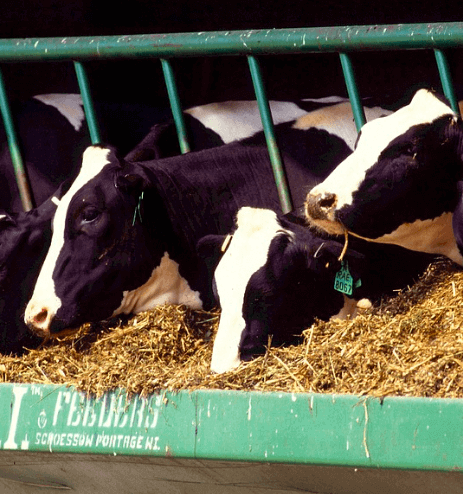
If consumers embrace it, gene editing could cut livestock feed costs

Screen Shot at PM

If the dairy industry did not have access to artificial insemination today, would it have consumer support to use it? On face value it may seem unlikely that such a beneficial practice could ever be questioned, but there is a strong lesson from 1945 when A.I. was being introduced into the United States when there was a common misconception that its use  would cause birth defects in calves.

… Whenever new technologies emerge, there … will always be some scaremongers raising doubts only to protect their patch.

…One of the new plant technologies that shows the most promise is Genome Editing (GE).

…GE could provide a quantum leap for our subtropical and tropical feed base by reducing the indigestible fibre portion of our plants.

…[This] gives dairy farmers the potential to reduce feed costs by up to 50 cents, per cow, per day. There also have been exciting developments around drought and frost resistance in wheat and canola that will potentially help protect dairy from crop failure and associated spikes in feed prices.

. …[W]e as an industry must continue to explain how dairying works. If we don’t, we risk getting caught up in the old saying – “a half-truth goes further and faster than a full one”.

The GLP aggregated and excerpted this blog/article to reflect the diversity of news, opinion and analysis. Read full, original post: New technologies on the horizon for dairy

‘Brain blobs’ genetically engineered from stem cells can track effects of Zika virus

vpvaccarino
[C]ombined with gene editing techniques like CRISPR, it seems like there’s almost nothing you can’t just whip up in a lab. Tiny, folded blobs of brain tissue, for example.

A group of scientists from MIT, Harvard and the Austrian Academy of Sciences [are] figuring out new ways to study how brains develop, and even used their latest brain blobs to study the effects of Zika virus…But the big takeaway from the research…was finding a hack that makes it easier to develop a realistic model of the human brain.

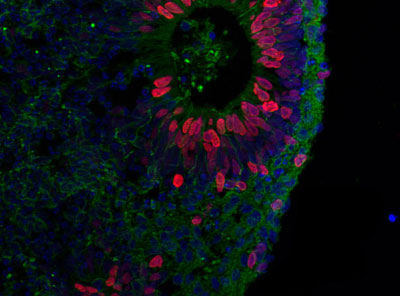
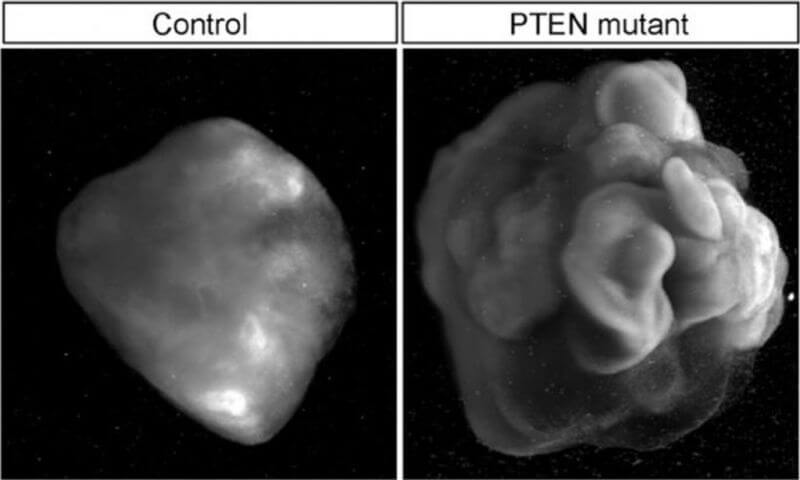
The study started with human embryonic stem cells…The scientists had a hunch that altering a certain set genes would change the way brains developed, so they used CRISPR to delete the PTEN gene…out of some of the stem cells and grew each set into organoids, little pieces of brain tissue.

mpgpznh hsismxtay dd
Brain blobs made from human embryonic stem cells. The left image shows a normal neuron clump and the right image shows a neuron clump with the PTEN gene missing.
[T]he model isn’t a perfect representation of a human brain,…[but] this work reveals the importance of certain proteins in regulating brain growth and development, and the hack allowed scientists to…explore how factors like Zika might interact.

The GLP aggregated and excerpted this blog/article to reflect the diversity of news, opinion, and analysis. Read full, original post: New Genetically Engineered Brain Blobs Can Help Us Study Zika

Differences in brain wiring could explain why some people learn languages quicker

How Language Is Processed By Your Brain spillwords

Babies’ ability to soak up language makes them the envy of adult learners everywhere. Still, some grown-ups can acquire new tongues with surprising ease. Now some studies suggest it is possible to predict a person’s language-learning abilities from his or her brain structure or activity—results that may eventually be used to help even the most linguistically challenged succeed.

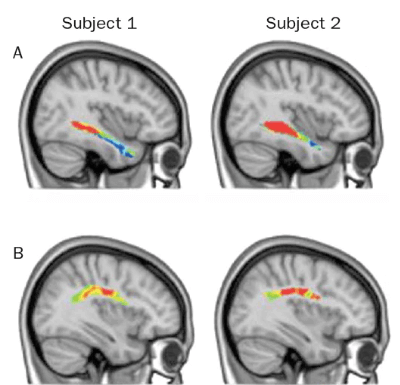
In one study, published in 2015 in the Journal of Neurolinguistics, a team of researchers looked at the structure of neuron fibers in white matter in 22 beginning Mandarin students. Those who had more spatially aligned fibers in their right hemisphere had higher test scores after four weeks of classes, the scientists found.

In another study, published in June 2016 in Brain and Language, EEG scans before an intensive online French course revealed patterns of brain-wave activity in a relaxed, resting state that correlated with completing the course quickly and easily.

What language aptitude really is and how it manifests in the brain are complex questions, touching on the nature of attention and even consciousness.

Capture
The ability to learn a new language may be influenced by brain wiring. In this study, Subject 2, who has more aligned nerve fibers, was a more successful learner than Subject 1.

The GLP aggregated and excerpted this blog/article to reflect the diversity of news, opinion, and analysis. Read full, original post: Some People’s Brains Are Wired for Languages

More than skin deep: Discrimination can influence how genes express themselves and negatively impact health

GTY bully mar

It’s no secret that discrimination is stressful for those who experience it, but turns out the issue is more than skin deep — these stressors can interact with our genetics to negatively impact our health, a new University of Florida study shows.

Study researchers developed a novel measure of unfair treatment to study the effects of discrimination on health, particularly with respect to racial disparities in complex diseases, which are illnesses resulting from both genetic and environmental factors. They used the measure to investigate hypertension, which is more prevalent in African-Americans, and found that discrimination interacts with certain genetic variants to alter blood pressure.

“We’ve been missing a huge factor in explaining racial disparities in disease,” said [Connie Mulligan, a professor at UF’s department of anthropology and Genetics Institute]. “Our finding of an interaction between genetics and environment could explain why it’s been so hard to identify all the risk factors for complex diseases, particularly those that have racial disparities.”

Study authors suggest genetic variants that predispose some people to depression, anxiety or suicide might also make them more sensitive to the effects of discrimination and lead to higher blood pressure.

The GLP aggregated and excerpted this blog/article to reflect the diversity of news, opinion, and analysis. Read full, original post: Discrimination interacts with genetics, impacts health

From 2016 onwards: Gene therapy’s transition from idea to revolutionary medicine

iStock Large pic zoom x

For a few lucky patients, 2016 was the year when gene therapy turned from promises to cures. The technology…made big advances and began turning into a real business offering some of the world’s most expensive and revolutionary medicines.

Here’s what happened in 2016.

The dream of gene therapy is to fix your DNA so you’re not sick anymore—a “cure.” During 2016, Italian scientists at Milan’s San Raffaele Telethon Institute for Gene Therapy reported that they had cured 18 children of a rare but terrible immune deficiency disease, ADA-SCID.

In February, doctors in Texas were laying plans to inject genes from light-sensing algae into the eyes of a blind person, potentially restoring the ability to see. The test, carried out a month later, was the first time a whole gene from a different species had been used in a human being.

With so many promising results in human tests, 2017 will be the year that several gene therapies end up before the Food and Drug Administration. These include a treatment for hereditary blindness developed by Spark, Glaxo’s Strimvelis, and cancer treatments from Novartis and Kite Pharma.

The GLP aggregated and excerpted this blog/article to reflect the diversity of news, opinion, and analysis. Read full, original post: Everything You Need to Know About Gene Therapy’s Most Promising Year

Viruses have evolved so that men suffer worse symptoms than women

Some viruses might cause weaker symptoms in women than in men because it makes them more likely to spread.

Many infections cause more severe illness in men than women. Men infected with tuberculosis are 1.5 times more likely to die than women; men infected with human papillomavirus are five times more likely to develop cancer than women; and men infected with Epstein-Barr virus are at least twice as likely to develop Hodgkin’s lymphoma as women.

Many think this pattern is because of differences between the sexes’ immune systems. But another explanation is that women are more valuable hosts. Women can pass infections to their children during pregnancy, birth and breastfeeding, so there’s an evolutionary pressure on viruses to be less harmful to them, say Francisco Úbeda  and Vincent Jansen at Royal Holloway University of London.

The study emphasizes the need to conduct clinical trials in both sexes, rather than predominantly in men as is often the case, says David Duneau, an evolutionary biologist at the University of Toulouse, France.

The GLP aggregated and excerpted this blog/article to reflect the diversity of news, opinion, and analysis. Read full, original post: Viruses may have evolved to hit men hard but go easy on women

Understanding transgenics: How genetic modification in conventional crop breeding and GMOs differ

eiy dpo v plant breeding

“GMOs are a hot topic and very misunderstood by many,” [Bejo Seeds Senior Tomato Breeder Doug Heath] says. “It is not odd to fear what is not known, and I wish that there had been much more consumer education regarding GMO crops years ago.”

Although genetic engineering allows for significant breakthroughs, today’s breeders are still making strides, Heath says.

“Many modern non-GMO breeding techniques have really helped to speed breeding. Use of molecular markers is one of the main techniques. We breeders are now able to know quickly from a very small piece of leaf tissue what is the status with numerous genes, some for resistances and others for quality traits,” he says.

Part of the reason growers find it difficult explaining modern non-GMO breeding is terms like “genetic markers” and “DNA extraction” sounds a lot like GMO breeding.

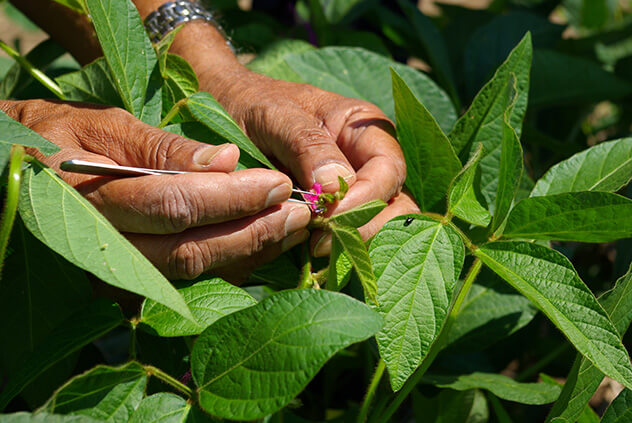
“These techniques also use [of] automated DNA extraction and analytical equipment, but the major difference is GMO plants are created using techniques that allow for insertion of a gene from one plant to another,” Heath says. “Usually, it is not possible with classical breeding to cross one species to another if reproductive incompatibility exists.”

Read full, original post: A Plant Breeder Explains How GE Techniques Differ from Non-GMO Breeding

Gene editing tool conundrum: CRISPR competitor NgAgo challenged over unreproducible results

thm cge en main swap

A Chinese biologist raised the hopes of the scientific community last year when he announced the discovery of a gene editing tool with the potential to upstage the transformational CRISPR-Cas9 system. Han Chunyu, of Hebei University of Science and Technology, dubbed his technique NgAgo — for Natronobacterium gregoryi Argonaute.

But his promise of a more accurate gene editing tool has been followed by a steady stream of disappointments, with other scientists failing to reproduce Han’s results. Mounting criticism has prompted Nature Biotechnology, the research publisher, to investigate the matter.

The work of Han’s research team is significant on multiple fronts. For China, it represented a first, in terms of that nation’s contribution to the realm of gene editing. But on a worldwide scale, it offered the potential of a precise gene editing tool with a wide range of applications, and fewer off-target effects.

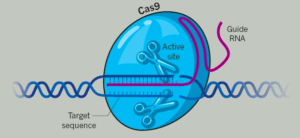
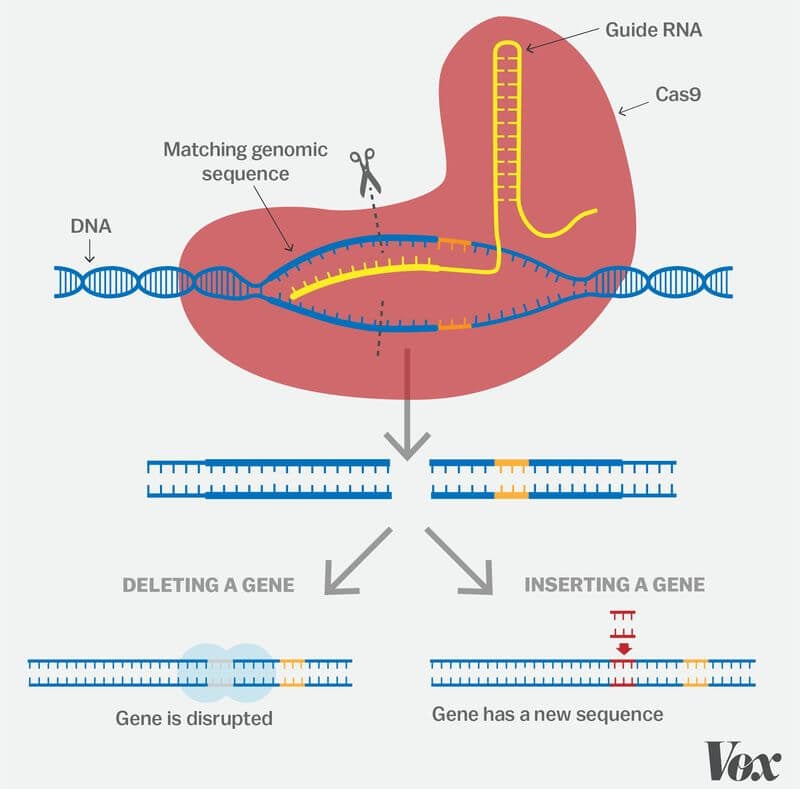
CRISPR scissorsThe popular CRISPR system has been likened to a pair of molecular scissors that uses the enzyme Cas9 to essentially cut or insert small pieces of DNA. Scientists have used CRISPR to edit genes in a multitude of applications, including adding and removing hypertension in rats to providing a potential solution to citrus disease.

Han described NgAgo to China Central Television using a similar analogy:

[CRISPR] is a pair of golden scissors, and people are thinking how to make it even shinier. But there are other kinds of scissors, and what we found is a new one. Whether it is good or not, it is still a new pair.

Han Chunyu

One main difference between the two pairs of “scissors” is that the NgAgo system uses an Argonaute endonuclease instead of the Cas9 enzyme to guide the cutting. As a result, it is less likely to be confused by free floating single-stranded DNA which has been known to cause inaccuracies in the CRISPR edits.

When NgAgo was first announced, many scientists celebrated the discovery, touted by Hebei University of Science and Technology for its novelty.

The university told the Global Times:

NgAgo is the first Chinese-invented top-notch biotechnology, breaking the foreign monopoly on genome editing processes. The technology has extensive applications for agriculture and medicine, including in gene therapy for diseases like AIDS and hepatitis B.

Some researchers suggested that NgAgo had the potential to be much more accurate than CRISPR-Cas9.

George Church, a geneticist at Harvard Medical School in Boston, told Nature: “A lot of us are really cheerleading and hoping that it works.”

To date, only a few scientists have been able to successfully use the technique since it was first published in Nature Biotechnology on May 2, 2016.

Controversy first went international in July, shortly after Australian geneticist, Gaetan Burgio, posted a detailed attempt of his failure to replicate Han’s NgAgo experiment on his blog.

However, Nature reported that at least three scientists, all of whom wished to remain anonymous, have had some success with the technology.

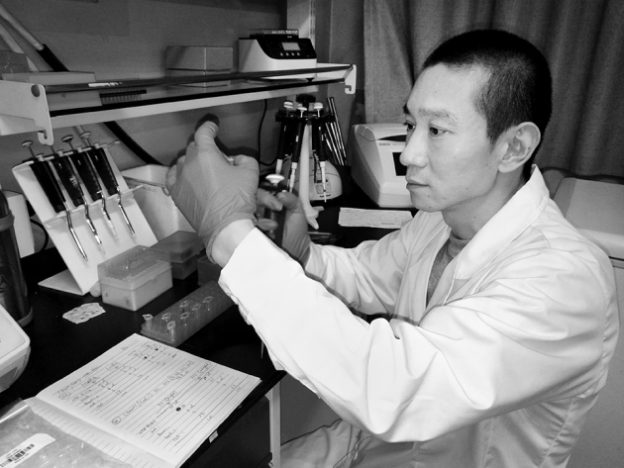
Geneticist Gaetan Burgio in the lab.

One Chinese researcher, independent of Han’s team, tested NgAgo in a few kinds of cells and found that it was able to induce genetic mutations at the desired sites. The researcher has verified the findings by sequencing. Two more Chinese scientists say they have initial results showing that NgAgo works. However, they still need to confirm this with sequencing.

Yet even if these few successes are proven true, Burgio argues that the difficulties encountered by other researchers suggest the technology may never fulfill its initial promises. He told Nature: “It might, might work, but if so, it’s so challenging that it’s not worth pursuing. It won’t surpass CRISPR, not by a long shot.”

Criticism for NgAgo has been growing steadily since Burgio’s blog post as more and more scientists have reported failures at reproducing the original results, according to Retraction Watch. Much of the backlash was directed at Han for not adequately addressing the issues scientists have been experiencing with reproducibility.

Han initially suggested that other scientists might be having trouble duplicating his results because they required “superb experimental skills.” He also said the failures could be related to the contamination of test cells by a bacteria called Mycoplasma.

Han’s defenses have been dismissed by critics. Researchers from eight US and Chinese laboratories published a letter, on November 15, in the online issue of Protein & Cell, which stated:

The key point of [Han and his colleagues paper] is that DNA-guided NgAgo’s can efficiently target 47 genomic loci with a 100 [percent] success rate and [greater than] 20 [percent] efficiency. Neither the originally published protocol nor the newly released information on Addgene’s website involves any steps that seem to require “superb experimental skills.”

…it [also] seems unlikely that independent laboratories would all have their cells contaminated, resulting in consistently negative results for DNA editing activity. In fact, several of the signees of this letter have made sure that our cells are free of mycoplasma by first testing them before performing replication experiments.

Another letter was published on November 28 in Nature Biotechnology that offered similar criticism to Han’s claims that NgAgo can be used as a gene editing tool.

These issues have left the scientific community clamoring for Han and his team to clear up the uncertainty surrounding NgAgo. The criticism has prompted Hebei University to launch an inquiry. Nature Biotechnology, the journal that originally published the NgAgo technique this past May, has also begun investigating.

On November 28, the journal issued an editorial expression of concern:

Nature Biotechnology believes that it is important for authors to be able to investigate the concerns raised by the correspondence and to provide additional information and evidence to support their paper if they are able to do so. Thus, we will continue to liaise with the authors of the original paper to provide them with the opportunity to do that by January 2017. An update will be provided to the community at that time.

Elizabeth Newbern is a contributing writer for the GLP. She has also written for GenomeWeb, Live Science, Audubon Magazine, and Scholastic. She received her MA in Journalism from New York University and a BA in Geology from Bryn Mawr College. You can follow her on twitter @liznewbern.

Teenager raped to death in US Animal Research Center (NY Times’ Michael Moss’ F in journalism)

Screen Shot at AM

If I wanted to create a fake news story – I would lead with a sensational headline. Something that would incense and shock the readers and be extra “clickbaity”. Perhaps a hook about a teenager getting raped to death. That should get some serious traffic.

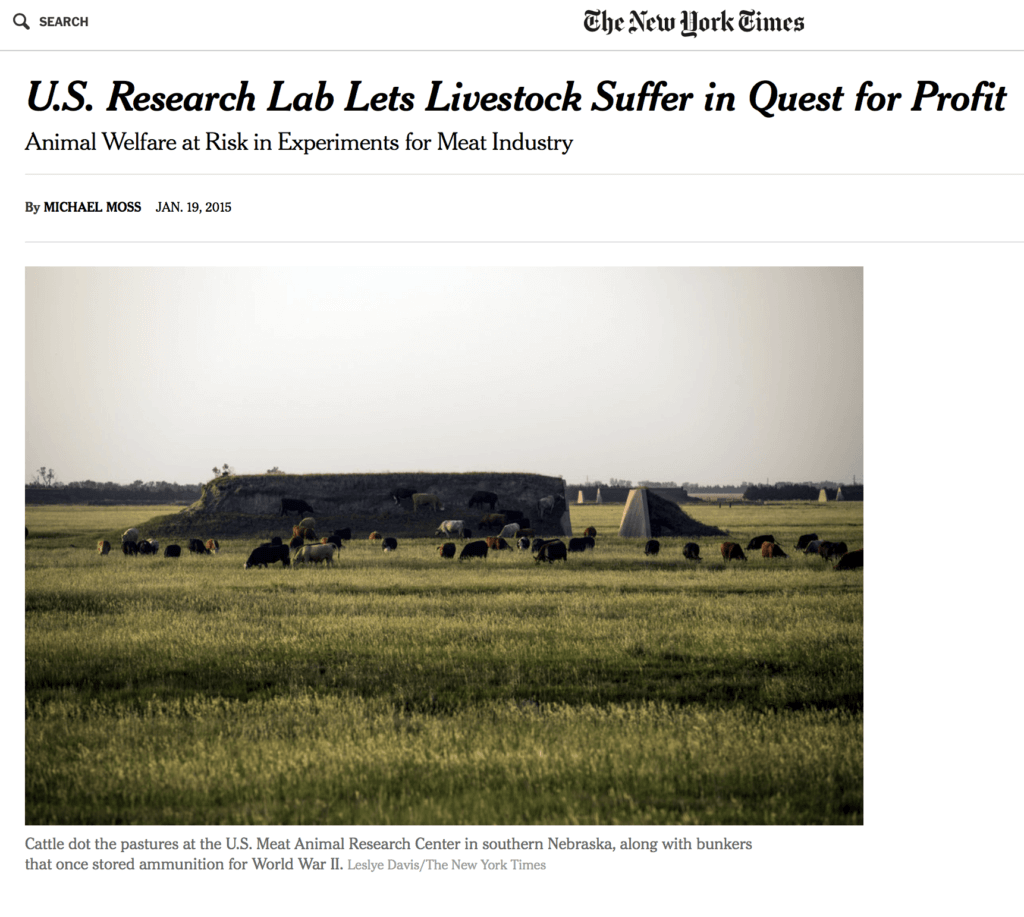
That seemed to be the approach taken by New York Time’s journalist Michael Moss back in January 2015 when he wrote “Research Lab Lets Livestock Suffer in Quest for Profit” skewering the US Meat Animal Research Center (US MARC).
Screen Shot at PMMoss began investigating the USDA-research facility after being contacted by Dr. James Keen, a disgruntled ex-employee who is prohibited from setting foot in the center. In the article Keen is quoted as saying that in 1989, “There was a young cow, a teenager, with as many as six bulls,”…”the bulls were being studied for their sexual libido, and normally you would do that by putting a single bull in with a cow for 15 minutes. But these bulls has been in there for hours mounting her”…”Her back legs were broken. Her body was torn up.” According to the article a few hours later the (teenager) cow died.

That is a gut-wrenching image! I have never heard a heifer referred to as a teenager, but that one compelling anecdote was enough for me. If true, this was egregious and unacceptable animal cruelty. However, the scenario did not ring true. I know the protocol for libido testing bulls, and it never involves multiple animals. There would be no reason to EVER put six bulls in with a single heifer for 5 minutes, let alone for hours.

There were numerous other horrific claims in the article. Moss quoted another source, Robert A. Downey, the executive director of the Capital Humane Society, in Lincoln, Nebraska as saying, “Experimental surgery is being performed in some (not all) cases by untrained, unskilled and unsupervised staff. This has resulted in the suffering of animals and in some cases the subsequent death of all animals.” During a visit, he said, he saw animals headed to surgery that fell from carts or were pushed to the floor by their handlers, while two other workers in the operating room ate doughnuts.
original
Again that infuriated me – as an animal scientist I know the very strict animal care protocols we have to comply with to undertake any animal research at UC Davis, even routine herd management is strictly monitored. However, again the scenario did not ring true given what I know of the character of the researchers at US MARC, not to mention the senselessness and research futility of doing a surgery if all the animals subsequently died. That does not pass the common sense smell test. And surgeries do not mix with doughnuts. For obvious reasons.

As I wrote in 2015 “As an animal geneticist, I have worked with the researchers in the Genetics, Breeding and Animal Health research unit at MARC, and personally visited the center on several occasions over the past decade. The story published by The New York Times does not reflect my knowledge of the current research that is being conducted at the center. Nor does it in any way align with my observations as it relates to the handling and treatment of animals at the center.”

Even back then I challenged Micheal Moss’ statement that “the center has one overarching mission: helping producers of beef, pork and lamb turn a higher profit” It is unclear where that demonstrably incorrect statement originated. Moss’ personal opinion perhaps. MARC’s publicly-available mission statement is to develop “scientific information and new technology to solve high priority problems for the U.S. beef, sheep, and swine industries.” Even the article itself then goes on to state that since MARC was founded 50 years ago, it “has fought the spread of disease, fostered food safety, and helped American ranchers compete in a global marketplace.”

However it was the allegations of the death raping of the teenage cow and experimental surgery being undertaken by untrained, unskilled and unsupervised staff that really stuck in my mind. I was therefore glad when the USDA Office of the Inspector General (OIG) announced it was going to investigate and audit the allegations made in the New York Times article. Specifically they stated they were going to investigate “33 statements from the article to evaluate and attempt to determine their veracity”.

I watched with interest as the interim report came out in 2015 to see which 33 statements were going to be investigated, and was satisfied to see that the two most egregious statements about the teenage cow (Statement 14), and that untrained staff performing experimental surgery (Statement 15) were going to be thoroughly investigated. At the time the interim report was released in September 2015, it stated with specific reference to these two statements, “We have no observations on this statement at the current time.”

So imagine my surprise when the OIG final report was released on December 16, 2016 and I was none the wiser. It’s conclusion, according to the article:

The report, released to the public … by the department’s inspector general, said an audit of the U.S. Meat Animal Research Center in Clay Center, Neb., had found no “evidence indicating a systemic problem with animal welfare.”

The OIG report stated that of the 33 statements made by the New York Times, “we determined that only 7 were materially accurate — 26 were inaccurate, lacked sufficient context or were uncorroborated”. New York Times that is a 21% material accuracy rate – also known as an F in my classes. The OIG report further clarified that “Overall, we did not note evidence indicating a systemic problem with animal welfare at US MARC.”

Wait – death raping of a teenage cow and experimental surgery being undertaken by unskilled staff – is that not the definition of an animal welfare problem? So I looked to see what the report specifically said about Statement 14 and 15. It said nothing. Because the entire text was redacted. Both the statements and the findings – blacked out. Even the statement text that was in the interim report was inexplicably redacted.

So of the 26 statements in the New York Times article that were determined to be “inaccurate, lacked sufficient context or were uncorroborated,” which was which? How many were inaccurate? There is a HUGE difference between inaccurate (i.e. fake news), and lacking sufficient context. And hopefully any journalist worth their salt would corroborate statements from a disgruntled employee and an executive director of a Humane Society in an article about animal welfare at an animal research facility with at least one independent source. Isn’t that how journalism works? Only two of the statements were listed as inaccurate in the OIG report, but the OIG conclusions on several others was bizarrely redacted. So your guess is as good as mine.

In its December 20, 2016 article about the report “U.S. Animal Research Center Needs More Oversight, Audit Says”, the New York Times explained that “The Times did not answer questions from the auditors, telling the inspector general’s office that the article spoke for itself.” Actually it didn’t, that is why there was an OIG investigation and audit which found only about one in five statements were correct. Nary a mention of that failing grade in material accuracy.

And in perhaps the ultimate piece of irony, the OIG report concluded that US MARC “could make its research more transparent to the public”. I might say the same to the OIG in its report! What are the privacy concerns that required the redaction of a simple conclusion of either materially accurate, inaccurate, lacked sufficient context or uncorroborated? Those sensational allegations and emotive images are out there now – right or wrong – unchallenged.

At the end of the day we will never know if the bull libido test heifer incident ever happened, or if untrained, staff performed experimental surgeries. All we have is OIG report conclusion that they “did not note evidence indicating a systemic problem with animal welfare at US MARC.” The OIG investigators said the Pulitzer Prize-winning reporter Michael Moss did not agree to be interviewed for their audit of the veracity of his article’s statements.

Rather than being shamed by his failing grade, in a recent email Moss doubled down his assertion that US MARC pushes the biology of livestock for profit, a statement that was graded plain “incorrect” in the OIG report. Repeating something does not make it true. Once again the facts are that US MARC develops “scientific information and new technology to solve high priority problems for the U.S. beef, sheep, and swine industries.”

But as has been evidenced repeatedly in recent months perception soon becomes reality and the truth gets left in the dust. And policy based on perception ensues which seems to have been the article’s original objective. Facts be damned.

Alison Van Eenennaam, Ph.D. is an animal geneticist and Cooperative Extension specialist in the Department of Animal Science at the University of California, Davis. Follow her on Twitter @BioBeef 

Commercial release of nontransgenic, high oleic acid safflower expected in 2018

Screen Shot at PM

The managing director of a company commercialising a safflower variety with unprecedented levels of oleic acid expects the first commercial plantings to take place in July 2018 after another successful trial.

Michael Kleinig, GO Resources, said the super high oleic safflower (SHOS) was developed jointly by CSIRO and the Grains Research and Development Corporation (GRDC) using RNA interference (RNAi) also known as gene silencing technology as part of the Crop Biofactories project.

Although not a traditional genetically modification (GM) process, the use of RNAi still requires approval from the Office of the Gene Technology Regulator (OGTR).

. . . .

The end use focus will be on the industrial market.

The oil replicates the use of synthetic oils and lubricants used in industrial applications.

“Because of its profile, the oil needs few additions before it can be used industrially, making it a real alternative to petroleum-based products,” Mr Kleinig said.

Although the industrial market is the primary focus, high oleic oil is also sought after by the food services sector, especially as a stable frying oil with a high burning point.

With this in mind, Mr Kleinig said the company would also look to get Food Standards Australia New Zealand (FSANZ) approval for the product.

The GLP aggregated and excerpted this blog/article to reflect the diversity of news, opinion and analysis. Read full, original post: New safflower 18 months from commercial plantings

Moratorium on gene drives rejected at UN biodiversity meeting despite protests from environmentalists

Screen Shot at AM

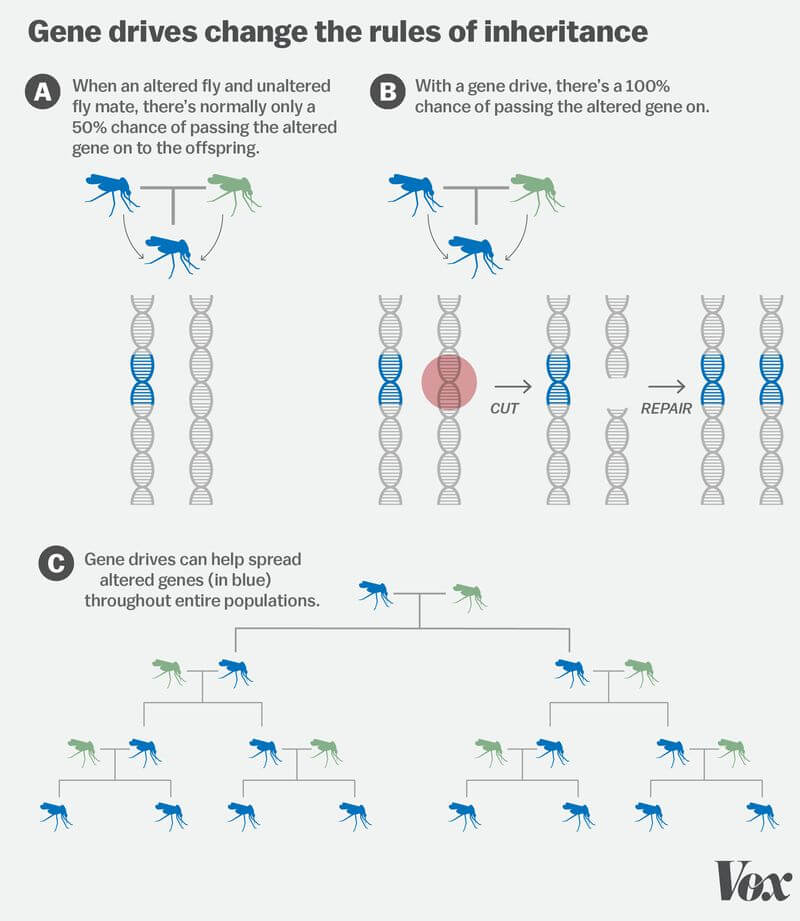
World governments at a United Nations biodiversity meeting [on December 2016] rejected calls for a global moratorium on gene drives, a technology that can rapidly spread modified genes through populations and could be used to engineer entire species. But environmental activists’ appeals for a freeze on gene-drive field trials, and on some lab research, are likely to resurface in the future.

“I’m very relieved,” says Andrea Crisanti, a molecular parasitologist at Imperial College London…He and others worry that a moratorium would make research on the technology more difficult, scare away funders and prevent field tests.

Environmental activists who proposed a moratorium on both lab research and field trials say the consequences of an accidental release are too severe for the work to proceed without having safeguards and international rules in place.

“Right now, given the state of the labs, we shouldn’t do it,” says Jaydee Hanson, a policy director at the International Center for Technology Assessment in Washington DC….

But political scientist Kenneth Oye at the Massachusetts Institute of Technology in Cambridge says a moratorium would have hurt efforts to reign in gene drives as well as to understand their risks. “That’s the research that is needed to inform judgement on whether and how to proceed,” he says.

The GLP aggregated and excerpted this blog/article to reflect the diversity of news, opinion, and analysis. Read full, original post: ‘Gene drive’ moratorium shot down at UN biodiversity meeting

Guide to CRISPR gene editing revolution

Capture

In 2016 alone, researchers have shown CRISPR can do some truly astounding things, like create mushrooms that don’t brown easily or edit bone marrow cells in mice to treat sickle-cell anemia. Down the road, CRISPR might help us develop drought-tolerant crops, create powerful new antibiotics, or treat diseases like cystic fibrosis. CRISPR might one day even allow us to wipe out entire populations of malaria-spreading mosquitoes or resurrect once-extinct species like the passenger pigeon. And, while there are real limits to what CRISPR can do, researchers are working to overcome them.

Gene editing itself isn’t new…What makes CRISPR so revolutionary is that it’s incredibly precise: The Cas9 enzyme mostly goes wherever you tell it to go. And it’s incredibly cheap and easy…Now it might cost just $75 and only take a few hours.

Artboard
How scientists can use CRISPR to edit genes in other organisms. With CRISPR, they can now make these edits quickly and cheaply, in days rather than weeks or months. Credit: Janvier Zarracina

In 2011, there were fewer than 100 published papers on CRISPR. In 2016, there were more than 1,000 and counting, with new refinements to CRISPR, new techniques for manipulating genes, improvements in precision, and more. “This has become such a fast-moving field that I even have trouble keeping up now,” says [Jennifer Doudna, a Professor of Chemistry at the University of California, Berkeley and a leading figure in the CRISPR revolution].

Artboard
Using CRISPR to modify not just a single organism but to modify an entire species is a concept known as “gene drive.” Credit: Janvier Zarracina/ Source: Oye et al 2014

The GLP aggregated and excerpted this blog/article to reflect the diversity of news, opinion, and analysis. Read full, original post: A simple guide to CRISPR, one of the biggest science stories of 2016

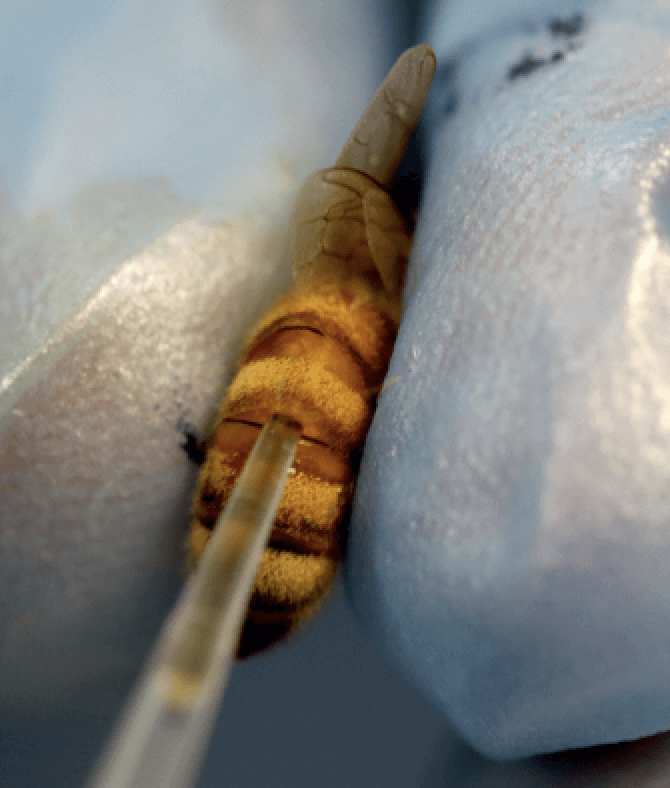
Bacteria carried by Varroa mites may be key to unlocking mystery of honey bee deaths

Screen Shot at AM

A University of Wisconsin-Stout biology professor and his students may have made an important discovery in the effort to determine why honey bee hives are dying out during the winters in the Upper Midwest.

Biology Professor Jim Burritt and his students have published research [in PLOS One] about a new strain of the bacterium called Serratia marcescens strain sicaria. … Ss1 for short.

“Our results indicate that Ss1 may contribute to the wintertime failure of honey bee colonies. We believe this is important because most beekeepers in our area lose over half of their hives each winter. …” said Burritt….

The bacterium came to light … as researchers looked for a different organism in blood drawn from sick bees in Dunn County. …

“It was clear we were looking at something different. As we did more testing on the organism, we began to realize we may be working with a new threat to honey bees. …” Burritt said.

. . . .

Along with finding the new strain of bacterium, also groundbreaking within the study is confirmation that Varroa destructor mites carry the Ss1 bacterium, Burritt said. Previously, mites were known only for transmitting viruses to honey bees.

The eight-legged Varroa mites are about the size of a poppy seed, Burritt said. “With the help of the students, we developed a method to efficiently obtain culture information from many individual mites,” he said.

The GLP aggregated and excerpted this blog/article to reflect the diversity of news, opinion and analysis. Read full, original post: Professor, students identify bacterium that may kill honey bees

Pacemakers made out of human stem cells may replace electronic models in future

sn pacemaker

The very first functional pacemaker cells created out of human stem cells have been developed by scientists from the McEwen Centre for Regenerative Medicine, at Toronto, Canada.

To date, electronic pacemakers are used to regulate heartbeat disorders of a human heart. The sinoatrial node (SAN) pacemaker cells are known to be the chief heartbeat controllers. A fault in its working can lead to irregular heartbeats and the treatment requires implantation of electronic pacemaker machines.

The effort made by scientists explains how human pluripotent stem cells can be developed into pacemaker cells in 21 days. These biological pacemaker cells can be used to replace the deteriorating SAN through cell transplantation.

The scientists formulated and tested the developmental pathway of creating pacemaker cells from stem cells by using different signaling molecules at different times, through the course of three weeks, till the goal was achieved.

“We are replicating nature’s way of making the pacemaker cell,” said the study’s senior author, Dr. Gordon Keller, Director of the McEwen Centre.

The GLP aggregated and excerpted this blog/article to reflect the diversity of news, opinion, and analysis. Read full, original post: Alternative Pacemaker Therapy: First Functional Pacemaker Cells Developed From Human Stem Cells

Inuit gained genetic advantage against freezing cold from 500,000 year-old DNA

d ca a b

How do Inuit populations in Greenland cope with below-freezing temperatures for the majority of the year? They may have inherited a genetic advantage from Denisovan relatives – a group of archaic humans who diverged from modern humans 500,000 years ago – a new study has found.

An international team of researchers from Israel, the UK, Denmark and UC Berkeley analyzed genomes of nearly 200 Greenland Inuit and compared them to ancient human DNA from Neanderthals and Denisovans, as well as modern humans whose data is part of the 1,000 Genomes Project.

The analysis revealed that all of the 200 Inuit genomes contained a genetic variant in a region associated with body fat distribution, which matched with the Denisovan genome, suggesting the variant was inherited through interbreeding 40,000 to 50,000 years ago.

Native Americans and some Siberians also contain the gene variant. It is also present at low to intermediate frequencies throughout Eurasia, but is nearly absent in Africa.

The GLP aggregated and excerpted this blog/article to reflect the diversity of news, opinion, and analysis. Read full, original post: Arctic Inuit Adapted to Handle Freezing Temps from Archaic Human DNA

What’s the most sustainable cover crop? It’s not mixture but monoculture

species cover crop mixture

Research thus far has consistently found that cover crop polycultures are not necessarily better than cover crop monocultures. This is now reaffirmed by a large study, done in Pennsylvania, published [late last] year (Finney et al. 2016).

The big idea behind cover crop mixtures is that the increased biodiversity will result in increased productivity, increased ecosystem services, or both. The Finney group tested both hypotheses. They found that the mixtures produced less biomass than the best monocultures … They also found that mixtures did not provide increased ecosystem services…. Finney et al. found that most of the ecosystem services which we want cover crops to provide are related to biomass production. … From this they concluded that “a mixture may not be necessary” and “a single cover crop species may be sufficient and more economical than a mixture.”

Mixtures do have one advantage, they can provide more services (multifunctionality) than a monoculture. However, in mixtures, the level of individual services provided is less than with a monoculture.

. . . .

Why don’t cover crop mixes work better than monocultures? Well, first, some ecological theory. The idea that biodiversity is better than monoculture comes from ecologists studying natural habitats. In nature, they observe niche differentiation (Connor et al. 2011). The idea is that a diverse mix of organisms can better use the available resources because of their different use characteristics. When their resource use does not overlap much, they are complementary.

The authors of this paper ask, “how can species be ‘complementary’ in their use of resources and production of biomass, and yet, a diverse community not perform processes any more efficiently than its most efficient species?” The simple answer is that there is no complementarity in these diverse mixes. …. Rather than complementarity, there are simple tradeoffs.

Any cover crop can do some good. If you like planting polycultures, do it. But don’t let the appeal of the silver bullet, of the secret solution, cloud your judgement. Novelty entices the most sober-minded of us into thinking “this is it.” …  as science is confirming, cover crop mixes are not the restore-everything-to-as-it-should-be final solution we hope for.

The GLP aggregated and excerpted this blog/article to reflect the diversity of news, opinion and analysis. Read full, original post: Cover crop best bet is monoculture, not mixture

Greenpeace’s ‘populist’ anti-GMO campaign is ‘post-truth’

Unknown
[Editor’s Note: This excerpt was translated into English by Google Translate and lightly edited for clarity.]

This year the Foundation of Urgent Spanish (Fundeu) has chosen “populism” as the word of the year. [Environmentalists’ anti-GMO policy] could be described as populist, but in the worst meaning of the term, the one that connects it with demagogy. Not for nothing other candidate words have been “cuñadismo” (pretend to know everything and want to impose your opinion) and post-truth  (that objective data are less important than your vision). It seems that this year Fundeu has been inspired by the Greenpeace transgenics campaign, since “populism” and many of the finalists can be used to define it. …

…[T]he tactics they have used GMO in these 20 years is to ignore reality and convey a message that is absolutely false…. You can see all the figures here, the GMO industry is transparent like few others. You will see that if we consider the global acreage of the last 20 years, the area planted this year is the third highest. Looking at it as a whole the trend is still bullish.  So the only ones who have the power to dictate the end of GMOs are not Greenpeace … but farmers. …  And I have predicted that GMOs will only leave the field when better varieties appear, possibly using CRISPR /Cas9.

The GLP aggregated and excerpted this blog/article to reflect the diversity of news, opinion and analysis. Read full post translated into English by Google Translate: Greenpeace, transgenics and after truth

Read full post in original Spanish: Greenpeace, transgénicos y posverdad

Ghana’s new guidelines on GMOs could speed release of water-efficient rice, pest-resistant cowpea

Screen Shot at PM

Ghana’s National Biosafety Authority (NBA) … issued guidelines for the release of genetically modified organisms (GMOs) [in December], a landmark step forward for modern biotechnology in the country.

“With these guidelines issued, Ghana can become a model in Africa,” said Eric Okoree, chief executive officer of the NBA. “We are telling the world, and Ghanaians, that we have opened the door and we are making ourselves open and ready to receive and consider applications for GMO use.”

. . . .

The document is the result of over six months of extensive consultation with partner institutions and technical experts in biosafety and biotechnology. …The guidelines seek to eliminate the uncertainties around GMO use by providing a clearer process for application, review, and approval/rejection by the NBA. …

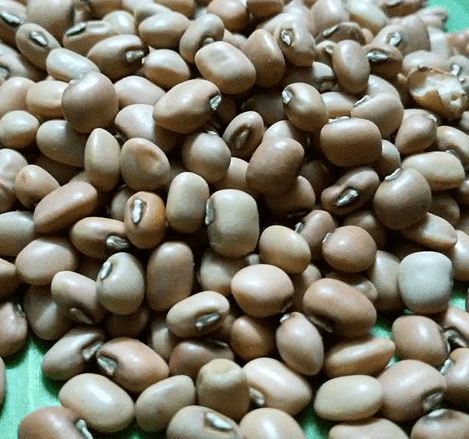
To date, no GM crops have been approved or registered for cultivation, import, or marketing in Ghana. Field tests are ongoing for some transgenic crops, such as Nitrogen-Use Efficient, Water-Use Efficient and Salt-Tolerant (NEWEST) rice and Bt cowpea. The guidelines could provide a basis for finally releasing them to the public.

The GLP aggregated and excerpted this blog/article to reflect the diversity of news, opinion and analysis. Read full, original post: Ghana’s bold bet on biosafety