Bacteria carried by Varroa mites may be key to unlocking mystery of honey bee deaths

Screen Shot at AM

A University of Wisconsin-Stout biology professor and his students may have made an important discovery in the effort to determine why honey bee hives are dying out during the winters in the Upper Midwest.

Biology Professor Jim Burritt and his students have published researchย [in PLOS One] about a new strain of the bacterium called Serratia marcescens strain sicaria. …ย Ss1 for short.

โ€œOur results indicate that Ss1 may contribute to the wintertime failure of honey bee colonies. We believe this is important because most beekeepers in our area lose over half of their hives each winter. …โ€ said Burritt….

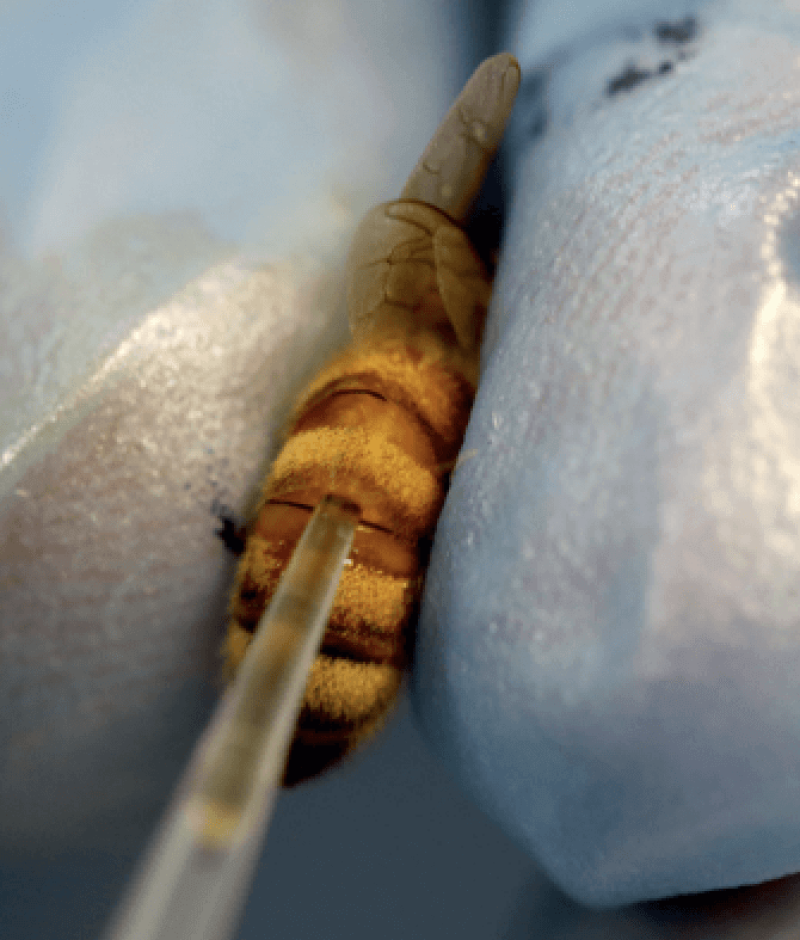
The bacterium came to light …ย as researchers looked for a different organism in blood drawn from sick bees in Dunn County. …

โ€œIt was clear we were looking at something different. As we did more testing on the organism, we began to realize we may be working with a new threat to honey bees.ย …โ€ Burritt said.

. . . .

Along with finding the new strain of bacterium, also groundbreaking within the study is confirmation that Varroa destructor mites carry the Ss1 bacterium, Burritt said. Previously, mites were known only for transmitting viruses to honey bees.

The eight-legged Varroa mites are about the size of a poppy seed, Burritt said. โ€œWith the help of the students, we developed a method to efficiently obtain culture information from many individual mites,โ€ he said.

The GLP aggregated and excerpted this blog/article to reflect the diversity of news, opinion and analysis. Read full, original post:ย Professor, students identify bacterium that may kill honey bees

{{ reviewsTotal }}{{ options.labels.singularReviewCountLabel }}
{{ reviewsTotal }}{{ options.labels.pluralReviewCountLabel }}
{{ options.labels.newReviewButton }}
{{ userData.canReview.message }}

Related Articles

Infographic: Global regulatory and health research agencies on whether glyphosate causes cancer

Infographic: Global regulatory and health research agencies on whether glyphosate causes cancer

Does glyphosateโ€”the world's most heavily-used herbicideโ€”pose serious harm to humans? Is it carcinogenic? Those issues are of both legal and ...

Most Popular

Screenshot-PM-24
Viewpoint: The herbicide glyphosate isnโ€™t perfect. Banning it would be far worse.
79d03212-2508-45d0-b427-8e9743ff6432
Viewpoint: The Casey Means hustleโ€”Wellness woo opportunism dressed up as medical wisdom
d-b
Blocked arteries, kidney stones, nausea, constipation, fatigue: Long list of health problems caused by too much vitamin Dย 
ChatGPT-Image-Mar-10-2026-01_39_01-PM
Viewpointโ€”โ€œMiracle moleculeโ€ debunked: Why acemannan supplements donโ€™t work
ChatGPT-Image-Apr-30-2026-05_00_48-PM
Wellness grifter physician turned wellness influencer out as surgeon general nominee
Screenshot-2026-04-30-at-11.33.46-AM
Anti-seed-oil to anti-vax pipeline: MAHA movement spreads to teen influencers
lab grown meat research kelly schultz lehighuniversity main
Profiles of the 10 top global cultured meat companies
ChatGPT-Image-Mar-27-2026-11_27_05-AM
The myths of โ€œprocessโ€: What science says about the โ€œdangersโ€™ of synthetic products and ultra-processed foods
ChatGPT-Image-Apr-30-2026-12_21_05-PM-2
The tech billionaires behind the immortality movement

Sorry. No data so far.

glp menu logo outlined

Get news on human & agricultural genetics and biotechnology delivered to your inbox.