Biohackers forge ahead with independent, unregulated research

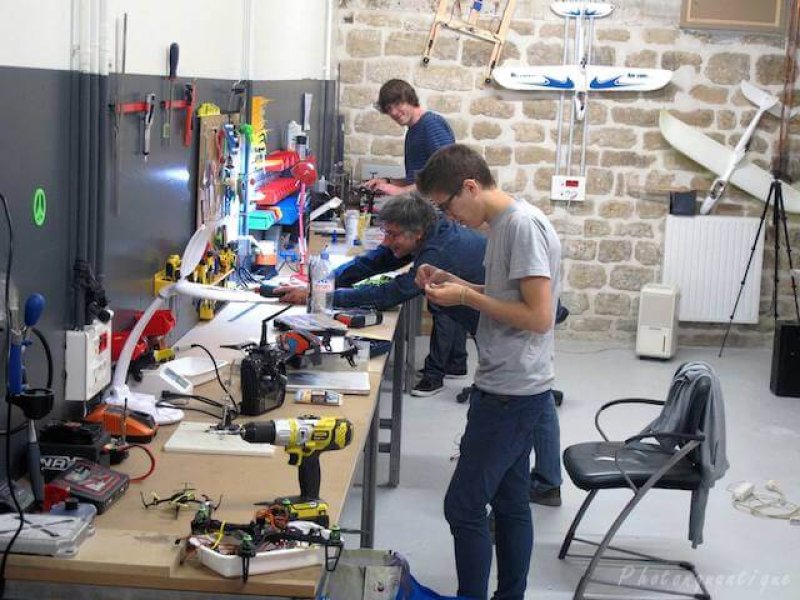
La Paillasse Nuit Blanche biohacking space hackerspace makerspace paris france europe innovation is everywhere drone lab

Alessandro [Volpato] isn’t a hobby chef, nor is he chemist or an electrician. But he might be a mixture of all of those things, plus a fourth – and the most important – component. He’s a biologist, a “do-it-yourself-biologist,” or a “biohacker.” That’s what the followers of the still small, but worldwide movement, call themselves.

Alessandro is currently working on something called an OpenDrop prototype. It’s a hand-sized, chip-controlled device that will be used to automatically manipulate cells and molecules in the future. This could speed up researching processes enormously.

In Germany, the manipulation of genes or work on multi-resistant germs, for example, is strictly controlled – and is punishable by law for do-it-yourself biologists. That makes Germany different than the US, where it’s possible for anyone to buy a starter kit for genetic experiments on pathogenic microbes for $159 (132 euros). A new method known as “gene scissors” makes gene manipulation relatively simple and inexpensive. There is no law that restricts kitchen genetics.

Alessandro Volpato is still working out the kinks in his own ideas. His OpenDrop prototype didn’t work the way it should have after several attempts. And the machine for reproducing genes is still stuck here and there. He’ll keep on working on it, of course – even without money from the private sector.

Read full, original post: Biohacking – genetic engineering from your garage

{{ reviewsTotal }}{{ options.labels.singularReviewCountLabel }}
{{ reviewsTotal }}{{ options.labels.pluralReviewCountLabel }}
{{ options.labels.newReviewButton }}
{{ userData.canReview.message }}

Related Articles

Infographic: Global regulatory and health research agencies on whether glyphosate causes cancer

Infographic: Global regulatory and health research agencies on whether glyphosate causes cancer

Does glyphosate—the world's most heavily-used herbicide—pose serious harm to humans? Is it carcinogenic? Those issues are of both legal and ...

Most Popular

Screenshot-2026-05-01-at-1.29.41-PM
Viewpoint: What happens when whole grains meet modern food manufacturing? Labels don’t tell the whole story.
S
As vaccine rejectionism spreads, measles may be taking a more dangerous turn
Screenshot 2026-05-06 at 2.56
Singularity crisis ahead? Can super babies save us from rogue AI geniuses?
Screenshot-2026-05-06-at-2.07.43-PM
Manufacturing a conspiracy: The timeline of how  the White House embraced the fringe claim that scientists are being mysteriously murdered
Screenshot-2026-03-13-at-12.14.04-PM
The FDA wants to make many popular prescription drugs OTC—a great idea. Here’s why it’s unlikely to happen
Screenshot-2026-04-20-at-2.26.27-PM
Viewpoint — Food-fear world: The latest activist scientists campaign: Cancer-causing additives
Screenshot-2026-04-30-at-2.19.37-PM
5 myths about summer dehydration that could damage your health — or even kill you
ChatGPT-Image-May-6-2026-03_41_05-PM
‘Protecting the integrity of science’: Kennedy’s FDA blocks release of taxpayer-funded studies finding COVID and shingles vaccines safe
Screenshot-2026-05-01-at-11.56.24-AM
‘Science moves forward when people are willing to think differently’: Memories of DNA maverick Craig Venter
79d03212-2508-45d0-b427-8e9743ff6432
Viewpoint: The Casey Means hustle—Wellness woo opportunism dressed up as medical wisdom
Screenshot 2026-05-06 at 12.49
Immortal dragons: The quest to ‘make death optional’
glp menu logo outlined

Get news on human & agricultural genetics and biotechnology delivered to your inbox.