Deceptive article on how to identify ‘poisonous GMO tomatoes’ circulating the internet again

we are eating a poison

Alison Campbell, writing on BioBlog, has been alerted to–and challenged–an article purporting to tell consumers how to distinguish between GM and “regular” tomatoes.

An article headed “We’re Eating A Poison! Here’s How To Identify GMO Tomatoes In Two Simple Steps!” was published at babiesdailynews.com in 2016. This year variations of the article have been reproduced HERE and – the version at Foodatory drawn to Campbell’s attention – HERE.

Campbell, Associate Dean (Teaching & Learning)and Senior Lecturer (Biological Sciences) at Waikato University, thunders the claim is wrong, wrong, wrong.

There aren’t any genetically-engineered tomatoes on the market, she points out.

Campbell then notes that the tomatoes we grow (or buy) and eat are themselves the result of centuries of modification by conventional selective breeding – and also techniques such as mutagenesis, which are not exactly “natural”.

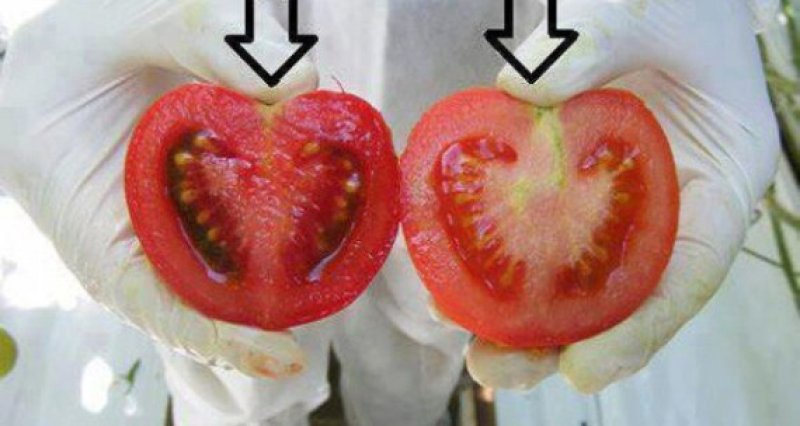
Then there’s the misleading image (above).

They’d obviously like us to think that one – perhaps the lushly rich red one to the left? – is natural/organic, and the other, a GMO. Especially when they ask, “can you tell the difference between a regular tomato and a genetically modified one?” But, as we know, all commercially-available tomatoes are produced by conventional means.

Read full, original post: Yes, we do have tomatoes – but not GM ones – says riled bio-blogger

{{ reviewsTotal }}{{ options.labels.singularReviewCountLabel }}
{{ reviewsTotal }}{{ options.labels.pluralReviewCountLabel }}
{{ options.labels.newReviewButton }}
{{ userData.canReview.message }}

Related Articles

Infographic: Global regulatory and health research agencies on whether glyphosate causes cancer

Infographic: Global regulatory and health research agencies on whether glyphosate causes cancer

Does glyphosate—the world's most heavily-used herbicide—pose serious harm to humans? Is it carcinogenic? Those issues are of both legal and ...

Most Popular

Screenshot-2026-05-01-at-1.29.41-PM
Viewpoint: What happens when whole grains meet modern food manufacturing? Labels don’t tell the whole story.
Farmers can talk to plants
Farmers are a major source of misinformation—about farming
ChatGPT-Image-Apr-13-2026-02_20_22-PM
Viewpoint: Misinformation infodemic? Why assessing evidence is so challenging 
ChatGPT-Image-Mar-27-2026-11_47_30-AM-2
FDA’s expedited drug reviews are hailed in some quarters but other approval practices are problematic
S
As vaccine rejectionism spreads, measles may be taking a more dangerous turn
Screenshot-2026-04-12-135256
Bixonimania: The fake disease scam that AI swallowed whole

Sorry. No data so far.

glp menu logo outlined

Get news on human & agricultural genetics and biotechnology delivered to your inbox.