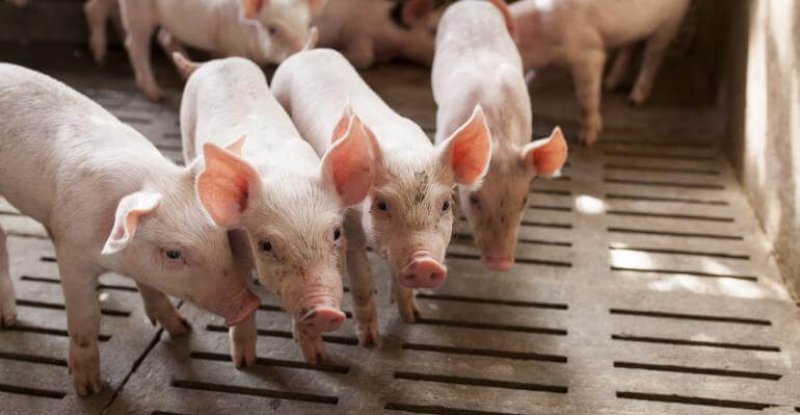
Gene-edited pigs could eliminate need for castration

Pigs Patarapong iStock

Castrating pigs is not a favorite chore for pork producers, but it’s necessary for meat quality and barn management. Now, scientists at the gene-editing company Recombinetics have developed a precision breeding method resulting in male piglets that remain in a prepubertal state, thus ending the need for castration. Recombinetics has partnered with Nebraska-based swine genetics supplier DNA Genetics to evaluate, develop, and commercialize the castration-free (CF) swine trait. Research is being led by Tad Sonstegard.

Successful Farming: What is the timeline for this project?

Tad Sonstegard: The basis of the knowledge for the castration-free trait came from research in human infertility and mouse physiology. Now work is progressing to develop castration-free pigs. We optimize everything in the lab first before we make the initial animals to ensure we can safely bring this to the marketplace. Within a year, we will move from development into breeding animals for evaluation of health and safety. We anticipate that the development and evaluation period will be completed within the next two to three years.

SF: Will farmers accept and use this technology?

TS: Oh, absolutely. If it makes life easier, why not? In one recent survey of farmers, they were asked if they would support research to replace the horned gene with the polled gene using precision breeding technology. Four out of five farmers said yes.

Read full, original post: Gene-editing research could end pig castration

{{ reviewsTotal }}{{ options.labels.singularReviewCountLabel }}
{{ reviewsTotal }}{{ options.labels.pluralReviewCountLabel }}
{{ options.labels.newReviewButton }}
{{ userData.canReview.message }}

Related Articles

Infographic: Global regulatory and health research agencies on whether glyphosate causes cancer

Infographic: Global regulatory and health research agencies on whether glyphosate causes cancer

Does glyphosate—the world's most heavily-used herbicide—pose serious harm to humans? Is it carcinogenic? Those issues are of both legal and ...

Most Popular

Screenshot-2026-04-22-at-12.21.32-PM
Viewpoint: Why the retracted Monsanto glyphosate study doesn’t change the science—the world’s most popular herbicide is safe 
Picture1
The FDA couldn’t find a vaccine safety crisis, so it buried its own research
ChatGPT-Image-May-1-2026-11_42_59-AM-2
Viewpoint: NAD is the wellness grifters latest evidence-lite longevity fad. At least the mice are impressed.
ChatGPT-Image-Apr-16-2026-02_56_53-PM
Financial incentives, over diagnosis, and weak oversight: Autism claims are driving up Medicare costs
ChatGPT-Image-May-12-2026-11_27_01-AM-2
AI likely to improve health care, research shows—but not for blacks and ethnic minorities
ChatGPT-Image-May-7-2026-01_23_27-PM-2
Viewpoint: Will AI democratize personalized cancer treatment or fuel medical misinformation?

Sorry. No data so far.

glp menu logo outlined

Get news on human & agricultural genetics and biotechnology delivered to your inbox.