National Geographic confesses to history of ‘racist’ coverage in special issue

nat geo

National Geographic strives to deepen our understanding of the world and our role in it. It’s difficult to understand 21st-century America without exploring the issue of race. It’s the elephant in the room, permeating every aspect of our culture, neighborhoods, schools, businesses, politics, sports, arts, and relationships.
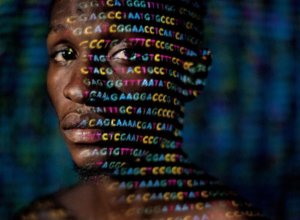
genetics code projected face african man crop adaptWhile science tells us that there is no such thing as race, society uses racial distinctions to divide us. Throughout history, groups of people have classified those who were different from them as the “other.” On the eve of the 50th anniversary of the assassination of civil rights leader Rev. Martin Luther King, Jr., we decided to look deeply into these issues with a distinct National Geographic lens. Our stories reflect a view that is global, scientific, and cultural.

…

Editor Susan Goldberg writes about National Geographic’s complicated history in an essay, “For Decades, National Geographic’s Coverage Was Racist. It’s Time We Acknowledged It.”

“It hurts to share the appalling stories from the magazine’s past,” she writes. “But it’s important to examine our own history before reporting on others.”


…

Science defines you by your DNA. Society defines you by the color of your skin. Using #IDefineMe, we want people to share their stories with us. We hope to spark a global conversation about how race defines, separates, and unites us.

Read full, original post: Why We’re Devoting an Entire Issue of National Geographic to Race

Related Articles

Infographic: Global regulatory and health research agencies on whether glyphosate causes cancer

Infographic: Global regulatory and health research agencies on whether glyphosate causes cancer

Does glyphosate—the world's most heavily-used herbicide—pose serious harm to humans? Is it carcinogenic? Those issues are of both legal and ...

Most Popular

Bayer Crop Circle in Golden Wheat
Making fertilizer from thin air: Bayer’s gene-editing innovation could dramatically cut chemical fertilizer use in growing food
Picture1
Viewpoint: How badly is the U.S. food-safety net fraying? FDA’s bungled handling of the tainted lettuce crisis deepens concerns over cuts to disease tracking and response
Reaching Through the Woven Sky
Challenging genetic modification rejectionists: Our evolving food system has relied on science for thousands of years
Screenshot-2026-11-03-at-12.31.18-PM
Gene editing once viewed with suspicion by UK  farmers, upwards of 90% now open to their sustainability benefits
Smiling-Woman-Over-Teal-Abstract-Shapes
Viewpoint: RFK Jr.’s latest foray into junk science: Even Kennedy’s hand-picked NIH director balks at appointment of crackpot mental health director
Neon Genome_ Fetal Dreamscape
The race to genetically engineer babies
Glossy Plastic Bag of Tokens and Labels
Viewpoint: How CNN got played by environmental activists pushing a plastics scare and litigation agenda
Screenshot-2026-11-02-at-11.34.28-AM
Farmers are collateral damage in the PFAS “forever chemicals” crossfire. Here’s what they need to know.
ChatGPT-Image-Mar-10-2026-01_39_01-PM
Viewpoint—“Miracle molecule” debunked: Why acemannan supplements don’t work
Screenshot-2026-10-29-at-11.18.34-AM
Viewpoint: ‘Just the flu’: Skipping your child’s flu shot could be a fatal mistake
Screenshot 2026-10-27 at 10.32
“Do your own research”: What Medicare’s annual open enrollment circus teaches us about the seductive trap of DIY health and science
Screenshot-2026-10-28-at-3.00.44-PM
Viewpoint: Activist attacks on corporations increasingly depend on "attribution" science to target oil companies for global climate change
Red and Green Embroidered Campaign Caps
Viewpoint: The fragile (and often bizarre) MAHA-MAGA-far left health-and-chemicals coalition is fracturing. Here’s why
glp menu logo outlined

Get news on human & agricultural genetics and biotechnology delivered to your inbox.