Viewpoint: Let’s make sure smallholder farmers benefit from new breeding techniques

x cb
Image : American Sorghum

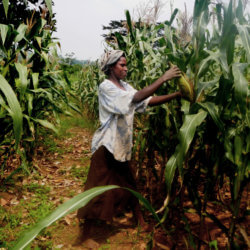
Critics argue that agro-biotechnology, and in particular genetic engineering, only provides large multinational corporations with the means to continue their dominance of the global food system, disadvantaging smallholder farmers, and ultimately — consumers. Proponents argue that agro-biotechnology, like the genome editing CRISPR-Cas9 system, should be made more accessible to smallholder farmers who will benefit from advanced breeding efforts in their own countries, using these precise tools to improve the crops of most interest to them.

The hope is that these new effective breeding tools could enable new collaboration, where researchers work hand-in-hand with farmers to develop crops and livestock more resistant to diseases and droughts, adapted to specific local needs. In South America, for example, researchers could assist potato farmers across the Andes Mountains create crops more tolerant to climate change, while at the same time protecting the region’s highly valuable agrobiodiversity.

And so the future is already here, but it’s not evenly distributed and we’re not ready. This is why we need to step up capacity-building efforts and strengthen and broaden the innovation agenda, enabling the benefits of modern biosciences to reach smallholder farmers in the southern hemisphere.
Editor’s note: Ivar Virgin is a senior researcher at the Stockholm Environment Institute

Read full, original post: GM crops offer hope in hotter times

Related Articles

Infographic: Global regulatory and health research agencies on whether glyphosate causes cancer

Infographic: Global regulatory and health research agencies on whether glyphosate causes cancer

Does glyphosate—the world's most heavily-used herbicide—pose serious harm to humans? Is it carcinogenic? Those issues are of both legal and ...

Most Popular

Screenshot-2026-11-16-at-2.37.32-PM
30 years of GMO farming: Is the boom in glyphosate and glufosinate use harming the environment? Data show they’re the most sustainable choice
ChatGPT-Image-Mar-10-2026-01_39_01-PM
Viewpoint—“Miracle molecule” debunked: Why acemannan supplements don’t work
Soybean Harvest in Cupped Hands
30 years of GMO farming: Defying cynics, we’ve had larger harvests, lower costs, and $385 billion in added global farmer income
Stormlit Portrait Over Golden Mountains
Searching for life where no one thought to look: A renowned astrophysicist’s seemingly quixotic quest to explore Venus’s clouds
Screenshot-2026-11-19-at-7.23.23-PM
Viewpoint: After a yearlong hiatus, the U.S. Preventive Services Task Force is back in business—gutted by RFK Jr. and promoting junk science
Screenshot-2026-11-19-at-7.54.57-PM
European General Court sides with scientists, dismisses activist claims that glyphosate is toxically dangerous
Nurturing Care Beneath the Crunchy Moms Logo
Crunchy Moms disinformation flood: Zuckerberg's Facebook has opened floodgates on measles and vaccines
glp menu logo outlined

Get news on human & agricultural genetics and biotechnology delivered to your inbox.