Viewpoint: Pesticide regulations should assess societal context, not just safety

weedkiller superJumbo
Image credit: Emmanuel Dunand/AFP

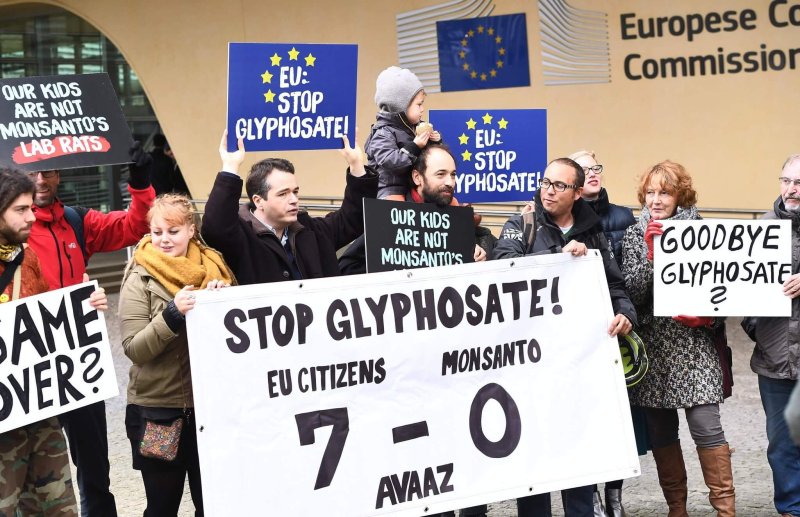
Apart from the inherent scientific complexity, the glyphosate case illustrates a fundamental societal issue. The mere fact that the European Citizens’ Initiative attracted so many adherents is indicative of a wide societal aversion to the massive increase in the production of chemicals and their use in pesticide-based agricultural mass production. Public concern is not only limited to glyphosate but also covers other chemicals such as neonicotinoids, endocrine-disrupting compounds, and food additives.

Presently there is no societal assessment in pesticide registration. Recently, a promising framework for the combination of cost-benefit analyses with factors such as risk perception, uncertainty, and trust in regulatory decision-making on toxic substances in food, including pesticides, has been proposed. We argue that including such a framework in pesticide authorization would be an appropriate way to take factors such as citizens’ initiatives, societal attitudes toward agricultural chemicals, and economic benefits of chemical pest and weed control into account.

It is time for a new scheme for pesticide evaluation in which regulatory decision-making takes into account not only the technical evidence on safety but also the societal context in which decisions are made.

Read full, original post: Decision-making in a storm of discontent

{{ reviewsTotal }}{{ options.labels.singularReviewCountLabel }}
{{ reviewsTotal }}{{ options.labels.pluralReviewCountLabel }}
{{ options.labels.newReviewButton }}
{{ userData.canReview.message }}

Related Articles

Infographic: Global regulatory and health research agencies on whether glyphosate causes cancer

Infographic: Global regulatory and health research agencies on whether glyphosate causes cancer

Does glyphosate—the world's most heavily-used herbicide—pose serious harm to humans? Is it carcinogenic? Those issues are of both legal and ...

Most Popular

Picture1
The FDA couldn’t find a vaccine safety crisis, so it buried its own research
Screenshot-2026-04-22-at-12.21.32-PM
Viewpoint: Why the retracted Monsanto glyphosate study doesn’t change the science—the world’s most popular herbicide is safe 
ChatGPT-Image-May-7-2026-12_32_36-PM
Viewpoint: The state of U.S. vaccine policy? Dismal nationally, but some states are stepping up.
placebo
Viewpoint — Alternative medicine and the placebo effect: Selling a reassuring illusion of health
_20250221_nib_rfk_trump
Viewpoint: 'Crisis of public trust': Autism support community shocked RFK continues to peddle false claims about the danger of vaccines
ChatGPT-Image-May-18-2026-01_45_05-PM-2
Newest hantavirus conspiracy: Online disinformation turns outbreak into latest ivermectin grift
Screenshot-2026-04-13-at-1.39.26-PM
Viewpoint: ‘Safer for children?’ Stonyfield yogurt under fire for deceptive organic marketing
ChatGPT-Image-May-18-2026-12_06_18-PM-2
Defying death: The immortality movement goes mainstream
Screenshot-2026-04-22-at-10.46.29-AM
Viewpoint: How to counter science disinformation? Science journalist offers 12 practical tips
Defense_Secretary_Ash_Carter_tours_the_Microsoft_Cybercrime_Center_in_Seattle_March_3_2016
How criminals are using AI to target social media users and steal their money and confidential data
glp menu logo outlined

Get news on human & agricultural genetics and biotechnology delivered to your inbox.