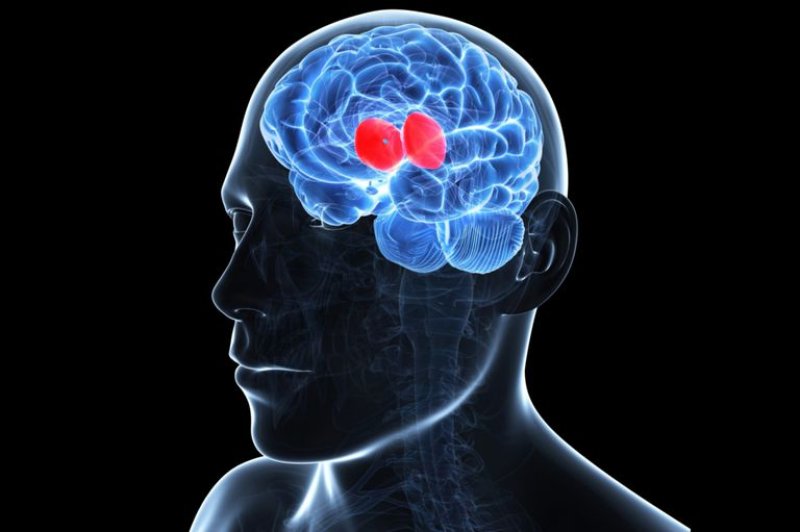
More than a brain relay station: Thalamus could be key to higher level thinking

thalamus image feb e df c d e d dd
Image credit: Science Photo Library/

Scientists have known for decades that the thalamus faithfully transmits information about the visual world from the retina to the cortex, leading to the impression that it is largely a messenger of sensory information.

In rodents, humans and other mammals, [neuroscientist Michael] Halassa says, the thalamus is much more than just a passive gatekeeper for sensory input. Instead, it plays an active role in orchestrating cortical activity, telling the cortex what tasks it should carry out in different contexts.

Knowable Magazine asked Halassa to discuss how work in his and other labs is changing the traditional view of the thalamus.

[Knowable:] What evidence suggests that the thalamus is doing something more interesting than previously thought?

[Halassa:] The prefrontal cortex is thought to be one of the most complicated cognitive areas of the cortex — it performs tasks that are even more complicated than face recognition. In humans, for example, it enables our ability to draw parallels, to imagine things that we’ve never seen, and to innovate. Based on our animal studies, we think that the mediodorsal thalamus is helping the brain narrow down its search for the correct behavior or response, so that it can quickly adapt as the environment or situation changes. It takes incomplete data from the cortex, then uses that information to determine which tasks the cortex should perform.

Read full, original post: A long-overlooked brain region may be key to complex thought

{{ reviewsTotal }}{{ options.labels.singularReviewCountLabel }}
{{ reviewsTotal }}{{ options.labels.pluralReviewCountLabel }}
{{ options.labels.newReviewButton }}
{{ userData.canReview.message }}

Related Articles

Infographic: Global regulatory and health research agencies on whether glyphosate causes cancer

Infographic: Global regulatory and health research agencies on whether glyphosate causes cancer

Does glyphosate—the world's most heavily-used herbicide—pose serious harm to humans? Is it carcinogenic? Those issues are of both legal and ...

Most Popular

S
As vaccine rejectionism spreads, measles may be taking a more dangerous turn
Screenshot-2026-05-01-at-1.29.41-PM
Viewpoint: What happens when whole grains meet modern food manufacturing? Labels don’t tell the whole story.
ChatGPT-Image-Mar-27-2026-11_47_30-AM-2
FDA’s expedited drug reviews are hailed in some quarters but other approval practices are problematic
Farmers can talk to plants
Farmers are a major source of misinformation—about farming
Screenshot-2026-04-20-at-2.26.27-PM
Viewpoint — Food-fear world: The latest activist scientists campaign: Cancer-causing additives
Screenshot 2026-05-06 at 2.56
Singularity crisis ahead? Can super babies save us from rogue AI geniuses?
Screenshot-2026-04-30-at-2.19.37-PM
5 myths about summer dehydration that could damage your health — or even kill you
Screenshot-2026-05-06-at-2.07.43-PM
Manufacturing a conspiracy: The timeline of how  the White House embraced the fringe claim that scientists are being mysteriously murdered
Screenshot 2026-05-06 at 2.19
Vaccine shootout at the CDC 
Screenshot-2026-03-13-at-12.14.04-PM
The FDA wants to make many popular prescription drugs OTC—a great idea. Here’s why it’s unlikely to happen
glp menu logo outlined

Get news on human & agricultural genetics and biotechnology delivered to your inbox.