Vitamin-fortified Golden Rice moves one step closer to commercialization in the Philippines

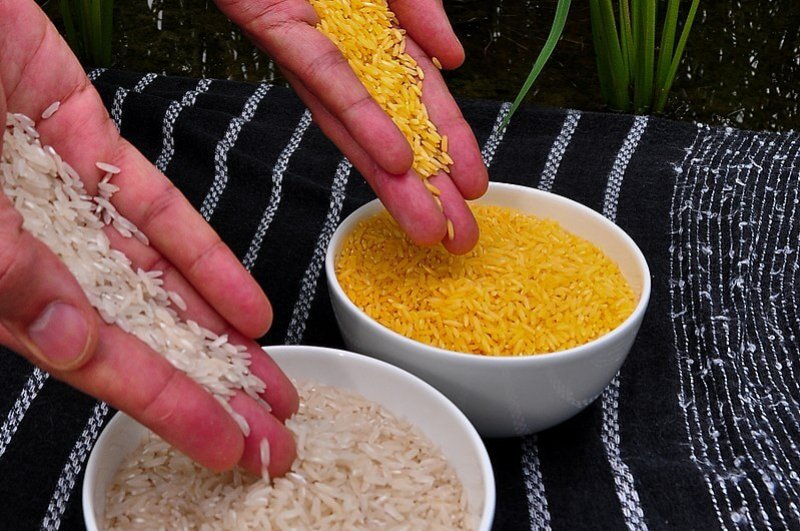
px Golden Rice
Image credit: International Rice Research Institute

A variety of Oryza sativa (rice) genetically engineered using recombinant DNA technology, Golden Rice contains beta carotene, an antioxidant which the body converts into Vitamin A. This gives the rice grain the yellow-orange or gold color that inspired its name.

However, the Golden Rice project is still on its way to completion. Its path, as expected, has not entirely been bright and shiny.

…
The Department of Agriculture’s Philippine Rice Research Institute (PhilRice) is working with the International Rice Research Institute (IRRI) towards further developing and completing the Golden Rice project in the Philippines.

The process involves different stages: research, confined field testing, field trials, safety assessments, market tests, and nutrition studies. Nevertheless, multiple rounds of trials and errors are bringing scientists closer to fully developing safe, genetically modified rice varieties with benefits that conventional varieties do not provide.
…
Now, the Golden Rice project is entering its fourth stage. In this phase, researchers will plant and grow Golden Rice in the same normal field environment as unmodified rice varieties. Further tests and assessments will be involved after the field test to ensure that Golden Rice is efficacious and will reach the communities that need it the most.

…

Once commercialized, Golden Rice is expected to become an affordable and sustainable way to combat vitamin A deficiency in the Philippines, particularly in its most remote and underdeveloped areas.

Read full, original article: Closer to harvest? The status of the Golden Rice project

Related Articles

Infographic: Global regulatory and health research agencies on whether glyphosate causes cancer

Infographic: Global regulatory and health research agencies on whether glyphosate causes cancer

Does glyphosate—the world's most heavily-used herbicide—pose serious harm to humans? Is it carcinogenic? Those issues are of both legal and ...

Most Popular

ChatGPT-Image-Mar-10-2026-01_39_01-PM
Viewpoint—“Miracle molecule” debunked: Why acemannan supplements don’t work
ChatGPT-Image-Sep-10-2026-10_36_07-AM
Viewpoint: Even lousy scientific articles can shield authors when they hype dubious health claims and products
sorghum farmers in kenya FARMERS TREND
Here are all the ways CRISPR gene editing is transforming Africa’s staple crops—and there’s a lot more innovation to come
Screenshot-2026-10-01-at-11.21.27-AM
Vaccine hesitancy, like malaria, surges globally, topping 35% in some countries
ChatGPT-Image-Sep-30-2026-01_25_34-PM
Blood tests for Alzheimer’s? The latest grifter, social media scam.
ChatGPT-Image-Sep-30-2026-01_11_07-PM
How U.S. teamed with Russia to block global human AI weapons oversight
ChatGPT-Image-Sep-30-2026-01_38_36-PM
Viewpoint: Died “with measles” vs. died “from measles”: RFK, Jr.’s dangerously subversive word games
ChatGPT-Image-Sep-21-2026-03_15_09-PM
Viewpoint: Chipotle-inspired lesson: 10,000 sick customers suggest that processed foods can be safer than fresh ones
ChatGPT-Image-Sep-29-2026-12_16_42-PM
Social media influencers are driving food misinformation across Europe
Screenshot-2026-09-28-at-1.16.38-PM
Defying public perceptions, U.S. cancer deaths plunged 35% since 1991
glp menu logo outlined

Get news on human & agricultural genetics and biotechnology delivered to your inbox.