


Who’s the man behind Glyphosate, and why is he winning some of the highest honors in science if his invention is so damaging? And why do farmers use pesticides anyways?
Read full, original post: Glyphosate: A Hidden Villain?


Who’s the man behind Glyphosate, and why is he winning some of the highest honors in science if his invention is so damaging? And why do farmers use pesticides anyways?
Read full, original post: Glyphosate: A Hidden Villain?

It’s just a lone, boney middle finger, but the scientists who found it say it’s the oldest directly dated fossil of our species to ever be found outside of Africa and the Levant, a region that today comprises Israel, Syria, Lebanon, and Jordan. But the new discovery is not without its critics, who say older evidence of human habitation outside of this region exists elsewhere, and that the finger might not even be human.
…
[W]hat makes this new study exciting is that it’s the first direct evidence of early modern humans venturing outside of Africa and the Levant. What’s more, it affirms that migrations into Eurasia were more expansive than previously thought.…
Traditionally, scientists figured modern humans migrated out of Africa in a single wave some 50,000 to 70,000 years ago, moving along the coast and subsisting off marine resources. But the discovery of this finger bone suggests humans were moving about 20,000 to 25,000 years earlier than assumed.
…
As for the finger, the researchers don’t know the former owner’s gender or age, nor which hand it came from, but it does exhibit signs of manual stress.
…
Anthropologist Rolf Quam from Binghamton University (SUNY) agrees that the authors performed a thorough analysis of the fossil, but without ancient DNA, he’s doubtful we can definitively say that this fossil belongs to a Homo sapiens individual.
Read full, original post: 88,000-Year-Old Middle Finger Found in Saudi Arabia Could Rewrite Human History

Of all the plants that humanity has turned into crops, none is more puzzling than the sweet potato. Indigenous people of Central and South America grew it on farms for generations, and Europeans discovered it when Christopher Columbus arrived in the Caribbean.
In the 18th century, however, Captain Cook stumbled across sweet potatoes again — over 4,000 miles away, on remote Polynesian islands. European explorers later found them elsewhere in the Pacific, from Hawaii to New Guinea.
The distribution of the plant baffled scientists. How could sweet potatoes arise from a wild ancestor and then wind up scattered across such a wide range? Was it possible that unknown explorers carried it from South America to countless Pacific islands?
An extensive analysis of sweet potato DNA, published … in Current Biology, comes to a controversial conclusion: Humans had nothing to do with it. The bulky sweet potato spread across the globe long before humans could have played a part — it’s a natural traveler.
…
“We find very clear evidence that sweet potatoes could arrive in the Pacific by natural means,” said Pablo Muñoz-Rodríguez, a botanist at the University of Oxford. He believes the wild plants traveled thousands of miles across the Pacific without any help from humans.
Read full, original post: All by Itself, the Humble Sweet Potato Colonized the World

…
One of the doctors interviewed said there is an emerging consensus. I think you can see that there is no consensus at all, except that most experts agree that a healthy diet, exercise, adequate sleep and other lifestyle factors are important for general health and well being. Their promotion of a high fat diet (especially coconut oil) conflicts with the American Heart Association’s warnings against it. Many of them practice so-called “integrative” and “functional” medicine, which are basically excuses for doctors to make things up as they go along.
…
Videos such as those done by Peggy Sarlin offer false hope. The real hope lies with researchers who are working hard to develop treatments and better ways to diagnose and prevent the disease and who understand the necessity of controlled experiments—research scientists who don’t just collect hypotheses, uncontrolled observations, and patient testimonials.
Read full, original post: Hope and hype for Alzheimer’s

CRISPR has changed the way alterations are made; so in the past year the FDA clarified their position, any intentional genetic modification resulted in a “drug” subject to FDA review. This is a very different conclusion than the one reached by the FDA about plants, were CRISPR modifications that did not involve insertions of foreign genes, just simple base substitutions or deletions do not automatically need to be reviewed.
…
We have been breeding animals for generations where random mutagenesis does the work, and we choose the phenotypes we want to promote. The same underlying base substitution or deletion performed randomly by nature, when performed intentionally, now requires regulatory oversight and solely for animals. It makes little scientific or common sense. If plants with simple base changes are considered “biosimilar” enough to not require additional regulation, what is there about an animal that doesn’t allow for “biosimilar” at all?
What is different about animals that the process and not the resulting product pose a risk? From a scientific point of view, nothing.
Read full, original post: Why Is CRISPR OK For Plants But Not Animals?

Here are a few ways researchers are already using [CRISPR] to make the world a better place;
1. Produce transplant organs. […] Using pigs for their kidneys instead of their bacon might be one solution.
…
2. Replace insulin shots for diabetics. […] Making a skin graft that contains a CRISPR-modified version of a protein that helps insulin regulate blood glucose levels could help make the needle history.
3. Erase killer heart conditions. […] We might already be on our way, with a recent demonstration of CRISPR being used to edit a gene responsible for a heart condition in a human embryo.
…
4. Create stunning garden displays. […] Scientists have used CRISPR to snip a gene responsible for the violet colour of the Japanese morning glory flower.
…
5. Gently cure a bunch of diseases … in mice. […] A clever modification to the [CRISPR] process allowed a team of scientists to cure a number of genetic conditions in mice simply by changing how external epigenetic factors modified the genes.
…
6. Destroy superbugs. […] One way we might be able to fight back against the drug-resistant superbug is to modify viruses with a payload that forces bacteria’s natural versions of the CRISPR enzymes to go rogue and chew up its own genes.
7. Make tiny tape recorders. […] CRISPR has recently been used to turn bacteria into the world’s smallest spooks, giving them the ability to eavesdrop on their environment.
Read full, original post: CRISPR Is Already Changing Our World, Here’s How
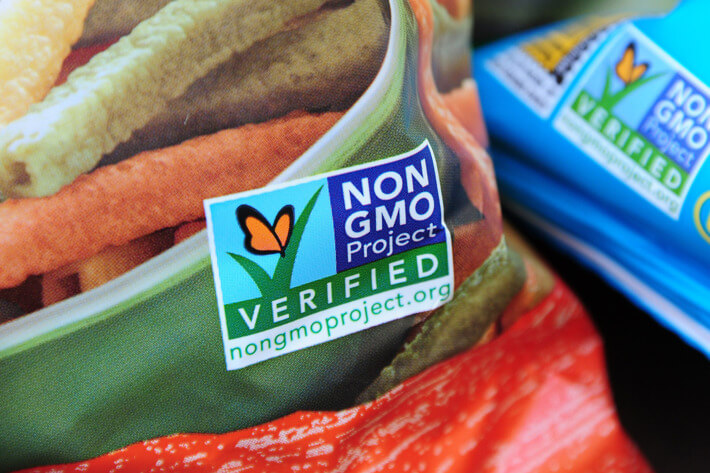
Many people assume that organic and non-GMO foods are more expensive, but is that really the case? In the recently published The price of non-genetically modified (non-GM) food, agricultural economists Nicholas Kalaitzandonakes, Jayson Lusk, and Alexandre Magnier used Nielsen product data to actually look at consumer purchasing and prices of organic and non-GMO foods from 2009 to 2016.
…
In Want non-GMO? How much more will it cost?, Jayson (one of the paper’s authors) writes: “We picked these product categories because they represent classes of products for which the potential impact of changes in the raw ingredients on the final retail price might be large (i.e., soybean or corn oil for which the supply is primarily GMO) to small (i.e., ice cream where the value share of GMO crops and their derivatives (e.g. corn syrup) is probably less than 5%).”
…
The researchers found that sales of organic and non-GMO products vary considerably by category. Organic products made up nearly 10% of cooking and salad oils and nearly 8% of tortilla chips sold in 2016 – much higher than I’d expected.

Read full, original post: The high price of food labels

The ingrained notion – that there has only ever been one species of human being, Homo sapiens – is a latterday fiction born of our own self-important view of ourselves.
…
Homo sapiens and Neanderthals had a common ancestor, about 500,000 years ago, before the former evolved as a separate species – in Africa – and the latter as a different species in Europe. Then around 70,000 years ago, when modern humans emerged from Africa, we encountered the Neanderthals, most probably in the Middle East. We briefly mixed and interbred with them before we continued our slow diaspora across the planet.
…
But the initial separation of the two lines of ancient humans who gave rise to Neanderthals and to Homo sapiens – and then their subsequent intermingling – shows that remixing does occur. Indeed, [geneticist David] Reich believes it was commonplace and that the standard tree model of populations is basically wrong. Throughout our prehistory, populations have split, reformed, moved on, remixed and interbred and then moved on again.
…
Instead of a tree, a better metaphor would be a trellis, branching and remixing far back into the past, says Reich, whose work indicates that the idea of race is a very fluid, ephemeral concept. However, he is adamant that it is a very real one and takes issue with those geneticists who argue that there are no substantial differences in traits between populations.
Read full, original post: David Reich: ‘Neanderthals were perhaps capable of many modern human behaviours’

Scientists have found a way to stop the spread of rice blast, a fungus that destroys up to 30% of the world’s rice crop each year.
An international team led by the University of Exeter showed that chemical genetic inhibition of a single protein in the fungus stops it spreading inside a rice leaf – leaving it trapped within a single plant cell.
The finding is a breakthrough in terms of understanding rice blast, a disease that is hugely important in terms of global food security.
However, the scientists caution that this is a “fundamental” discovery – not a cure that can yet be applied outside the laboratory.
The research revealed how the fungus can manipulate and then squeeze through natural channels (called plasmodesmata) that exist between plant cells.
…
Rice blast threatens global food security, destroying enough rice each year to feed 60 million people.
It spreads within rice plants by invasive hyphae (branching filaments) which break through from cell to cell.
In their bid to understand this process, the researchers used chemical genetics to mutate a signalling protein to make it susceptible to a specific drug.
The protein, PMK1, is responsible for suppressing the rice’s immunity and allowing the fungus to squeeze through pit fields – so, by inhibiting it, the researchers were able to trap the fungus within a cell.
Read full, original post: Breakthrough in battle against rice blast

Using brain scans, a new study has observed a link between connections in the brain and the ability of the person to tolerate economic risk. The paper titled “Amygdala Functional and Structural Connectivity Predicts Individual Risk Tolerance” was published in the journal Neuron on April 5.
…
108 participants were recruited for the study. First, they were asked to answer questionnaires involving 120 different scenarios. The answers were used to classify where the individuals stood on a spectrum ranging from extremely risk-averse to extremely risk-seeking.
…
By analyzing the brain structures and the questionnaire data, it was found that participants with a higher tolerance for risk had more gray matter (a larger amygdala) and displayed more functional amygdala-mPFC connectivity than those with a lower tolerance for risk.
…
“Just by looking at these features of your brain, we could have a reasonable idea if you are someone who will take lots of risk or not,” [says researcher Joseph Kable.]
…
But given the early stages of the research, it is too soon to understand whether a system could be designed and implemented with regards to business investments or gambling disorders. “Risk taking is a complex phenomenon that is likely influenced by many factors. It seems like a big leap to go from a lab study to using this technology to inform financial decisions,” added Professor Timothy Caulfield.
Read full, original post: Do You Take Unnecessary Risks? Your Brain Structure Could Be To Blame

The industry at that time was almost entirely based on a single banana cultivar called “Gros Michel” (meaning “Big Mike”), and it was susceptible to infection by a strain of fungus called Fusarium. Once the soil of a given plantation was contaminated with that strain, any Gros Michel tree grown there would soon die.
By good fortune, a different banana cultivar that was being grown in the South Seas was able to substitute for Gros Michel as a commercial line, and this new “Cavendish” cultivar became the new banana of international commerce, as it remains to this day. (Check out this interesting blog post about the history of the Cavendish variety and how it actually passed through a greenhouse in England in that process! And here is another good post about the history of this disease and the industry.)
Unfortunately, it’s about time for some band to cover “Yes, We Have No Bananas” because, evolution being what it is, a new strain of Fusarium — Tropical Race 4 — has arisen and it is lethal to the Cavendish. The disease is slowly making its way around the world, and since it can be spread in a particle of dirt on something like a boot, it will almost inevitably make it to the Central and South American growing regions that supply both North America and Europe with their bananas.
Although this unfortunate scenario has been on the minds of the banana industry for decades, it is now starting to get more attention in the mainstream press. One part of the story that has been shocking to these outside observers is that such a huge industry would ever be dependent on a single cultivar of banana. As Stephen Mihm put it for Bloomberg, this looming “bananapocalypse” is attributable to a vulnerability that comes from the practice of “extreme monoculture.”
While I understand why observers might be shocked that a nearly $12 billion industry depends almost exclusively on the Cavendish banana, I do want to push back on the implied conclusion that this represents some sort of irrational or irresponsible expression of “big ag” or whatever other demons are imagined by the Food Movement.

When you see something that is a standard practice in a very large, nationally diverse and multi-company business like bananas, I would suggest that it is appropriate to ask not “what is wrong with this system” but rather, “What are the practical factors that drive this seemingly irrational practice?”
I’m not a banana expert, but in the mid-1990s, two of my first jobs as an independent consultant had to do with the banana industry. It was during the exciting early years of commercial plant biotechnology, and many industries were asking, “What might this new technology do for our business?” Both of my projects involved early-stage discussions between a major banana company and a plant biotech company — four different entities in all. These were “drawing board stage” projects, with the goal of figuring out if certain ideas could ever make economic sense: Would they be something worth years of effort and millions of dollars for research? Still, overall, biotechnology looked like a way for this industry to tap into genetic diversity.
The fun part for me was getting to do a deep dive into the details of how bananas are grown, handled, shipped and marketed. I got to travel to Honduras, Costa Rica and Ecuador to tour banana plantations and interact with experts at the major banana export companies. As I said, I’m not an industry insider, but I think I can shed some light on why there are not more kinds of bananas grown for export.
As modern consumers, we are offered an amazingly diverse selection of fresh fruits and vegetables year-round, so it is important to think back to the early days of this offer of plenty. Having grown up in Denver in the 1960s, I can recall that, except for a few summer months, almost the only fresh fruit options at the grocery store were bananas, apples and oranges. I have a podcast about why apples were ever on that list. But if you think about it, the very fact that we can so easily enjoy fresh bananas in temperate regions is a bit remarkable.
Bananas can grow only in regions where there is never frost, and they do best in truly tropical climates. How did a tropical fruit become a mainstream, reasonably priced, healthful, kid-popular fruit for people who experience winter?
In tropical regions, there is a great deal of genetic diversity among wild bananas and considerable diversity among the banana or plantain types that humans cultivate. However, very few of these bananas could ever meet the criteria needed to be a viable export crop.

First of all, a banana for export has to be seedless. Many wild bananas have large, very hard black seeds – not something that has much consumer appeal. The bananas that people like are seedless because they have triploid genetics – three of each chromosome vs. the two that we have. That is the same way we get seedless watermelons, grapes, etc. It’s not some “GMO” thing; it happens at times in the plant kingdom, and we humans like it! Still, improving or changing the cultivar through “conventional breeding” isn’t an option if it makes no seeds.
Next, the banana needs to be productive in terms of overall yield per tree or acre. I’m sure no one in the 1920s was calculating it, but in modern “sustainability” thinking, the “land-use efficiency” of a crop is an important criterion. That, along with “water-use efficiency,” small “carbon footprint” and “energy footprint,” is all very much tied to good yield. The usable per-hectare yields of the Cavendish variety are quite high, and that is why it has been a both economically viable and environmentally sustainable choice for a long time.
But probably the most limiting requirement for a banana variety to be commercially acceptable is that it has to be shippable. In the modern era, we have lots of transport options for food products, but during the era when the banana was becoming an item of international trade, the only viable option was ocean shipping. A product being moved from the tropics to North America or Europe needed a very-low-cost transport option if it was ever going to be a mainstream consumer product. Most fresh produce products loaded onto a ship for a two-plus-week trip to a northern port would be a soup of decay by the time they arrived.
What made the Gros Michel and its successor, the Cavendish, remarkable was that they could make that trip at a temperature range of 55-58 degrees Fahrenheit, and so not even require lots of energy for refrigeration. Very few of the wonderful range of cultivated or wild banana types could ever do that, but because the Cavendish can be shipped this way, the energy and carbon footprint of its shipment is small. This crop has a very attractive “food-miles” profile.

In addition, it turns out that the conditions under which bananas grow can affect their shipping potential. There is a disease that infects only the leaves of banana plants called “Black Sigatoka.” If a banana tree has suffered too much of that infection, even the robust Cavendish variety won’t be able to make the trip by sea. One thing I learned on my tour was that plantations have employees whose whole job is to survey the plantation on a tree-by-tree basis in order to qualify the fruit for shipment based on how well that disease has been managed.
But it gets even more complicated than that (here’s a good video summary of the process). Bananas are picked in Central and South America at a “green” stage — imagine a fruit more completely green than the greenest one you’ve ever seen in the clusters in your store. When they get to their destination, they are put into “ripening rooms,” where they are exposed to ethylene gas to start them on the way to the ripe yellow fruit you know. Before you freak out, know that ethylene is the fully natural plant hormone that induces ripening in most fruits and vegetables.
There is a definite art to this ripening process, and highly valued experts who can assess each shipment of bananas know just how to handle them in the “ripening rooms” to achieve the goal of delivering “just right” bananas at retail. This process has to factor in issues like ups and downs in demand and turnover rates at key retail customer outlets, in addition to the condition of the incoming fruit.
I know that at the stores where I shop, I can consistently buy bananas that are close to ripe but not fully, such that I can hope to consume them all before they turn black. We consumers might think we have a balancing act to do when it comes to timing ripening and consumption of the bananas from our counters, but imagine that on a huge scale for the banana distribution chain.
There is one more critical element of the business model: Those ships that come to our ports loaded with bananas certainly can’t go back empty. The banana shipping companies are also seriously involved in their “back-haul” business of bringing back products of interest in the source countries. Having a well-understood, predictable crop helps with running that business efficiently as well.
So for the international banana business to work in a way that provides a relatively low-cost product acceptable to consumers, it needs to be able to function in a reliable and predictable fashion. Figuring out how to do this with a new banana variety would be a huge challenge. How do you grow it efficiently? Can the crop make the trip reliably? How can its ripeness be managed in order to meet both the distribution chain requirements and the needs of consumers for decent “counter life”? Will all of this work in a way that is compatible with a viable back-haul business?
So while it is easy to think that the banana industry is crazy to depend on one cultivar, I submit to you that it is not without reason and it implies no irresponsibility.
So does that just mean that we are inevitably going to live out the unintended prophecy of “yes, we have no bananas”? I think that depends on whether we continue to live in a world where anti-biotechnology groups are able to exercise the control that they currently have over our food system.
Let me explain. Remember that my introduction to bananas was based on excitement about what biotechnology could do for the crop. One of the concepts was to develop bananas that were resistant to that leaf infection disease that can compromise ship-ability. Control of that disease requires something like 40 fungicide sprays a year, so as you can imagine, there would be a huge cost savings if the trees could be made resistant.
The other concept on the table was modifying the banana so that it would stay in that nice yellow, but not yet black, stage longer on the consumer’s counter. I’ll never forget that in the first meeting about that idea, a participant who worked for a UK-based banana importer said in his very British accent: “Why would you want to do that? Don’t you know that the dustbin is a major consumer of bananas?” Obviously, he wasn’t attuned to current sensitivity to the need for food waste reduction. I thought it was cool that a banana company was serious about an idea that might reduce food waste, with the hope that it would make consumers more comfortable about buying even more bananas.
Well, these were just theoretical ideas at the time, and they didn’t go anywhere because it soon became evident that the anti-GMO forces were quite successful at putting brand-sensitive companies in an untenable spot if they were using “GMO crops” not just for generic ingredients but for brand-central crops. A dramatic example was how fast-food chains like McDonald’s moved to avoid biotech potatoes for their signature fries.
It quickly became clear to the banana companies that their brands and their retail store access could be compromised if they pursued “GMO” options. The irony here is that this would have been the most viable strategy with which to bring genetic diversity into the logical but extreme monoculture of bananas.
So the irony is that if the “yes, we have no bananas” scenario becomes a reality, it will be because we as a global society didn’t use a safe, viable, scientifically sound strategy to rationally deal with the problem in the banana crop.
Public institution scientists in Australia and entrepreneurial scientists in Latin America have come up with ways to modify commercially relevant bananas to resist the Fusarium disease. Ideally, there would be the potential to use several approaches, either in the same banana or in different fields; that would avoid delay selection for resistance and avoid yet another dependency on a single line. It is likely that the “heritage variety” Gros Michel could be made commercially viable once again!
If the Fusarium-resistant biotech bananas were introduced, activists would almost certainly attack them as “GMO.” Would any of the big banana companies have the guts to move forward with the technology in spite of the inevitable brand attacks by NGOs? Would any big food retailers be willing to resist the inevitable pressures not to stock that fruit? That retail blockage strategy is being used today against other new biotech offerings such as non-browning apples and potatoes and fast-growing, terrestrially raised salmon.
At one level, this is a question about what will be available for us as consumers. Will we continue to have this highly consumed, reasonably priced, child-friendly, healthy food option? Maybe not. But there is another big question.
One thing I witnessed on those visits to the banana industry back in the ’90s was that large communities in Central and South America flourish because of the jobs that this industry creates. We in the rich world will still have lots of other fruit choices if the stores have no bananas, but that flexibility isn’t there for the families that have been doing the work to provide us with this staple food option for so many decades. I would think that most activists are the kind of people who care about the availability of healthy, low-cost fruit options; I doubt that they would want to see the banana-producing communities impoverished. However, if the current paradigm of anti-GMO intimidation of fruit companies and retailers continues, that is where we are headed.
Steve Savage is an agricultural scientist (plant pathology) who has worked for Colorado State University, DuPont (fungicide development), Mycogen (biocontrol development), and for the past 13 years as an independent consultant. His blogging website is Applied Mythology. You can follow him on Twitter @grapedoc

The core concept of the movement, upon which all else is based, is that Whites are undergoing an extermination, via mass immigration into White countries which was enabled by a corrosive liberal ideology of White self-hatred, and that the Jews are at the center of this agenda.
This is what white nationalists at the rally in Charlottesville last summer were alluding to when they chanted, “Jews will not replace us.” The idea that history should be interpreted in light of Jewish subversion has been around for a while, but it has gained supporters in recent years as part of a backlash against the establishment liberal ideology.
Editor’s note: Read Kevin MacDonald’s response: Kevin MacDonald responds to criticism of his theory of Jewish ethnocentrism and influence
The kernel of truth behind the Jewish conspiracy theory is that Jews are vastly overrepresented in positions of influence. If Jews had never existed, the world really would be radically different in many ways. It’s safe to say that, in the twentieth century, Jews exerted more influence person-for-person on politics and culture than any other group. Although the Jewish conspiracy theory is false, it is worthwhile to understand the cause of its enduring—and now resurging—popularity.
In some circles it is considered politically incorrect to even acknowledge Jewish influence. The Anti-Defamation League (ADL) declares the idea that Jews “control” Hollywood or the film industry to be a “classic anti-Semitic canard.” Regarding the fact that the heads of all eight major film studios are Jews, former ADL director Abraham Foxman says that many executives “happen to be Jewish.” An astonishingly disproportionate number of leading political donors, business leaders, and radical activists of every stripe also happen to be Jewish. Since merely observing these facts can trigger accusations of anti-Semitism, social scientists have been reluctant to take the issue of Jewish influence head on. The result is that mainstream thinkers have not provided an adequate explanation for the phenomenon, and this created a vacuum for conspiracy theorists to fill.
 The claim that Jews use their influence to collectively wage war on gentiles is certainly not new. The Protocols of the Elders of Zion, first published in 1903, purports to be the minutes of a meeting of Jewish leaders planning to destroy and take over gentile societies for the benefit of Jews. Despite being a preposterous forgery—much of it plagiarized from an anti-Napoleon III novel from 1864—the Protocols was widely taken as authentic for decades, and even now it remains influential in some parts of the world. While only the most unsophisticated anti-Semites take the Protocols seriously today, a new version of the same theory has emerged, this time with the trappings of legitimate scholarship, in the work of Kevin MacDonald.
Kevin MacDonald is a now-retired professor of psychology at California State University, Long Beach. His research focused on developmental and evolutionary psychology, and he published in respectable academic journals. In 1995 he was elected to serve a six-year term as Secretary-Archivist and as a member of the Executive Council of the Human Behavior and Evolution Society (HBES), the primary organization representing evolutionary psychology.
Between 1994 and 1998, he published three books arguing that Judaism is a “group evolutionary strategy.” According to MacDonald, Jews evolved both genetic and cultural adaptations to preserve their own ethnic interests at the expense of gentiles. The most important genetic adaptations are high intelligence and ethnocentrism. The cultural adaptations include those aspects of Judaism that allow for a high degree of communal control and promote in-group altruism. In the most influential book in his trilogy, The Culture of Critique, MacDonald argues that in order to pursue their group evolutionary strategy, intelligent and ethnocentric Jews designed some of the most influential twentieth-century political and scientific movements in order to undermine gentile society and strengthen the position of Jews. MacDonald specifically blames Jews for the rise of leftism:
Individuals who strongly identified as Jews have been the main motivating force behind several highly influential intellectual movements that have simultaneously subjected gentile culture to radical criticism and allowed for the continuity of Jewish identification. Together these movements comprise the intellectual and political left in this century, and they are the direct intellectual ancestors of current leftist intellectual and political movements, particularly postmodernism and multiculturalism.
MacDonald’s books went virtually unnoticed by the evolutionary psychology community until the year 2000. In 2000, he testified on behalf of holocaust-denier David Irving to support Irving’s libel lawsuit against some of his critics, and this attracted some media attention. Most evolutionary psychologists (with a few notable exceptions) rejected MacDonald’s work as not meeting the minimum standards to warrant a scholarly response. Shunned by mainstream academia, MacDonald took his work directly to the public, giving interviews and writing popular articles in outlets such as The Occidental Quarterly and The Occidental Observer. (He is currently the editor of both those magazines.) His followers saw him as a brave truth teller who was persecuted by academia for being politically incorrect. They interpreted the absence of a scholarly rebuttal as evidence that his work was unassailable.
It seemed to me that, after all these years, it was time to give MacDonald a fair hearing. Whether or not he met the threshold to merit scholarly attention was a moot issue. Unofficial leader of the alt-right Richard Spencer says that MacDonald “may be the most essential man in our movement in terms of thought leader[ship].” As the alt-right has grown, so has MacDonald’s influence. If his work was directly or indirectly influencing possibly millions of people, that was a good enough reason to take it seriously. And it’s theoretically possible that he could have some legitimate but politically incorrect ideas that had been overlooked by mainstream academics.

I proposed the “default hypothesis” to explain Jewish overrepresentation. The fact that Ashkenazi Jews have a mean IQ of around 110 is well established. (Gregory Cochran, Jason Hardy, and Henry Harpending make a strong case that this is due to selection on Jews during the Middle Ages for the ability to make a living in white-collar occupations.) According to the default hypothesis, Jews tend to be overrepresented in all intellectual, political, and scientific movements that are not overtly anti-Semitic primarily because of their high IQ, secondarily because they are located in major urban centers where all the action happens. Being the leader of an intellectual movement is cognitively demanding, so Jews, as a relatively intelligent, urban-based population, will produce more leaders. Because many right-wing movements in the twentieth century have been overtly anti-Semitic, Jewish political involvement has skewed left, but Jews are still overrepresented among the leaders of all sorts of non-overtly anti-Semitic right-wing movements.
The default hypothesis and MacDonald’s Judaism-as-a-group-evolutionary-strategy theory make very different predictions. If the former is correct, Jews should also be overrepresented in the leadership of opposing movements. If the latter is correct, Jews should tend to cluster around those movements that actually support Jewish ethnic interests. I carefully examined The Culture of Critique to see whether MacDonald’s evidence is more consistent with his or with the default hypothesis.
As I studied The Culture of Critique, it became clear that there were serious problems with MacDonald’s scholarship. When I checked his references, I often found that there was nothing in the original source to support his claims. When he identified movements as being controlled by Jews, there were often plenty of gentiles in leadership positions as well, and sometimes they seemed even more influential than the Jews. MacDonald explained this by saying that the gentiles had been recruited in order to conceal the fact that the movement itself was dominated by Jews. But with the exception of Carl Jung and psychoanalysis, there was virtually never any evidence for this. When I looked at MacDonald’s examples of leaders of Jewish intellectual movements, I found that the majority of them did not come close to conforming to his paradigm of a Jewish activist who promotes chaos and multiculturalism for gentiles while promoting the opposite for Jews. Almost all the Jews MacDonald says advocated multiculturalism in order to subvert gentiles advocated multiculturalism for Jews and Israel, too—there was no evidence that they were anything more than consistent leftists.
I found that MacDonald’s portrayal of intellectual history was grossly tendentious. He made almost no mention of radical, gentile-led movements that had all the properties he associated with Jewish movements, and which were the real “intellectual ancestors of current leftist intellectual and political movements.” Rousseau, the intellectual leaders of the French Revolution, the French existentialists, the Italian anarchists—these gentiles are all ignored in The Culture of Critique, and the reader gets the absurd impression that Europeans lived in happy “hierarchic harmony” for thousands of years until the Jews came along.
Most significantly, I found that Jews were clearly overrepresented in the leadership of violently opposing political movements—a fact that favors the default hypothesis. Although Jews have been overrepresented among prominent blank-slatists and anti-hereditarians (e.g., Stephen Jay Gould, Richard Lewontin, Ashley Montagu), they have also been some of the most prominent defenders of the concept of human nature and hereditarianism (e.g., Steven Pinker, Jonathan Haidt, Hans Eysenck, Richard Herrnstein). Many of the most important supporters of Israel are obviously Jewish, but some of the biggest critics of Israel are also Jewish (e.g., Noam Chomsky, Norman Finkelstein, Judith Butler). Many Jews have promoted the “words are violence” argument to restrict free speech. But the Foundation for Individual Rights in Education (FIRE)—the most influential organization that defends free speech—was founded by two Jews (Alan Charles Kors and Harvey A. Silverglate).
Psychoanalysis was led by Jews, but its most important opponents were Jews (e.g., Karl Popper, Hans Eysenck, Aaron Beck). Many leading opponents of white nationalism are Jewish. But at the first conference of the one major non-anti-Semitic white nationalist organization—American Renaissance—in 1994, four-out-of-ten of the invited speakers were Jews (including an orthodox rabbi). Jews are leading socialists, but also leading libertarians (Milton Friedman, Ludwig von Mises, Robert Nozick, Ayn Rand, etc.). And so it is with just about every movement discussed in The Culture of Critique.
I published these observations in the journal Human Nature. MacDonald released a response to me, in which—although he won’t admit it—he changed his theory. He now says that it doesn’t matter if Jews are on the opposite side of every issue, it only matters which side has more influence. He writes: “the important question…is not counting heads…but in determining where the influence lies.” Therefore, even though some of the most important leaders of the anti-Israel Boycott, Divestment and Sanctions (BDS) movement are Jews, it doesn’t matter because the BDS movement hasn’t been successful. But whether a political movement is ultimately successful is to a large extent a matter of luck. If, as far as we can tell, Jews are just about equally likely to be leaders in all non-overtly anti-Semitic movements, this obviously favors the default hypothesis.
 MacDonald also now says that if Jews support opposing movements, it is because the Jewish community has “important diversity of viewpoint” concerning what is in the best interests of Jews. But he never explains why Jews do not tend to disproportionately back those movements that really do support Jewish interests. In The Culture of Critique he repeatedly indicates that Israel is of central importance to Jewish ethnic interests. He now says that the fact that many Jews viciously oppose Israel presents no challenge for his theory because anti-Israel Jews are acting on what they perceive to be their ethnic interests. He has very little evidence to support this claim besides his unsupported assumption that everything Jews do must be motivated by their drive to promote Jewish interests.
There are many other facts that seem to clearly contradict the predictions of MacDonald’s theory, though he attempts to spin them as actually supporting evidence. For example, I pointed out that the Jews who participated in liberal movements—namely, the secular ones—have an intermarriage rate upwards of seventy percent. This would seem to cast doubt on the claim that they are engaged in a “group evolutionary strategy.” MacDonald responded that the high intermarriage rate is part of the strategy because
intermarriage and conversion have benefits for the Jewish community…, including the advantages of marrying into prominent non-Jewish familiars, such as the families of presidents Trump and Clinton….Some authors have suggested that relatively high rates of intermarriage, low fertility, and the various levels of Jewish identification in the modern Western societies are highly functional for Judaism because they serve as a bridge to the surrounding culture because of family ties with non-Jews.
This is, as philosophers of science say, not exactly an “inference to the best explanation.” Rather, as Imre Lakatos said, weakening one’s theory in the face of difficulties but without making new risky predictions is a sign of “methodological degeneration.”
Now the question is why MacDonald’s ideas are attractive to so many people, including some academics and scientifically literate laypeople. One reason why his work has been successful is the same reason the Protocols of the Elders of Zion was successful. It’s appealing to pin the blame for one’s problems on an outgroup, and particularly easy when the outgroup is a conspicuously successful minority. Ethnic Chinese and Indians have elicited similar negative reactions in Southeast Asia and Africa, respectively. Since Jews in the West have been influential not only in business but also in politics, art, and science, it is not surprising that this would sometimes elicit an especially intense reaction.
The other reason why MacDonald has been successful in appealing to laypeople is that the intellectual establishment has lost all credibility when it comes to judging controversial issues. As noted, it is often considered politically incorrect even to acknowledge the reality of Jewish influence. It is even more politically incorrect to acknowledge that groups can differ from each other. In a book published last month, Harvard geneticist David Reich writes:
When asked about the possibility of biological differences among human populations, we [mainstream scientists] have tended to obfuscate, making mathematical statements in the spirit of Richard Lewontin about the average difference between individuals from within any one population being around six times greater than the average difference between populations….But this carefully worded formulation is deliberately masking the possibility of substantial average differences in biological traits across populations.
This is old news to MacDonald’s followers. Many people—including everyone on the alt-right—know that establishment scientists have “deliberately mask[ed]” the possibility of group differences between both races and the sexes for moral/political reasons. When the same establishment figures say that MacDonald is discredited, a large number of people may assume that this is just another noble lie. As long as mainstream scientists and intellectuals continue to flagrantly misrepresent the facts about group differences, and the possibility of group differences, there will be a place for pseudoscience to flourish under the guise of dangerous truth.
Nathan Cofnas is a graduate student in the philosophy of biology at the University of Oxford. Follow him on Twitter @nathancofnas

A ban on creating human organs inside the bodies of animals will likely be lifted as early as this autumn, following a planned review of the current guidelines prohibiting such research.
An expert panel of the Education, Culture, Sports, Science and Technology Ministry last month compiled a report on research into producing human organs in the bodies of pigs and other animals. In the report, the panel concluded it would allow researchers to implant an animal embryo (a fertilized egg) containing human cells into an animal’s womb.
 …
The panel pointed out in the latest report that this research could lead to discovering the underlying causes of diseases, securing organs to be used for transplants, and developing new treatments. The panel thus concluded it would be appropriate to allow an animal embryo containing human cells to be transplanted into an animal’s womb to be birthed, considering that such studies have already been allowed in the United States and Britain.
However, the panel in the same report decided not to allow research that could produce a creature ambiguous enough to blur the line between humans and other animals.
…
A team led by University of Tokyo Prof. Hiromitsu Nakauchi has said it will carry out research to create a human pancreas inside a pig if the ban [is lifted].
Read full, original post: Ban on creating human organs inside bodies of animals likely to be lifted

The Delhi High Court, on March 11th, ruled that Monsanto’s patents on two genetically modified (GM) seed varieties of cotton – Bollgard and Bollgard II – could not be enforced, thereby concluding a three-year legal feud between Monsanto and its Indian licensee, Nuziveedu Seeds, over unpaid royalties. The ruling effectively terminates the American biotechnology giant’s intellectual property rights to Bt cotton technology in India.
…
With the latest ruling, Monsanto’s claims against Nuziveedu for unpaid royalties have been waived because its patents are invalid. It will now have to settle for the rates decided by the government.
This is a significant blow for Monsanto, the world’s largest seed producer, as it currently licenses its seeds to nearly 50 domestic companies through its local joint venture with Mahyco Seeds Ltd. It could, in all probability, lead to the company’s complete exit from India.
…
High-yielding varieties have helped India become one of the world’s largest producers and exporters of cotton. If patent and pricing rights aren’t adequately protected, a host of companies will be discouraged from selling and investing in the research and development of genetically modified seeds in India.
Read full, original post: Without its GM cotton patents, Monsanto may stop doing business in India

Phosphorus is an essential element for life — but that there was enough of it for life to start on Earth might just have been a matter of luck, new findings suggest.
According to new observations of the Crab Nebula — the leftovers from an exploding star first seen by Chinese astronomers in 1054 — presented on April 5 at the European Week of Astronomy and Space Science in Liverpool, England, the abundance and distribution of phosphorus in the Milky Way galaxy may be more random than scientists previously thought. As such, some places in the galaxy may not have enough phosphorus to support life, even if they are home to otherwise hospitable exoplanets, the researchers said.
Most of the universe’s phosphorus was created during the last gasps of dying massive stars or during a supernova — when such a star exhausts its fuel and explodes. Phosphorus is difficult to observe, and only in 2013 did astronomers make the first measurements of the element in a stellar explosion, in the wispy remains of a supernova called Cassiopeia A.
…
If the production of phosphorus varies widely across the galaxy, so might the likelihood of life on other planets. Even if a planet had every other condition required for habitability, it might still be bereft of life because it formed where there was a dearth of phosphorus, the researchers said.
Read full, original post: Why Extraterrestrial Life May Be More Unlikely Than Scientists Thought

A single breakthrough discovery for managing citrus greening (also known as Huanglongbing or HLB) in Florida in the future is unlikely, says a new report by the National Academies of Sciences, Engineering, and Medicine. The committee that wrote the report called for a systems approach to prioritize research on the disease and strategically distribute resources for research to effectively manage the disease, which is the most serious threat for citrus growers worldwide.
…
The committee recommended continuing support for both basic and applied research for short- and long-term research efforts. In the long run, HLB solutions would likely utilize new technology, such as gene modification and gene editing, focusing on targets that mediate molecular interactions among plant, bacteria, and the vector, the committee said. As interest in using genetic modification in research grows, CRDF [Citrus Research and Development Foundation] should also consider funding research to assess stakeholder acceptance of the technology and expand efforts to educate growers, processors, and consumers to facilitate the eventual deployment of genetically modified citrus lines.
Read full, original post: Report: Single Big Breakthrough Unlikely for Citrus Greening Cure

It’s the stuff of science fiction. Hybridisation of two caterpillars in Brazil confirmed through extensive genomic testing by CSIRO researchers.
But it’s real and will enable the international agricultural community to stay ahead in the race to combat the megapest.
Helicoverpa armigera and Helicoverpa zea (commonly known as the cotton bollworm and corn earworm, respectively) are the world’s greatest caterpillar pests of broad-acre crops, causing in excess of US $5 billion in control costs and damage each year across Asia, Europe, Africa, America and Australia.
Researchers have used world-first genome mapping technology to confirm the bollworm has been spreading rapidly in Brazil and hybridising with the earworm.
The caterpillar is retaining the strongest characteristics of both species posing a real threat that the new and improved “superbug” could spread into the United States and cause widespread crop destruction.
The hybridisation research is outlined in a paper published in the Proceedings of the National Academy of Sciences of the USA (PNAS) journal….
…
“No two hybrids were the same suggesting a ‘hybrid swarm’ where multiple versions of different hybrids can be present within one population,” CSIRO scientist Dr Tom Walsh says.
Read full, original post: Hybridisation and the new frontier against spread of global pests

Humans continue to produce new neurons in a part of their brain involved in learning, memory and emotion throughout adulthood, scientists have revealed, countering previous theories that production stopped after adolescence. The findings could help in developing treatments for neurological conditions such as dementia.
…
[Maura] Boldrini and colleagues looked at the hippocampus in 28 men and women aged between 14 and 79, collected just hours after they had died.…
Using a number of techniques, the team examined the degree of new blood vessel formation, the volume, and the number of cells of different stages of maturity, in an area known as the dentate gyrus.
…
The team found levels of these “mother cells” dropped with age in the front and middle region of the dentate gyrus. However, levels of the cells they give rise to did not drop, with the team finding thousands of new, immature neurons in the dentate gyrus at the time of death regardless of age.
…
[T]here was a drop in the front of the dentate gyrus in the number of cells producing substances linked to neuroplasticity – the ability for the brain to change or “rewire”.…
The authors note that a drop in plasticity might help explain why even healthy people can become more emotionally vulnerable as they age, but that the formation of new cells including neurons might help protect against cognitive or emotional decline.
Read full, original post: Humans produce new brain cells throughout their lives, say researchers

…
Nautilus spoke with [Charles Lieber, the Mark Hyman Professor of Chemistry at Harvard University], arguably one of the scientists capable of making this sci-fi prediction come true.
…
The brain grows literally throughout the neural lace. When it’s injected, this two-dimensional mesh ends up being like a cylinder that’s still a mesh, and it gets filled with the tissue…You could envision co-injecting this network, the mesh or lace, with stem cells and literally regrowing damaged tissue. Using some stimulation and stuff, you could help to rewire this in the way you want—somewhat science fiction, but also not totally crazy. In science, I’ve been disappointed at times, and this is a case where we’ve been more than pleasantly surprised. It’s certainly in the realm of what’s physically possible.
…
It could follow, at the individual neuron level, the changes that are associated with aging in the neural circuit. We do have the capability to input stimulation into these circuits that were slowing down. You could, in fact, stimulate it again and try to get the behavior back to what it was when you were 30 or 50 versus whatever.
Read full, original post: Will This “Neural Lace” Brain Implant Help Us Compete with AI?