More than half of your body is not human, say scientists. Human cells make up only 43% of the body’s total cell count. The rest are microscopic colonists. Understanding this hidden half of ourselves – our microbiome – is rapidly transforming understanding of diseases from allergy to Parkinson’s.
…
This includes bacteria, viruses, fungi and archaea (organisms originally misclassified as bacteria). The greatest concentration of this microscopic life is in the dark murky depths of our oxygen-deprived bowels. Prof Rob Knight, from University of California San Diego, told the BBC: “You’re more microbe than you are human.”
…
It would be naive to think we carry around so much microbial material without it interacting or having any effect on our bodies at all. Science is rapidly uncovering the role the microbiome plays in digestion, regulating the immune system, protecting against disease and manufacturing vital vitamins.
…
Dr [Trevor] Lawley says there’s growing evidence that repairing someone’s microbiome “can actually lead to remission” in diseases such as ulcerative colitis, a type of inflammatory bowel disease. And he added: “I think for a lot of diseases we study it’s going to be defined mixtures of bugs, maybe 10 or 15 that are going into a patient.” Microbial medicine is in its early stages, but some researchers think that monitoring our microbiome will soon become a daily event that provides a brown goldmine of information about our health.
Lee Tan, a 41-year-old marketing professional and copywriter in Vancouver, Canada, was diagnosed with high blood pressure three years ago. “It runs in my family so I knew it was coming sooner or later,” she said.
Tan (not her real name) was put on a medication called Coversyl, a trade name for perindopril. When that didn’t work, the dosage was increased. And when that didn’t work either, she was put on Coversyl Plus — a combination medication containing both perindopril and indapamide. This was still not successful in lowering Tan’s blood pressure, so her doctor added a prescription for amlodipine, a calcium channel blocker used to treat high blood pressure and coronary artery disease. Coversyl and amlodipine, in combination, have been referred to as a “wonder drug cocktail for high blood pressure.”
Amlodipine is included in the World Health Organization’s List of Essential Medicines. Such medications are “considered to be the most effective and safe to meet the most important needs in a health system.”
But on the first day of taking amlodipine, Tan felt an overwhelming fatigue.
“I was incapable of anything more physical than going to the washroom,” she told the Genetic Literacy Project. “My body just felt so tired over the weekend I started taking it and I literally couldn’t get out of bed.” After a few days she scheduled an appointment with her doctor, who instructed her to stop taking amlodipine immediately.
In response to the medication, her blood pressure dropped dangerously low. This was a serious adverse reaction to amlodipine, which in some patients has resulted in death. Asked to put her experience on a scale of 1 to 10 (where 10 is nearly fatal), she said: “I would give [the reaction] a 7 or 8.”
An adverse drug reaction (ADR) occurs when a medication has an unexpected, unwanted, and harmful effect on the patient, even when the medication has been prescribed and taken correctly — based on standardized guidelines. While some adverse drug reactions are caused by drug-drug interactions or allergic responses, the majority of reactions appear to be caused by genetic factors. And while normal genetic variation can cause an ADR in some patients, it can result in a medication having no effect in others.
According to the National Academy of Medicine, over 2 million serious ADRs occur every year in the US and account for around 100,000 deaths annually. If these estimates are correct, that would make ADRs the fourth leading cause of death in the US, ahead of pulmonary disease, diabetes, pneumonia, accidents and automobile deaths. And by some estimates, the cost of drug-related morbidity and mortality in the United States is $136 billion per year. This is more than the total cost of cardiovascular or diabetic care.
In Tan’s case, a specific underlying gene variant may have been at the heart of her severe reaction to amlodipine. Amlodipine is metabolized by CYP3A4, an enzyme that is encoded by the CYP3A4 gene and is involved in the metabolism of 30 to 50 percent of all prescribed medications.
Genetic polymorphisms — or variations — to the CYP3A4 gene are very common, and some result in the decreased function or even the complete loss of function of the CYP3A4 enzyme. In a 2014 research review, A. N. Werk and I. Cascorbi outlined evidence showing “that genetic variants in CYP3A4 significantly contribute to interindividual variability of metabolic activity.”
In the case of decreased function or complete loss of function of the CYP3A4 enzyme, amlodipine would not be cleared or metabolized quickly enough. This could lead to drug toxicity, when too much of a medication accumulates in the bloodstream and leads to increased drug action. Amlodipine toxicity, characterized by severe hypotension and shock, is the leading cause of drug overdose in the practice of cardiovascular medicine.
According to proponents of precision medicine, Tan’s amlodipine reaction could have been avoided if genetic testing had been done prior to prescribing medication for high blood pressure. If genotype testing had been incorporated into the current North American standard of care, and if a CYP3A4 genetic polymorphism is indeed to blame in Tan’s case, her doctor would have known to avoid prescribing any medication metabolized by the CYP3A4 enzyme.
As a result of the alarming frequency of adverse drug reactions and their tremendous burden on the healthcare system, huge efforts are being made to push precision medicine forward. Precision medicine is an “approach for disease treatment and prevention that takes into account individual variability in genes, environment and lifestyle for each person,” according to the Precision Medicine Initiative. Environmental and lifestyle factors include exercise and diet behaviors, stress levels, and exposure to environmental mutagens. All of these can modulate gene expression.
Traditional medicine is aimed at the average, and medication is given on a kind of trial and error basis. Several adjustments are often needed to both the medication and the dosage prescribed before optimal treatment is achieved. This can lead to a great deal of frustration for the patient, time wasted on doctor visits and follow-ups, and the risk of adverse reactions and even underdosing (in the case of rapid drug metabolism).
“Genome analysis can predict and avoid many of these adverse reactions or unproductive prescriptions, saving enormous amounts of money and making medication more personal and precise,” wrote John Stanley Mattick, Executive Director of the Garvan Institute of Medical Research, for The Conversation.
When precision medicine fully replaces traditional medicine and its familiar tendency towards crisis management, no two individuals will be treated the same even when their diagnoses are identical.
So what’s in the way of precision medicine becoming the official healthcare paradigm? Why isn’t a patient’s genetic information thoroughly reviewed before prescribing any medical treatment or intervention?
Many hurdles continue to stand in the way, such as the cost of large-scale genomic sequencing and ongoing gene discovery (required to continue identifying genetic polymorphisms that confer health risks), the complex logistics of data storage and access, as well as a sense of wariness that still dominates public opinion. Some fear privacy violations, insurance underwriting, and other forms of exploitation that may be introduced when precision medicine becomes the standard of care.
As for Tan, she thinks that the incorporation of genetic testing at the primary care level is the logical next step. “I do see great potential in the use of genomic sequencing, not just for preventing adverse reactions to medication but also the possibility of disease prevention as well,” she said.
Kristen Hovet is a journalist and writer who specializes in psychology, health, science and the intersection of sociology and culture. Follow her on her website, Facebook or Twitter @kristenhovet.
“Laws, like sausages, cease to inspire respect in proportion as we know how they are made.”
The true version of a quote that 19th century Germany’s “Iron Chancellor” Otto von Bismarck likely never uttered nonetheless illustrates how, at least for genetically engineered salmon, watching current lawmaking on GE food is putting this new fish into a grind.
For the AquAdvantage salmon, an Atlantic salmon modified to grow twice as fast as conventional Atlantic salmon and far more sustainably, the true grinding action is coming from two conflicting directions:
Another law—the bioengineering labeling statute passed in 2016—introduced by Sens. Pat Roberts of Kansas and Debbie Stabenow of Michigan––blocks states from creating their own GM/GE labels, and calls for the US Department of Agriculture to create final labeling guidelines.
For its part, the USDA has stated that it will not issue such a label, because that’s now the FDA’s job.
Under a third statute, the Omnibus Appropriations Act for fiscal year 2017, AquaBounty salmon is prohibited commercially in the United States until “the FDA publishes final labeling guidelines informing consumers of such content.”
What a legislative mess.
So, where does that leave genetically modified salmon in the United States? Stuck in the grind.
AquaBounty has stated:
We frustratingly read, almost on a daily basis, about the crisis within the salmon industry with imposed cuts in the fishing season and unable to support the demand for salmon. The Company remains committed to growing our business outside the US whilst continuing to press for resolution from the FDA on this matter in the US.
GE salmon is caught in the regulatory grinder
These new laws have stymied the company’s entry into the US market, even though the FDA approved the AquaBounty salmon as safe to eat in 2015 (as did Health Canada, subsequently). Meanwhile, the GE fish was approved for sale in Canada in 2016. In August 2017, AquaBounty said it had sold 5 tons of AquAdvantage salmon fillets to customers in Canada.
In addition to its facilities in Canada and Panama, AquaBounty in 2017 acquired a land-based fish farm in Indiana, to complement its facility on Prince Edward Island to be used to raise the genetically modified salmon. The GE salmon was developed by the insertion of a growth hormone gene from Chinook salmon into Atlantic salmon, and a promoter sequence from ocean pout. This genetic combination allows it to reach market weight about twice as fast as the conventional fish, opening the door to higher fish yields using less inputs to meet increasing demand. The land-based tanks also were considered to be less of an impact on the environment, since they are contained facilities and don’t allow waste (or escaped fish) into the marine environment.
“Both of these facilities must be approved by the FDA prior to their initial stocking with AquAdvantage Salmon, but we anticipate both to be operational in 2018 with a first harvest of commercial production in late 2019,” the company has said.
Opposition to the salmon has been limited but fierce from old-line environmentalists and some environmental groups, however. Food and Water Watch, Greenpeace, Friends of the Earth and the David Suzuki Foundation among other vocal advocacy groups have campaigned against the fish; joined lawsuits against regulatory authorities in the US and Canada; and filed a litany of complaints against adopting the genetically modified fish with government institutions.
Mis- and disinformation are distorting science and public policy. Subscribe to our Daily and Weekly Digests for incisive coverage of ‘disruptive’ innovations in AI, agricultural biotechnology, food, chemicals, nuclear energy, vaccines, and other disruptive innovations.
And salmon fisheries in places like Alaska and British Columbia, which wielded an economic impact of $750 million at least in Alaska, until overfishing and the impact of farmed salmon reduced the “wild” harvest value to about $125 million in 2002. As of September 2017, the total value of Alaska’s seafood (including but not limited to salmon) “creates an estimated 99,000 FTE jobs, $5.2 billion in annual labor income, and $12.8 billion in economic output,” according to ASMI, an Alaskan trade group. These industries have long supported regional politicians like Sen. Murkowski, who also have opposed the fish.
Hence some of the laws, some legal experts suggest.
Drew Kershen, emeritus professor at the University of Oklahoma College of Law and authority on agricultural legal issues, wrote that:
The Murkowski rider is law only for fiscal year 2017. It should expire on July 1, 2018. Of course, Senator Murkowski could introduce another rider to continue the ban on AquaBounty Salmon beyond that date. In fact, I expect the senator to do precisely that because….by July 1, 2018 or shortly thereafter, the USDA is required to have mandatory labeling regulations in place for GMO foods. If the USDA meets that July 1, 2018 deadline, then the FDA should simply adopt the USDA food label. At that point the FDA obligation under the Murkowski rider would be satisfied. That explains why I said that I expect the Senator to introduce another rider or a slightly amended rider. I have the intuition that the FDA does not want to issue a label, certainly not by its lonesome self, because to do so will incur political wrath from Senator Murkowski and the Alaska congressional delegation. But it could be that FDA honestly considers its hands tied by the GMO Mandatory Labeling Law.
For the moment, AquaBounty is a little more optimistic. According to the company’s response to the 2018 Omnibus Budget Bill:
All this has to be seen against the backdrop of clear rejection of the contentious language regarding labeling previously introduced by Senator Murkowski. The current language is a simpler one—introduction predicated on the FDA finalizing labeling guidance—and does not contain labeling instruction to the FDA. Hence the onus is now firmly on the FDA alone. However, neither the appropriations language nor publishing a guidance compels the FDA to move quickly, or at all, on the import alert.
Sausage-grinders and law-making watchers are still in for a ride.
Andrew Porterfield is a writer and editor, and has worked with numerous academic institutions, companies and non-profits in the life sciences. BIO. Follow him on Twitter @AMPorterfield.
If the thought of conceiving in space or the potential of one day giving birth there seem unimaginable and far-fetched notions, then think again. NASA is already studying the possibility. With the Micro-11 mission, they recently launched human and bull sperm specimens to the international space station where astronauts will assist in experiments on the impact of microgravity on sperm’s motility and function.
…
Believe it or not, fertilization is not as simple as a sperm meeting an egg. There are processes that need to occur to ready the sperm to be optimally mobile, accelerate toward the egg and ultimately be able to make certain cellular adjustments to be able to fuse with it. Prior work demonstrates that with sea urchins, the motility aspect was faster in microgravity but the latter phase that permits penetration and fusion with the egg was suboptimal to nonexistent.
…
NASA’s work is certainly bringing concepts previously believed to be science fiction into the territory of obviously remote, but potentially possible distant science future. Given the radiation issues and many challenges already in view, the end result is definitely an extremely lofty goal. Either way, whether we can or can’t procreate on the moon, the knowledge we will acquire along the journey will be no small step for man.
The challenges of sustainable food production without damaging the environment for a growing human population have increased considerably. The current agricultural practices involving chemical fertilizers and even organic farming are not sustainable in the long run and can have deleterious effects on the environment. Thus, new, innovative solutions need to be identified and propagated for tackling this.
Among such innovations, that can complement conventional as well as organic farming methods, are genetic modification (GM) and aquaculture. Yet, GM technologies often face resistance from civil groups owing to an ‘unknown’ fear, akin to Frankenstein’s monster.
…
[T]his appears to be an appropriate juncture to revisit this nearly two decade old IFOAM [International Federation of Organic Agricultural Movements] declaration in light of the more recent findings, while also dispelling the fears about GM crops, as supported by several eminent scientific bodies and more than 100 Nobel Laureates.
…
New plant breeding techniques (NPBTs) are most promising for organic farming. NBPTs, like cisgenic technology is being advocated as non-GM by some researchers….
…
We cannot afford to prolong the wait of incorporating GM crops into organic farming methods endlessly just because of the so-called “precautionary principle”!
Experts estimate we’ll be eating the first CRISPR produce — likely strawberries or another type of fruit — within five to ten years.
…
These genetically modified foods could be the key to solving a looming problem. The world’s population is growing exponentially, so much so that farmers will need to grow 70% more food on the same amount of land to feed everyone.
…
Sophisticated, all-inclusive gene-editing packages such as CRISPR and other closely related techniques are as fast as they are cheap. Scientists are already using CRISPR to make crops, cows, and pigs that are healthier, better equipped to handle heat and drought, and more resistant to pests and disease.
Where traditional breeding methods — including GMOs — hack away at a crop’s genome with a dull blade, tools like CRISPR slice and reshape with scalpel-like precision.
It is a technology that many experts say is capable of saving the planet from starvation, but only if the public will permit it.
…
“The more people care about their food and the environment, the more I believe it will drive them into the arms of biotechnology,” [Jason Kelly, the CEO of a biotech company called Gingko Bioworks] said.
Sections of the government, egged on by powerful Andhra seed companies, are probably cheering the judgment of the Delhi high court’s division bench that just declared Monsanto’s Bollgard-II patent illegal. Given how this will affect the future of Indian agriculture, though, they haven’t understood the importance of the judgment since its implications go beyond Monsanto.
Indeed, they will also impact patents by locals such as Deepak Pental whose GM mustard is awaiting government approval —since Pental’s research was funded by the government-created National Dairy Development Board that spearheaded India’s milk revolution, though, he may not be interested in a patent.
The government … has gone out of its way to hit Monsanto, on grounds it was over-charging farmers even though few farmers objected to Monsanto’s tariff.
…
The government’s stance never made sense since, with 95% of the cotton crop using Bt technology, it was obvious farmers thought the cost-benefit was favourable.
…
So, at a time when India most needs genetic modification (GM) technology to raise yields, to protect against certain pests, to provide protection against water stress or floods, the court has ensured no GM patents can be given.
There are commonalities of human behavior that extend beyond any geographic or cultural boundary. Every known society has a sexual division of labor – many facets of which are ubiquitous the world over. Some activities are universally considered to be primarily, or exclusively, the responsibility of men, such as hunting large mammals, metalworking, and warfare. Other activities, such as caregiving, cooking, and preparing vegetable foods, are nearly always considered primarily the responsibility of women.
…
[W]hy are these particular conceptions of masculinity so common across cultures and throughout history, and what are the implications for our current, democratic, post-industrial era?
…
[E]xhortations such as “be a man” are common across societies throughout the world. Such remarks represent the recognition that being a man came with a set of duties and responsibilities. If men failed to stay cool under pressure in the midst of hunting or warfare, and thus failed to provide for, or protect, their families and allies, this would have been devastating to their societies.
…
Obviously, these traits are not, and need not be, restricted to men. But when it comes to teaching the next generation of young males what socially responsible masculinity looks like, it might be worth keeping these historical contributions in mind. Not as a standard that one should necessarily feel unduly pressured by, but as a set of productive goals and aspirations that can aid in personal development and social enrichment.
Editor’s note: William Buckner is a student of Evolutionary Anthropology at UC Davis
In this episode, [Liz Haswell and Ivan Baxter] talk to Kevin Folta, Professor and Chairman of the Horticultural Sciences Department at the University of Florida. Kevin’s research focuses on the functional genomics of small fruit crops, photomorphogenesis, and plant transformation.
…
We talk about a recent publication from the Folta lab, ”Identification of novel growth regulators in plant populations expressing random peptides” (Bao et al., Plant Physiology, 2017).
…
Kevin developed a passion for scientific outreach early in his career. Unfortunately, his success in scientific communication has also made him a target. In 2015, a Freedom of Information Act (FOIA) request was filed to the University of Florida by US Right to Know as part of a campaign targeting the emails of public scientists who have spoken out in favor of biotechnology.
In this emotional episode, Kevin describes the whirlwind of fake news and misinformation that ensued after the FOIA request. We talk about the spiral of silence these efforts intend to create and why it is absolutely vital to keep speaking up for science and for the scientists under attack.
The immune system is known for its ability to remember its response to pathogens, leading to more efficient clearance of the same pathogen upon reinfection. This immunological memory forms the basis of one of the most important medical achievements: infection prevention through vaccination.
Any memory response to a pathogen, vaccine, or tumor starts with naive T cells.
…
For a long time, research on naive T cells has focused purely on their numerical presence. It is now becoming clear that not only the number of naive T cells, but also the composition of the naive T-cell spectrum, can change with age and in different diseases.
…
Although the success of vaccination is beyond dispute, important challenges remain. One of these challenges is the successful vaccination of newborns and elderly individuals, who are most vulnerable to infections, but paradoxically respond least efficiently to vaccination.
…
The newborn immune system is skewed toward naivety, and it has long been assumed that naive T cells are incapable of any kind of protective immune response. This view has been challenged, however, by recent findings.
…
It is therefore attractive to speculate that especially early in life, when effector and memory formation is still low, naive T cells are part of the rapid protective response against pathogens. This may also provide opportunities for targeted immunization strategies in neonates, such as the use of adjuvants that specifically stimulate the young naive T cells.
US regulators have ruled crops altered using gene-editing techniques do not need to come under the same restrictions as genetically modified organisms (GMOs).
Although there has not yet been a decision taken on the issue in Europe, scientists in the UK have greeted the US department of agriculture’s (USDA) move with relief.
Ahead of the ruling, UK researchers here had been concerned the USDA would place gene editing within the same lengthy regulatory process as GMOs.
And they feared such a move would sway the EU Commission towards adopting a similar stance.
Now though there is renewed optimism, especially after the European Court of Justice suggested in January that the simpler gene-editing technology was different to full modification.
Huw Dylan Jones of Aberystwyth University said GMO research had been frustrated for years by regulatory constraints and dogged by a negative association with the public.
“The USDA decision sends a clear and positive message to the EU that gene editing should be treated differently,” Professor Dylan Jones said.
My company, 23andMe, recently received FDA authorization for the first ever direct-to-consumer genetic test for an inherited risk for cancer. Specifically, it tests for variants in the BRCA1 and BRCA2 genes known to significantly increase chances of developing breast and ovarian cancer.
…
Making this kind of test directly available to consumers is a huge milestone in empowering people to be in control of their own health information.
I was disappointed to see that some of the initial reaction to this FDA authorization had a similar tone as the early reaction to at-home pregnancy tests. Some critics believe that people can’t handle this kind of information on their own, and that learning about a genetic cancer risk should be conveyed only by medical professionals.
I disagree.
…
We know from our research and the work of others that you don’t have to be an expert to handle genetic health risk information. People do not base rash or ill-informed decisions about their health on it.
…
[A] number of our customers who learned that they carry potentially harmful BRCA-related genetic variants never knew they were at risk for breast or ovarian cancer and would never have been tested for them through the traditional system. For some of these people, the information they got from a direct-to-consumer genetic test truly saved their lives.
Modern humans might never have raised a quizzical eyebrow had Homo sapiens not lost the thick, bony brows of its ancient ancestors in favour of smoother facial features, a new study suggests.
Researchers at the University of York believe early humans bore prominent brow ridges as a mark of physical dominance, and as the human face evolved to become smaller and flatter, it became a canvas on which the eyebrows could portray a much richer range of emotions.
…
“We moved from a position where we wanted to compete, where looking more intimidating was an advantage, to one where it was better to get on with people, to recognise each other from afar with an eyebrow flash, and to sympathise and so on,” said Penny Spikins, a palaeolithic archaeologist at York and co-author on the study, published in Nature Ecology & Evolution.
…
Over the years, researchers have put forward a range of hypotheses. One idea states that the ridge simply filled the gap that would otherwise exist between the protruding face and the braincase. Another argues that a prominent brow served as structural reinforcement, ensuring the face could take the stress of powerful chewing.
…
Given the importance of eyebrows in human communication, it is not clear why other primates do not use them more, said Robin Dunbar, professor of evolutionary psychology at Oxford University.
When scientists in France set out to sequence 1,000 yeast genomes, they looked at strains from all the places you might expect: beer, bread, wine.
…
[T]hey wanted these samples to see if they could confirm their suspicions about the historical origin of yeast. The results of their analysis, published in Nature, suggest that yeast came from, of all places, China.
The most telling clue is that yeast in and around China has the most genetic diversity of anywhere in the world. Liti had already suspected this, having worked with Chinese researchers who collected yeast from remote primeval forests. But the massive sequencing confirmed just how unique yeast in East Asia are: There are more differences between yeast strains from Taiwan and Hainan—both tropical islands off the coast of China—than there are between strains in the United States and Europe, separated by the entire Atlantic Ocean.
…
Once wild yeast strains made it out of Asia, humans likely domesticated them several times to make the yeasty foods that we know: beer, bread, wine.
Sequencing the human genome has shown us that we are mostly all made up of the same stuff, but it’s the tiny variations in our coding that account for huge variations among people. In his most recent study, published earlier this month, [Esteban] Burchard’s team at UCSF sequenced the entire genomes of 1,441 African American and Latino children with asthma and found a genetic variant that may be responsible for why the most popular asthma medication on the market, albuterol, often does not work for black and Latino children.
…
The promise of personalized medicine is to exploit the variations in our genome, tailoring treatments and assessing risk of disease based on specific genes. But modern science has so far mostly ignored that those variations sometimes fall along ancestral lines.
…
Teasing apart how much of that is genetic and how much of that is due to shared environments is a very difficult—but necessary—problem to solve.
…
It is discrimination embedded deep in the annals of medicine, a slight resurfaced with every journal article that includes the disclaimer that the study population was of “mostly European descent.”
…
The result of all this is that without correction, precision medicine is on course to be a breakthrough that serves to reinforce existing societal and economic inequalities.
Is a film based on a video game with fleeting mentions of a biotech buzzword compelling sci-fi? No. But I liked Rampage anyway.
The use of CRISPR to edit genes is perhaps the only novel plot point in this latest monster movie. An evil head of a biotech company subverts a scientist’s work to fashion a bioweapon that revs up the growth hormone gene, and more, in three unfortunate animals. Cue Godzilla, King Kong, and the beast in Lake Placid.
But the screenwriters seem to confuse gene editing with an infectious bioweapon, like anthrax. The tagline at IMDb reveals the befuddlement: “When three different animals become infected with a dangerous pathogen, a primatologist and a geneticist team up to stop them from destroying Chicago.” Infectious disease, genetic modification, or both?
CRISPR canisters from space
The first frame in the film is just wrong: a written statement that CRISPR was invented in 1993. Nope.
The gene editing technology began as a conversation between two women at a conference in 2011, which they told me about here. Their initial CRISPR paper is from 2012, and they’ll likely share a Nobel prize with Feng Zhang, who also pioneered the technology. And two other genetic editing technologies preceded CRISPR, zinc fingers and TALENs, by just a few years. Perhaps the film is referring to homologous recombination, which is the mechanism, not the name, and dates to the late 1980s.
We also learn right away that in 2016 CRISPR was declared a “weapon of mass destruction and proliferation” in the US. Good to know.
In the opening scene, a distraught astronaut aboard Athena 1 frantically searches for a rat. The crew is dead and blobs of blood drift by. “A beast!” she yells as a giant rodent lurches. She grabs a bunch of black canisters before ejecting herself in a pod. But the pod soon blows up, showering the mysterious canisters into the earth’s atmosphere, unknowingly seeding the planet with a “pathogen.” We never learn what the pathogen is (bacterium? virus? ameba?), nor why it was being nurtured in space.
Oopsies!
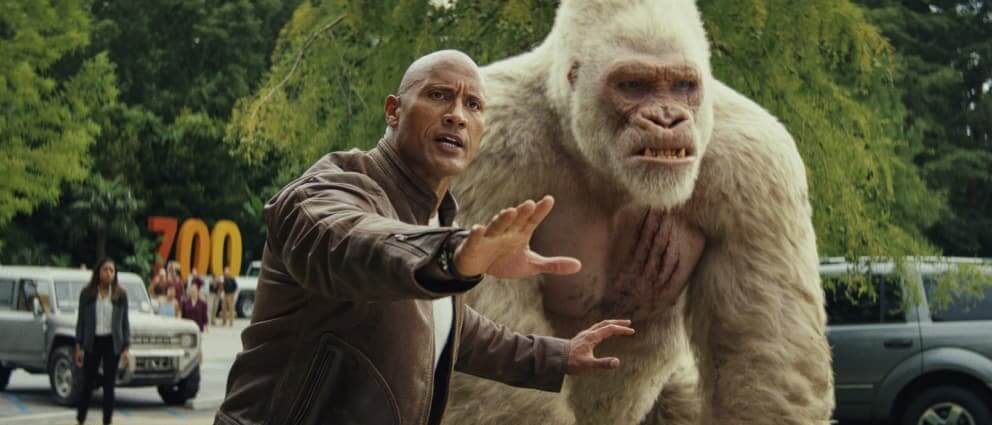
Scene change. Hunky San Diego Wildlife Sanctuary and primatologist Davis Okoye (Dwayne “the Rock” Johnson) is showing a young nerd, frat boy, and blonde how to acclimate a new gorilla into the group. Soon, albino George the ape ambles out and he and Davis chatter in sign language. George is particularly adept at flashing a third finger, in context. He’s smart! But the albinism, a single gene trait, is never addressed, and since its rarity makes George valuable, it makes no sense that the poachers slaughter his family, which we see in grizzly flashback.
That night the space crap lands, flung from meteors (Pitbull’s “Fireball”would have fit well here). A celestial canister plops down in the gorilla compound in San Diego, and curious George picks it up, opens it, and white powder disperses in his face, with nary a singe from the sizzling metal. Another canister lands in southern Wyoming, “infecting” a wolf. A third lands in Everglades National Park, similarly anointing a crocodile.
Gorilla, wolf, crocodile. Remember them, the cast of gene-edited vertebrate characters.
Size matters, and more
The next morning, George has escaped his compound and killed a bear, sustaining some cuts. He’s curled up in a cave and crying, signing, like a Trump tweet, “Sad.” Hurt. Bear. Upset.
George is bigger! Overnight!
Scene change: to biotech firm Energyne in a Chicago skyscraper, to squabbling siblings Claire Wyden, who looks like a clone of Today Show host Savannah Guthrie, and her whining brother, Brett. The company funded the research to create the pathogen in the canisters, building of the spaceship, and a private military operation in Greeley, Ohio.
News on a screen in the background shows five dead guys and a giant wolf pawprint. “It’s infected by the pathogen,” Claire mumbles mysteriously.
Another scene change. Kate Caldwell (Naomie Harris) is in her LA apartment. Next to her Starbucks detritus are a few genetics textbooks. Odd, because scientists don’t need textbooks, students do. We learn later that Kate indeed has a PhD in biochemistry, a degree in conservation genetics, and vaguely used CRISPR on endangered species in the Arctic.
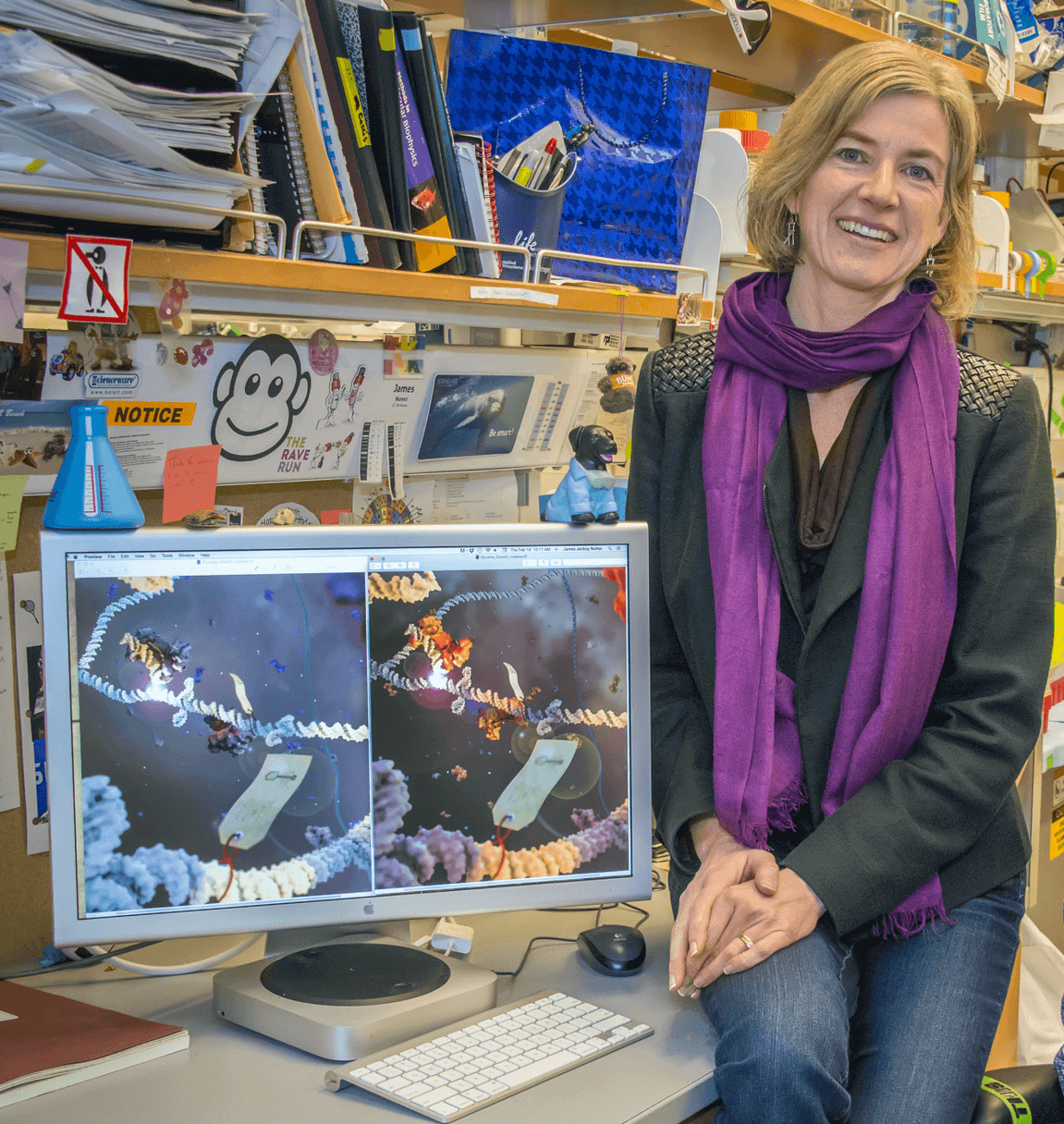
Jennifer Doudna from the University of California Berkeley, co-inventor of CRISPR.
So what, exactly, is CRISPR? A biotechnology that isn’t as gee-whiz as it seems. It’s a molecular toolbox that consists of a “guide” RNA to direct cutting of a selected DNA sequence by an enzyme that’s also part of the package. Then the cell’s natural DNA repair system fixes the damage. To get these components inside cells, researchers use the viruses already used for years in gene therapy (retro-, adeno-associated-, adeno, and lenti viruses) and, more recently, injection or lipid nanoparticles, to avoid an immune response to viruses.
Early reviews
The first reviews, from journalists invited to the premier, seemed to not quite get the science, but that’s understandable because it is so fragmented.
Stat News gushed over The Rock, then talked about CRISPR “rewriting the code of life,” the common error in terminology that makes me, as a genetics textbook author, want to scream. If the genetic code wasn’t universal – all species use the same DNA triplets to specify the same amino acids – technologies that sometimes mix gene parts from different species, even just in the promoter regions of genes that control expression, wouldn’t work. Anyone take insulin produced in bacteria or yeast? And this film review is full of genetic code mistakes. They all mean “DNA sequence,” not “genetic code.” The code is the correspondence. I’m sure Dr. Kate’s textbooks have the requisite genetic code chart of RNA codon-amino acid assignments that also festoons my office wall.
Interestingly, the Daily Bruin used “mutagen,” which at first confused me because classically mutagens have been just nasty chemicals and radiation. That’s what I used to make flies with legs on their heads for my PhD research. But the biotechnologies that replace DNA sequences, like CRISPR, also alter the DNA. So OK.
Genetic changes
DNA is DNA. We don’t have different genetic codes.
Meanwhile, the ever-enlarging George is caged in a lab for tests. Davis glances down at the results. “That can’t be right! His neuromuscular synapses are increasing! His blood has lethal levels of growth hormone!”
A surly George soon bursts out of the cage. Davis wants to save him, but what’s wrong? The brilliant Kate knows. “He’s growing, isn’t he? And has speed and agility. He’s demonstrating levels of aggression you don’t see in his species.” The ape has grown from 7 feet tall, 500 pounds, to 9 feet tall and 1000 pounds, in one day.
From George’s phenotype, I suspect that Claire had her minions weaponize CRISPR to replace:
controls for the growth hormone gene from a different species – the coding portion is similar among vertebrates – upping it’s expression
the prestin gene with the bat version that imparts echolocation (clever!)
The storyline obeys Isaac Asimov‘s basic law of science fiction: Change. One. Thing. And Rampage does that – not CRISPR, that’s just a means to an end, but the acceleration. The GMO-fast-growing salmon that might have inspired the plot attain adult size twice as fast – in 18 months, not overnight – but don’t exceed normal body size. No one’s seen a GMO salmon the size of Moby Dick.
Mis- and disinformation are distorting science and public policy. Subscribe to our Daily and Weekly Digests for incisive coverage of ‘disruptive’ innovations in AI, agricultural biotechnology, food, chemicals, nuclear energy, vaccines, and other disruptive innovations.
Kate’s explanation of CRISPR is a swipe across her iPhone to show Davis cute animal pix. No guide RNAs, no DNA-cutting enzymes, no DNA repair. Still, with George bellowing and rattling his cage in the background, she explains that CRISPR is usually limited to fixing one cell at a time (no), but she’s found a way to change all an organism’s cells at once, “every DNA strand.” No again. Insertion sites are chosen, the guide RNA and enzyme not released willy-nilly all over a genome, triggering the dreaded off-target effects. Maybe Kate needs that textbook after all.
In fact the geneticist could have said “abracadabra” instead of CRISPR the whole time and the story would not have changed.
Just as I was getting irked at the missed opportunity to mention what CRISPR can do, such as possibly treat Huntington’s disease, Kate explains that she developed her strategy to save her brother, who was dying of an unnamed condition. She was fired from Energyne 2 years ago and stole stuff.
End of science. Just fire and chases
George busts out of captivity, and the rest of the film is chase scenes involving the gargantuan gorilla, wolf (which can fly, love those genetic modifications), and crocodile as they converge on the Windy City.
The action accelerates.
A military contractor is unaware of the giant wolf sneaking up from behind, conjuring the clueless lawyer on the crapper in Jurassic Park eaten by a T. rex. Crunch! There goes GI Joe’s head!
Mysterious government guy Harvey Russell introduces himself to Davis and Kate: “When a scientist shits in the bed, I’m the guy they call to change the sheets.”
Then somehow George is back, and his cuts have healed! “The DNA makes it capable of extreme regeneration” says the ever-helpful geneticist.
“How will we cure George?” laments Davis, as the music soars.
An antidote, of course! One tiny dose of R-19, Claire the biotech bitch smirks, and the behemoths will follow the low frequency radiowaves emanating from the tower housing Energyne, thanks to their CRISPR-ed in batbiosonar DNA.
Watching a newsfeed of the rampage, Claire declares, “The pathogen is doing what we designed it to.” Well, no. “The pathogen,” whatever it is, isn’t the bioweapon, it’s the delivery system for the CRISPR components, like a rubber band in a slingshot.
The crocodile that nobody knew about suddenly ripples from beneath a tourboat on Lake Michigan, then surges up to swallow a plane. Someone is bellowing “EKIA,” and I wonder if perhaps the beasts are planning a side trip to Ikea, but they head for company headquarters.
Fire! Explosions! People flee, vehicles crash, monsters invade upper stories, and one great swallow even beats the genetically-enhanced shark ingesting Samuel L. Jackson in 1999’s Deep Blue Sea.
“We can’t stop them! We gotta get that antidote!” hollers Davis.
The human characters collide on the 85th floor of the skyscraper, and Kate the geneticist filches a test tube of antidote from a cryopreservation tank, hopefully not the type used in the recent fertility clinic meltdowns. Everyone races to the roof, where Kate somehow slips the antidote to George the giant ape. This happens too fast to grasp. Perhaps she gives it to him in a latte.
Thirty more minutes of gore and fire follow, but I won’t give away the touching ending.
Context
My mentor in grad school called the fear of an escaped genetically-altered organism the “triple-headed purple monster” mindset. This was back when the fledgling biotech industry policed itself by developing the measures of physical and biological containment still in place for technologies that combine DNA from different species.
The film might have worked better back then, when the fears were new and more grounded, with biotech-based drugs and the genetically-modified foods we’ve been eating for years still to come. Although great fun to watch, Rampage lacks the sophistication, continuity, and intelligence of the Jurassic Park franchise. (But Rampage at least doesn’t make the genetic code error, as Jurassic Park does with its “billions of genetic codes.”)
So, after all that, what does Rampage have to do with CRISPR gene editing? Absolutely nothing! I hope I’m invited to the premier of the next biotech film.
Ricki Lewis is the GLP’s senior contributing writer focusing on gene therapy and gene editing. She has a PhD in genetics and is a genetic counselor, science writer and author of The Forever Fix: Gene Therapy and the Boy Who Saved It, the only popular book about gene therapy. BIO. Follow her at her website or Twitter @rickilewis.
Rice is a world food staple with an incredible story. Susan McCouch from Cornell University has been studying rice genetics for decades, and directs efforts in rice education in conjunction with the International Rice Research Institute in the Philippines. This episode features interesting stories about rice origins, early selection, variation and domestication. It is a fascinating look at the details behind an important food crop.
James Watson, the Nobel laureate who turns 90 this week, was front and center on a red-carpeted stage before an enormous rendering of a [Chinese] futuristic complex dubbed The Cheerland-Watson Center for Life Sciences and Technology, intended to rival prestigious biomedical research centers in the West.
…
Despite the glitzy ceremony, which included an evening-gown clad announcer and a half-day conference on precision medicine, the ambitious effort is raising eyebrows—and doubts. “I left Shenzhen rather pessimistic that the institute would ever be built,” says Watson, who wonders whether the necessary funding will materialize. The research agenda is also veering away from what he expected.
James Watson
…
Watson was intrigued. “I thought China might be the place to develop cheaper drugs,” he says. He also thought that “China may be the future, so I wanted to see it.”
…
Watson thought the center would focus on cancer drug discovery. But an announcement on the website of Shenzhen’s Dapeng New District, where the center is located, makes one mention of cancer cell immunotherapy, while identifying “precision medicine” as a main focus.
…
“I wish these people luck,” says Watson, who will keep working with CheerLand for the time being. But “I don’t think this particular effort is going to happen unless somebody comes forward with a lot of money.”
In pursuit of sustainability, shoppers are reaching for the organic apple or the GMO-free chips. But if we truly want to reach that goal, on our next trip to the farmers’ market or grocery store, we should consider reaching for the genetically modified tomato or wheat instead.
…
How do we move forward when so many of us are paralyzed by the pro- and anti-GMO movements? To say that GMOs provide the only avenue toward sustainability is woefully wrong. The same can be said for organic farming. Where either of these methods falls short, the other can be there to lend a hand.
Genetically modified organisms can preserve the environment and build an economy for future generations.
…
[R]esearchers are able to alter the DNA of certain crops to minimize destruction by viruses, fungus and pests. This approach is being applied to preserve the banana from extinction and ensure continued growth of cacao plants, and it has already helped save a Hawaiian papaya. Unfortunately, pests and disease aren’t the only concerns.
…
Ensuring the health and well-being of future generations will require a combination of organic and GMO foods. We all desire sustainability, but creative compromise and mutual trust will help us reach our goal.
Editor’s note: Kevin Doxzen is a science communications specialist at the Innovative Genomics Institute and a biophysics PhD student at the University of California – Berkeley.